An event’s success isn’t what happened on stage — it’s what attendees say once it’s over. This post event satisfaction survey template measures organization quality, staff performance, event length, and NPS in 8 questions across 9 screens. Send it within an hour of closing for the most honest data.
This post event satisfaction survey template goes deeper than a quick "rate the event" poll. It breaks attendee satisfaction into specific dimensions — organization, staff friendliness, staff helpfulness, and event length — alongside open-ended likes/dislikes and an NPS recommendation question. Eight questions, nine screens, under three minutes. Send via email or SMS within an hour of the event ending.
8
9
2 min 30 secs
What Questions Are in This Post Event Satisfaction Survey Template?
This post event satisfaction survey template includes 8 questions across 9 screens. It's built for post-event distribution — not a kiosk quick-pulse, but a considered assessment sent after the event ends. Here's what each question measures:
"Overall, how would you rate the event?" (star rating scale) — The summary metric. This is the number your stakeholders and sponsors want to see. Track it across events to build a baseline — it's meaningless for a single event but powerful as a trend line. Events that score below 3.5 consistently have a fundamental format or audience-fit problem.
"What did you like about the event?" (open-ended) — Attendees volunteer what stuck with them most. The keynote that changed their thinking, the networking format that actually led to conversations, the venue that felt right. These are your "repeat this" signals.
"What did you dislike about the event?" (open-ended) — Separate from likes on purpose. Attendees who'd otherwise write only positive feedback are prompted to think critically. Feed both open-ended fields through AI feedback analytics to auto-tag recurring themes across hundreds of responses.
"How organized was the event?" (star rating) — Organization is the invisible baseline. Attendees don't praise good logistics, but they destroy you for bad ones. A low organization score with a high overall score means your content saved you despite operational chaos. Fix the operations before your content can't compensate anymore.
"How friendly was the staff?" (star rating) — Staff demeanor sets the emotional tone of the event from registration onward. This is different from staff helpfulness — a friendly but clueless volunteer is different from a cold but efficient one. Track both to know which to fix.
"How helpful was the staff?" (star rating) — Competence question. Could attendees find their sessions, get answers to questions, resolve issues quickly? A gap between "friendly" (high) and "helpful" (low) means your volunteers need better training, not attitude adjustment.
"Was the event length too long, too short, or about right?" (star rating scale) — This is the question most event organizers skip, and it's the one that directly predicts drop-off for the next event. Attendees who felt the event was too long won't register for the next one — even if they rated everything else highly. Use this to calibrate your event duration against attendee tolerance.
"How likely are you to recommend the event to a friend or colleague?" (0-10 NPS) — Your growth predictor. Post-event NPS above 50 correlates with 25-35% organic registration growth for the next edition. Below 30, you're relying entirely on paid marketing to fill seats. Use NPS trend reports to compare across events.
What Good Post-Event Satisfaction Scores Look Like — Benchmarks for Event Organizers
Numbers without context are just numbers. Here's where post event satisfaction survey scores land in practice, so you know whether your results are worth celebrating or worrying about:
Overall event rating (5-star scale): Corporate events average 3.6-3.9. Industry conferences sit at 3.8-4.2 (attendees self-select for interest, which inflates scores). Scores above 4.3 are exceptional. Below 3.4, your next event will have a registration problem.
Event organization: The tightest tolerance of any parameter. Above 4.0, attendees don't mention it. Between 3.5-4.0, you'll see scattered complaints in open-ended feedback. Below 3.5, organization becomes the dominant theme in dislikes — drowning out everything else you did well.
Staff friendliness vs. helpfulness: Friendliness typically scores 0.3-0.5 points higher than helpfulness. That's normal — being pleasant is easier than being knowledgeable. If helpfulness scores drop below 3.0, invest in volunteer training and event-day briefings. If friendliness drops below 3.5, you have a hiring or volunteer recruitment problem.
Event length perception: For half-day events, 70-80% of respondents should say "about right." For full-day events, expect 55-65% "about right" and 25-30% "too long." Multi-day conferences: if more than 40% say "too long," your next event should be one day shorter or include more breaks.
Post-event NPS: First-time events average 25-35. Established annual events with loyal audiences hit 45-60. If your NPS dropped more than 10 points from the previous edition, something specific broke — dig into the open-ended responses to find it.
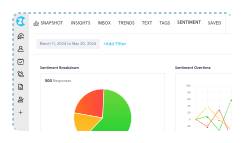
Track all of these on a single sentiment-tagged dashboard so you can see which parameters drive the overall score up or down.
How to Analyze Post Event Satisfaction Data Without Drowning in It
An 8-question survey sent to 500 attendees generates a lot of data. Most event teams either ignore it or spend two weeks building a report nobody reads. Here's a faster approach:
Start with the NPS distribution, not the average. An NPS of 35 that comes from 50% promoters and 15% detractors is very different from 35% promoters and 0% detractors. The first group has strong fans AND vocal critics — that's a polarizing event. The second has mild supporters and no opposition — that's a forgettable one. Both score 35.
Cross-reference ratings with open-ended themes. Run the "likes" and "dislikes" through thematic analysis and map themes to the star ratings. If attendees who rated organization below 3 all mention "registration confusion," you've found the specific fix. Don't guess — let the data tell you.
Compare staff friendliness and helpfulness scores. If both are high, your team was great. If friendliness is high but helpfulness is low, your team was pleasant but undertrained. If both are low, you have the wrong team. Each diagnosis has a different solution.
Segment by attendee type. If you tagged responses by attendee category (speaker, VIP, general attendee, sponsor), compare their scores. Sponsors and VIPs who score low on organization are a bigger risk to your revenue than general attendees who felt the event was too long.
Pro tip: build a one-page event scorecard with the 5 star ratings, NPS, and top 3 themes from each open-ended field. Present this within 72 hours of the event. The detailed analysis can come later — but the scorecard while people still remember the event drives faster decisions.
Common Post-Event Survey Mistakes That Waste Attendee Feedback
The survey itself is solid. The mistakes happen around it — timing, distribution, and follow-through.
Sending it 3 days later. After 48 hours, attendees have emotionally moved on. Their feedback becomes generic ("it was good") instead of specific ("the panel on AI was the highlight but the lunch break was 10 minutes too short"). Send within 1 hour of the event closing. Period.
Burying it in a thank-you email novel. If your post-event email is 500 words of gratitude before the survey link, most people never scroll to the link. Put the survey link in the first sentence. "How was [Event Name]? Take 2 minutes to tell us: [LINK]" — that's the entire email.
Not separating event feedback from lead nurture. The post-event survey is a feedback tool, not a marketing touchpoint. Don't add product pitches, sponsor ads, or "schedule a demo" CTAs to the survey. Attendees who feel sold-to during a feedback request give shorter, less honest responses — or don't respond at all.
Collecting data but skipping the debrief. The most common failure: 400 survey responses sit in a spreadsheet for weeks, then the next event planning cycle starts from scratch. Schedule the debrief meeting BEFORE the event happens. Block 90 minutes in the calendar for the week after. Use automated workflows to push a summary report to stakeholders the morning after responses close.
Automating Post-Event Survey Distribution — Set It Up Before the Event Starts
The best post event satisfaction survey workflow is one you configure before the event and never think about on event day. You have enough to manage during the event without manually sending surveys.
Pre-schedule email distribution. Upload your attendee list before the event. Set the survey email to trigger 45-60 minutes after the scheduled event end time. If the event runs long, adjust the trigger — but having it pre-loaded means you're not scrambling after closing remarks.
SMS for higher open rates. Post-event SMS gets 3-4x the open rate of email. Use SMS surveys for your primary distribution and email as the follow-up for non-responders 24 hours later. Keep the SMS text short: "How was [Event]? 2-minute survey: [link]"
Automated reminders. One reminder to non-responders at 24 hours is worth sending. Two reminders is acceptable. Three or more and you're annoying people who already decided not to respond. Set up automated trigger workflows to handle this without manual intervention.
Detractor auto-alerts. Configure real-time alerts so the event lead gets notified immediately when an NPS detractor (0-6) submits. A personal follow-up within 24 hours ("We noticed your experience fell short — can you tell us more?") recovers 15-20% of unhappy attendees into return visitors.
Why Post-Event Satisfaction Surveys Are Non-Negotiable for Recurring Events
If you're running a one-time event, feedback is nice to have. If you're running recurring events — annual conferences, quarterly meetups, monthly webinars — post-event satisfaction data is the difference between an event that grows and one that quietly dies.
Trend data reveals what attendance numbers hide. Your conference had 500 attendees this year and 520 last year. Growth, right? But if your NPS dropped from 48 to 31, you have 520 people who are less likely to come back — and less likely to recommend. The attendance growth masked a satisfaction decline that will hit registration next year.
Sponsor decisions depend on attendee satisfaction data. Sponsors don't just want headcounts — they want engagement. A post event satisfaction survey showing 85% of attendees found the event "well-organized" and scored staff helpfulness above 4.0 is tangible proof of a quality audience. That data closes sponsorship renewals faster than a media kit.
Content planning needs specific input. "What did you like/dislike" open-ended responses from the post event satisfaction survey template are your content planning committee. The speaker who gets mentioned 40 times in "likes" is your headliner next year. The topic that appears 25 times in "dislikes" gets replaced. Use expert survey planning frameworks to structure how you translate feedback into content decisions.
Related Templates for Event Feedback
This post event satisfaction survey template is your comprehensive post-event assessment. Pair it with these templates for different event touchpoints:
Event Survey Template — a shorter, 4-question version for quick on-site feedback at kiosks or session exits during the event.
Washroom Feedback Form Template — for venue facility feedback at large events where restroom quality directly impacts attendee satisfaction.
Webinar Feedback Form Template — for virtual and hybrid events where the digital experience needs separate evaluation from the content.
A post event satisfaction survey is a structured questionnaire sent to attendees after an event to measure their satisfaction across multiple dimensions — overall experience, organization quality, staff performance, event length, and likelihood to recommend. It provides event organizers with data to evaluate success and improve future events.
How soon after an event should I send the satisfaction survey?
Within 1 hour of the event closing. After 48 hours, response rates drop below 10% and feedback becomes vague. Pre-schedule the distribution before the event starts — set it to trigger automatically based on the event end time so you're not manually sending surveys while managing event wrap-up.
What's the difference between an event survey and a post event satisfaction survey?
An event survey (3-4 questions) is designed for on-site collection at kiosks or session exits — quick and in-the-moment. A post event satisfaction survey (8+ questions) is sent after the event ends and covers more dimensions: organization, staff quality, event length, and detailed feedback. Use both for a complete picture.
Why does this post event satisfaction survey template ask about staff friendliness AND helpfulness separately?
Because they measure different things and have different fixes. A friendly but unhelpful staff team needs better training and event-day briefings. An efficient but unfriendly team needs different recruitment or attitude coaching. Separating the two tells you which intervention to prioritize.
How do I use post-event satisfaction data to improve future events?
Build a one-page scorecard within 72 hours: the 5 star ratings, NPS score, and top 3 themes from each open-ended field. Present this in a scheduled debrief meeting. Use the "likes" themes to identify what to keep, "dislikes" to identify what to fix, and the event length question to calibrate duration for the next edition.
What's a good NPS score for a post-event satisfaction survey?
First-time events average 25-35. Established annual events with loyal audiences reach 45-60. NPS above 50 correlates with 25-35% organic registration growth. If your score dropped more than 10 points from the previous edition, investigate the open-ended responses to find the specific cause.
Should I use email or SMS to distribute the post event satisfaction survey?
SMS as primary — it gets 3-4x the open rate of email. Send a short message with the survey link within an hour of the event ending. Follow up with email to non-responders 24 hours later. Limit total reminders to two — more than that annoys people who already decided not to respond.
Create and Send This Post Event Satisfaction Survey with Zonka Feedback


.svg)
 Healthcare
 Finance
 Retail
 SaaS & Digital
 eCommerce
 Education
 Salesforce
  HubSpot
 Pipedrive
 Mailchimp
 Klaviyo
 Zendesk
  Intercom
 Freshdesk
 HelpScout
  Front
Front Jira
Jira Slack
Slack  MS Teams
 Zoom
Zoom Google Sheets
  Zapier
  Integrately
 Make
Make  Webhooks




 MS Teams