


.svg)
 Healthcare
 Finance
 Retail
 SaaS & Digital
 eCommerce
 Education
 Salesforce
  HubSpot
 Pipedrive
 Mailchimp
 Klaviyo
 Zendesk
  Intercom
 Freshdesk
 HelpScout
  Front
Front Jira
Jira Slack
Slack  MS Teams
 Zoom
Zoom Google Sheets
  Zapier
  Integrately
 Make
Make  Webhooks



 Sign In
 MS Teams


TL;DR
- Alchemer is a capable survey platform—but many teams find it complex, expensive at scale, and short on the CX-specific workflows that modern feedback programs need.
- We evaluated 20+ tools against the most common reasons teams leave Alchemer: pricing shock, usability gaps, missing closed-loop workflows, and data control requirements.
- The best Alchemer alternatives in 2026 include SurveyMonkey, QuestionPro, SurveySparrow, Qualtrics, Medallia, Sogolytics, Jotform, Google Forms, and LimeSurvey—each the right fit for a different use case and budget.
- If your reason for switching is specifically about CX workflows, closed-loop feedback, and AI-driven insights—not just better surveys—scroll to the end to see how Zonka Feedback fits that need.
Alchemer—formerly SurveyGizmo—has long been a go-to platform for advanced surveys, logic, and reporting. But in 2026, many teams are actively exploring Alchemer alternatives that better match how feedback is collected and acted on today.
When SurveyGizmo rebranded to Alchemer in 2020, it came with a new pricing model that caught a lot of existing users off guard. Teams that had built workflows on affordable SurveyGizmo plans found themselves facing significantly higher costs for the same capabilities—or fewer features on legacy plans they couldn't easily exit.
That frustration is still a primary driver of people searching for alternatives today. Whether the issue is pricing, complexity, missing CX workflows, or the need for self-hosted data control—this guide is built to help you find the right replacement.
We compare 9 leading survey platforms, CX feedback tools, form builders, and enterprise XM solutions based on features, reporting, integrations, workflows, and deployment options. Let's get into it.
Which Alchemer Alternative Is Right for You?
The right choice depends on your specific reason for leaving Alchemer. Use this decision framework as a starting point:
| If you're leaving Alchemer because… | Best Alchemer Alternative | Reason |
| It's too complex for non-technical teams | SurveyMonkey | Easiest cross-team adoption |
| You need research panels and longitudinal studies | QuestionPro | Built-in research infrastructure |
| Survey logic takes too long to build | Perspective AI | AI Interview & live follow ups |
| Response rates are too low | SurveySparrow | Conversational format improves completion |
| You're running enterprise XM programs at scale | Qualtrics | Multi-program XM with enterprise governance |
| You need operational VoC at the frontline level | Medallia | Purpose-built for enterprise VoC execution |
| You need compliance-ready surveys in a regulated industry | Sogolytics | Security-first with governance controls |
| You're primarily using it for forms and internal workflows | Jotform | Faster, cheaper, built for workflow automation |
| You just need simple, free surveys | Google Forms | Zero cost, instant setup |
| You need full data control and self-hosting | LimeSurvey | Open-source, on-premise deployment |
| You need closed-loop CX workflows and AI insights—not just surveys | Zonka Feedback | CX-first platform built for what happens after the survey |
How We Evaluated These Tools
-
Scope: We evaluated 20+ survey, feedback, and experience management platforms against the most common reasons teams leave Alchemer.
-
Criteria: Pricing transparency, ease of setup, survey logic depth, CX workflow capabilities, analytics maturity, integration ecosystem, and deployment flexibility.
-
Ratings: G2 scores referenced reflect ratings as of early 2026 with a minimum of 50 verified reviews.
-
Affiliation disclosure: Zonka Feedback is our product. We've included it separately at the end of this guide—not as part of the numbered ranking—so you can evaluate the independent alternatives first. We've mentioned upfront where Zonka Feedback is and isn't the right fit.
What Does Alchemer Cost in 2026?
Pricing is the number one reason teams start searching for Alchemer alternatives—and it's worth addressing upfront.
Alchemer's current published plans are (verified against Alchemer's pricing page, May 2026):
- Collaborator: $55/user/month — unlimited surveys, 75,000 responses/year account limit, email support
- Professional: $165/user/month — advanced logic, offline mode, phone support on annual plans
- Full Access: $275/user/month — SPSS exports, advanced research question types, market research tools
- Business Platform: Custom pricing (contact sales)
There's a critical detail that catches many buyers off guard: the Collaborator, Professional, and Full Access plans are capped at 1–3 users. If your team needs 4 or more user licenses, Alchemer requires you to move to the Business Platform tier—which is custom-priced and typically significantly more expensive. This is one of the sharpest hidden cost cliffs in the category.
Many teams that came over from the SurveyGizmo days also found the rebrand came with a pricing restructure that felt abrupt. Legacy plan holders were pushed toward more expensive tiers without a clear migration path. That experience left a lasting impression in Alchemer's G2 reviews and on Capterra.
Why Teams Are Switching from Alchemer
Beyond pricing, there are specific patterns that consistently show up in reviews from teams who've moved on from Alchemer. These aren't generic complaints—they're documented pain points from real teams managing real feedback programs.
- The pricing jump at scale is unpredictable.
Alchemer's per-user pricing stacks up quickly once you cross the 3-user threshold—at which point the published plans no longer apply and you're negotiating a Business Platform contract. Teams that started on affordable plans consistently report significant cost increases at renewal. One reviewer on G2 described a team going from under $1,000 for 8 users to nearly $8,000 at renewal: "10X price increase this year." A Capterra reviewer put it plainly: "The price keeps increasing each renewal—it's becoming hard to justify." - Advanced features come with a steep learning curve.
Alchemer's logic and customization capabilities are genuinely powerful—but they're not self-explanatory. Non-technical teams frequently report spending hours on tasks that should take minutes. Capterra reviewers flag that the interface feels overwhelming for beginners and that basic survey actions require too many steps. For teams without a dedicated survey specialist, this creates friction that slows programs down. As one G2 reviewer noted: "The interface feels dated and overwhelming for beginners." - Collecting feedback is one thing. Acting on it is another.
Alchemer is built around survey collection and reporting. What many CX and customer success teams discover over time is that it doesn't natively support what happens after a response comes in—real-time alerts, SLA-based escalations, closed-loop follow-ups, and workflow automation. Teams running NPS or CSAT programs often end up building workarounds in other tools just to do what CX-first platforms handle out of the box. - Enterprise and VoC programs outgrow its scope.
Larger organizations with multi-program experience management needs—CX, EX, product, and brand tracking in one place—find Alchemer's architecture limiting. It handles individual surveys well. It doesn't handle coordinated, governance-heavy experience programs at the same level as purpose-built enterprise platforms. - Data residency and self-hosting aren't options.
Alchemer is a cloud-only platform. For regulated industries—healthcare, government, financial services—this is a hard blocker. Teams with strict data residency requirements or internal IT policies around third-party cloud hosting have no path forward with Alchemer, which pushes them toward self-hosted or open-source alternatives. - Support responsiveness drops at critical moments.
The gap between pre-sale support and post-implementation support is one of the most frequently cited complaints in Alchemer reviews. One of the reviewers in Market Research, captured it on Capterra: "In the past year—pretty much since SurveyGizmo changed its name to Alchemer—the product has gone downhill. We've had terrible account support and frequent issues with the software. We have also often waited weeks for issue resolution when we couldn't afford to wait weeks."
Top Alchemer Alternatives at a Glance
| Alternative | Best For | Primary Use Case | Standout vs Alchemer | G2 Rating |
| SurveyMonkey | Teams needing scalable, easy-to-use surveys | Customer, employee & market surveys | Faster setup, broader adoption, better benchmarks | 4.4 |
| Perspective AI | Qualitative research without branch logic | AI interview for churn loss | Own follow up questions | 5.0 |
| QuestionPro | Market research & insights teams | Research studies, panels & advanced analytics | Built-in panels, longitudinal studies, cross-tab analysis | 4.5 |
| SurveySparrow | Teams focused on high response rates | Conversational CX & EX surveys | Chat-style surveys, higher completion rates, modern UX | 4.4 |
| Qualtrics | Large enterprises running XM programs | Enterprise CX, EX, PX & brand tracking | Multi-program XM, enterprise governance, deeper analytics | 4.4 |
| Medallia | Enterprises with mature VoC programs | Operational CX & VoC at scale | Omnichannel VoC, real-time case management, frontline action | 4.2 |
| Sogolytics | Compliance-driven & regulated organizations | Secure business & internal surveys | Strong governance, security-first setup, stakeholder-ready reports | 4.5 |
| Jotform | Teams needing forms & workflow automation | Forms, approvals, internal requests | Faster form creation, built-in approvals, payments | 4.7 |
| Google Forms | Individuals & small teams | Simple internal surveys | Free, instant setup, Google Sheets integration | 4.6 |
| LimeSurvey | Privacy-first & regulated organizations | Self-hosted surveys & research | Open-source, full data control, self-hosted flexibility | 4.1 |
| Zonka Feedback | CX, product & customer success teams | NPS, CSAT, CES & closed-loop CX feedback | Omnichannel CX, real-time alerts, AI insights, workflow automation | 4.7 |
The 10 Best Alchemer Alternatives in 2026
The right alternative depends on why you're leaving Alchemer. Here's a detailed look at each option—what it does well, where it falls short, and exactly how it compares to Alchemer.
1. SurveyMonkey: Best Alchemer Alternative for Scalable, General-Purpose Surveys
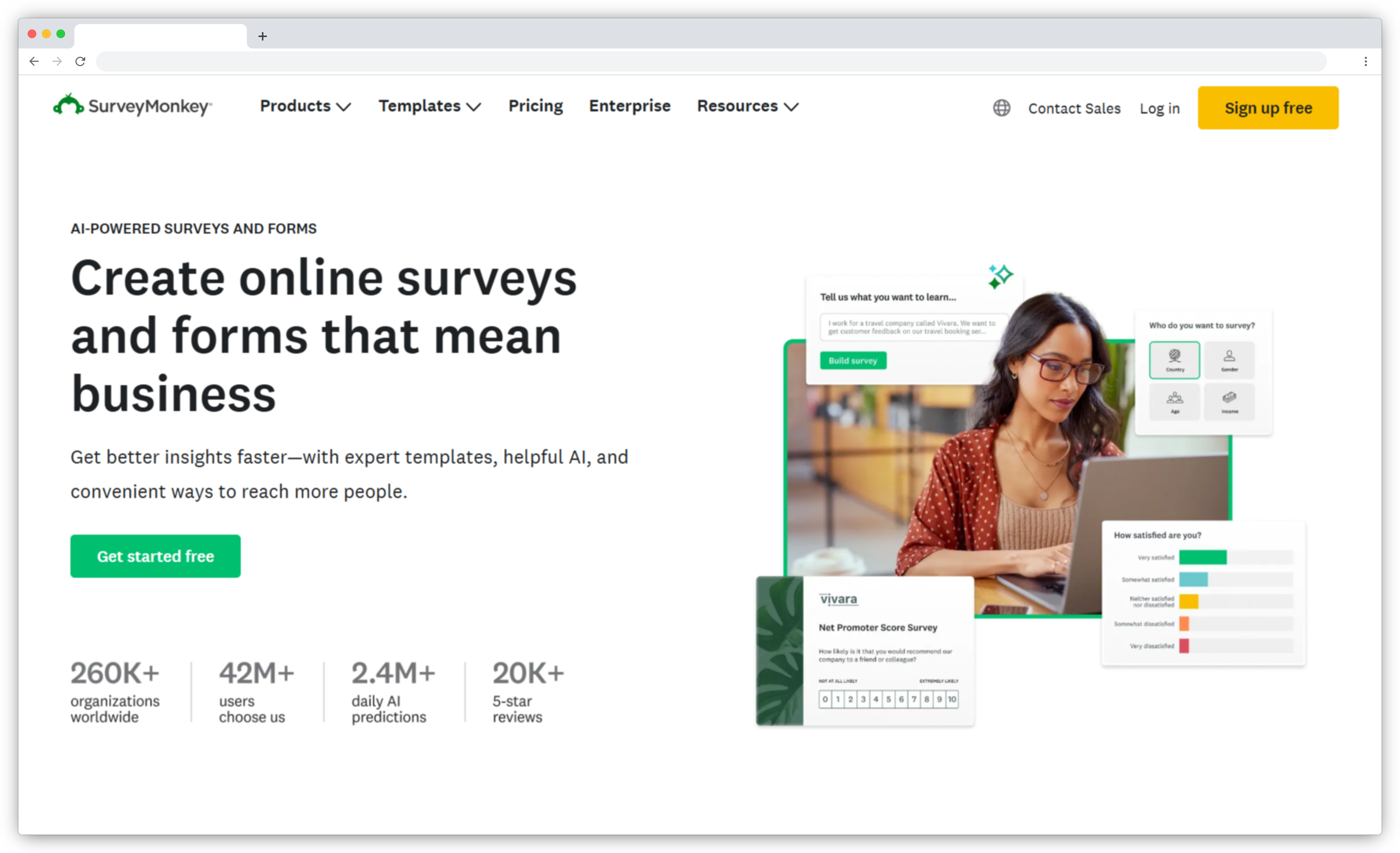
SurveyMonkey is a widely used online survey platform designed for teams that need fast, reliable survey creation at scale. It balances ease of use with robust analytics and enterprise-ready collaboration features.
- Best for: Marketing teams, HR and people ops, customer success teams, educators, and organizations that need dependable surveys without heavy technical setup.
- Use case: Customer satisfaction surveys, employee engagement surveys, market research, event feedback, brand tracking, and recurring pulse surveys.
- G2 Rating: 4.4/5 on G2
How SurveyMonkey Compares to Alchemer
The most common reason teams land on SurveyMonkey after Alchemer is straightforward: it's easier to use across the whole organization, not just for the specialist who set it up.
Alchemer's power comes with a learning curve that limits who can actually build and launch surveys independently. SurveyMonkey inverts that—its intuitive builder, large template library, and pre-written question sets mean teams across marketing, HR, and operations can run their own surveys without training or IT support.
On core survey capabilities, they're comparable. The meaningful differences show up in breadth of adoption, built-in benchmarking, and panel access. SurveyMonkey's industry benchmarks let teams compare their scores against sector averages in a way Alchemer doesn't match natively. Its reporting is also easier to navigate for non-analysts, and its integration ecosystem covers more out-of-the-box connectors to standard business tools.
Where SurveyMonkey doesn't win over Alchemer: deep custom logic and configuration. Teams running highly complex survey architectures may find Alchemer's flexibility harder to replicate. But for most general-purpose survey programs, SurveyMonkey covers the ground at a lower operational cost.
Key Features of SurveyMonkey
- Intuitive drag-and-drop survey builder
- Large library of expert-written survey templates
- Advanced logic, skip patterns, and piping
- Custom branding and white-label options
- Built-in benchmarks and industry comparisons
- Audience and panel access for market research
- Team collaboration and permissions
- Custom dashboards and exportable reports
- Integrations with CRM, HR, and marketing tools
- Enterprise-grade security and compliance options
SurveyMonkey Pros
- Extremely easy to use for non-technical teams
- Fast survey creation with proven templates
- Strong brand trust and adoption across industries
- Built-in benchmarks not available in Alchemer natively
- Suitable for both small teams and large organizations
- Extensive integrations ecosystem
SurveyMonkey Cons
- Less flexibility for deeply customized survey logic
- Advanced features locked behind higher-tier plans
- Limited CX-specific action workflows
SurveyMonkey Pricing
- Starts at $18/month
- Free version available with basic features
2. Perspective AI: Best Alchemer Alternative for AI Interviews
- Best for: research, product and CX teams who chose Alchemer for depth and found the cost of that depth was weeks of survey-logic construction.
- Use case: qualitative studies, churn and win/loss interviews, product discovery, and any research where the interesting answers are the ones you did not anticipate.
- G2 Rating: 5/5 on G2
How Perspective AI Compares to Alchemer
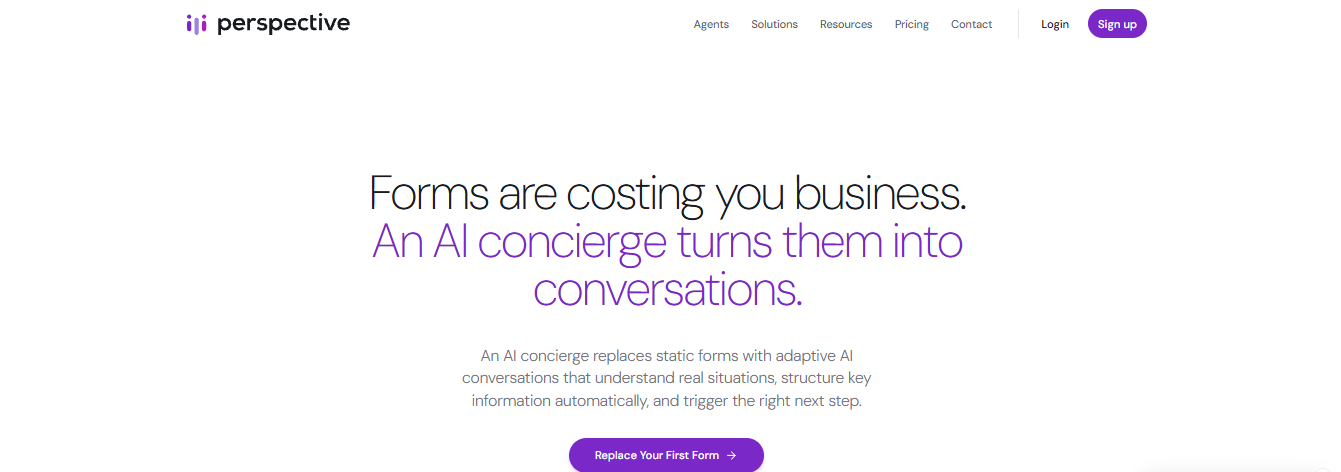
Alchemer's real strength is conditional logic: skip patterns, piping, branching, and question libraries that let a skilled researcher anticipate every path a respondent might take. That power is also the work. A serious Alchemer survey is a build project, and its quality is capped by how well you predicted the answers in advance.
Perspective AI removes the prediction step. You write the research goal in plain language and the AI interviewer agent constructs the conversation as it goes — asking a follow-up when an answer is vague, changing direction when something unexpected surfaces, and probing the specific detail that matters to that respondent. There is no logic tree to build, because the branching is decided live. A typical conversation runs 25–30 exchanges against the five or six questions a form would have asked.
The trade-off is real and worth stating: Alchemer remains the better tool for structured data collection at scale, complex quota management, and any study that must produce clean, comparable quantitative fields. Perspective AI produces transcripts and themes, not crosstabs. Teams switching for the reasoning behind their data gain a great deal; teams switching to replace a quantitative instrument will find it does a different job.
Key Features of Perspective AI
- AI interviewer agent that writes unscripted follow-up questions in real time
- Voice and text interviews in 57 languages, with the language detected automatically rather than configured
- Accent-native voices — Australian, Indian, Scottish, Irish, Nigerian and Jamaican English, Argentinian Spanish, and five Arabic variants
- Sub-second opening, interruption handling and noise filtering for a fluid spoken interview
- Research outline builder — plain-language goal in, running study out, no logic tree required
- Magic Summary: automatic themes, sentiment, key quotes and risk signals
- Interactive AI analysis across the full response set, with cited answers
Perspective AI Pros
- No survey logic to design, test or maintain
- Captures the unanticipated answer — the one a skip pattern would have skipped
- Analysis is automatic and same-day; no coding or tagging backlog
- Non-researchers can launch a credible study
- Free tier and a flat $99/month entry point, with unlimited seats
Perspective AI Cons
- Not a quantitative instrument — no crosstabs, significance testing or quota management
- No recurring NPS, CSAT or CES program dashboards
- Less control over exact question wording than a hand-built Alchemer survey
Perspective AI Pricing
- Free: 100 credits to start
- Pro: from $99/month for 1,000 credits
- Flex: pay-as-you-go credits, a conversation costing 10
- Enterprise: custom pricing; unlimited seats included on all plans
3. QuestionPro: Best Alchemer Alternative for Market Research & Advanced Analytics
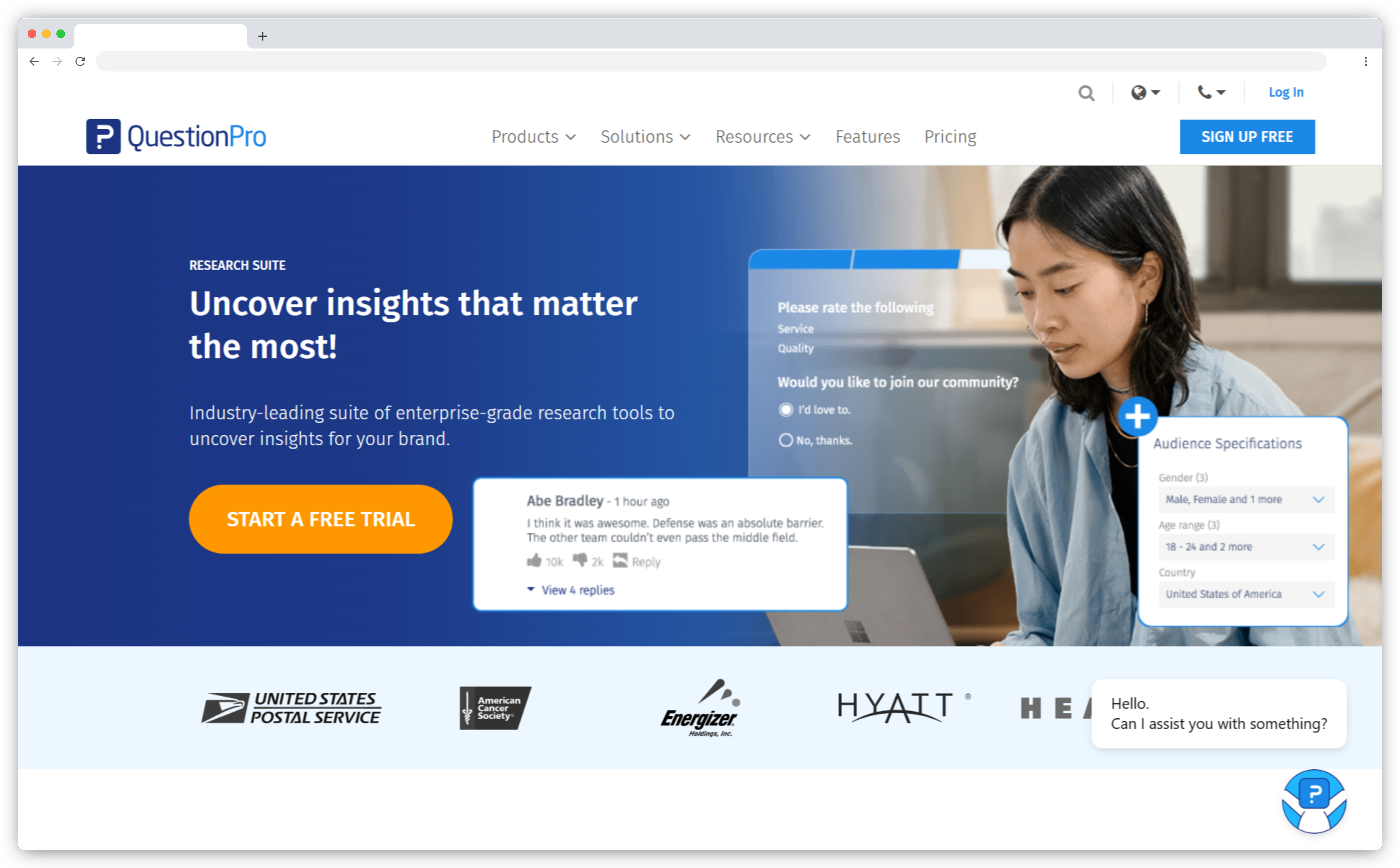
QuestionPro is a comprehensive research and survey platform built for teams that need advanced data collection, analysis, and research workflows. It extends well beyond basic surveys into a full research infrastructure.
- Best for: Market research teams, insights professionals, product researchers, academic institutions, and organizations running structured research programs.
- Use case: Market research studies, product and UX research, customer segmentation, brand tracking, academic surveys, panel-based research, and longitudinal studies.
- G2 Rating: 4.5/5 on G2
How QuestionPro Compares to Alchemer
Alchemer is often chosen for its flexible survey logic—but research teams frequently discover they need more than logic. They need end-to-end research infrastructure: sampling, panel management, longitudinal tracking, cross-tabulation, and structured output for stakeholders.
QuestionPro is built for that audience. Where Alchemer requires external tools or manual processes for many research workflows, QuestionPro handles panel management, recurring study design, and multi-wave data comparison natively. This makes it considerably more efficient for organizations running ongoing research programs rather than one-off surveys.
The reporting depth is also meaningfully better for research contexts. Segmentation, cross-tabulation, and advanced filtering are built in—researchers can explore trends without exporting data to statistical tools. For teams where methodological rigor matters as much as survey flexibility, QuestionPro is a stronger fit than Alchemer.
Key Features of QuestionPro
- Advanced survey logic, piping, and randomization
- Built-in research panels and sampling tools
- Longitudinal and tracking studies
- Cross-tabulation and segmentation analysis
- Multi-language and global research support
- Customizable dashboards and reports
- Data export to statistical tools
- Role-based access and collaboration
- API and third-party integrations
- Enterprise security and compliance options
QuestionPro Pros
- Purpose-built for research and insights teams
- Built-in panel management removes dependence on third parties
- Stronger research analytics than Alchemer out of the box
- Suitable for complex, long-term research programs
- Flexible survey logic comparable to Alchemer
QuestionPro Cons
- Interface can feel complex for casual survey users
- Not built for real-time CX workflows
- Requires research expertise to get full value
QuestionPro Pricing
- Starts at $99/month
- Free version available with basic features
3. SurveySparrow: Best Alchemer Alternative for Conversational Surveys & Higher Response Rates
SurveySparrow is a conversational survey platform that improves response rates by making surveys feel like natural interactions rather than transactional forms.
- Best for: CX teams, HR and people ops, product teams, and organizations focused on improving survey engagement and completion rates.
- Use case: Customer satisfaction surveys, NPS and CSAT programs, employee engagement and pulse surveys, onboarding feedback, website and in-app surveys.
- G2 Rating: 4.4/5 on G2
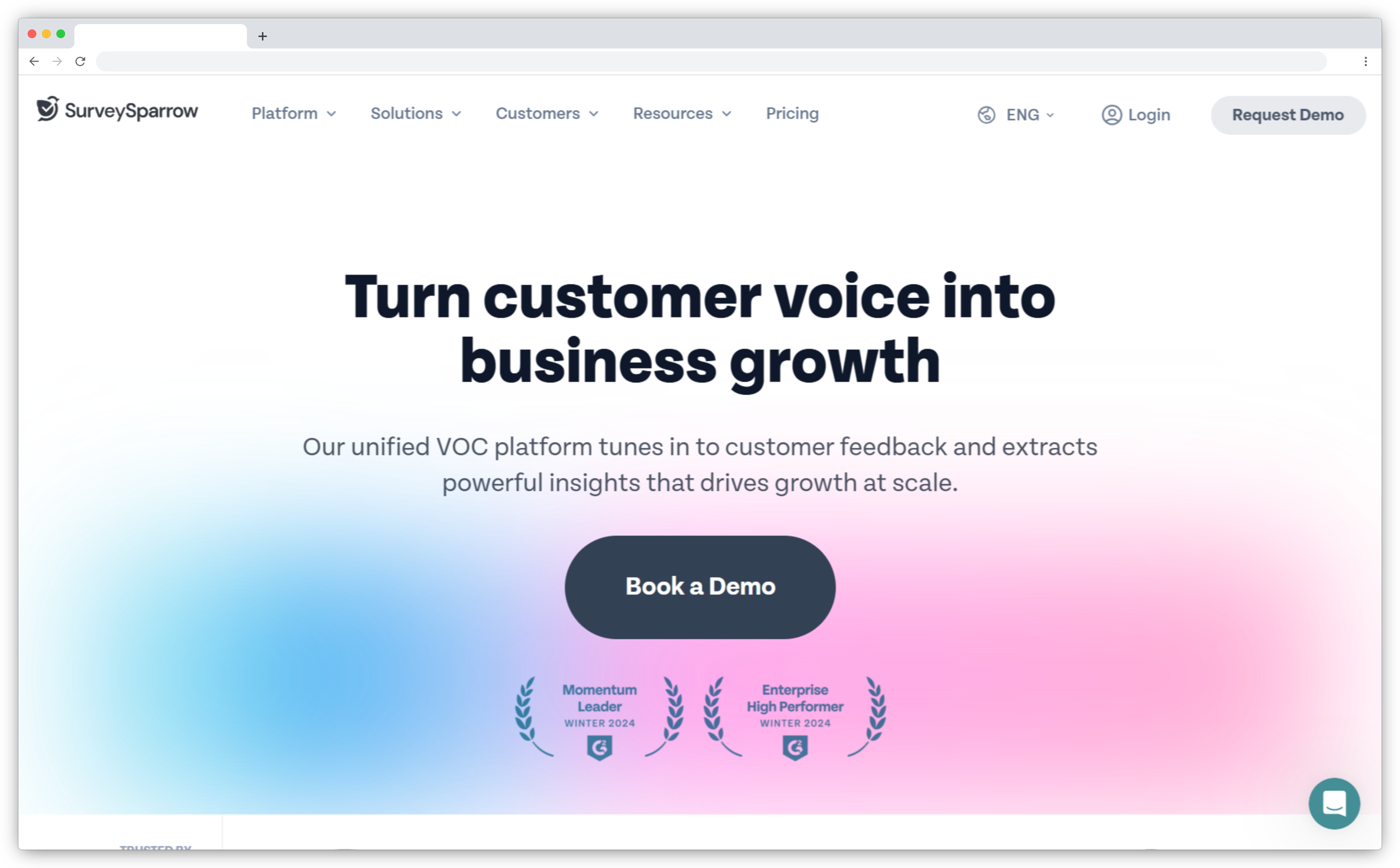
How SurveySparrow Compares to Alchemer
Alchemer's traditional multi-question survey layout works for structured research. It doesn't work as well for customer-facing feedback programs where respondent experience directly affects completion rates.
SurveySparrow addresses this by presenting one question at a time in a chat-style interface. The format is less overwhelming, more engaging, and more closely mirrors the kind of interaction customers are used to. For NPS, CSAT, and pulse surveys where low response rates are a chronic problem, this design shift alone produces measurable improvement.
On logic and personalization, SurveySparrow is comparable to Alchemer. The meaningful difference is the respondent experience and how quickly non-technical teams can build and iterate surveys without configuration overhead. For teams that aren't running research studies but are managing customer and employee feedback programs, SurveySparrow is a cleaner fit.
Key Features of SurveySparrow
- Conversational, chat-style survey interface
- Advanced logic, branching, and personalization
- NPS, CSAT, CES, and custom survey types
- Recurring and automated survey scheduling
- Multi-channel distribution (email, link, web, in-app)
- Custom branding and white-label options
- Real-time analytics and dashboards
- Team collaboration and role-based access
- Integrations with CRM and support tools
- Multi-language survey support
SurveySparrow Pros
- Higher engagement and completion rates than traditional survey formats
- Modern UX that feels less intrusive for respondents
- Faster setup and lower configuration overhead than Alchemer
- Strong fit for CX and EX feedback programs
- Clean interface for non-technical teams
SurveySparrow Cons
- Not suited for complex academic or panel-based research
- Advanced analytics are less deep than research-focused platforms
- Conversational format doesn't fit every survey type
SurveySparrow Pricing
- Custom pricing based on business requirements
- Free version not available
4. Qualtrics: Best Alchemer Alternative for Enterprise Experience Management (XM)
Qualtrics is an enterprise experience management platform designed to capture and analyze customer, employee, product, and brand experiences at scale. It powers complex, organization-wide feedback programs with advanced analytics and governance.
- Best for: Large enterprises, global organizations, and teams running multi-program experience management initiatives.
- Use case: Enterprise VoC programs, employee experience (EX), product experience (PX), brand tracking, relationship and transactional surveys, and cross-functional experience analytics.
- G2 Rating: 4.4/5 on G2
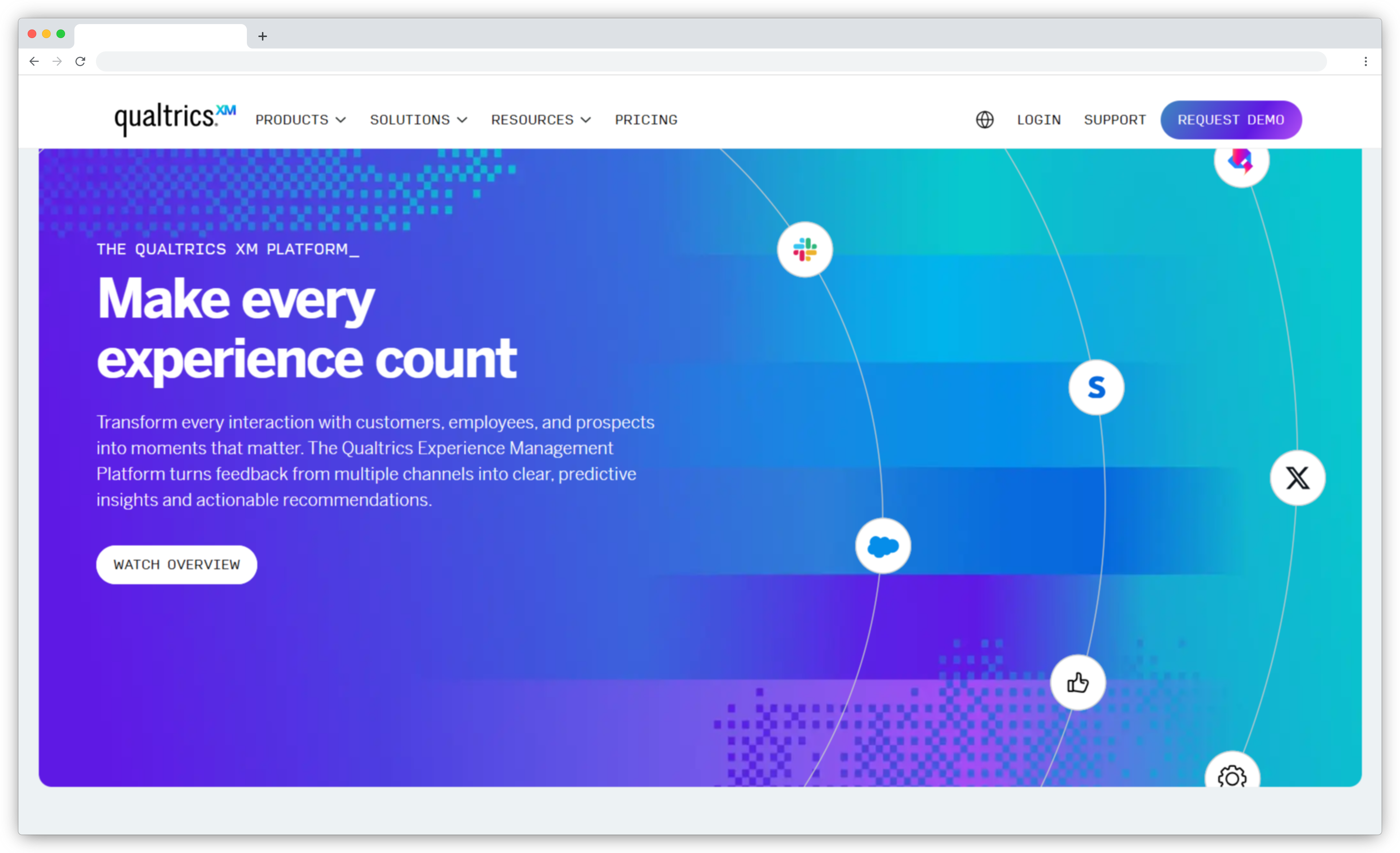
How Qualtrics Compares to Alchemer
Alchemer operates well as a survey tool within a team. Qualtrics is built to manage experience programs across an entire organization—and that distinction matters at enterprise scale.
Where Qualtrics clearly outpaces Alchemer is in multi-program governance and enterprise analytics. Organizations managing CX, EX, product, and brand feedback in parallel need a centralized platform with strict role-based access, data orchestration, and cross-program reporting. That's what Qualtrics was built for. Alchemer doesn't have a native answer to this architecture.
Qualtrics also handles global deployments better. Multi-language support, complex org hierarchies, regional governance controls, and enterprise security make it a viable fit for regulated industries and multinational teams where Alchemer's scope is simply insufficient.
The tradeoff: Qualtrics pricing runs $25,000 to $100,000 or more annually for enterprise contracts. It's a serious commitment, and it's overkill for teams that just need better surveys or CX workflows without full XM infrastructure.
Key Features of Qualtrics
- Enterprise-grade survey creation and logic
- Unified XM platform (CX, EX, PX, BX)
- Advanced analytics and text analysis
- Program-level dashboards and reporting
- Role-based access and governance controls
- Multi-language and global deployment support
- Integration with BI tools and data warehouses
- Automation and trigger-based workflows
- Enterprise security and compliance
- Scalable APIs and integrations
Qualtrics Pros
- Designed for large, complex organizations
- Powerful analytics across multiple experience programs
- Centralized governance across teams and regions
- Strong support for global and regulated deployments
- Deep integration capabilities with BI and data tools
Qualtrics Cons
- Very high cost—enterprise contracts start around $25,000/year
- Steep learning curve and long implementation cycles
- Overkill for small teams or simple survey programs
Qualtrics Pricing
- Custom enterprise pricing (typically $25,000–$100,000+/year)
- Free trial not available
5. Medallia: Best Alchemer Alternative for Enterprise VoC & Operational CX Programs
Medallia is an enterprise Voice of Customer platform built to capture and operationalize feedback across every customer touchpoint. It helps organizations turn experience data into frontline action at scale.
- Best for: Large enterprises, CX leaders, and operations teams managing complex, multi-touchpoint customer experience programs.
- Use case: Enterprise VoC programs, omnichannel customer feedback, contact center insights, retail and location-based CX, and operational experience improvement.
- G2 Rating: 4.2/5 on G2
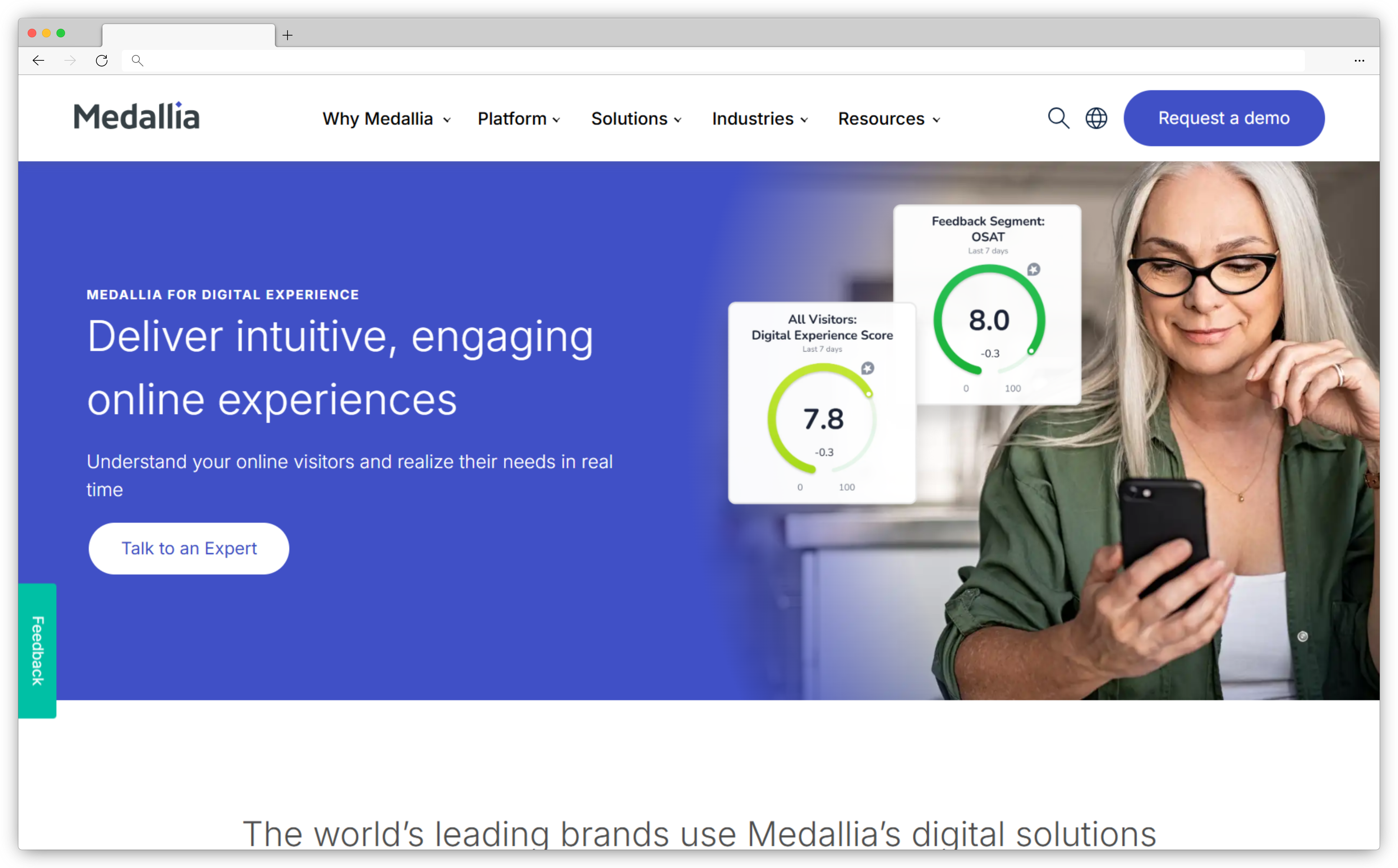
How Medallia Compares to Alchemer
Alchemer collects structured survey data. Medallia goes much further—it aggregates feedback from surveys, digital channels, contact centers, and in-store interactions to give a holistic view of the customer journey.
The defining difference is operational integration. Medallia doesn't just analyze feedback—it pushes insights directly to frontline managers, agents, and location leads through role-specific dashboards and automated alerts. For retail, hospitality, financial services, and healthcare organizations where CX performance is measured at the individual location or agent level, this operational focus is something Alchemer simply doesn't offer.
Medallia also handles real-time case management, automated follow-ups, and performance accountability in ways that Alchemer's reporting-focused architecture wasn't designed for. For mature enterprise VoC programs where closing the loop at scale is a core requirement, Medallia is in a different category than Alchemer.
Key Features of Medallia
- Omnichannel feedback collection across surveys, digital, and in-store
- Enterprise VoC and CX analytics
- Real-time alerts and automated case management
- Role-based dashboards for frontline teams
- Journey and touchpoint analysis
- Text analytics and sentiment analysis
- Integration with CRM and operational systems
- Performance tracking and reporting
- Enterprise security and governance
- Scalable global deployment
Medallia Pros
- Strong operational CX focus with frontline action capabilities
- Designed for multi-location and omnichannel businesses
- Real-time feedback, alerts, and case management at scale
- Mature enterprise VoC—well beyond what Alchemer supports
Medallia Cons
- Not flexible for ad-hoc or lightweight survey needs
- Enterprise-only positioning with high cost of entry
- Requires significant organizational maturity to implement effectively
Medallia Pricing
- Custom enterprise pricing
- Free trial not available
6. Sogolytics: Best Alchemer Alternative for Secure Business Surveys & Compliance-Driven Programs
Sogolytics is a business-focused survey platform built for organizations that prioritize data security, compliance, and structured feedback programs.
- Best for: Mid-market organizations, regulated industries, nonprofits, and teams that need secure, compliant survey and feedback collection.
- Use case: Customer satisfaction surveys, employee engagement surveys, compliance and risk assessments, program evaluations, and internal business surveys.
- G2 Rating: 4.5/5 on G2
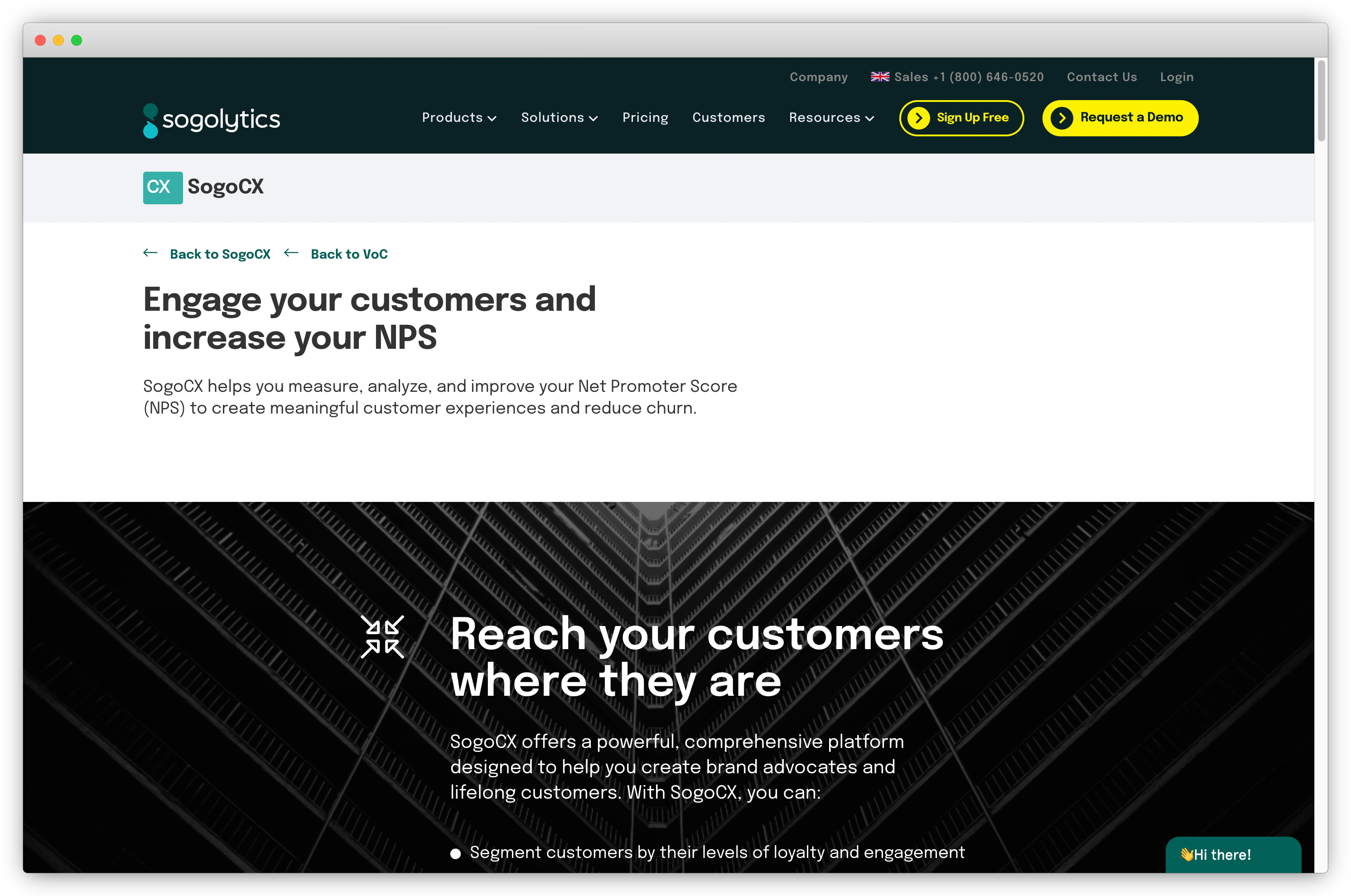
How Sogolytics Compares to Alchemer
Alchemer and Sogolytics overlap considerably in survey logic and customization. Where they diverge is in who each platform is optimized for.
Alchemer is built for flexibility-first users who are willing to configure their way to the right outcome. Sogolytics is built for compliance-first organizations that need predictability, security governance, and reporting that's ready to share with leadership without post-processing.
For regulated industries—healthcare, financial services, education, nonprofits—Sogolytics is often the better operational fit. Its data handling, access controls, and stakeholder-ready exports are designed for environments where auditability matters as much as analytical depth. Teams that found Alchemer's configurability more liability than asset tend to find Sogolytics easier to manage at the organizational level.
Key Features of Sogolytics
- Advanced survey logic and question branching
- Secure data collection and storage
- Role-based access and permissions
- Custom dashboards and compliance-ready reports
- Multi-language survey support
- Offline survey capabilities
- Data export and sharing tools
- Compliance-ready configurations
Sogolytics Pros
- Strong focus on data security and compliance
- Stakeholder-ready reporting without manual cleanup
- Easier to govern than highly configurable platforms like Alchemer
- Scales well for mid-sized regulated organizations
Sogolytics Cons
- Less modern UX than conversational survey platforms
- Limited CX-specific action workflows
- Lower customization ceiling than Alchemer
Sogolytics Pricing
- Starts at $39/month
- Free version available with basic features
7. Jotform: Best Alchemer Alternative for Forms, Approvals & Workflow Automation
Jotform is a flexible online form builder designed for fast data collection, internal workflows, and approvals. It's best when the goal is structured intake and workflow routing, not deep survey analytics.
- Best for: Operations teams, HR, finance, education, nonprofits, and businesses that need forms, approvals, and workflow automation.
- Use case: Internal request forms, approvals and routing, registrations, applications, payments, consent forms, and operational data collection.
- G2 Rating: 4.7/5 on G2
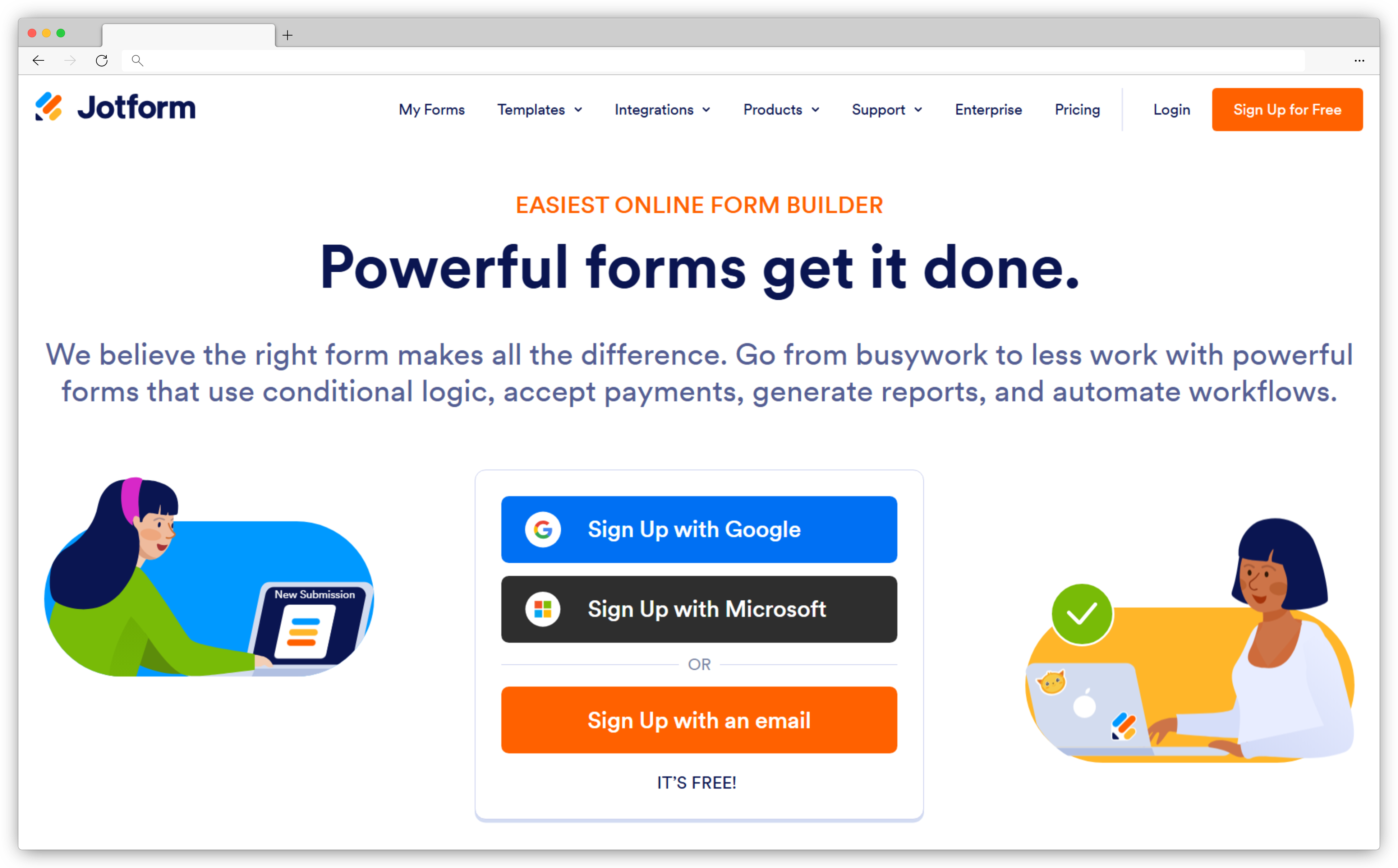
How Jotform Compares to Alchemer
Many teams use Alchemer not for surveys at all, but to collect structured data and route internal requests. If that describes your use case, Jotform will likely serve you better—at a lower price and with far less setup friction.
Jotform's native approval workflows, payment collection, e-signature support, and conditional routing are built specifically for operational use cases. Alchemer can approximate these with configuration; Jotform ships with them. The form creation experience is also faster—teams report building production-ready forms in minutes rather than hours.
Jotform is not a CX measurement or analytics platform. If you need NPS, CSAT, or research-grade reporting, it's not the right tool. But for the subset of Alchemer users who are primarily using it as a form and workflow tool, Jotform is a more efficient and cost-effective replacement.
Key Features of Jotform
- Drag-and-drop form builder with 10,000+ templates
- Conditional logic and smart fields
- Approval workflows and multi-step routing
- Payment and e-signature support
- File uploads and data storage
- Integrations with CRM and productivity tools
- Custom branding and white-label options
- Mobile-friendly and offline forms
Jotform Pros
- Fastest form creation and deployment in this category
- Native approvals, payments, and signatures—no configuration required
- Minimal learning curve for non-technical users
- Broad integration ecosystem
- Highest G2 rating (4.7) among alternatives in this list
Jotform Cons
- Not designed for deep survey analytics or research
- No CX metrics like NPS or CSAT
- Reporting is basic compared to survey-focused platforms
Jotform Pricing
- Starts at $34/month
- Free version available with basic features
8. Google Forms: Best Free Alchemer Alternative for Simple Internal Surveys
Google Forms is a free, web-based survey and form tool designed for quick data collection. It's ideal for basic surveys and internal questionnaires with minimal setup.
- Best for: Small teams, educators, startups, and organizations that need simple surveys without cost or complexity.
- Use case: Internal feedback, event registrations, quick polls, classroom surveys, onboarding forms, and basic data collection.
- G2 Rating: 4.6/5 on G2
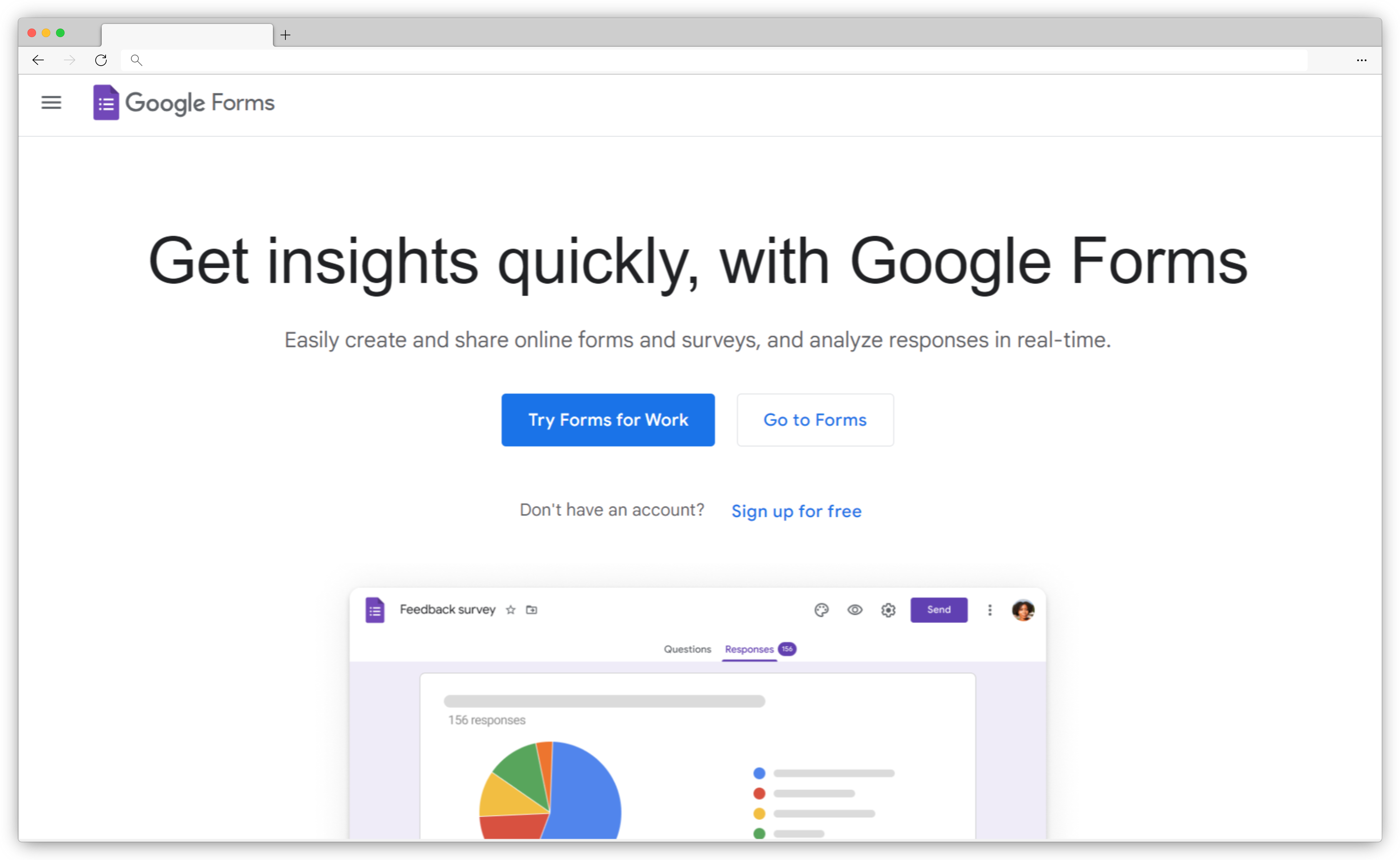
How Google Forms Compares to Alchemer
Google Forms is not a like-for-like Alchemer replacement—it's a free alternative for teams that were using only a fraction of what Alchemer offered, and were paying for capabilities they didn't need.
If you're running internal surveys, event sign-ups, quick employee polls, or simple data collection where response volume doesn't matter and CX metrics aren't required, Google Forms covers that ground at zero cost. Surveys are live in minutes, responses flow into Google Sheets automatically, and everyone on the team already knows how to use it.
The ceiling is low. No advanced logic, no CX metrics, no workflows, no meaningful reporting beyond basic charts. But for the use case it's designed for, no tool on this list beats the combination of speed, accessibility, and cost.
Key Features of Google Forms
- Free survey and form builder
- Real-time response collection
- Automatic data sync with Google Sheets
- Basic logic and validation
- Multiple question types
- Easy sharing via link or email
- Collaboration with Google Workspace users
- Mobile-friendly forms
Google Forms Pros
- Completely free to use
- Extremely fast and easy to set up
- Familiar interface—no onboarding required
- Seamless Google Workspace integration
- No user or response limits for most use cases
Google Forms Cons
- Very limited logic and customization
- No CX metrics like NPS or CSAT
- Basic reporting and analytics only
- No workflows or automation
- Not suitable for customer-facing or enterprise feedback programs
Google Forms Pricing
- Free—included with all Google accounts and Google Workspace plans
9. LimeSurvey: Best Open-Source & Self-Hosted Alchemer Alternative for Full Data Control
LimeSurvey is an open-source survey platform that can be fully self-hosted. It's built for organizations that need complete control over survey infrastructure, data residency, and compliance—something Alchemer's cloud-only architecture can't provide.
- Best for: Government organizations, academic institutions, regulated industries, and teams that require on-premise or private cloud survey deployment.
- Use case: Compliance-driven surveys, academic research, government data collection, sensitive internal surveys, and long-term research studies.
- G2 Rating: 4.1/5 on G2
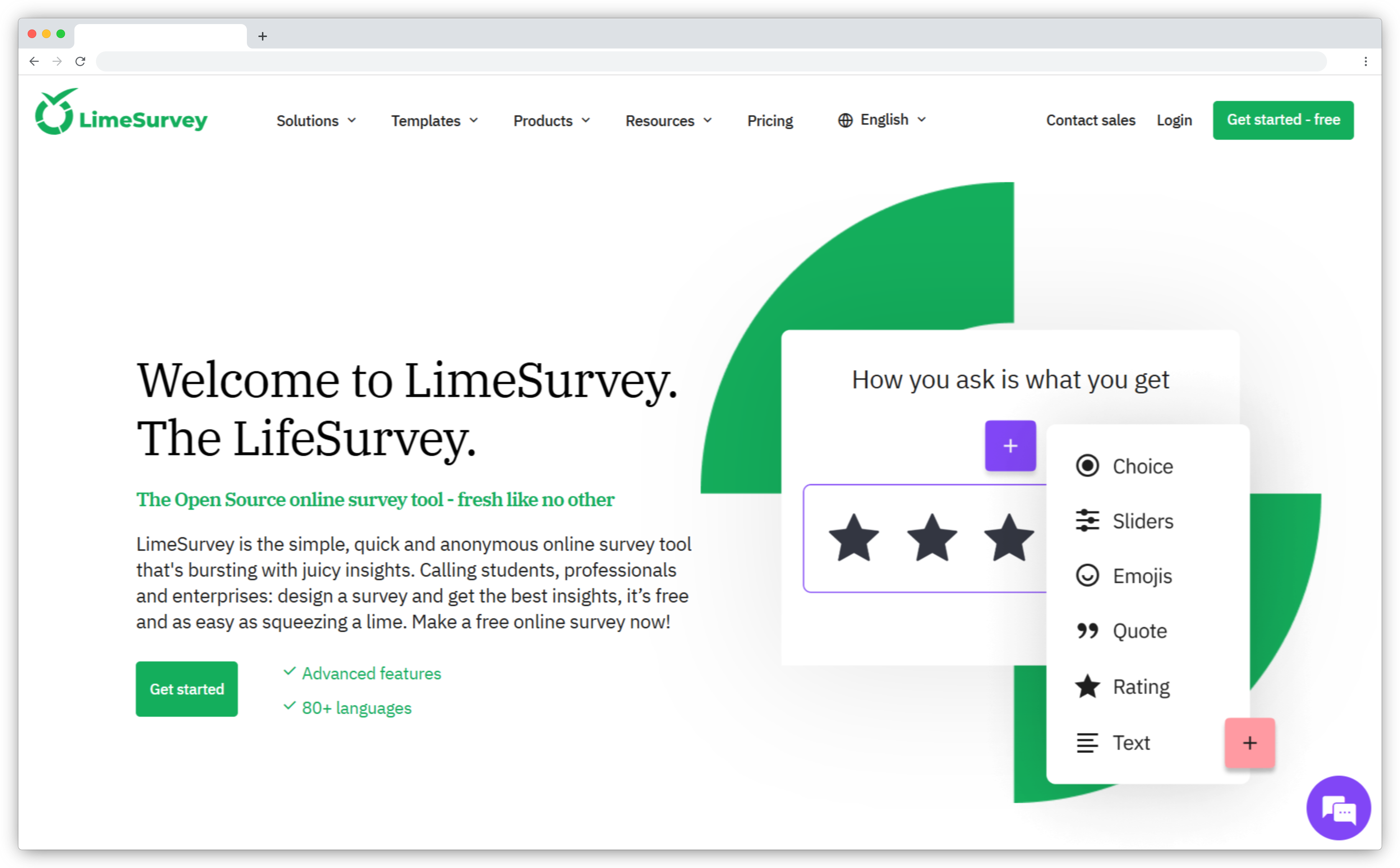
How LimeSurvey Compares to Alchemer
Alchemer runs on Alchemer's infrastructure. For organizations in regulated sectors with strict data residency policies—many government agencies, healthcare institutions, and financial services firms—that's a hard stop. LimeSurvey is the most established open-source solution for these teams.
Self-hosting means full control: your servers, your data, your security configuration. Teams can also modify the platform code directly, integrate with internal systems, and build survey workflows that comply with local data regulations without relying on vendor certifications.
The tradeoff is operational overhead. LimeSurvey requires technical resources to install, maintain, and update. The UI is less polished than commercial alternatives. There are no built-in CX workflows or AI features. But for organizations where data sovereignty is non-negotiable and the alternative is not having a survey platform at all, LimeSurvey fills a genuine gap.
Key Features of LimeSurvey
- Open-source survey platform—fully customizable
- Self-hosted and private cloud deployment options
- Advanced logic and branching
- Multi-language and multilingual surveys
- Extensive question types
- Custom theming and branding
- Role-based access and permissions
- Data export in multiple formats
- API access and extensibility
LimeSurvey Pros
- Full control over data, hosting, and infrastructure
- Open-source—no per-response or usage-based pricing
- Suitable for sensitive, regulated, and government data
- Supports complex surveys and advanced logic
- Ideal for academic and public sector use cases
LimeSurvey Cons
- Requires technical resources to set up and maintain
- UI is less modern than SaaS alternatives
- No built-in CX workflows, alerts, or automation
- Limited out-of-the-box reporting depth
LimeSurvey Pricing
- Free when self-hosted (open-source)
- Paid cloud plans start around $8/month
If Your Goal Is CX Outcomes, Consider Zonka Feedback
Every tool in this list replaces Alchemer for a specific use case: easier surveys, research infrastructure, conversational formats, enterprise XM, self-hosted data control. What most of them don't address is the gap that matters most for CX and customer success teams—what happens after the response comes in.
Zonka Feedback is built for that part.
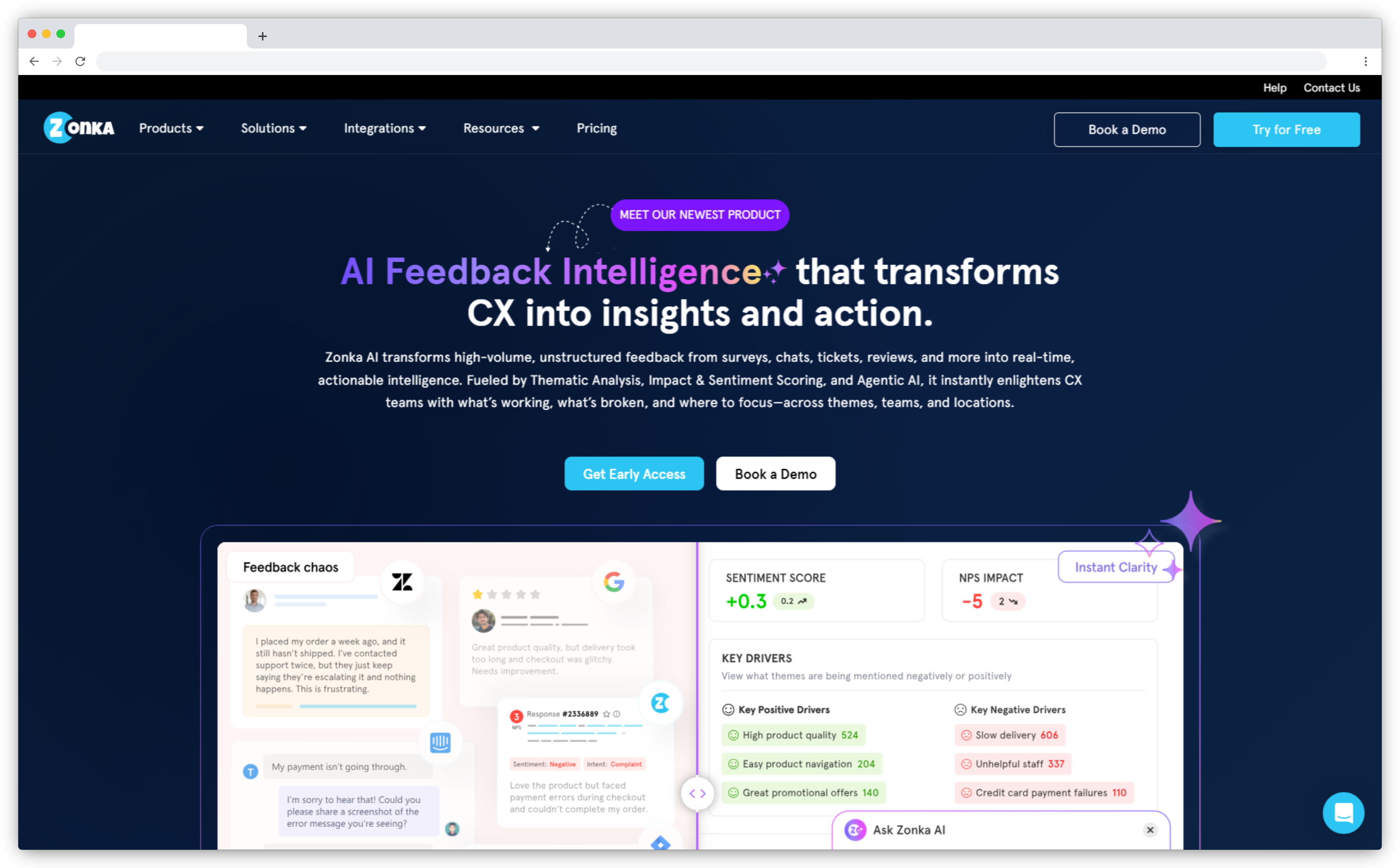
It's designed as a CX feedback operating system, not a survey tool that happens to have some analytics. Teams use it to capture NPS, CSAT, and CES across every touchpoint—email, SMS, web, in-app, QR codes, and offline—and then route those insights to the right people through real-time alerts, automated workflows, and SLA-based escalations. Feedback doesn't sit in a dashboard. It triggers action.
Where Alchemer produces reports, Zonka Feedback produces resolution. Role-based dashboards give CX, product, support, and leadership teams the views they actually need. AI-powered insights surface trends and sentiment patterns without manual analysis. Deep CRM integrations with Salesforce, HubSpot, Zendesk, and Freshdesk ensure feedback connects to the customer records where it belongs.
Zonka Feedback is a strong fit if you're leaving Alchemer because:
- Your feedback program needs closed-loop workflows, not just data collection
- You're running NPS, CSAT, or CES programs and need real-time visibility and escalation
- Your team needs omnichannel collection without complex setup
- You want AI-driven insights without building a separate analytics layer
It's not the right fit if you need academic panel research, a free survey tool, or fully self-hosted infrastructure.
Zonka Feedback Pricing & Rating
-
Custom pricing based on business requirements — free trial available on request
Conclusion
Alchemer is a capable platform, but the combination of pricing complexity, usability friction, and limited CX workflow support has pushed many teams to look elsewhere. The good news: the alternatives available in 2026 cover every use case that Alchemer serves—often better, and at a clearer price point.
The right choice comes down to what you're actually optimizing for. If it's research infrastructure, QuestionPro. If it's enterprise XM governance, Qualtrics. If it's free and simple, Google Forms. If it's data sovereignty, LimeSurvey.
And if you're leaving Alchemer because your feedback program needs to do more than collect and report—if you need real-time alerts, closed-loop workflows, and AI-driven insights that turn responses into action—schedule a demo with Zonka Feedback to see what a CX-first platform looks like in practice.

.png)
.png)