

.svg)
 Healthcare
 Finance
 Retail
 SaaS & Digital
 eCommerce
 Education
 Salesforce
  HubSpot
 Pipedrive
 Mailchimp
 Klaviyo
 Zendesk
  Intercom
 Freshdesk
 HelpScout
  Front
Front Jira
Jira Slack
Slack  MS Teams
 Zoom
Zoom Google Sheets
  Zapier
  Integrately
 Make
Make  Webhooks



 Sign In
 MS Teams



The best VoC tools for insurance in 2026 include Zonka Feedback, Medallia, InMoment, Qualtrics XM, and Calabrio (now Verint). The right choice depends on your use case: real-time claims and renewal feedback programs, enterprise multi-location carrier networks, bridging agent and digital feedback sources, structured compliance-grade VoC research, or contact center speech analytics on claims calls.
TL;DR
- VoC tools for insurance help carriers, brokers, and insurtech teams collect and analyze policyholder feedback at key journey moments, from FNOL and claims processing through renewals and complaint resolution.
- The most effective platforms combine omnichannel feedback collection with sentiment analysis, closed-loop workflow automation, and role-based dashboards that route signals to the right team.
- We evaluated nine platforms against five insurance-specific criteria: insurance analytics depth, omnichannel coverage, real-time alerting, integration with claims and CRM systems, and compliance certifications.
- Most enterprise VoC platforms require three to six months to implement. Mid-market platforms typically deploy in two to four weeks, making them better suited to regional carriers and insurtech teams with limited implementation resources.
- Insurers that collect feedback at FNOL and renewal touchpoints see lower complaint escalation rates and stronger policyholder retention than those that rely on periodic post-claim satisfaction surveys.
Insurance customers form their strongest opinions during claims. J.D. Power consistently finds that claims handling is the most influential driver of policyholder loyalty across P&C insurance, outweighing both premium pricing and coverage terms. Most insurers are collecting feedback, but not at the right moments.
Post-claim surveys sent three to five days after settlement miss the emotional peak of the experience. Feedback collected at FNOL, during claims status updates, and at settlement captures what actually drives a policyholder's decision to renew or leave. This guide covers nine voice of the customer tools for insurance. Each VoC software platform in this list was evaluated against insurance-specific criteria to help carriers, brokers, and insurtech teams collect feedback at the right touchpoints, analyze it at the right level, and route it to the team that can act on it.
Where Insurers Collect VoC Data (and Why Most Miss the Critical Moments)
The policyholder journey has seven feedback moments that matter. Most insurers are listening at only one or two of them.
| Touchpoint | Feedback Signal | Why It Matters | Best Survey Type |
| Quote and Onboarding | Was the process clear? Were coverage terms understood? | Sets policyholder expectations. Low satisfaction here predicts early cancellation. | CSAT or short CES via email |
| FNOL (First Notice of Loss) | Was reporting the claim easy? Did the policyholder feel heard? | The highest-stakes feedback moment. Negative FNOL experience is the primary driver of churn decisions. | CES via SMS within two hours of FNOL |
| Claims Status Updates | Is the policyholder receiving timely, clear communication? | Lack of status visibility drives inbound complaint call volume. Feedback here identifies communication gaps before they escalate. | CSAT via SMS or email after each update |
| Claims Settlement | Was the outcome fair? Was the payment explained clearly? | Settlement experience determines renewal intent, customer loyalty, and likelihood to recommend. | NPS via email within 24 hours of settlement |
| Agent Interaction | How did the claims adjuster or service agent perform? | Agent-level data drives individual coaching and team performance benchmarking. | Post interaction surveys via CSAT |
| Renewal Window | Would the policyholder recommend the insurer? Do they plan to renew? | Renewal window feedback collected 30 to 60 days before renewal gives time to intervene with at-risk policyholders. | NPS via email |
| Complaint Resolution | Was the complaint resolved to satisfaction? | Complaint handling feedback identifies systemic issues and regulatory risk areas. | CSAT via email or follow-up survey |
Most VoC tools can deploy surveys at some of these touchpoints. The difference lies in whether they can trigger those surveys from claims system events rather than fixed schedules, route the resulting signals to the right team automatically, and connect individual feedback to specific agents, branches, or policy types.
For insurers building a feedback program across these moments, starting with FNOL and renewal touchpoints typically delivers the highest retention impact. These are the two moments that most directly predict whether a policyholder renews or leaves.
Insurers that want a deeper look at how to apply these touchpoints in practice can explore the voice of customer best practices for insurance carriers guide.
What to Look for in a VoC Tool for Insurance
General-purpose survey tools can capture policyholder feedback, but they don't handle the data complexity, compliance requirements, or journey-specific triggers that insurance feedback programs require. These are the five criteria we used to evaluate each platform in this guide.
1. Insurance-specific analytics
The platform should detect claims themes, identify agent responsiveness issues, and surface renewal churn signals. Generic sentiment scores aren't sufficient for insurance. Advanced analytics that map to specific claims and policy touchpoints are what separates insurance-ready VoC tools from general-purpose platforms. You need a platform that tells you whether complaint volume around claims delays is increasing, which agent or branch has the lowest customer satisfaction scores, and what specific aspects of FNOL are driving detractor responses.
2. Omnichannel feedback coverage
Insurance policyholders interact across email, SMS, phone, in-app, web, and branch channels. The platform should support customer surveys across all of these channels without requiring separate tools for each one. Single-channel VoC programs miss large portions of the policyholder base by design.
3. Real-time alerting and closed-loop workflows
When a policyholder gives a low CES score after FNOL, someone needs to respond within hours. The platform should support automated alerts to specific team members based on score thresholds and response content. Closed-loop tools that let teams assign, track, and resolve feedback issues reduce the time from signal to action.
4. Integration depth
Insurance teams run multiple systems including claims management platforms (Guidewire, Duck Creek), CRM systems (Salesforce, HubSpot), and helpdesk tools (Zendesk, ServiceNow). The VoC platform should connect to these systems so that survey triggers fire from claims events, CRM data syncs back to the policyholder record, and response data flows into your existing systems without manual export.
5. Compliance and data handling
The platform should be SOC 2 certified at minimum. For health insurance teams, HIPAA compliance is a firm requirement. European carriers and their data processors need GDPR-compliant handling and regional data residency options. For a full breakdown of the voice of customer metrics and KPIs to track across each of these criteria, see the VoC metrics guide.
Zonka Feedback is our platform and appears first in the list below. We included eight alternatives because the right tool depends on your team's size, channel mix, and existing systems.
Why Listen to Us
Zonka Feedback works with insurance organizations including SPB Benelux, part of SPB Group and the European leader in affinity insurance, which manages feedback across 40 million policyholders and more than 611,000 annual claims. We also work with CAC Specialty, a top-40 U.S. insurance broker operating across specialty risk and commercial lines. We evaluated each VoC solution in this guide against the five criteria above. Zonka Feedback leads this list because it is our product. We've included eight alternatives because the best VoC platform for insurance depends on your team's size, channel mix, and current systems.
Quick Comparison: 9 Best VoC Tools for Insurance (2026)
Here is a side-by-side overview of the nine platforms in this guide.
| Tool | Best For | Key Insurance Feature | Starting Price | G2 Rating |
| Zonka Feedback | Mid-market carriers and insurtech teams | FNOL-triggered surveys, real-time claims alerts | Custom | 4.8/5 |
| Medallia | Enterprise carriers and multi-location networks | Athena AI, multi-location benchmarking | Custom | 4.5/5 |
| InMoment | Mid-to-large insurers with multi-channel programs | Conversational AI surveys, predictive analytics | Custom | 4.7/5 |
| Qualtrics XM | Large carriers with structured VoC research programs | Complex survey logic, Text iQ analysis | Custom | 4.3/5 |
| SentiSum | Teams with high complaint and ticket volumes | Root cause detection from unstructured text | From $3,000/month | 4.8/5 |
| CustomerGauge | Commercial lines brokers and MGA teams | Account-level NPS, revenue attribution | Custom | 4.6/5 |
| Calabrio (now Verint) | Insurance contact centers and claims operations | Speech analytics on claims calls | Custom | 4.5/5 |
| Sprinklr | Large carriers managing digital reputation | Social listening across 30+ channels | Contact sales | 4.3/5 |
| Thematic | Teams analyzing large open-text feedback volumes | AI theme detection, custom insurance taxonomy | From $25,000/year | 4.8/5 |
All pricing is approximate. Verify current tiers from each vendor's official pricing page before purchase.
Enterprise platforms in this list (Medallia, Qualtrics XM, InMoment) typically require three to six months to implement. Mid-market platforms (Zonka Feedback, SentiSum, CustomerGauge, Thematic) generally deploy in two to six weeks, depending on integration scope. For a broader comparison covering VoC tools used across retail, SaaS, and healthcare, see the best voice of customer tools guide.
1. Zonka Feedback: Best for Mid-Market and Regional Insurers
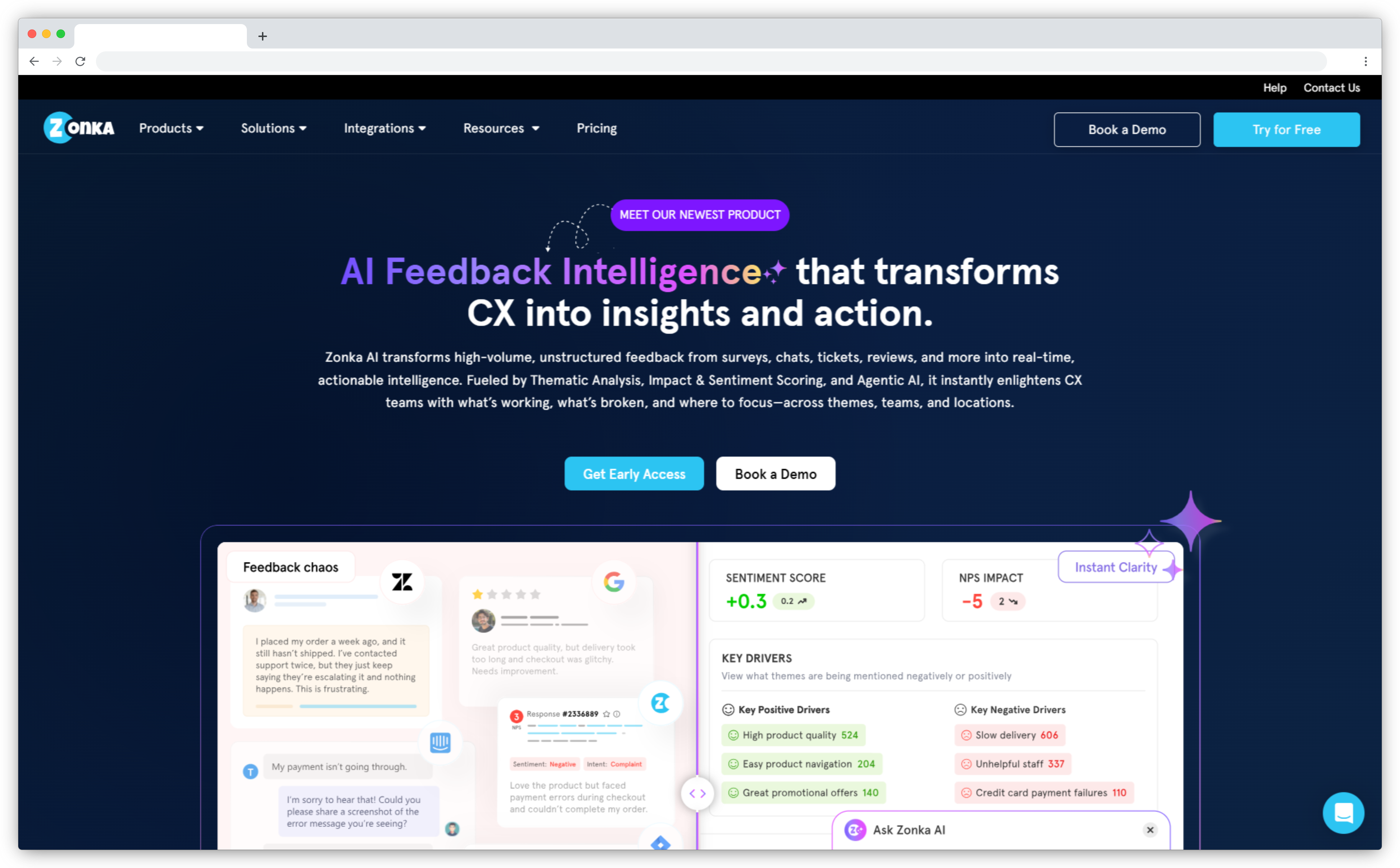
Zonka Feedback is an AI customer feedback and intelligence platform that combines omnichannel survey collection with a unified feedback analytics layer. For insurance teams, it supports survey deployment across email, SMS, WhatsApp, in-app, web widgets, kiosk, and offline channels from a single platform.
Key insurance capabilities:
- FNOL trigger surveys via SMS and email, deployed within minutes of claim registration using webhook-based integration with claims management systems
- Real-time alerts to claims managers and regional leads when policyholder CES or CSAT scores drop below defined thresholds
- <Renewal window tracking through net promoter score software, with automated 30-day and 60-day survey sequences for at-risk policyholders
- AI Feedback Intelligence layer for theme detection and sentiment analysis across open-ended claims responses and support feedback
- Role-based dashboards that show each team member the signals relevant to their scope, from individual agent scores to branch-level and portfolio-wide trends
Insurance teams using Zonka Feedback include SPB Benelux, which manages feedback across 40 million policyholders and more than 611,000 annual claims as part of SPB Group's affinity insurance operations across Europe.
Not ideal for: Contact center teams that need call recording, speech analytics, or claims call transcription. Zonka Feedback is a survey and intelligence platform, not a contact center QA tool.
Pricing: Custom. Contact Zonka Feedback for current pricing at zonkafeedback.com/pricing.
G2 Rating: 4.8/5 (80 reviews)
Best for: Mid-market and regional carriers, insurtech teams, and insurance organizations running multi-channel policyholder feedback programs. Teams can be live in under a week without implementation consulting.
To design the right questions for each claims and renewal touchpoint, see the guide to VoC survey questions for insurance companies. For context on how a voice of customer platform for collecting policyholder feedback fits into a broader VoC program structure, see the full VoC overview.
2. Medallia: Best for Enterprise Carriers and Multi-Location Networks
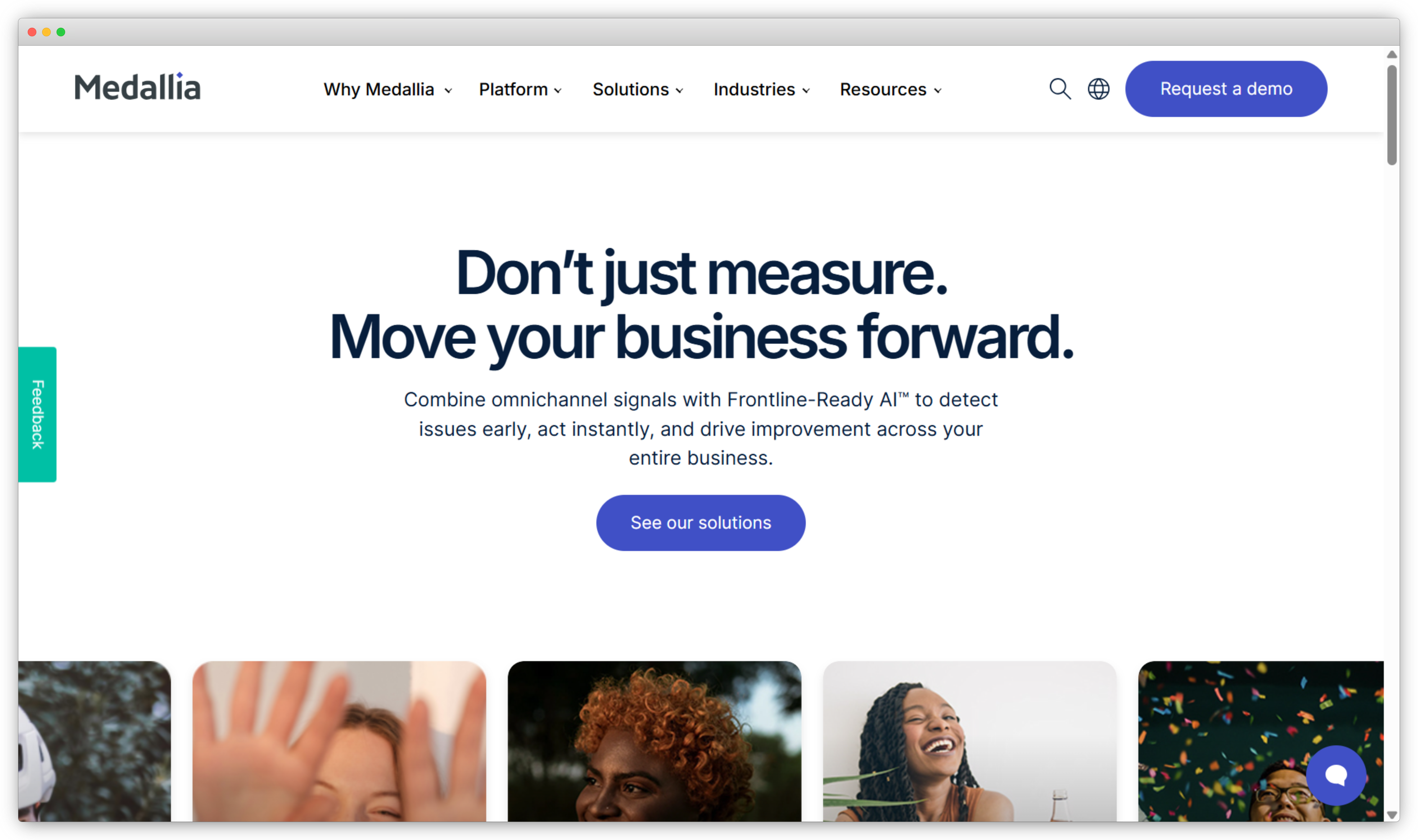
Medallia is an enterprise customer experience platform used by large carriers and financial services organizations across multiple countries and product lines. Its Athena AI engine processes feedback in real time, identifying emerging signals and routing them to the appropriate team before issues escalate.
Key insurance capabilities:
- Real-time signal detection across claims, renewals, agent interactions, and digital channels
- Multi-location benchmarking that lets regional and enterprise carriers compare NPS and CSAT performance across branches, adjusters, and product lines
- Agent-level NPS and CSAT tracking with automated performance reporting for claims and service teams
- Integration capabilities with Guidewire, Salesforce, and other enterprise claims and CRM platforms via API
Not ideal for: Organizations with fewer than 500 monthly survey responses, or teams without dedicated implementation resources. Medallia deployments typically take three to six months and require internal project ownership. Regional carriers and insurtech teams usually find the platform too complex and costly for their scale.
Pricing: Custom. Contracts typically start at $50,000 per year for mid-enterprise deployments. Contact Medallia for current pricing.
G2 Rating: 4.5/5 (199 reviews)
Best for: Large P&C carriers, multi-line enterprise insurers, and organizations that need VoC data connected across hundreds of locations and thousands of agents.
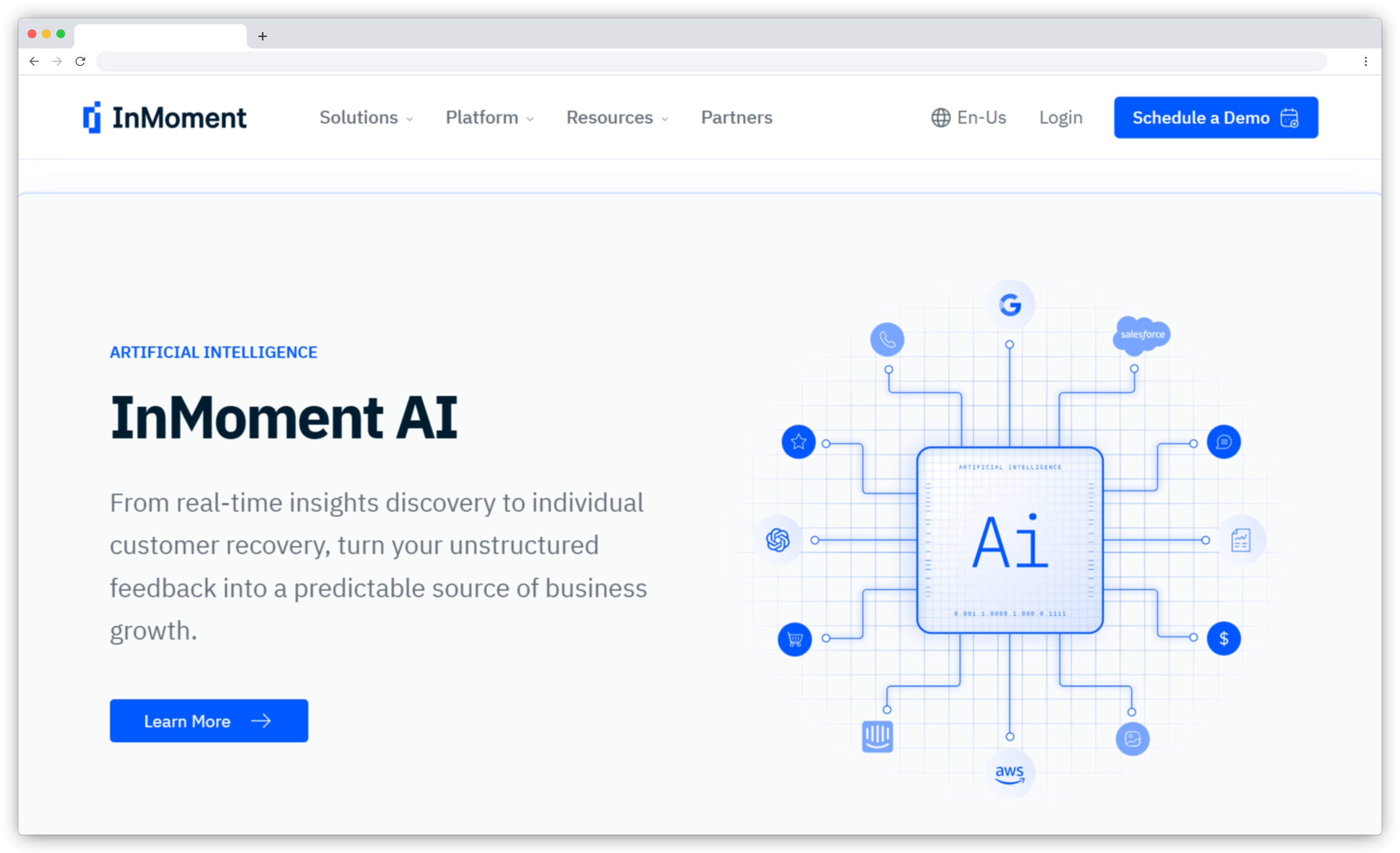
3. InMoment: Best for Insurers Bridging Agent and Digital Feedback
InMoment is an experience intelligence platform that combines structured survey data with unstructured signals from support tickets, reviews, chat transcripts, and call logs. For insurance teams, it connects agent interaction data with policyholder survey responses to build a more complete picture of each customer relationship.
Key insurance capabilities:
- Conversational AI surveys that adapt in real time based on policyholder responses, which improves data quality in complex feedback situations such as claims disputes
- Unified view of survey data alongside support tickets, digital reviews, and chat transcripts
- Branch and agent-level performance dashboards for multi-location carrier networks
- Predictive analytics that identify policyholders showing early signs of non-renewal based on declining satisfaction trends across multiple touchpoints
Not ideal for: Teams that need standalone contact center speech analytics or call recording as a primary capability. InMoment's core strength is connecting structured and unstructured feedback sources. It is not a dedicated contact center QA platform.
Pricing: Custom. Contact InMoment for current tiers. Implementation typically takes three to four months.
G2 Rating: 4.7/5 (319 reviews)
Best for: Mid-to-large insurers with multi-channel CX programs, and digital-first insurtech organizations that need to connect policyholder survey data with operational feedback sources.
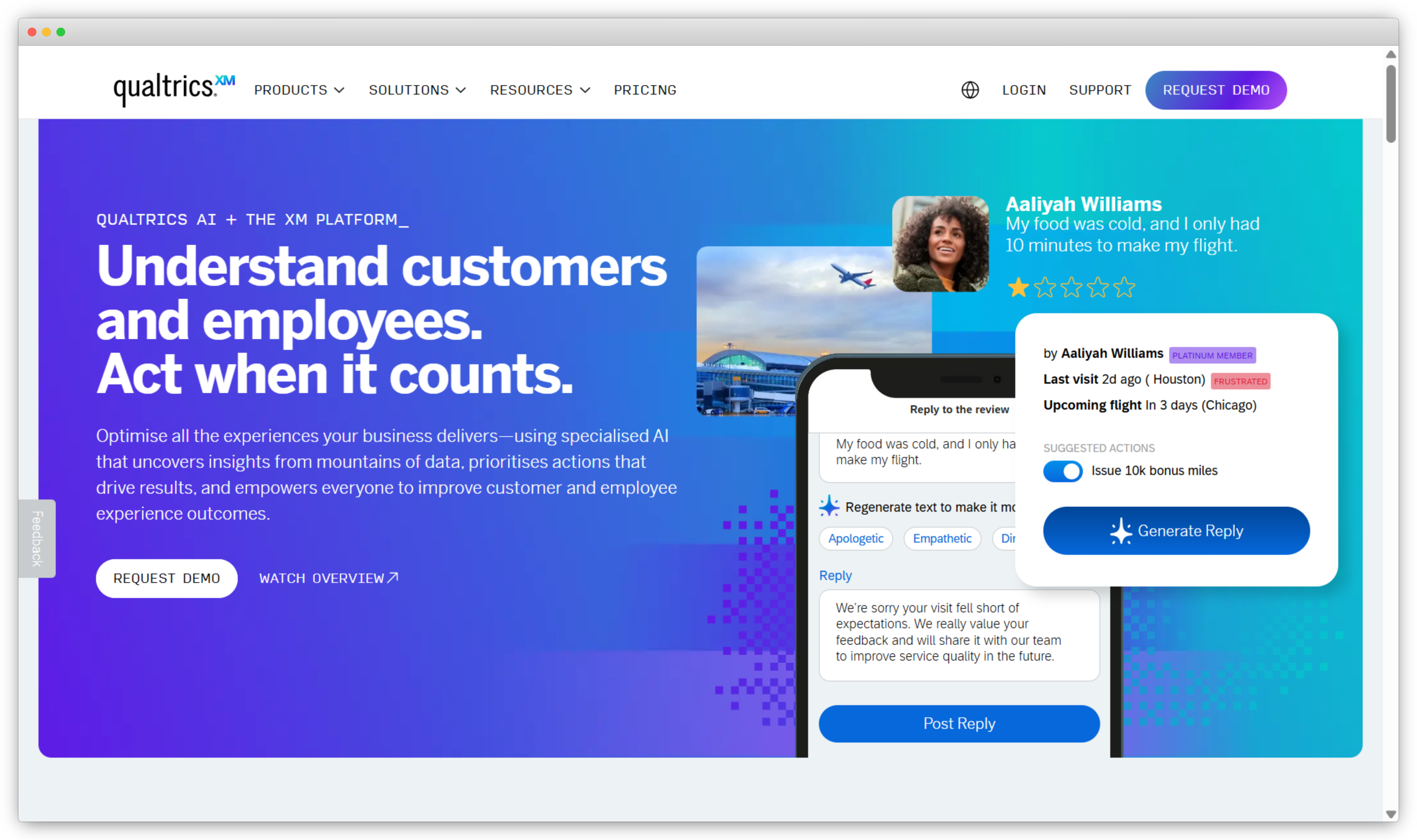
4. Qualtrics XM: Best for Structured VoC Research Programs
Qualtrics XM is a research-grade VoC platform built for organizations that run structured, compliance-grade feedback programs with complex survey logic and formal governance requirements. It's used by large carriers and reinsurers that treat VoC as a dedicated research function rather than an operational feedback program.
Key insurance capabilities:
- Advanced survey logic and branching for multi-step claims surveys, onboarding assessments, and post-complaint follow-up studies
- Text iQ for automated theme extraction from open-ended claims responses and complaint data
- Data governance and access controls suitable for GDPR and HIPAA compliance requirements
- Native integration with Salesforce, Zendesk, Guidewire, and other enterprise platforms via API and connector library
Not ideal for: Teams without a dedicated CX research or analytics function. Qualtrics XM has a steep learning curve and requires significant configuration. Real-world deployments for enterprise insurance programs typically take six months or more. It is not suited for teams that need to deploy a working feedback program quickly.
Pricing: Custom. Enterprise contracts typically start in the six-figure range annually. Contact Qualtrics for current pricing.
G2 Rating: 4.3/5 (747 reviews)
Best for: Large carriers, reinsurers, and insurance holding companies with formal VoC research programs, compliance reporting requirements, and dedicated CX analytics teams.
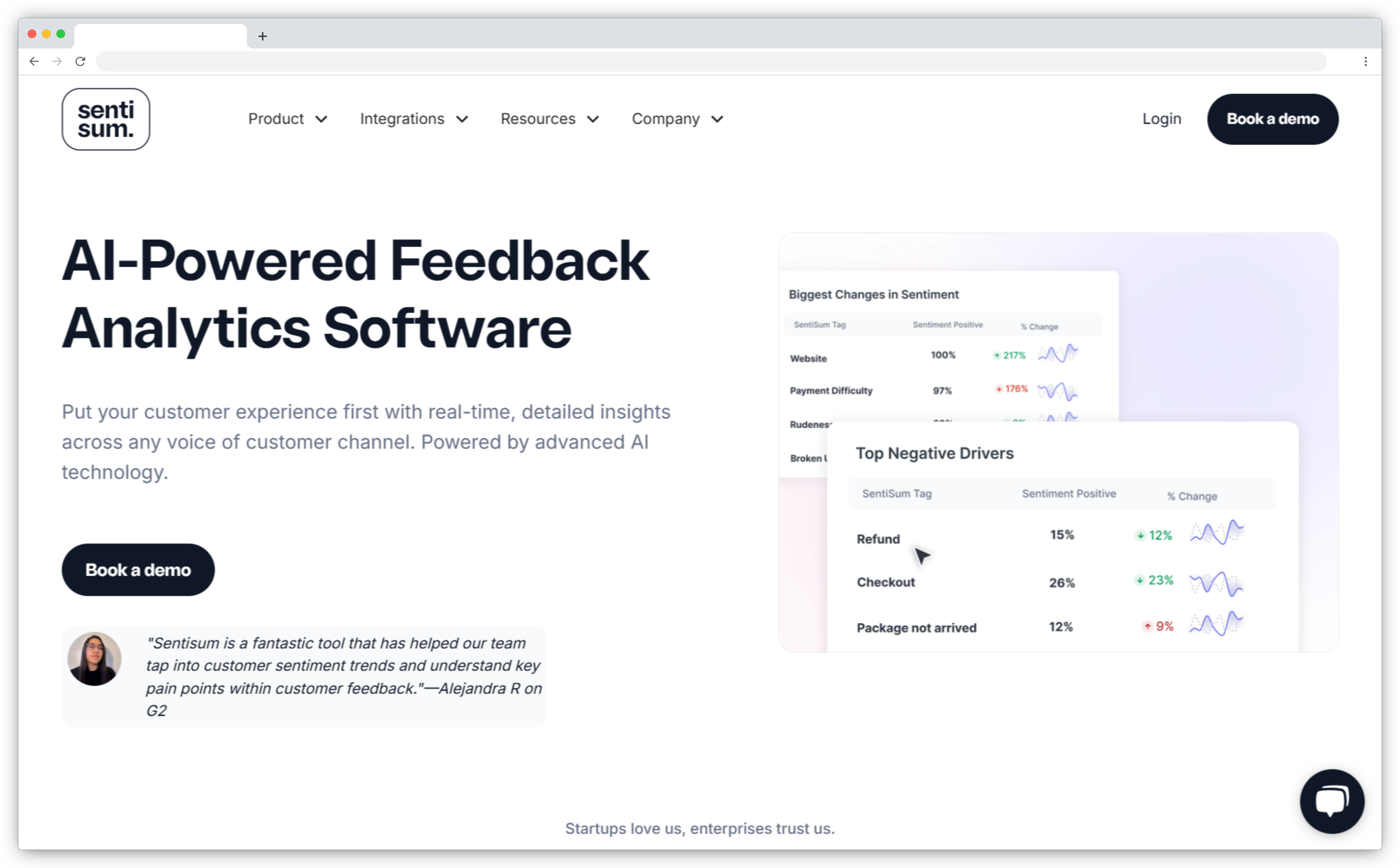
5. SentiSum: Best for Teams with High Complaint and Ticket Volumes
SentiSum is an AI-native text analysis platform that processes unstructured feedback from support tickets, complaint logs, chat transcripts, and open-ended survey responses. For insurance teams, it is most valuable for identifying root causes within large volumes of claims complaints and service tickets without manual tagging or categorization.
Key insurance capabilities:
- Automated root cause detection across customer complaints and insurance complaint categories including claims delays, coverage disputes, pricing objections, and agent communication issues
- Real-time spike alerts when complaint volume in a specific category increases beyond normal thresholds
- Unified view of unstructured feedback from support platforms, survey tools, and review sites
- Theme-level trend analysis that shows how complaint patterns shift over time and across policyholder segments
Not ideal for: Teams whose primary feedback source is structured survey data, or organizations building a VoC program from scratch. SentiSum is built for unstructured text analysis. Teams without an existing pipeline of complaint or ticket data will need a survey platform either alongside it or instead of it.
Pricing: Pro from $3,000/month. Enterprise pricing on request. Verify current tiers at sentisum.com.
G2 Rating: 4.8/5 (14 reviews)
Best for: Insurance CX and support teams with high volumes of complaints, open-text survey responses, and support tickets that need structured analysis at scale.
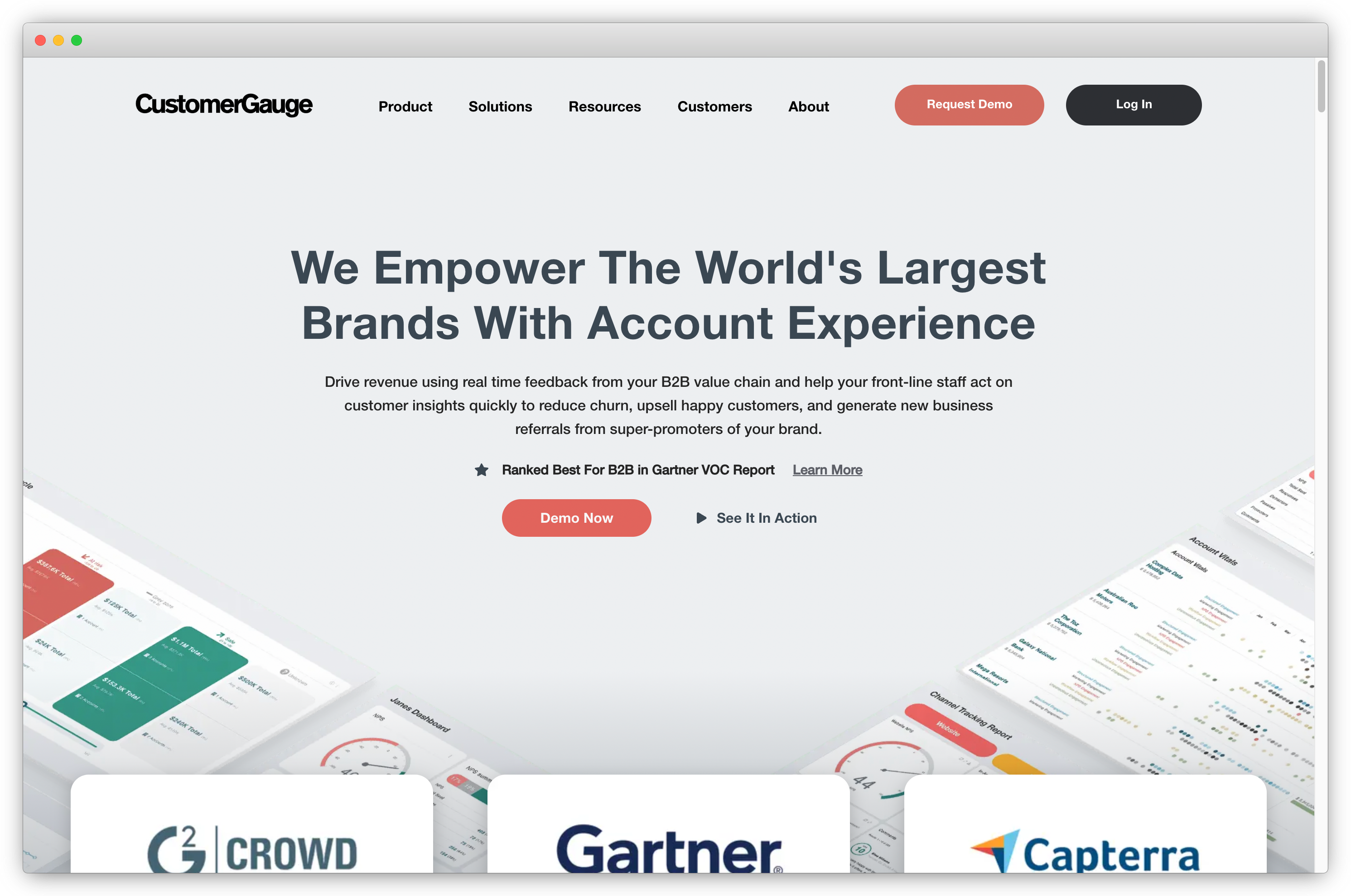
6. CustomerGauge: Best for Commercial Lines Brokers and MGA Teams
CustomerGauge is a B2B NPS platform built for account-level relationship management. In an insurance context, it is best suited for commercial lines carriers, wholesale brokers, and MGA teams that manage NPS and retention at the broker or agent account level rather than at the individual policyholder level.
Key insurance capabilities:
- Account-level NPS tracking that connects policyholder satisfaction scores to revenue data at the broker or agent account level
- Revenue attribution linking NPS score trends to renewal rates and churn risk for specific accounts
- Automated NPS workflows for broker touchpoints including quarterly relationship reviews, renewal conversations, and post-incident follow-ups
- Churn prediction based on account-level score trends across the broker relationship lifecycle
Not ideal for: Direct-to-consumer insurance teams focused on policyholder CSAT and high-volume journey-based feedback collection. CustomerGauge is built for B2B account management. Its omnichannel survey collection capability is limited compared to platforms designed for policyholder-facing programs.
Pricing: No public pricing. Contact CustomerGauge for a current quote.
G2 Rating: 4.6/5 (50 reviews)
Best for: Commercial lines carriers, wholesale brokers, and MGA teams managing NPS across broker and agent account portfolios.
7. Calabrio (Now Part of Verint): Best for Insurance Contact Centers and Claims Operations
Calabrio was an independent workforce management and contact center VoC analytics platform. In February 2026, the combined Calabrio and Verint organization announced it would operate under the Verint corporate name, with the Calabrio product line continuing within the Verint CX Automation Platform. Existing Calabrio customers are not required to migrate.
Key insurance capabilities:
- Speech analytics on claims calls that detect policyholder sentiment, flag compliance risks, and score agent performance based on actual call content
- Quality management scoring for claims adjusters and customer service agents
- Automated flagging of calls where policyholders express escalation intent, frustration with claims delays, or dissatisfaction with settlement outcomes
- Contact center workforce management integrated with VoC data for coaching, scheduling, and performance management
Not ideal for: Insurance teams looking for a standalone survey platform or omnichannel policyholder feedback tool. Calabrio's capabilities are focused on the contact center environment. It does not replace a policyholder survey or digital journey feedback program.
Pricing: Custom. Contact Verint for current Calabrio product tiers and pricing.
G2 Rating: 4.5/5 (340 reviews, Calabrio ONE)
Best for: Insurance contact centers, claims operations teams, and quality assurance teams that need speech analytics and agent performance monitoring at scale.
8. Sprinklr: Best for Large Carriers Managing Digital Reputation
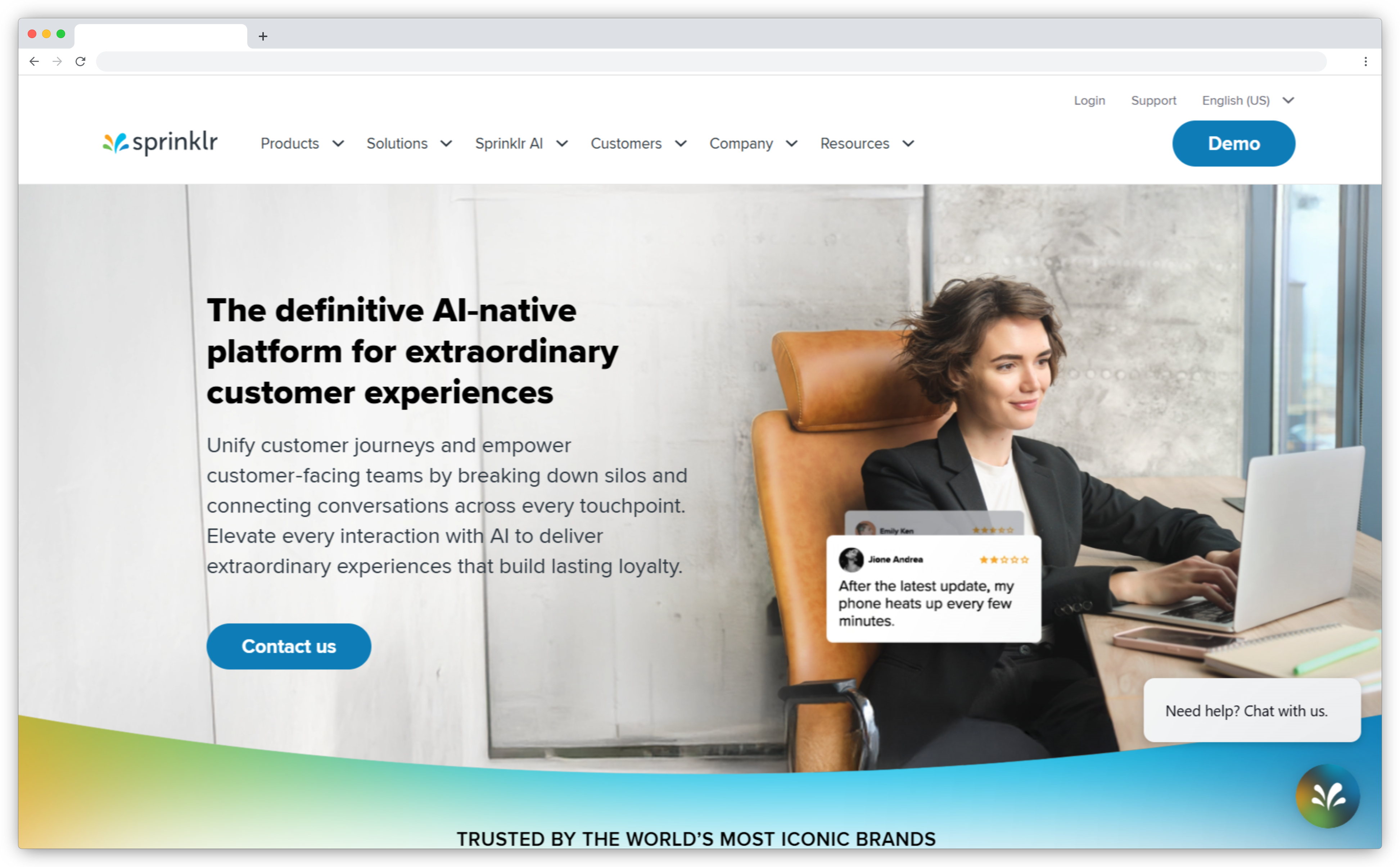
Sprinklr is an enterprise CXM platform that unifies social listening, digital channel management, and contact center operations. For insurance teams, its primary value is monitoring and managing the carrier's reputation across review platforms, social channels, and online complaint forums.
Key insurance capabilities:
- Social media monitoring for insurance brand mentions, complaint trends, and reputation events across 30+ digital channels
- Review monitoring and sentiment analysis across review platforms, social media, news mentions, and messaging apps
- Unified case management for complaints sourced from digital channels
- AI-powered anomaly detection that surfaces sudden spikes in negative sentiment, such as complaint surges following claims events or policy changes
Not ideal for: Insurers looking for a primary policyholder survey platform or claims-specific feedback tool. Sprinklr's strength is breadth across digital channels rather than insurance-specific analytics depth. Implementation is complex and requires dedicated technical and operations resources.
Pricing: Sprinklr does not publish pricing publicly. The entry-level Sprinklr Service tier has been cited at approximately $4,200 per user per year in third-party sources. Verify current pricing from sprinklr.com before purchase.
G2 Rating: 4.3/5 (733 reviews)
Best for: Large carriers with significant social media presence, high digital complaint volumes, and dedicated teams managing brand reputation across multiple channels.
9. Thematic: Best for Analyzing Large Volumes of Open-Text Feedback
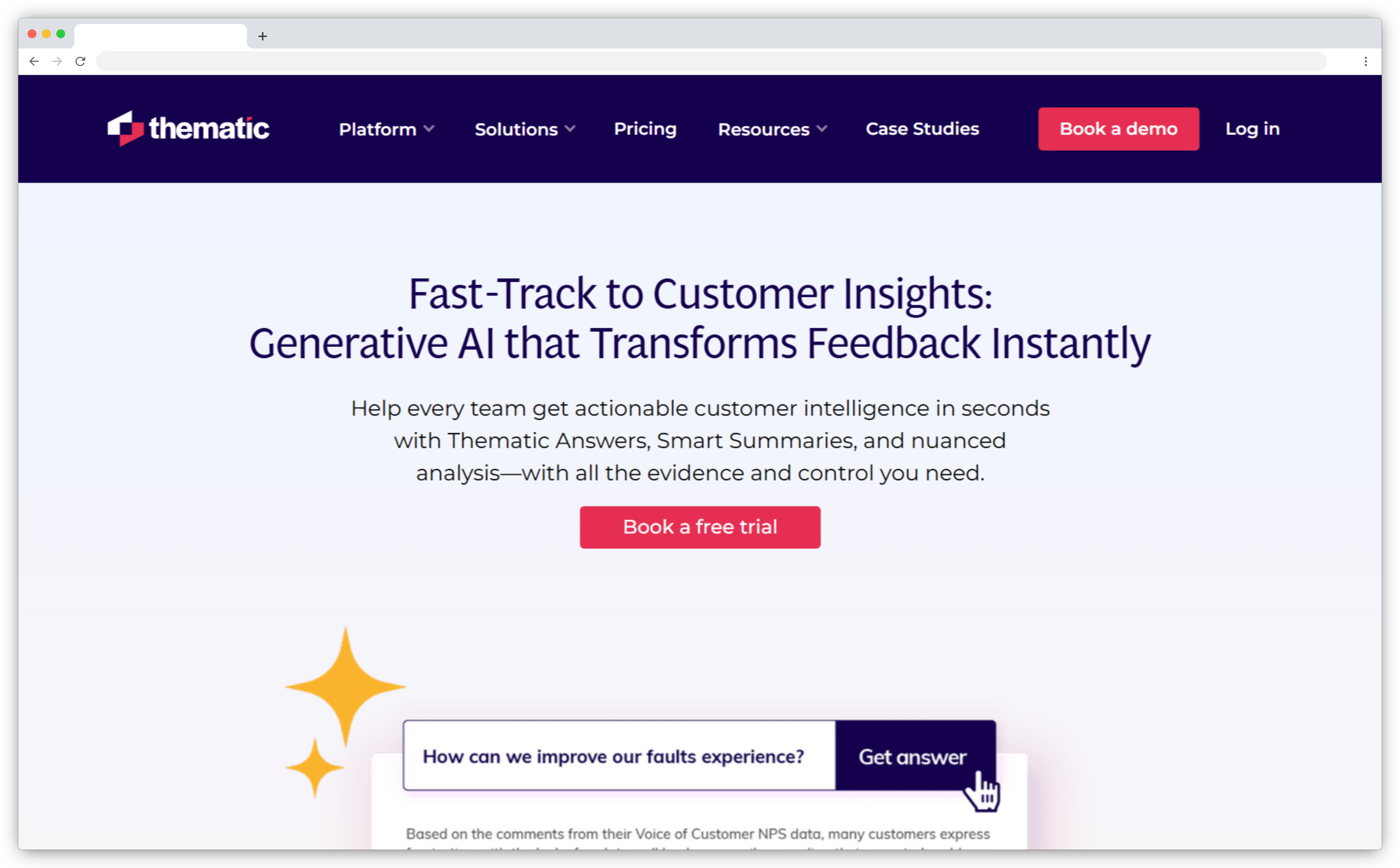
Thematic is an AI theme analysis platform that extracts patterns from large volumes of open-text feedback. It is not a survey collection platform. For insurance teams, it is most valuable when a large bank of existing feedback data, including complaint logs, NPS verbatims, review exports, and support ticket archives, needs to be structured and analyzed without manual tagging.
Key insurance capabilities:
- AI-powered theme detection from complaint data, open-ended survey responses, and review platform exports
- Side-by-side theme trend comparison across time periods, policyholder segments, and product lines
- Custom taxonomy building for insurance-specific categories including claims handling, pricing, coverage, agent performance, and complaint types
- Integration with survey platforms including Qualtrics and SurveyMonkey, as well as Zendesk and Salesforce
Not ideal for: Teams that need real-time alerting, omnichannel survey collection, or a complete VoC platform from day one. Thematic is an analysis tool for teams that already have a feedback data pipeline and need to make sense of open-text content at scale.
Pricing: From $25,000 per year. Verify current tiers from getthematic.com.
G2 Rating: 4.8/5 (43 reviews)
Best for: Insurers with significant existing open-text feedback, including complaint archives, NPS verbatims, and review data exports, that need structured theme analysis without a manual categorization process.
How to Choose the Right VoC Tool for Your Insurance Team
The right VoC tool depends on three variables: your organization's size, your primary feedback use case, and your current systems environment.
Mid-size and regional carriers
For regional carriers and mid-market insurers, the priority is fast deployment, omnichannel survey coverage across claims touchpoints, and real-time alerting when policyholder satisfaction drops. Customer retention at the regional level depends on catching dissatisfied policyholders before renewal. Enterprise AI is not a day-one requirement. The goal is to deploy FNOL and renewal surveys in weeks and route low-score alerts to the right person automatically. Before selecting a platform, define the listening architecture first. The guide on how to build a voice of customer program for insurance teams walks through that process.
Enterprise carriers and multi-line organizations
For large carriers managing thousands of touchpoints, hundreds of agents, and multiple product lines, the priorities shift to role-based signal routing, entity mapping at branch and agent level, multi-location performance benchmarking, and compliance certification depth.Enterprise survey tools and software are built to surface customer needs across a complex portfolio rather than a single product line. Medallia, InMoment, Qualtrics XM, and Zonka Feedback are built for this scope. Expect longer implementation timelines and higher contract values. Organizations at this scale should have a defined VoC strategy and best practices for CX teams in place before vendor selection begins.
Contact center-heavy insurers
For insurers where the majority of policyholder interactions happen over the phone, including claims reporting, dispute resolution, and renewal conversations, speech analytics on those calls often delivers more signal than survey data alone. Calabrio, now part of Verint, is built for this use case. Combining a speech analytics tool with a survey platform gives contact-center-heavy insurers coverage across both call and digital touchpoints.
On sequencing
Most insurers should start with a structured claims and renewal survey program before investing in AI-native unstructured feedback analysis. Getting consistent, high-quality structured feedback at the right journey moments builds the baseline that makes advanced text analytics more reliable. Running AI analysis on low-volume or poorly timed survey data produces unreliable results.
Conclusion
Choosing the right VoC tool for insurance comes down to where your feedback currently lives and how quickly your team needs to move from signal to action. Mid-market carriers and regional insurers need fast deployment, real-time alerting, and omnichannel survey coverage across claims touchpoints. Enterprise carriers need entity mapping, compliance depth, and multi-location benchmarking. Contact center-heavy operations need speech analytics on claims calls rather than surveys alone.
The tools in this guide cover each of those use cases. None of them replace the need to define your highest-stakes listening moments, including FNOL, claims status updates, and renewal, before selecting a platform.
Insurers that collect feedback at these specific touchpoints consistently see lower complaint escalation rates and stronger policyholder retention. The platform matters less than the listening architecture behind it.

.png)
.svg)
.png)