

.svg)
 Healthcare
 Finance
 Retail
 SaaS & Digital
 eCommerce
 Education
 Salesforce
  HubSpot
 Pipedrive
 Mailchimp
 Klaviyo
 Zendesk
  Intercom
 Freshdesk
 HelpScout
  Front
Front Jira
Jira Slack
Slack  MS Teams
 Zoom
Zoom Google Sheets
  Zapier
  Integrately
 Make
Make  Webhooks



 Sign In
 MS Teams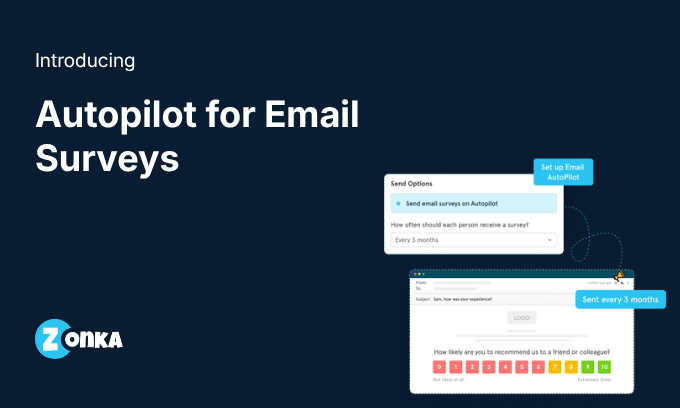



When Delighted announced it was winding down, a lot of those teams came to us. Different industries, different sizes, but almost every conversation circled back to the same request.
They missed being able to set a cadence and walk away. Add your people, decide how often each one should hear from you, and let the system handle the rest. No batches. No Tuesday-afternoon guesswork. It just ran.
They loved that.
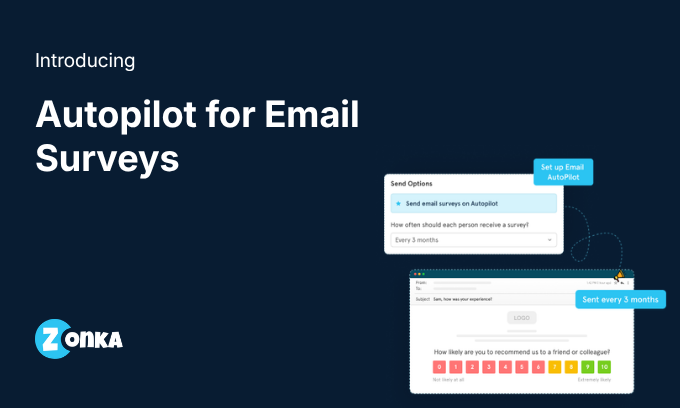
So we built it into Zonka Feedback. We call it Autopilot for email surveys, and it does exactly what those teams asked for. You set who gets surveyed and how often, and it takes the sending from there.
The Roadmap Is Only Half the Story
The roadmap matters a lot for us when building a product feature, but it's rarely the whole story. What customers keep asking for shapes what we build next, and how soon.
That's what happened with Autopilot. It was already on our roadmap, but our customers moved it up the list. Team after team, especially the ones migrating from Delighted, told us they weren't willing to give it up. That's what turned a future feature into a now one.
And it's a good reminder for anyone building product. Innovation isn't always a new thing on a slide. Sometimes it's spotting the workflow people already lean on, and making sure they never have to leave it.
Manual Sending Costs You Twice
Here's what we didn't fully appreciate until those conversations. Doing this by hand doesn't cost you once. It costs you twice. First in the responses you don't get, then in the time your team pours into chasing them.
It's Not the Ask, It's the Timing
Start with the responses. We treat survey fatigue as a frequency problem. It was never that. It's a timing problem. Picture how an email survey usually goes out. Someone exports a list and hits send on a Tuesday afternoon, to everyone at once. Part of it lands at 9pm. A chunk shows up Saturday morning. The week-old customer gets the same survey, on the same day, as the one who's been with you three years.
Nobody planned it that way. It's just what manual sending looks like at scale, and it's bad timing wearing a fatigue costume. You can't fix that by asking less. You fix it by asking better.
The Manual Era Is Quietly Expensive
Then there's your team. Someone owns the spreadsheet. Someone sets the reminders. Someone remembers, or forgets, which segment got surveyed last quarter. Every send is a small decision, and they pile up until your best CX person spends more time scheduling surveys than reading the answers.
That's backwards. The point of collecting feedback is to hear something and act on it. Not to babysit a send calendar.
Set the Cadence, Autopilot Does the Rest
We built Autopilot around a simple split. You make one decision up front, and it handles everything after that.
a. You Set the Cadence
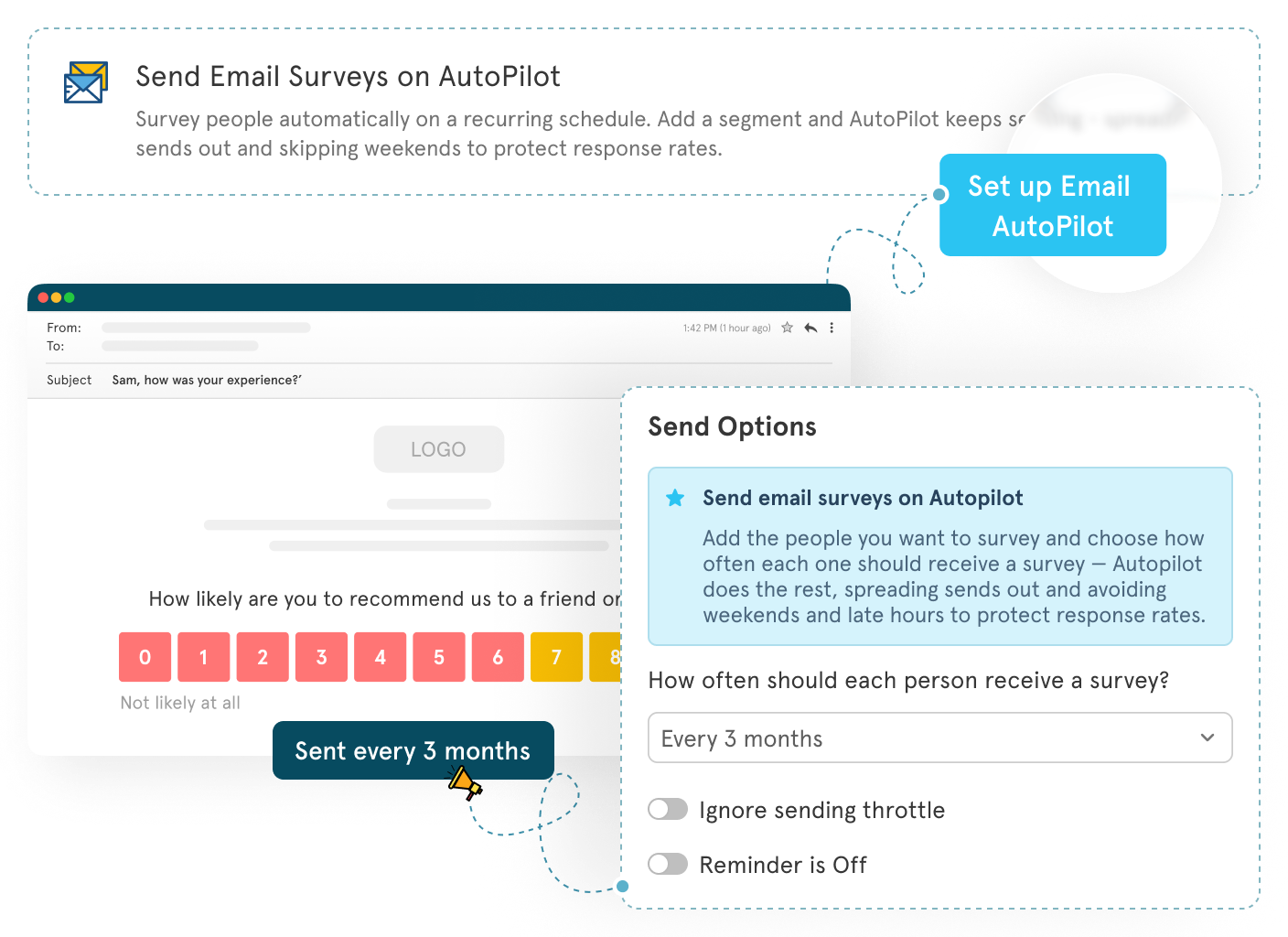
The idea is simple, and that's the point. You add the people you want to survey, manually, from a contact segment, or by importing a CSV. You choose how often each person should receive a survey. Every three months, say, for a relationship NPS pulse.
Then you stop.
b. Autopilot Handles the Sending
Autopilot takes over from there. Instead of one blast, it spaces things out to protect the response you're after:
- Spreads sends over time instead of firing them all at once
- Steers clear of weekends and late hours, because a survey that lands at 11pm on a Saturday was never going to get answered
- Holds a per-person cadence, so the customer who replied last month isn't pinged again next week just because they sit on the same list
- Keeps reminders and a sending throttle on hand when you want them, out of the way when you don't
The Programs Autopilot Is Built For
Autopilot isn't built for one-off sends. It's built for the surveys you want running all the time, the recurring listening that quietly falls apart the moment it depends on someone remembering.
1. Relationship NPS
Take a Relationship NPS program, the classic case. You want a read on loyalty across your whole base, every quarter, indefinitely. Done by hand, that means someone carving the list into weekly waves so you don't flood inboxes, tracking who got surveyed when, then rebuilding the whole thing next quarter. With Autopilot you set the cadence to every three months, once. Eligible customers roll through on schedule, the spacing sorts itself out, and nobody launches a campaign again.
2. Ongoing CSAT
Ongoing CSAT is the same idea at a different tempo. If you're reading satisfaction on a rolling basis, not just after a support ticket, Autopilot keeps each customer on their own clock and skips anyone surveyed too recently. A steady pulse, instead of a pile-up.
3. Customer Health Tracking
Customer health tracking is where it matters most. Health only tells you something when it's continuous. A one-off snapshot shows how someone felt that week. It doesn't show you whether the relationship is climbing or quietly slipping. Recurring surveys that actually keep running give you the line, not the dot. And the line is the part that lets you act before a renewal call goes sideways.
None of this is flashy. It's the kind of thing you only notice when it stops being your problem.
Send on Autopilot, Focus on the Signal
I think the era of manually managing feedback programs is ending, and I don't believe many teams will miss it.
Not because automation is having a moment, but because the manual work was never the valuable part. The value always lived on the other side of the response, in what customers are trying to tell you and what you choose to do about it. Every hour you spend on timing, batching, and "did we send this one yet" is an hour you're not spending on the signal underneath.
Autopilot is a small feature with a bigger idea behind it. Feedback programs should run themselves, so the people who run them can get back to the work that actually moves customer experience.
If you're one of the teams switching from a survey tool like Delighted, or you're simply done owning the send calendar, this is the kind of thing worth trying for yourself.
You can book a quick demo and we'll walk you through how Autopilot works and help you set your first cadence today.

.png)
.svg)
.png)