

.svg)
 Healthcare
 Finance
 Retail
 SaaS & Digital
 eCommerce
 Education
 Salesforce
  HubSpot
 Pipedrive
 Mailchimp
 Klaviyo
 Zendesk
  Intercom
 Freshdesk
 HelpScout
  Front
Front Jira
Jira Slack
Slack  MS Teams
 Zoom
Zoom Google Sheets
  Zapier
  Integrately
 Make
Make  Webhooks




 MS Teams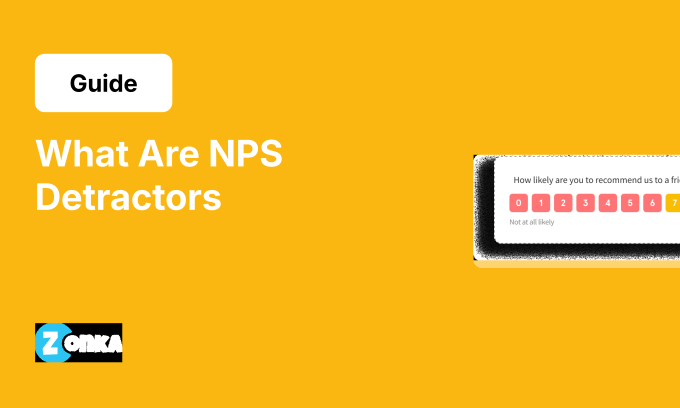


TL;DR
- NPS detractors are customers who score 0-6 on Net Promoter Score surveys, signaling dissatisfaction and high churn risk.
- Detractors drive over 80% of negative word-of-mouth but provide unfiltered feedback that exposes critical pain points.
- Four detractor types exist: Newcomers, Loyalists, Disgruntled Promoters, and Professional Critics — each requires different recovery strategies.
- Companies addressing detractors see 25% higher retention rates by implementing closed-loop feedback, personalized action plans, and 24-hour response windows.
NPS detractors are customers who score your brand between 0-6 on Net Promoter Score surveys. These low scores signal dissatisfaction, low recommendation likelihood, and high churn risk. Detractors are responsible for over 80% of negative word-of-mouth, making them a critical segment to address.
Imagine it's a Black Friday weekend, your busiest online shopping period. Suddenly, your social media channels explode with complaints about slow website loading times and confusing checkout procedures. Customers are abandoning carts in droves, and your brand is trending for all the wrong reasons.
What if you could identify these issues before they escalated and turn those frustrated customers into brand loyalists who rave about your seamless online shopping experience? That's the power of listening to detractors and taking action.
While detractors may seem purely negative, they're actually a valuable feedback source. Their unfiltered input exposes pain points you might have missed, giving you a chance to fix critical issues before they compound. Companies that actively recover detractors see 25% higher retention rates and often convert them into vocal brand advocates.
Consider high-end restaurant chains like Jones the Grocer, which actively listened to the needs of detractors and achieved a Net Promoter Score of over 90%. By using NPS tools to identify the problem areas in their business and closing the feedback loop with detractors, many such organizations are turning them into brand champions, boosting retention and sales.
In this guide, we'll cover what defines a detractor, why they matter for business growth, how to identify different detractor types, proven strategies to turn them into promoters, and how to respond effectively within the critical first 24 hours.
What Are NPS Detractors? (0-6 Score Meaning)
NPS detractors are customers who are dissatisfied with your brand's offerings, evidenced by low ratings (0-6) on NPS surveys. This dissatisfaction can manifest through negative reviews, reduced purchases, canceled subscriptions, and ultimately, switching to competitors.
Your brand is not what you tell your customers; it is what your customers tell others about it.
Rightly put forth by Scott Cook, co-founder of Intuit, the negative experiences of detractors can become your brand narrative unless addressed.
But here's the twist: Detractors, those seemingly unhappy customers, are actually a hidden weapon for large enterprises. They may not feel like it at first, but their feedback holds immense value.
NPS Detractors Meaning: Why 0-6 Scores Signal Risk
Detractors aren't just dissatisfied — they're actively disengaged. A score of 0-6 on the NPS question ("How likely are you to recommend us?") means the customer had an experience significant enough that they wouldn't advocate for your brand. Some might even actively discourage others.
The score range matters. A 6 is different from a 0, but both signal problems worth investigating. The lower the score, the more urgent the follow-up. What separates good NPS programs from ineffective ones isn't whether detractors exist — they exist everywhere — it's whether anyone does anything about them.
For context on how detractors fit into the broader scoring framework, see what constitutes a good NPS score and understand the limitations of Net Promoter Score.
Why NPS Detractors Matter (and Cost Your Business)
While it's nearly impossible to have all your customers always happy with your business, your detractors can cause a lot of harm to your business and no matter how less or more they may be in number, they should always be a priority. Here are some reasons why you must never ignore detractor feedback:
- Unfiltered Feedback: Detractors are your unfiltered truth serum. Unlike NPS Passives, they provide a clear picture of what's NOT working. This honest customer feedback exposes pain points you might have missed, allowing you to fix crucial issues before they snowball into a bigger crisis.
- Boost Retention Rates: Think of detractors as lost opportunities in disguise. By addressing their concerns promptly and effectively, you can turn them into loyal customers. Studies show companies that focus on detractors experience a 25% increase in customer retention — a game-changer for any large enterprise.
- Identify Trends & Stay Ahead: Detractors often highlight recurring issues across specific departments or product lines. By analyzing detractor feedback, you can identify widespread trends before they become major problems. This proactive approach allows you to stay ahead of the curve and continuously improve your offerings.
- Turn Negativity into Positive Advocacy: Imagine this: a detractor who once blasted your product online becomes a vocal advocate, raving about its improvements after your team addressed their concerns. That's the power of transforming negativity into positive brand advocacy. Detractors, when handled correctly, can become your biggest brand champions.
- Gain a Competitive Edge: In today's cutthroat market, even a slight edge over your competitors can be a goldmine. By actively listening to detractors and addressing their concerns, you can continuously refine your products and services, ensuring they stay ahead of the competition.
Types of NPS Detractors: Who They Are & How to Handle Them
Here's a breakdown of common detractor types and actionable insights to turn their negativity into positive growth for your business:
1. Newcomers (First-Time Customers)
Imagine a customer who just signed up for your complex enterprise software but encounters a confusing interface and unhelpful error messages. They're not just a detractor — they're a customer flight risk.
The Problem: New user experiences are often an afterthought, leading to frustration and churn. Traditional onboarding processes might not cater to diverse learning styles.
Solution: Implement proactive check-ins through automated emails or calls to ensure new customers are not facing issues from the start. Additionally, you can make:
- Gamified Onboarding: Gamify the onboarding process with interactive tutorials, points systems, and rewards to keep new users engaged.
- Microlearning Modules: Break down complex functionalities into bite-sized, interactive microlearning modules that cater to different learning styles (visual, auditory, kinesthetic).
- "Buddy System" for New Customers: Pair new customers with existing, satisfied users who can offer peer-to-peer guidance and support.
Example: A large financial institution implements a gamified onboarding process for its mobile banking app. New users earn points for completing tasks, unlocking features, and watching short explainer videos. This approach increases user engagement and reduces support tickets from frustrated newbies.
2. Loyalists
These are long-term customers who experience a decline in quality or service, causing them to turn sour. They may feel neglected or taken for granted.
The Problem: As a large enterprise, you might sometimes fall into the trap of focusing on new customer acquisition, neglecting the needs of loyal customers. This can lead to a sense of betrayal and a decline in brand loyalty.
Solution: Conduct regular quality audits to ensure that the high standards expected by loyal customers are maintained consistently. You can implement:
- "Voice of Customer" Program: Implement a voice of customer methodology that actively solicits feedback from loyal customers. This can be done through dedicated NPS surveys, focus groups, or online forums.
- "Surprise and Delight" Initiatives: Surprise loyal customers with unexpected perks — free upgrades, exclusive discounts, or personalized gifts like custom hoodies or mugs. This shows them they're valued and appreciated.
- Customer Relationship Management (CRM) Segmentation: Segment your customer base in your CRM system, tailoring communication and offers based on customer lifetime value and loyalty.
3. Disgruntled Promoters
These are former brand champions who switched sides due to significant negative experiences. They might feel ignored or unheard.
The Problem: Negative customer experience can spread like wildfire on social media, especially when voiced by a trusted brand advocate. Ignoring detractor complaints can damage your reputation and deter potential customers.
Solution: Implement a closed-loop feedback system where detractors receive a personalized response outlining the steps taken to address their concerns. For detailed frameworks, see closing the feedback loop with NPS surveys. Additionally, you can keep in check:
- Social Media Monitoring & Engagement: Proactively monitor social media mentions and engage with disgruntled advocates. Offer a sincere apology and a clear plan of action to resolve their issue.
- "Brand Ambassador Repair Program": Develop a program to re-engage former brand ambassadors who turned detractors. This might involve personalized communication, early access to new products, or co-creation opportunities.
Example: Consider a large tech company that receives a scathing online review from a disappointed influencer about a faulty product. They not only address the influencer's issue directly but also invite them to participate in a beta testing program for upcoming product updates. This shows a commitment to improvement and rekindles the influencer's positive relationship with the brand.
4. Professional Critics (Bloggers, Reviewers, Journalists)
These are industry influencers whose opinions can make or break a product launch. One bad review can significantly impact sales and brand perception.
The Problem: Ignoring professional critics can lead to negative press coverage and a damaged reputation within your industry.
Solution: Save your brand image in the market by reaching out to them, considering their insights, and resolving their concerns. You can do this by offering:
- Early Product Access & Collaboration: Offer early access to new products or services to professional critics for their feedback. This allows them to provide valuable pre-launch insights and fosters a collaborative relationship.
- Industry Influencer Events: Organize exclusive events for industry influencers, providing them with in-depth product demonstrations and the opportunity to network with company executives.
- "Critic Response Team": Create a dedicated team to monitor and address concerns raised by professional critics. This team should be composed of individuals with strong communication and product knowledge, able to provide prompt and informative responses.
How to Convert NPS Detractors to Promoters: 5 Proven Strategies
An NPS detractor's voice is a valuable source of insight. Here are some unique strategies that you can implement to turn frowns from detractors upside down and unlock a wealth of positive brand advocacy.
1. Identifying Churn Groups for Early Intervention
Catching dissatisfaction early prevents churn and allows proactive intervention. Large enterprises with complex customer journeys might miss early warning signs when data on user frustration is scattered across departments (support tickets, usage logs), and the focus on overall satisfaction scores overlooks issues in specific departments.
To prevent dissatisfied customers from churning and fostering long-term loyalty, you can:
- Leverage Behavioral Analytics: Go beyond traditional NPS surveys. Utilize behavioral analytics tools to identify early signs of dissatisfaction. This could include low product usage, increased support tickets, or negative sentiment within internal communication channels.
- Proactive Risk Scoring & Segmentation: Develop a "Detractor Risk Score" based on historical data and behavioral patterns. Use advanced segmentation to identify common characteristics among detractors.
- "Save the Sale" Strategy for Existing Customers: For existing enterprise customers expressing dissatisfaction, implement a "Save the Sale" strategy. This involves dedicated customer success managers proactively reaching out to understand their concerns and offer personalized solutions.
- Sentiment Analysis: Implement sentiment analysis to understand the emotions behind negative feedback. This can help you identify underlying issues affecting customer satisfaction.
2. Closed-Loop CX Practices to Rebuild the Trust
Detractors often feel their concerns fall on deaf ears. Closed-loop practices like dedicated support channels and immediate responses show the company takes its feedback seriously. This acknowledgment validates their experience and opens the door to addressing their issues.
By going beyond apologies and actually working to fix the problem, you can demonstrate a genuine commitment to improvement and are actively working to prevent similar issues in the future.
To handle such situations, you can implement:
- Dedicated "Detractor Support Channels": Establish dedicated support channels (e.g., VIP hotlines, online forums) specifically for detractor feedback. This allows them to bypass general customer service and connect directly with someone who can address their specific concerns.
- Immediate Response: Establish a system for immediate response to negative feedback. Automated alerts can notify your team in real-time, ensuring prompt action.
- "Root Cause Analysis" Workshops: Organize collaborative workshops with detractors to explore the root cause of their dissatisfaction. This facilitates an environment of open communication and helps develop solutions that address their specific needs.
- Personalized Action Plans with Clear Timelines: Don't offer generic solutions. Develop personalized action plans for each detractor, outlining the specific steps you'll take to address their concerns. Set clear timelines and keep them informed of progress.
3. Leveraging Technology for Personalized Engagement
As an enterprise that deals with a vast number of customers with diverse needs and pain points, manually personalizing the detractor journey for each customer would be incredibly time-consuming and resource-intensive.
Thanks to advanced NPS software tools in the market, you can leverage data from various sources (NPS surveys, open-ended feedback, support tickets, usage logs) to gain deeper insights into individual detractor experiences. This data can then be used to personalize outreach and offer targeted solutions and prevent customer churn.
For instance, consider a large company like Adobe using these technologies with its Creative Cloud suite. A graphic designer might be experiencing difficulties with a new update to Photoshop, leading to frustration and potentially stopping their workflow. In such a scenario, Adobe can identify a potential detractor and optimize customer journey by:
- In-Product Detractor Identification: Adobe's Creative Cloud could utilize sentiment analysis tools to monitor user behavior within Photoshop. A spike in error messages, abandoned edits, or negative comments on social media channels integrated with the platform might flag the designer as a potential detractor.
- Targeted Content & Resource Recommendations: Based on this data, Photoshop could automatically recommend relevant content. This might include a pop-up notification showcasing a recently uploaded video tutorial on the new update's features or a link to a knowledge base article addressing common troubleshooting steps.
- NPS Pulse Surveys & Real-Time Feedback: After the designer interacts with the recommended resources, a brief NPS pulse survey might appear within the software. This in-context survey allows Adobe to gauge the designer's satisfaction in real-time and determine if the resources addressed their concerns.
- Automation: If the designer remains unsatisfied or the NPS score is low, an automated email could be triggered offering personalized support. This email might connect them with a live chat option with an Adobe specialist or provide a scheduling link for a dedicated consultation to address their specific challenges with the update.
This personalized approach increases the chance of resolving the designer's frustration quickly, preventing churn, and potentially turning them into a promoter who advocates for the latest updates within the design community.
4. From Detractor to Promoter: Cultivating Advocacy & Long-Term Value
You would be surprised to know that promoters are 57% more likely to spend more with a brand they are loyal to. Imagine the impact if your unhappy customers, those who might normally spread negativity, became your most vocal advocates. By addressing their concerns and transforming them into promoters, you unlock a powerful marketing force that strengthens customer loyalty in a genuine way.
Promoters are vocal advocates who recommend your brand to others, creating a ripple effect of positive word-of-mouth that builds trust and credibility far more effectively than traditional advertising. Studies show that 77% of consumers say they've been influenced by a friend or family member's recommendation, highlighting the immense power of customer advocacy.
Here's how you can cultivate this loyal promoter base:
- Showcase Detractor Success Stories: Share the journeys of former detractors who became promoters. Publish customer testimonials and case studies that highlight how you listened to their concerns, addressed their issues, and ultimately improved their experience. These stories demonstrate your commitment to customer satisfaction and inspire others with the potential for positive change.
- Empower Customer Advisory Boards: Invite former detractors to participate in "Customer Advisory Boards." Their unique perspective provides valuable insights on product development, customer service improvements, and industry trends. By actively incorporating their feedback, you demonstrate that their voices matter and ensure your offerings remain relevant and address their evolving needs.
- Recognize "Net Promoter Champions": Identify and reward customer success managers (CSMs) who excel at turning detractors into promoters. This "Net Promoter Champion" program incentivizes a customer-centric culture within your organization. It celebrates the power of successful turnaround stories and motivates CSMs to go the extra mile in resolving customer issues and fostering long-term loyalty.
For more on leveraging promoters after recovery, see using NPS for customer reviews and recommendations.
5. Responding to Detractors
Promptly acknowledging detractor feedback shows you value their input. This demonstrates you take concerns seriously and are ready to address them. When topped with a sincere apology, you validate their issues and frustration, showing empathy and understanding. This can significantly improve their perception of your brand.
Many companies, like Airbnb, prioritize excellent customer service. Consider a frustrated Airbnb host who left a negative review about a confusing payout process. The company might promptly respond, acknowledging their frustration and apologizing. They could assign a dedicated representative to guide the host through the process, troubleshoot the issue, and provide clear solutions.
Additionally, they might offer a courtesy gesture, such as a complimentary stay credit, to compensate for the trouble. Impressed by the personalized attention and quick resolution, the host might not only remove the negative review but also leave a positive one, praising the company's exceptional service.
That being said, here's how you should respond to detractors so that their negative experience is changed into a positive one and their happiness becomes your marketing tool!
- Acknowledge Promptly: Respond to detractor feedback within 24 hours whenever possible. This demonstrates responsiveness and a willingness to listen.
- Genuine Apology: Personalize your apology by acknowledging the specific issues mentioned. Avoid generic responses and show empathy for their situation.
- Offer Clear Solutions: Present actionable steps you'll take to address their concerns. Be transparent about the solutions and avoid vague promises.
- Set a Timeline: Let them know when they can expect to see improvements. This builds trust and shows a commitment to resolving the issue within a reasonable timeframe.
- Follow-Up: After implementing solutions, follow up with the detractor to gauge their satisfaction. This shows you care about their experience and their continued business.
- Continuous Engagement: Stay connected with the detractor and keep them informed about improvements made based on their feedback. This demonstrates your commitment to ongoing customer satisfaction and can foster a long-term positive relationship.
How to Handle NPS Detractors: Response Framework
The difference between detractor recovery and detractor loss often comes down to timing and execution. Here's a practical framework for handling detractors effectively:
a. The 24-Hour Response Window
Speed matters more than most companies realize. A detractor who hears back within 24 hours is significantly more likely to engage than one who waits a week. The urgency signals that their feedback actually mattered.
Set up automated alerts for all detractor responses (0-6 scores). Even if you can't resolve the issue immediately, acknowledge receipt within 24 hours. A simple "We received your feedback and are investigating" holds the line while you gather context.
b. Response Templates for Different Scenarios
Having response frameworks doesn't mean using cookie-cutter messages. It means having a starting point that ensures consistency while allowing personalization.
For Service Issues:
"Hi [Name], thank you for sharing your feedback about [specific issue]. I'm [Your Name], and I'm reaching out personally because your experience didn't meet our standards. Here's what happened: [brief explanation]. Here's what we're doing: [specific action]. Here's how we'll prevent this: [systemic fix]. I'd like to schedule a call this week to ensure we've fully resolved this."
For Product Gaps:
"Hi [Name], I saw your feedback about [specific feature]. You're right — this isn't where it should be. We're currently [specific roadmap item or workaround]. I can't promise an exact timeline, but I want to keep you updated. In the meantime, here are two workarounds that other customers have found helpful: [alternatives]."
For Value Concerns:
"Hi [Name], I understand pricing is a concern. Based on your usage, [different approach] might deliver more value. Let me show you [specific benefit]. Can we schedule a quick call to make sure you're getting maximum value?"
c. Key Response Elements
Every detractor response should include: acknowledgment of the specific issue, genuine apology, clear action plan with timeline, follow-up commitment, and a direct contact method. The goal is to show the customer their feedback triggered real action, not just sympathy.
Common Mistakes When Handling Detractors
Even well-intentioned detractor recovery programs fail when they fall into these traps:
-
Responding Too Slowly. The most common failure mode. By the time someone responds three days later, the customer has already mentally checked out. They've started researching alternatives or decided the relationship isn't worth the effort. Speed signals respect.
-
Generic Apologies Without Action. "We're sorry you had a bad experience" means nothing without specifics. Detractors want to know what's changing. Every response should include what went wrong, what you're doing about it, when they'll see results, and how you're preventing recurrence.
-
Not Closing the Loop. Reaching out once is table stakes. The recovery happens in the follow-up. Did the solution work? Is the customer satisfied now? Schedule a follow-up touchpoint 7-14 days after your initial response. Track whether detractors move to passive or promoter status.
-
Treating All Detractors the Same. A newcomer who had a bad onboarding experience needs different intervention than a longtime customer who just hit a breaking point. A 2 is not the same as a 6. Build different recovery playbooks for different detractor types.
-
Focusing on Response Rate Instead of Resolution Rate. Responding to 100% of detractors is meaningless if none of them end up satisfied. The metric that matters is: what percentage of detractors become neutral or positive after your intervention? If you're responding quickly but not converting detractors, your solutions aren't working.
What You Need to Make This Work at Scale
The detractor recovery framework outlined above works — but only if you can execute it consistently across dozens or hundreds of customers. Manual tracking doesn't scale. By the time someone remembers to follow up three days later, the detractor has already moved on.
Effective detractor recovery at scale requires four operational capabilities.
-
First, automated triggering: the system needs to identify detractor responses in real-time and route them to the right person without manual sorting.
-
Second, workflow orchestration: different detractor types need different playbooks, and the system should route newcomers to onboarding specialists, loyalists to account managers, and critics to executive escalation automatically.
-
Third, sentiment detection: not all 0-6 scores carry the same urgency — a detractor who writes "just not for me" needs different handling than one who writes "your support team hung up on me twice."
-
Fourth, closed-loop tracking: you need visibility into which detractors were contacted, what solutions were offered, whether they responded, and whether their sentiment improved.
These capabilities don't exist in isolation. The detractor recovery system needs to connect to your CRM (to pull customer history and update records), your support system (to see open tickets and past interactions), and your product analytics (to understand usage patterns that correlate with dissatisfaction). Without these integrations, your team is working blind — they're responding to detractors without knowing whether this is the customer's first complaint or their fifth.
Most businesses use dedicated NPS tools to handle this infrastructure rather than building it in-house. Platforms like Zonka Feedback provide the automation, routing, and integration layer that makes closing the feedback loop operationally feasible at scale.
Conclusion
Detractors aren't the problem — ignoring them is. Every 0-6 score represents a customer who took the time to tell you something went wrong. What you do with that signal determines whether they churn quietly, spread negative word-of-mouth, or become one of your most loyal advocates.
The execution is simpler than most companies make it. Identify detractors in real-time. Segment them by type. Respond within 24 hours with specific solutions and timelines. Follow up to verify resolution. Track whether they move from detractor to passive or promoter. The businesses that do this consistently see measurable improvements in retention, referrals, and revenue within 90 days.
The framework matters less than the discipline. Start with one detractor segment — pick the one costing you the most revenue or creating the loudest negative feedback. Build a recovery playbook. Test it. Measure the conversion rate. Refine based on what works. Then expand to the next segment.


.png)