

.svg)
 Healthcare
 Finance
 Retail
 SaaS & Digital
 eCommerce
 Education
 Salesforce
  HubSpot
 Pipedrive
 Mailchimp
 Klaviyo
 Zendesk
  Intercom
 Freshdesk
 HelpScout
  Front
Front Jira
Jira Slack
Slack  MS Teams
 Zoom
Zoom Google Sheets
  Zapier
  Integrately
 Make
Make  Webhooks



 Sign In
 MS Teams


TL;DR
- NPS pinpoints your most enthusiastic advocates (Promoters scoring 9-10), creates structured referral workflows, and aligns with the psychology behind why customers refer.
- Most businesses struggle with referrals because they can't identify the right customers, lack a systematic process, struggle with incentive design, and ask at the wrong time.
- This guide shows you how to build an NPS-driven referral engine by capturing sentiment in real-time, activating Promoters with personalized campaigns, timing outreach at peak satisfaction moments, and tracking performance with data.
- You'll learn a six-step framework: identify high-value Promoters through segmentation, activate them with personalized campaigns, design two-sided referral incentives, track key metrics, close the referral loop to sustain advocacy, and make referral links shareable across platforms.
- We cover industry-specific strategies for healthcare, hospitality, fintech, retail, and eCommerce, plus best practices like removing referral barriers, leveraging automation, and expanding beyond just Promoters.
- By the end, you'll have a repeatable system to turn customer loyalty into your most cost-effective acquisition channel.
Did you know that 84% of B2B sales start with a referral, but only 10% of companies actually have a system in place to manage them? Think about that for a second. So much untapped potential, just sitting there, waiting to be unlocked.
Referrals are powerful. They're built on trust, they close faster, and they cost you less than any other acquisition strategy. But here's the thing: most businesses don't have a plan for them. Referrals just "happen" when they could be happening a lot more with a little structure. Imagine the growth you could achieve if you turned your happiest customers into active advocates for your brand.
This is exactly where Net Promoter Score (NPS) can change everything. Unlike other metrics, NPS doesn't just measure loyalty. It identifies advocates who can help grow your business. It shows you who loves your brand and gives you the chance to turn that love into action. With NPS, you can identify Promoters, activate them with the right campaigns, and create a referral engine that practically runs itself.
In this blog, we'll talk about why using NPS for referrals matters now more than ever, the challenges companies face in driving referrals, and how NPS can solve them. Let's get started.
Note: If your goal is generating customer reviews or Google reviews specifically, we have dedicated guides for those strategies. This article focuses on building structured referral programs where customers bring in new customers through direct recommendations.
The Psychology Behind Referrals
Why do people refer products and services to others? It's not just because they like you. It's because it makes them feel good. Referrals are rooted in trust, social currency, and a natural desire to help. Here's a closer look at why referrals happen and how Net Promoter Score ties into these motivations:
-
Trust is Everything: A referral is a personal endorsement, and no one wants to recommend something that might backfire. This is why trust is at the heart of referrals. Promoters, your happiest customers, already trust your brand and feel confident in sharing that trust with others. For example, in the healthcare industry, satisfied patients are more likely to recommend a provider they trust to their friends and family, ensuring that the referral carries real weight.
-
Social Currency: Referrals boost the referrer's credibility. When someone shares a great product or service, it positions them as knowledgeable and trustworthy. This is especially true in finance or SaaS industries, where being "in the know" adds to their professional reputation. With NPS, identifying Promoters allows you to tap into this need for recognition, turning them into advocates who feel valued and empowered.
-
Reciprocity Drives Action: Customers who feel appreciated are naturally inclined to return the favor. When you use NPS to identify Promoters and reward their loyalty with personalized campaigns or recognition, you're leveraging the principle of reciprocity. For instance, a retail customer who receives exclusive early access to a sale might feel encouraged to refer others because they feel valued by the brand.
-
The Feel-Good Factor: Referrals make people feel good. When Promoters recommend your brand, they're not just helping you. They're helping someone else benefit from the same positive experience they had. For instance, in the SaaS space, a team leader might refer a productivity tool because it made their own team more efficient, gaining satisfaction from sharing that success with others.
Why should you Use NPS for Referrals?
It's clear that referrals are a natural extension of strong customer relationships. But here's the catch: referrals don't just happen on their own. Sure, some customers may recommend you casually, but if you want referrals to become a reliable growth engine, you need a system. That's where Net Promoter Score changes everything.
NPS doesn't just measure how loyal your customers are. It shows you exactly who your Promoters are (those happiest, most satisfied customers who are ready to rave about your brand). More importantly, it gives you the tools to take that insight and turn it into action.
Here's why NPS is the perfect fit for driving referrals:
-
Pinpoints Your Advocates. Not all existing customers are ready to refer you. NPS identifies the ones who are, those who score you a 9 or 10, and makes them your starting point for a referral strategy. For example, in retail, this might be frequent shoppers who leave glowing reviews. In SaaS, it's users who've seen a clear ROI from your product.
-
Built for Action. Unlike traditional feedback methods, NPS isn't just about gathering data. It's about creating opportunities. By segmenting Promoters, you can easily launch referral campaigns that feel personal and meaningful, whether it's a thank-you message, exclusive perks, or a simple nudge to share your brand with others.
-
Scalable and Systematic. Instead of hoping for referrals, NPS lets you build a repeatable process. Think of it as your referral engine: automated surveys identify advocates, targeted campaigns activate them, and tracking tools measure their impact, all without manual intervention.
-
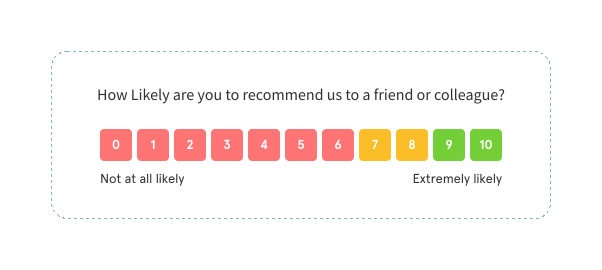
Aligns with the Psychology of Referrals. Referrals are built on trust and the feel-good factor of helping others. NPS taps into these emotions by asking Promoters a simple but powerful question: "How likely are you to recommend us?" This question reinforces their positive experience and sets the stage for them to act.
Challenges in Driving Referrals that Businesses Face
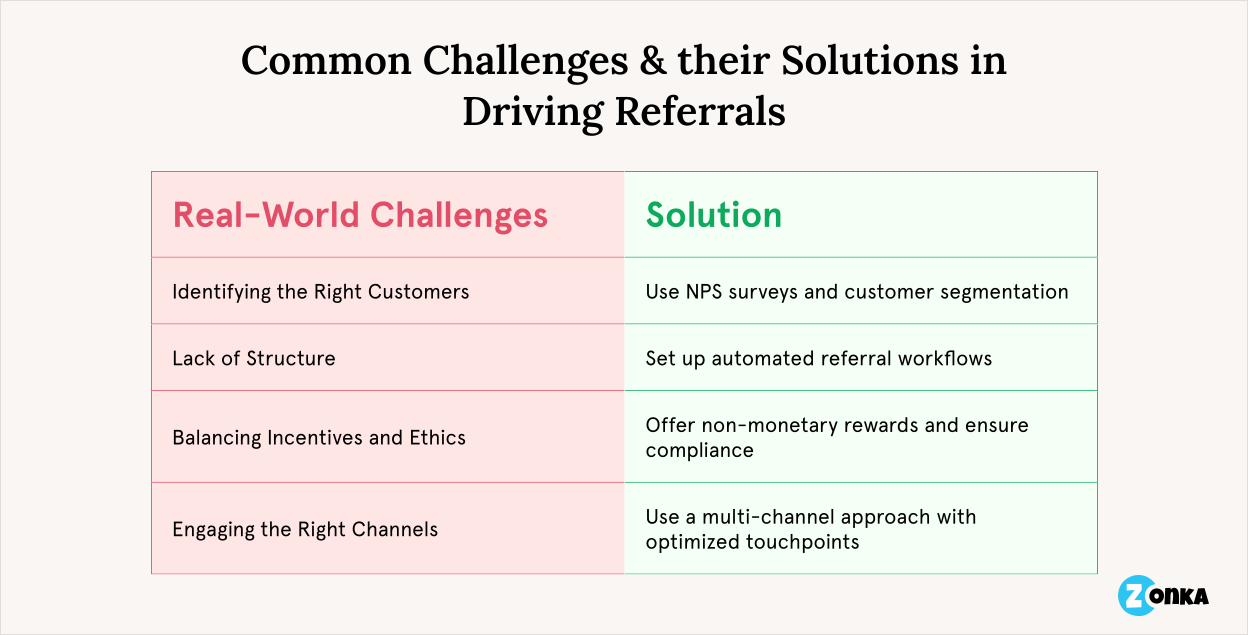
There are significant challenges businesses face when trying to create a steady stream of referrals. Universally, the challenges boil down to this:
-
Identifying the Right Customers. Not every customer is ready or willing to recommend your brand. Businesses often rely on guesswork or generic surveys, missing the opportunity to pinpoint true Promoters. For example, in the SaaS industry, you might assume long-term users are natural advocates, but without asking the right questions, you can't know for sure.
-
Lack of Structure. Most companies treat referrals as a happy coincidence rather than a structured process. They don't have workflows to engage Promoters, track referral outcomes, or measure ROI. This lack of organization leads to missed opportunities, especially in industries where trust and loyalty play a big role.
-
Balancing Incentives and Ethics. Offering incentives is a great way to encourage referrals, but it can get tricky, especially in regulated sectors like healthcare and finance. The key is to find rewards that align with both your customers' values and industry guidelines.
-
Engaging the Right Channels. Customers today have countless ways to connect: email, social media, messaging apps. But businesses often fail to meet them where they are. Without a multi-channel approach, referral programs can fall flat.
Whether it's navigating regulations in healthcare or capturing fleeting guest satisfaction in hospitality, each sector faces unique obstacles that can stand in the way of building an effective referral program. Here are some industry specific challenges that you might come across:
| Industry | Challenges |
| Healthcare | Regulatory and privacy laws limit direct referrals Monetary incentives are restricted Limited communication options due to compliance |
| Retail | Customers lose enthusiasm quickly after purchase Referral programs lack personalization and real-time engagement |
| Finance | Trust and discretion make referrals sensitive Customers hesitate due to the personal nature of services Transactional referral strategies can backfire |
| Hospitality | Guest enthusiasm fades after their stay Delayed referral requests miss the critical satisfaction window Guests forget to share positive experiences |
| SaaS | Complex buyer journeys make timing tricky Satisfaction fluctuates during onboarding and adoption Referral requests are often poorly timed |
How Net Promoter Score Drives Referrals
Unlike traditional referral programs that rely on chance or mass email blasts, NPS gives you a structured, data-driven approach to turning happy customers into advocates. Instead of waiting for referrals to happen organically, you create a repeatable referral engine, one that is predictable, scalable, and continuously optimized.
The NPS-to-Referral Funnel: A Systematic Approach
For referrals to be a reliable acquisition channel, you need a repeatable process that identifies, activates, and tracks customer advocacy. NPS enables this in four key ways:
1. Capturing Sentiment to Build an Advocacy Pipeline
Before referrals happen, you need a real-time pulse on customer sentiment. The most common mistake many companies make is assuming that loyalty automatically translates into advocacy. While a high NPS score indicates satisfaction, not every Promoter is equally motivated to refer.
NPS solves this by acting as a continuous barometer of customer enthusiasm. Unlike transactional surveys or periodic feedback requests, NPS establishes an always-on system that maps customer sentiment over time. This allows companies to identify shifts in advocacy potential before enthusiasm fades, pinpoint high-value moments when customers are naturally inclined to refer, and segment customers not just by loyalty, but by engagement levels.
For instance, a SaaS company can track NPS responses at key journey points: after onboarding, at feature adoption milestones, or post-renewal, to identify when users feel the strongest connection to the product. Instead of treating referrals as one-off asks, NPS allows businesses to build an advocacy pipeline that evolves with the customer lifecycle.
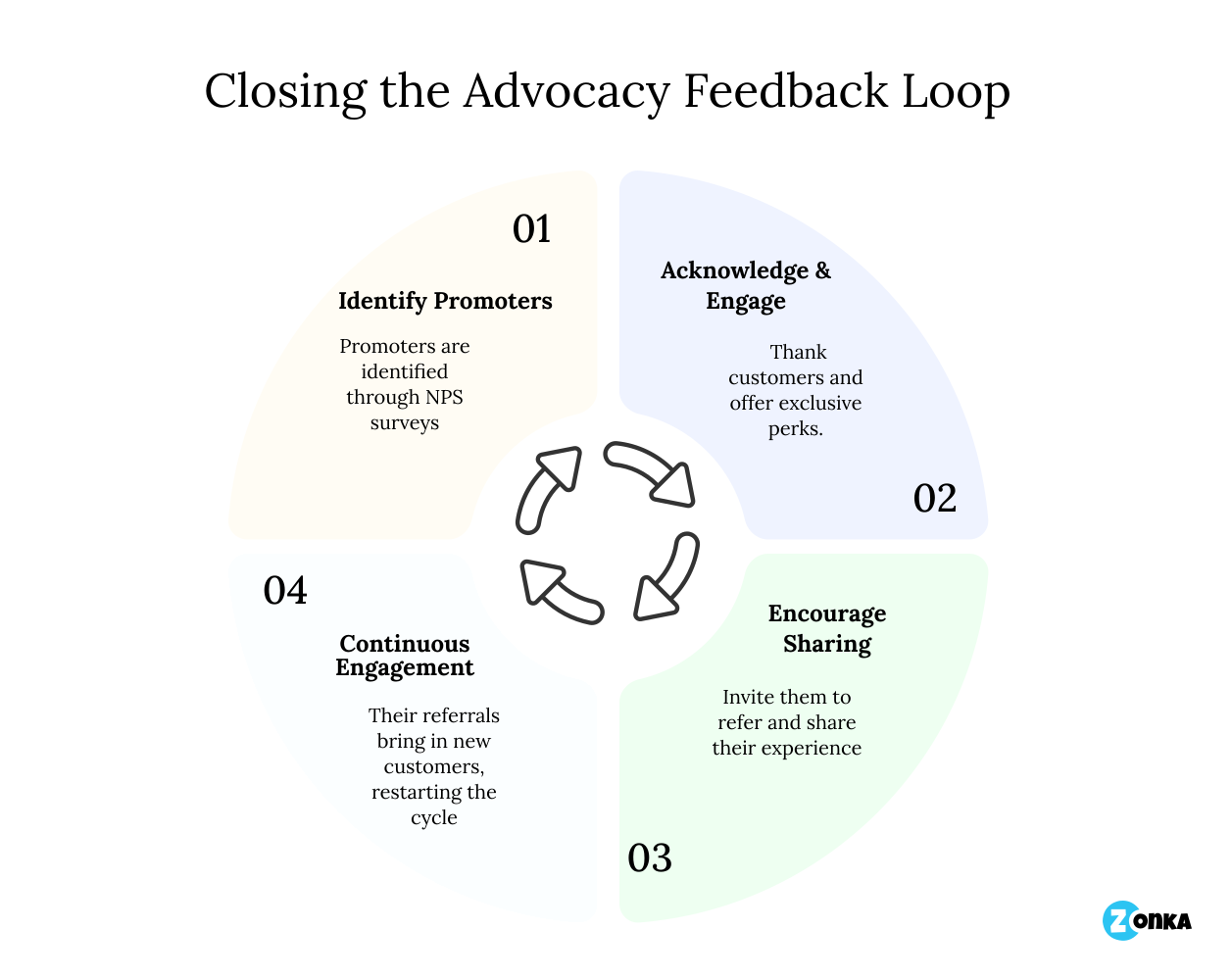
2. Creating a Feedback-Driven Advocacy Loop
Businesses often fail to close the feedback loop with their happiest customers. NPS eliminates this gap by enabling structured follow-ups. When Promoters are identified, businesses can immediately thank them for their feedback, acknowledge their loyalty with exclusive benefits, and invite them to share their experience through a referral.
This creates an ongoing cycle of engagement. Customers provide feedback, businesses act on it, and satisfied customers naturally become brand advocates.
3. Aligning Referral Outreach with Customer Experience Stages
Not every Promoter is ready to refer at the same stage in their journey. NPS allows businesses to align referral requests with key milestones, ensuring the timing is right.
For new users, a referral program can be introduced after a successful onboarding experience. For long-term customers, businesses can invite referrals after a relationship survey, reinforcing the value the customer has received over time. For recent buyers, post-purchase NPS surveys can trigger referral invites when enthusiasm is highest.
By aligning referrals with these natural touchpoints, businesses can drive higher participation rates and avoid referral requests feeling forced or ill-timed.
4. Data-Backed Optimization for Referral Success
Unlike one-time referral campaigns, NPS-driven referrals allow businesses to analyze what works and continuously optimize their strategy. By tracking NPS data alongside referral participation rates, companies can identify which customer segments refer the most, refine outreach timing to maximize engagement, and test different incentives and messaging to increase conversions.
For instance, a hospitality brand can analyze referral trends among Promoters who gave a high NPS score post-stay versus those who provided feedback weeks later. This insight helps them refine the referral request timing, ensuring guests share recommendations when their experience is freshest in mind.
Actionable Steps to Drive Referrals using NPS
Now that we've seen how NPS creates a structured, scalable referral engine, it's time to put the strategy into action. Capturing sentiment alone isn't enough. You need to convert those insights into a seamless, high-converting referral program.
This section walks through the six essential steps to transforming Promoters into referrers, complete with real-world examples to illustrate each step.
1. Identify the Right Promoters Through NPS Surveys
One of the biggest mistakes many companies make is assuming that every satisfied customer will refer. A high NPS score doesn't automatically translate into advocacy. Some customers love your product but won't actively recommend it unless prompted, while others may have influence and engagement that make them prime candidates for referrals.
In fact, research has shown that typical referral rates lie around 2-10%, and Promoters will actually make referrals only if there's a structured process in place to engage them. Simply relying on satisfaction alone means leaving significant untapped referral potential on the table.
So, how do you separate passive satisfaction from active advocacy?
a. Trigger NPS surveys at the Right Moments
Instead of sending surveys on a fixed schedule, businesses should align NPS measurement with high-engagement milestones, such as after a successful onboarding experience (for SaaS), immediately following a second or third purchase (for e-commerce), after a customer has interacted positively with support (for finance and healthcare), or upon contract renewal (for B2B services).
Timing matters. The closer NPS is measured to a key engagement moment, the more predictive it becomes of actual referral likelihood.
b. Segment Promoters Based on Engagement Level
Not all Promoters are equal. A one-time buyer who scores a 9 on an NPS survey doesn't have the same advocacy potential as a repeat customer or power user who actively engages with your brand.
To refine your referral strategy, segment Promoters into high-value advocates (repeat buyers, long-term subscribers, decision-makers in B2B, or high-engagement users in SaaS) and casual fans (customers who enjoy your product but don't engage consistently or haven't built a deep connection with your brand).
For instance, Sephora discovered that repeat buyers who interacted with their loyalty program at least three times were 60% more likely to refer friends than one-time purchasers. By targeting their most engaged Promoters instead of treating all satisfied customers the same, they drove a significant increase in referral sign-ups.
c. Analyze Open-Ended NPS Responses for Referral Intent
Many companies focus only on the NPS score itself while ignoring the qualitative insights in responses. The best brand advocates often express their enthusiasm without even being asked.
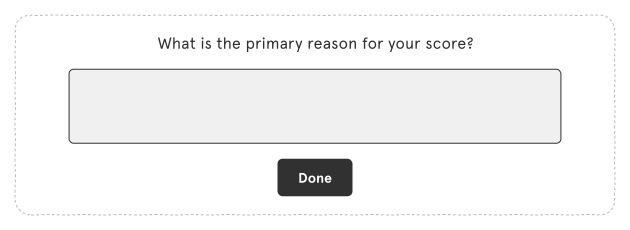
Look for customers who use superlative language ("best platform I've ever used"), mention that they already refer others organically, or highlight specific features or experiences that make them brand loyalists.
2. Activate Promoters with Personalized Campaigns
Identifying Promoters is only the first step. Activation is what turns advocacy into measurable referrals. Many businesses make the mistake of treating referrals like a generic marketing campaign, blasting "Refer a Friend" emails and hoping for conversions. But referrals are personal. They're built on trust, and trust requires the right message, at the right time, through the right channel.
A study by McKinsey found that personalized referral campaigns generate 40% more revenue than generic referral requests because they tap into what customers actually value. Instead of asking for a favor, you must align referral outreach with customer motivations to make referring feel effortless and rewarding. Here's how to do that:
a. Reference Their NPS Feedback to Make It About Their Experience
Promoters don't refer because you ask them to. They refer because they believe in the product. Instead of sending a generic request, tailor the outreach based on what they love about your brand.
If a Promoter mentions customer support as a reason for their high NPS score, highlight how referrals help others experience the same great service. If they praise a specific feature, frame the referral as a way to help others benefit from it.
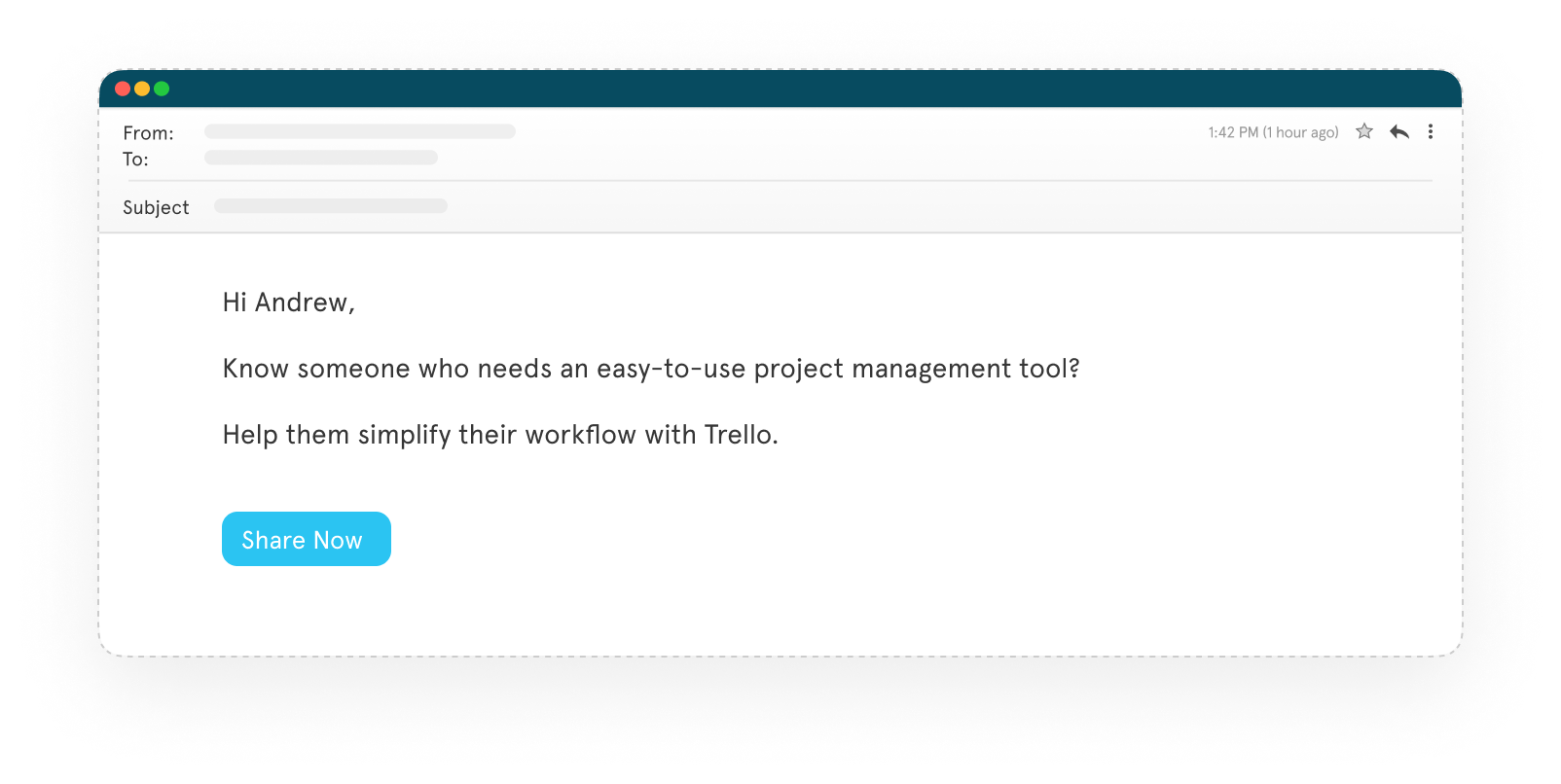
For instance, if you notice Promoters specifically praising ease of use, reach out to them with personalized messaging like "Know someone who needs an easy-to-use project management tool? Help them simplify their workflow with [Product Name]." This simple tweak can increase your referral participation drastically.
b. Contextual Timing: Trigger Requests When Promoters Are Most Engaged
The best time to ask for a referral is when a customer is feeling peak satisfaction, not months later when enthusiasm has faded. Businesses should map referral requests to high-engagement moments, including:
For B2B, after a successful quarterly business review or a milestone achieved. For SaaS, after users reach a key activation point (launching their first campaign, integrating their workflow, or upgrading to a paid plan). For Retail & E-commerce, immediately after a successful purchase or upon a repeat order. For Hospitality, right after checkout or post-stay feedback submission. For Fintech, after a customer successfully applies for and receives a loan, completes a high-value transaction, or hits a financial milestone (first savings goal reached, investment return milestone).
c. Use Multi-Channel Outreach to Increase Engagement
Customers respond differently depending on the platform they engage with most. A referral program shouldn't rely solely on email. It should be integrated into the customer's preferred channels.
For B2B, use LinkedIn outreach, in-app pop-ups, or direct sales team follow-ups. For SaaS, try in-app referral prompts, triggered emails, or product tours. For Retail & E-commerce, SMS follow-ups, post-purchase email automation, and social media shares work well. For Finance & Healthcare, secure portal notifications, advisor-driven recommendations, or direct messaging are more appropriate.
3. Design Two-Sided Referral Incentives
The right incentive can amplify referral participation, but the wrong one can undermine trust and make referrals feel purely transactional. Many companies default to cash rewards, assuming that monetary incentives will motivate customers to refer. However, studies show that cash-based referrals often fail to drive long-term engagement. They may generate a temporary boost in sign-ups, but they don't necessarily attract high-value or loyal customers.
The key to sustainable referral programs is designing two-sided incentives, where both the referrer and the referred friend receive value. This creates a win-win dynamic that feels fair and encourages ongoing participation.
Here's how you can align incentives with customer behavior:
a. Offer Value-Based Rewards That Reinforce Brand Loyalty
Rather than offering generic discounts or cash, you should provide rewards that enhance the user's experience with the product.
For SaaS, offer extra features, storage credits, or premium upgrades. For E-commerce, provide early access to sales, limited-edition products, or bonus loyalty points. For Finance & Fintech, consider fee waivers, increased cashback rates, or investment bonuses. For Hospitality, room upgrades, VIP concierge services, or exclusive access to events work well.
Tesla's referral program doesn't offer cash rewards. Instead, it gives referrers exclusive perks, like priority vehicle delivery or invitations to private Tesla events. These rewards make Tesla owners feel like insiders, strengthening their connection with the brand while driving sustained referral activity.
b. Structure "Give $X, Get $X" Programs for Fairness
The most successful referral programs offer equal value to both parties. When the referred friend gets the same benefit as the referrer, it feels less like a sales pitch and more like a genuine recommendation.
Examples of balanced referral incentives:
Dropbox's famous "Give 500MB, Get 500MB" storage program drove millions of sign-ups. Airbnb's "Give $40 travel credit, Get $40 when your friend books" made referrals feel generous rather than self-serving. Uber's "Give $10 off first ride, Get $10 credit when they ride" created a viral referral loop in their early growth phase.
This structure removes the awkwardness of one-sided referrals and increases conversion rates because the referred friend feels like they're getting a real deal, not just helping someone earn a reward.
c. Use Tiered Rewards to Sustain Engagement Over Time
A single referral bonus may encourage one-time participation, but tiered incentives drive ongoing advocacy. The more referrals a customer makes, the better the rewards, creating a gamified experience that keeps them engaged.
For example, a subscription company could offer 1st referral: one free month, 3rd referral: exclusive product bundle, 5th referral: VIP customer status with lifetime perks.
Airbnb incentivized hosts to refer new hosts by offering increasing bonuses for each successful referral. Instead of capping rewards at one-time payouts, they scaled incentives based on the number of successful referrals, resulting in sustained long-term referral participation.
d. Incorporate Non-Monetary Perks to Enhance Brand Perception
Cash incentives often fail in industries where trust and credibility matter most, such as finance, healthcare, and professional services. Non-monetary perks like charitable donations, branded experiences, or exclusive content feel more authentic and align better with customer values.
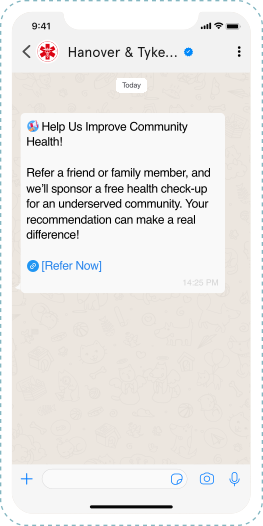
For instance, for Finance, "For every referral, we'll donate $50 to a financial literacy program." For Healthcare, "Refer a patient, and we'll sponsor a health check-up for an underserved community." For B2B Services, "For every successful referral, we'll plant 100 trees as part of our sustainability pledge."
4. Track Referral Metrics to Optimize Performance
A referral program without tracking is like a sales funnel with no analytics. It's impossible to know what's working, what's failing, and where opportunities are being lost. Many businesses launch referral programs expecting organic growth, only to find that referral participation remains low, conversion rates underperform, and high-intent referrers drop off without taking action.
The truth is, even the best referral programs need ongoing optimization. Companies that measure and refine their referral strategy based on data see significantly better outcomes than those who take a "set-it-and-forget-it" approach.
💡A strong referral program should aim for a 10-15% referral participation rate and a 5%+ conversion rate. Anything below these benchmarks suggests missed opportunities in activation, incentives, or user experience.
Key Metrics to Measure Referral Success
Consider these key metrics to measure referral success:
-
Referral Participation Rate: Percentage of Promoters who take action. A well-structured referral program sees a participation rate of 10-35% among Promoters.
-
Referral Conversion Rate: How many referred customers actually sign up or purchase. The average conversion rate for referrals is 5-20%, depending on incentives and industry.
-
Referral Funnel Drop-off Points: Where potential referrers lose interest. A referral funnel typically loses 20-50% of participants at different touchpoints.
-
Customer Retention Post-Referral: Ensuring new customers stay engaged beyond acquisition. Referred customers have 37% higher retention rates than non-referred ones.
5. Close the Referral Loop to Sustain Advocacy
One of the biggest mistakes businesses make is treating referrals as transactions rather than relationships. Customers who refer are your most engaged advocates. They're putting their own credibility on the line to endorse your brand. If you only reward them once and move on, you're missing an opportunity to turn them into long-term brand champions.
Behavioral psychology tells us that people feel a stronger emotional connection to things they've contributed to, a principle known as the Endowment Effect. When referrers see their impact, they feel a deeper sense of ownership and investment in your brand, increasing the likelihood that they'll continue referring, advocating, and engaging with your business over time.
Here's how you can strengthen referral engagement beyond the first action:
a. Recognize and Personalize Referrer Appreciation
A simple "thank you" isn't enough. Acknowledgment needs to feel personal, meaningful, and reinforcing. Customers who refer should feel like valued contributors, not just participants in a promotion.
Send personalized thank-you messages referencing what they love about your brand (for example, "Thanks for sharing [Product Name] with your network. We know you love [specific feature], and now your friend can enjoy it too!"). Offer exclusive perks for frequent referrers, such as beta access, priority support, or branded gifts. Consider public recognition (with permission) in customer newsletters, on social media, or through case studies.
Airbnb, for instance, doesn't just reward referrals. They keep referrers engaged by showing them the travel credit they earned, who used their link, and even sending personalized thank-you notes, creating an ongoing incentive to refer.
b. Show the Impact of Their Referral to Make Advocacy Feel Meaningful
When people see the real-world effect of their actions, they're more likely to repeat them. A referrer who simply gets a discount may not think much about the impact, but if they know they helped someone else benefit from a great product, they're far more likely to keep referring.
Ways to showcase referral impact: Let them know when their referral signs up ("Your referral just joined. Thanks for helping us grow the community!"). Share user success stories tied to their referral ("Because of your referral, a new customer just had their first $100K sales month using our software!"). Create a referral leaderboard to gamify engagement and encourage competition.
c. Track and Nurture Your Top Referrers to Build a Community
Most referral programs treat all referrers equally, but not all referrals contribute the same value. Businesses should actively track and nurture their top referrers, turning them into long-term brand advocates.
Identify your top 10% of referrers and offer them exclusive benefits. Create a VIP referral tier where engaged referrers get early product releases, premium customer support, or invites to exclusive events. Incentivize continuous referrals. The more they refer, the more influence they gain.
6. Make Referral Links Shareable Across Platforms
Referrals and social proof are two sides of the same coin. A strong referral program creates brand advocates, and showcasing their stories reinforces trust, inspiring even more referrals. This creates a continuous loop of advocacy, where Promoters not only refer but also influence others through their testimonials and word-of-mouth recommendations.
A study by Nielsen found that 92% of consumers trust peer recommendations over brand messaging, making social proof one of the most powerful ways to accelerate referral success. The key is to make advocacy visible and effortless.
Here's how you can use social proof in referrals:
a. Create One-Click Shareable Referral Links
The easier you make it to share, the more referrals you'll get. Instead of asking customers to explain your product or manually send invites, provide them with pre-built shareable links that work across all platforms.
Generate unique referral links for each customer that they can share via email, WhatsApp, LinkedIn, or Twitter with one click. Provide pre-written messages or templates that customers can copy and personalize ("I've been using [Product Name] for [X months] and it's been a total productivity boost. Thought you might find it helpful too. [Referral Link]"). Make referral links mobile-friendly so they work seamlessly on smartphones and messaging apps.
b. Showcase Referral Milestones & Community Growth
People love to be part of something bigger than themselves. Highlighting the collective impact of referrals creates a sense of community and encourages participation.
Display referral program growth: "10,000+ customers joined through referrals this year!" Recognize top referrers by creating a leaderboard for your most active advocates. Celebrate community wins by showcasing referred customers' success stories.
Best Practices for Driving High-Impact Referrals with NPS
A successful NPS-powered referral program doesn't just rely on happy customers. It's built on frictionless execution, strategic timing, and continuous engagement. Many businesses fail to maximize referrals simply because they make it too complicated, ask at the wrong time, or only target a small segment of customers instead of expanding their referral funnel.
By applying these best practices, you can streamline referrals, increase participation, and turn customer advocacy into a scalable acquisition strategy.
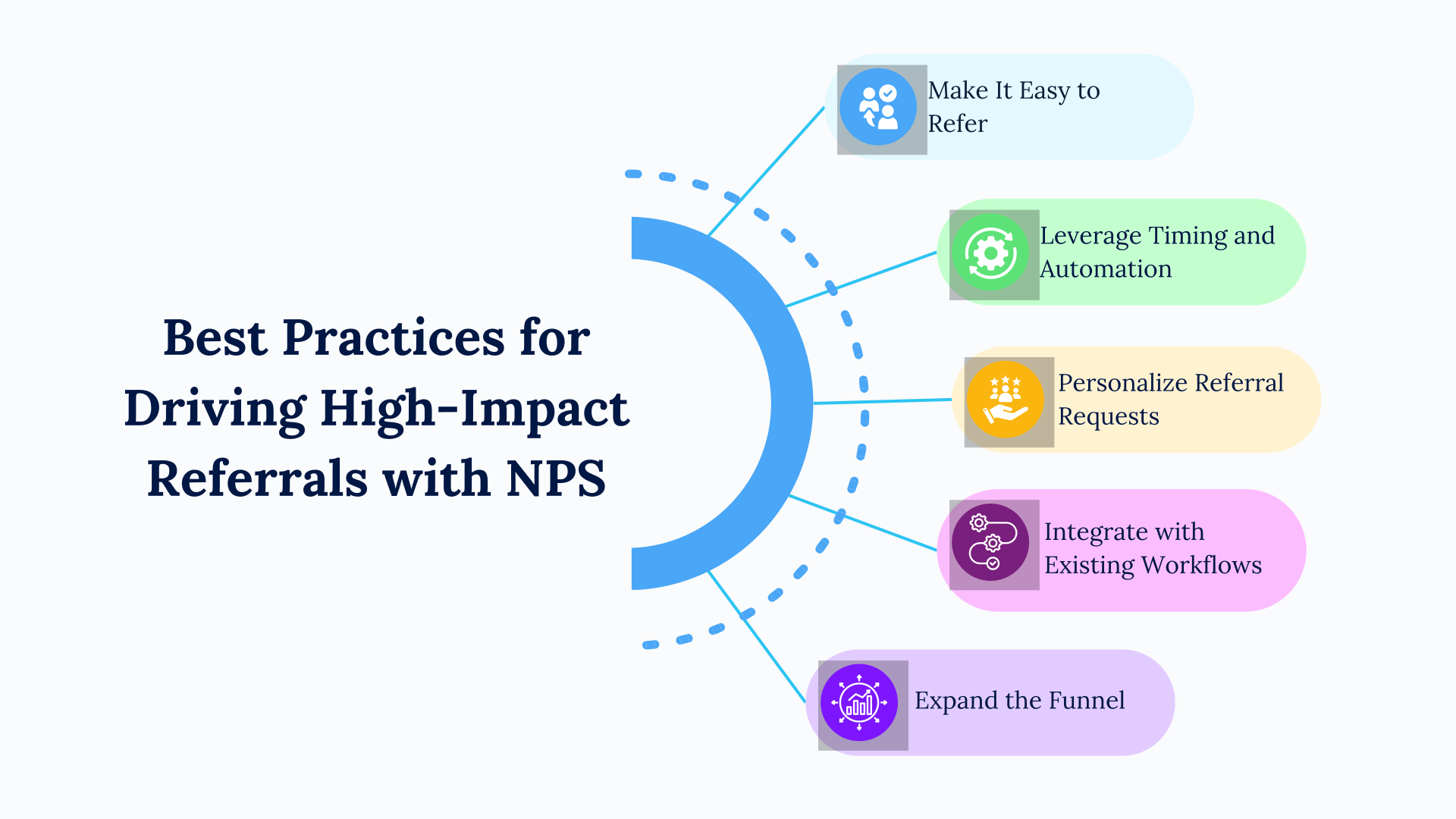
a. Make It Easy to Refer by Removing Every Barrier
Referrals should require zero effort from customers. If they have to search for a referral link, fill out long forms, or explain your product to a friend, you're already losing potential advocates.
The best referral programs are designed with seamless access and instant execution in mind. Whether it's a one-click referral link, a pre-filled message, or an in-app invite, the process should be as simple as "Tap. Share. Done."
b. Leverage Timing and Automation to Strike When Engagement is Highest
Timing makes or breaks referrals. A customer might love your product today, but if you ask for a referral six months later, their enthusiasm may have faded. That's why referrals should be triggered at peak engagement moments, right after a positive support interaction, a successful transaction, or an exciting product milestone.
And let's be honest. Manually tracking these moments is impossible. That's where automation comes in. A well-structured referral system identifies, tracks, and nudges Promoters at precisely the right time, ensuring that referral requests feel timely, natural, and relevant rather than forced.
c. Personalize Referral Requests to Make It About Them
The biggest mistake businesses make? Sending generic "Refer a Friend" emails that feel like mass marketing. Customers don't refer because you asked. They refer because they believe in your product. Your job is to align the referral request with what matters most to them.
A high-value customer who raves about your customer service? Highlight how referring will help their peers experience the same great support. A user who loves your platform's ease of use? Position the referral as a way to simplify workflows for their network.
When referral outreach feels personal, relevant, and customer-centric, it no longer feels like a corporate request. It feels like a natural extension of their enthusiasm.
d. Integrate with Existing Workflows to Meet Customers Where They Already Are
A referral request should never feel like an extra step. It should be embedded directly into the user's journey. If your customers are in your app, website, or email system daily, that's where referrals should happen.
Instead of sending separate referral emails, why not add referral triggers inside product dashboards, post-purchase pages, or billing portals? If your team already engages with customers through support tickets, success calls, or account reviews, why not integrate referral requests directly into those conversations?
Referrals shouldn't feel like a separate marketing campaign. They should feel like a natural, organic part of how customers already interact with your brand.
e. Expand the Funnel by Not Just Relying on Promoters
Most companies limit referral programs to their Promoters, but what about the loyal customers who are satisfied but not vocal advocates yet?
Loyal but quieter customers may not proactively refer, but they might if given the right nudge, incentive, or reason. Instead of focusing only on Promoters, you should expand your referral strategy to repeat buyers who engage frequently but haven't rated their experience, customers who have referred before but aren't actively doing so now, and users who gave an NPS score of 7 or 8 (potential advocates who need a little encouragement).
Innovative NPS Driven Referral Campaigns: Strategies Across Industries
Traditional referral programs rely on mass messaging, one-size-fits-all incentives, and passive word-of-mouth. But when referrals are powered by Net Promoter Score, they become more strategic, targeted, and scalable.
Unlike generic referral campaigns, NPS-driven referrals leverage real-time customer sentiment data to ensure that referral requests are timely (sent when Promoters are at their peak enthusiasm), targeted (customized based on customer preferences and experiences), and predictable (tracked and optimized for long-term advocacy).
Here's how businesses across different industries can take NPS referrals to the next level with effective strategies.
1. Healthcare: Patient-Driven Referrals Through Trust & Testimonials
Patients don't refer based on incentives. They refer based on trust, positive outcomes, and meaningful experiences. The challenge is compliance restrictions and privacy concerns that limit how businesses can request referrals. NPS insights help healthcare providers overcome this by identifying satisfied patients (Promoters) and activating them through trust-driven referral models.
NPS-powered referral strategies for Healthcare include sentiment-based storytelling (identify high-NPS patients and invite them to share their recovery stories, not as direct referrals, but as patient testimonials in communities, social media, or advocacy groups), community-led advocacy (satisfied patients can be encouraged to refer friends to educational workshops, wellness programs, or preventive care initiatives), and doctor-to-patient referral optimization (use NPS to track patient sentiment after consultations and follow-ups, triggering referral requests when trust is highest).
2. Hospitality: Experience-Driven Advocacy for Referral Growth
Guests refer when they've had a great experience, one they remember, talk about, and want to share. But traditional referral requests often come too late, when excitement has faded.
NPS-powered referral strategies for Hospitality include experience-timed referral requests (trigger referral invites immediately after a guest leaves an NPS rating of 9 or 10, ensuring that requests happen at the emotional high point of their stay), post-stay VIP upgrades (guests who refer receive instant loyalty perks, such as room upgrades or concierge benefits, creating a reason to stay engaged), and gamified loyalty milestones (encourage guests to earn free stays, elite status, or special perks by referring friends over time).
3. Fintech: Trust-First Referrals for Financial Services
Finance is a high-trust industry. Customers won't refer just for a discount. They need to believe in the credibility, security, and value of the service. NPS allows fintech brands to build a trust-driven referral system that aligns with customer priorities.
NPS-powered referral strategies for Fintech include mission-based incentives (instead of cash rewards, referrers can choose between donation-based referrals, waived fees, or exclusive financial insights), trust-driven social proof (high-NPS customers receive exclusive invites to share their experiences in industry panels, investment forums, or fintech blogs, subtly driving referrals through credibility), and data-driven tiered referrals (identify customers with long-term engagement and high-NPS scores, offering them VIP referral perks like priority financial advisory or access to premium banking tiers).
4. Retail: Gamified Milestone-Based Referrals
Retail customers often love a brand but need a push to refer. Traditional programs offer flat rewards, but NPS-driven referral gamification creates ongoing engagement.
NPS-powered referral strategies for Retail include milestone-based rewards (customers earn progressively better perks as they hit referral goals: 5 referrals = VIP status, 10 referrals = exclusive product drops), sentiment-driven personalization (customers who rate a product 9 or 10 via an NPS survey are instantly prompted to refer a friend), and social sharing & limited-time challenges (time-sensitive campaigns encourage Promoters to share referral links for bonus rewards during peak shopping seasons).
5. eCommerce: AI-Driven Personalization for High-Converting Referrals
E-commerce thrives on precision marketing. Instead of blasting the same referral message to everyone, NPS data allows brands to trigger hyper-personalized, AI-driven referrals.
NPS-powered referral strategies for eCommerce include AI-driven referral offers (customers with high NPS scores receive referral rewards customized to their purchase history: loyalty points, discounts on favorite brands, or product bundles), predictive timing for referral requests (referral prompts appear at peak buying moments, such as post-checkout, seasonal sales, or during customer anniversaries), and personalized incentive choices (instead of a generic reward, referrers can select between store credit, free gifts, or bonus loyalty points).
Where to Go From Here?
You now have the blueprint for turning satisfied customers into a self-sustaining referral engine. But here's the thing: referrals are just one part of a larger system.
If you want referrals to keep flowing, you need more Promoters. That means knowing how to improve your NPS score systematically, not just hoping satisfaction goes up on its own. Every point increase in your NPS score expands your pool of potential referrers.
And if you're running this manually right now? You're leaving growth on the table. The businesses that win with referrals don't track spreadsheets and send emails by hand. They build automated workflows that identify Promoters, trigger personalized outreach at exactly the right moment, and track every referral without anyone lifting a finger.
Finally, referrals are just the outer loop. The real magic happens when you close the feedback loop with every customer, Promoter or not, creating a system where satisfaction compounds over time and advocacy becomes inevitable rather than accidental.
Start with one thing. Pick the step that makes the biggest difference for your business right now. Then build from there.

.png)
.png)
.png)
.png)