

.svg)
 Healthcare
 Finance
 Retail
 SaaS & Digital
 eCommerce
 Education
 Salesforce
  HubSpot
 Pipedrive
 Mailchimp
 Klaviyo
 Zendesk
  Intercom
 Freshdesk
 HelpScout
  Front
Front Jira
Jira Slack
Slack  MS Teams
 Zoom
Zoom Google Sheets
  Zapier
  Integrately
 Make
Make  Webhooks



 Sign In
 MS Teams
.svg)


TL;DR
- NPS tools for banking help you measure customer trust, identify friction across digital and branch journeys, and run both rNPS and tNPS programs that reflect the real health of customer relationships in BFSI. They surface issues across onboarding, KYC, loans, card activation, payments, support, and branch interactions.
- The right banking NPS tool needs more than survey delivery — it needs SOC 2, ISO 27001, and GDPR compliance, multi-entity hierarchy support, omnichannel reach (branch kiosks, in-app, SMS, WhatsApp, IVR), and deep CRM integrations that let teams act on feedback without manual handoffs.
- We compared the top banking NPS tools based on omnichannel delivery, AI-driven sentiment and thematic analysis, security and compliance, CRM/helpdesk integrations, role-based dashboards, and automation. Strongest picks by category: Zonka Feedback for AI-powered rNPS + tNPS, deep banking workflows, and multi-channel measurement across digital + branch; SurveySensum for branch-level tNPS and frontline operational insights; AskNicely for RM/branch service coaching and frontline performance improvement.
- To operationalize NPS, automate detractor workflows, and get real-time visibility into every financial journey, schedule a demo with Zonka Feedback — the most complete NPS platform for banks, credit unions, NBFCs, and fintechs.
Banks collect more customer feedback than almost any other industry. Most of it quietly disappears. A customer gives a 4 after a loan disbursement. A detractor flags something after a failed UPI transaction. Someone rates their branch visit. That data lands in a dashboard, gets reviewed once a quarter, and changes nothing — because the tool wasn't built for what banking actually demands.
That's the real problem with NPS in BFSI. It's not a measurement problem. It's a tooling problem. The right platform is the difference between feedback that triggers a follow-up call within 24 hours and feedback that gets exported into a spreadsheet nobody opens.
After working with banks, credit unions, and fintechs to build structured NPS programs, one pattern holds: institutions that invest in the right tooling consistently outperform peers on customer retention, digital adoption, and loyalty metrics. The survey is almost secondary. What drives results is what the platform does with the response.
This guide covers the top NPS tools for banking and financial services in 2026 — what makes each right for a specific type of institution, what BFSI actually demands from these platforms, and how to choose based on your channels, compliance requirements, and CX maturity.
What Banking NPS Tools Must Actually Handle
Generic NPS tools are built for SaaS and e-commerce. They handle email surveys beautifully. They'll fall apart the moment you try to run a branch kiosk survey, segment by RM, or demonstrate compliance in a regulatory audit. Banking is a different category entirely, and the tool selection criteria should reflect that.
Here's what separates a genuine banking NPS platform from one that just happens to work in BFSI:
-
Compliance and data security: Financial institutions handle sensitive PII — account details, transaction history, behavioral data tied to financial products. The NPS tool sitting on top of that data needs ISO 27001 certification, GDPR-compliant data residency options, role-based access controls, and audit trail granularity. "We're SOC 2 compliant" is the floor, not the differentiator. Ask how they handle GDPR erasure requests for NPS response data, and what audit logs look like during a regulatory review.
-
Multi-entity and hierarchy support: A mid-sized bank might operate under three regional brands, twelve business units, and hundreds of branches. An enterprise holding company might have retail banking, wealth management, insurance, and NBFC arms. The NPS platform needs to run separate programs per entity, roll up reporting across the hierarchy, and ensure data segregation by subsidiary — without requiring a separate subscription per brand.
-
Branch + digital in one system: The customer who visits a branch Monday might open the mobile app Wednesday and call the contact center Friday. If your NPS data lives in three separate tools — one for branch, one for digital, one for IVR — you're measuring fragments. The only way to see the full loyalty picture is a single platform that handles kiosk/tablet surveys offline, in-app prompts, SMS and WhatsApp flows, and IVR post-call triggers simultaneously.
-
Trust signals beyond the standard NPS question: In banking, customers care about data security, fee transparency, and how the institution handles problems. A well-designed banking NPS program adds follow-up questions that capture trust dimensions the standard 0-10 question misses — and the platform needs to support that logic without developer involvement.
Keep these requirements as your baseline filter. Any tool that doesn't meet them isn't a banking NPS tool — it's a survey tool you're trying to make work in banking.
What is NPS in Banking?
If you work in banking or financial services, you already know that a customer's "satisfaction" score rarely tells the real story. Customers might say they're satisfied after a loan approval or a branch visit — but still switch banks six months later. This is exactly why the industry relies on NPS (Net Promoter Score): it measures something traditional CX metrics don't — customer loyalty and trust, which are the real drivers of long-term profitability in BFSI.
NPS in banking asks a single question: "How likely are you to recommend our bank or financial provider to others?"
On the surface, it looks simple. But in practice, especially in BFSI, NPS becomes a strategic indicator of institutional health, because it captures sentiment across the most sensitive points of the financial journey:
- Digital onboarding and KYC
- Credit card approvals
- Loan disbursement cycles
- Customer support and ticket resolution
- Mobile app failures and downtime
- Branch experience and RM interactions
- Fraud resolution and dispute management
When you overlay NPS on these touchpoints, a pattern emerges. Banks with higher NPS consistently show better retention, lower cost-to-serve, higher digital adoption, and higher cross-sell rates. I've seen this repeatedly when working with BFSI clients — a bank may have thousands of satisfied customers, but only a fraction are loyal. NPS exposes that gap immediately.
Why NPS Matters for Banking & Financial Services?
Other industries use NPS to measure delight. Banks use NPS to measure risk. NPS becomes a way to predict:
- Churn risk (loans shifting to competitors, account closures)
- Brand trust erosion (after service delays or disputes)
- Digital adoption friction (drop-off points inside the mobile app)
- Operational weaknesses (branch inconsistencies, RM behavior, underwriting delays)
This makes NPS less of a "survey metric" and more of a leading indicator of revenue stability. Understanding NPS and customer lifetime value is critical here — promoters in banking behave very differently from promoters in SaaS or retail.
NPS Promoters in banking:
- Recommend the bank to their inner circle
- Consolidate more financial products (cards, loans, savings)
- Show higher trust during economic uncertainty
- Engage proactively with digital channels
- Cost significantly less to serve
NPS Detractors, meanwhile, create operational drag — higher complaint volumes, lower repayment discipline, higher support demand, and negative word-of-mouth. This is why leadership increasingly tracks NPS alongside traditional financial KPIs.
How NPS Actually Works Inside a BFSI Organization?
In banking, NPS is rarely used as a single data point. Mature BFSI CX teams never rely on a single NPS score. Instead, they run two parallel streams of measurement that provide a 360º view of customer loyalty.
Relationship NPS (rNPS): How Much Do Customers Trust the Institution Overall?
rNPS captures the macro health of your customer relationships — how customers feel about the bank as a whole, not just a single interaction. This helps leadership understand:
- Brand trust and long-term loyalty
- Whether customers feel "banked with" or merely "served by" the institution
- How stable (or at risk) the customer base is
- How macro shifts (pricing changes, outages, market events) impact sentiment
rNPS becomes the baseline score that executives track monthly or quarterly because it reflects overall trust, advocacy, and long-term relationship strength.
Transactional NPS (tNPS): How Well Did We Deliver a Critical Banking Journey?
tNPS measures loyalty at specific moments of truth — the high-stakes interactions that shape customer experience in banking. Examples include:
- Credit card or debit card issuance
- Loan approval, underwriting updates, and disbursement
- Customer support or complaint resolution
- Mobile banking transactions (failed payments, app downtime, UPI issues)
- Branch interactions with RMs or service officers
tNPS surfaces friction fast — often within hours — and gives operational teams a clear line of sight into where customers are struggling right now. For a deeper breakdown of how these two models complement each other, see our guide on relationship transactional NPS and when to use each in a BFSI context.
Comparison Table of Best NPS Tools in 2026
| NPS Tool for Bank | Best For | Key Strengths | AI Capabilities | G2 Rating |
| Zonka Feedback | Banks, credit unions, NBFCs, fintechs wanting full rNPS + tNPS | Deep banking workflows, advanced segmentation, automation, customizable | AI feedback intelligence, sentiment, themes, churn-risk flags, role-based dashboards | 4.7 |
| SurveySensum | Branch-heavy banks needing tNPS + operational insights | Branch/RM dashboards, location-level insights, high-frequency tNPS | AI text analysis, sentiment detection, branch pattern identification | 4.7 |
| AskNicely | Banks focused on frontline/RM service excellence | Coaching workflows, staff engagement, service consistency | AI coaching prompts, theme detection, sentiment insights, performance predictions | 4.7 |
| Qualtrics | Enterprise banks needing predictive insights & compliance | Predictive analytics, multi-BU governance, advanced data modeling | Predict iQ, text/speech analytics, churn prediction, next-best-action | 4.4 |
| NICE Satmetrix | Large/regulatory institutions needing governance + case management | Compliance-focused workflows, VoC governance, enterprise follow-up | AI categorization, sentiment, compliance-risk alerts, root cause analysis | N/A |
| QuestionPro | Small–mid-sized banks needing affordability + ease | Simple NPS setup, customizable banking surveys, offline support | Basic sentiment analysis, auto-tagging, text summaries | 4.5 |
| Delighted | Early-stage fintechs wanting lightweight rNPS (legacy users only) | Fast setup, clean UI, simple insights | Basic sentiment & theme detection | 4.7 |
What are the Top 7 NPS Tools for Banking & Financial Services?
The best NPS tools for banking and financial services handle multi-channel feedback (branch, mobile app, SMS, email, IVR), support both transactional and relationship NPS, and integrate deeply with core banking systems, CRMs, and ticketing platforms. In 2026, banks aren't just evaluating survey delivery. They need platforms that capture customer sentiment in real time, surface risks early, automate close-the-loop actions, and meet compliance requirements without custom builds.
Based on real BFSI implementations, product capabilities, compliance depth, and CX impact, the best NPS tools for banking include Zonka Feedback, SurveySensum, AskNicely, and Qualtrics among others.
1. Zonka Feedback: Best NPS Banking Tool for Measuring Customer Trust & Loyalty Across Financial Journeys
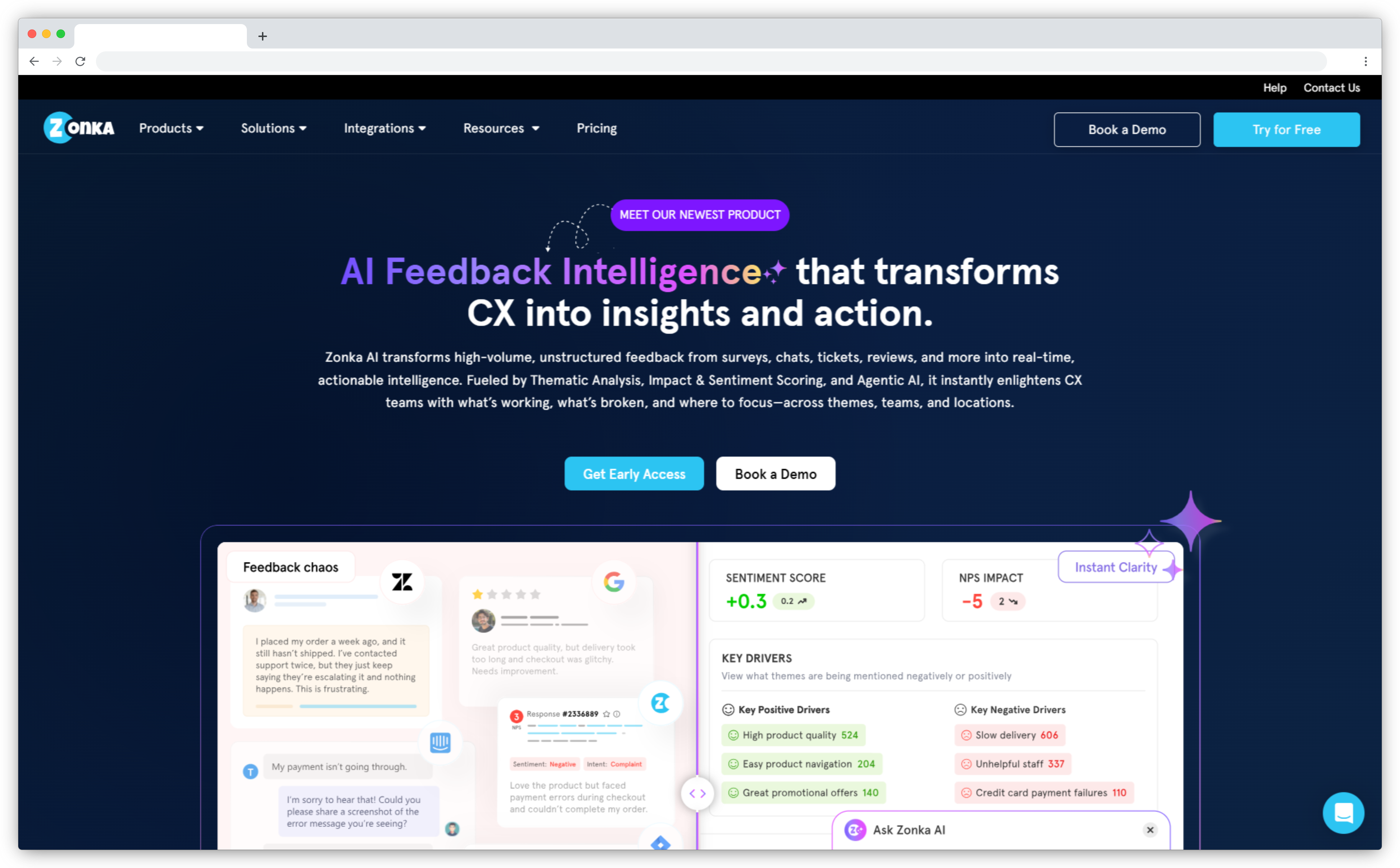
Zonka Feedback is one of the best NPS tools in banking, designed for financial institutions that need deeper insights into customer loyalty across digital, branch, and support journeys. With native tNPS and rNPS capabilities, AI-driven feedback intelligence, omnichannel survey delivery, and automated close-the-loop workflows, Zonka Feedback helps banks detect friction early, reduce churn, and improve customer trust at scale.
- Best For: Banks, credit unions, NBFCs, and fintechs needing a unified NPS + CX measurement system
- Use Case: Transactional NPS, Relationship NPS, omnichannel feedback, and AI-powered customer insights
- Watchouts: Best suited for banks that want deep customization, automation, and insights — not a lightweight plug-and-play survey tool.
- G2 Rating: 4.7/5 (out of 80 reviews)
 Why is Zonka Feedback the Best NPS Tool for Banking & Financial Services?
Zonka Feedback outperforms generic survey tools because it's built around the realities of high-volume, multi-touchpoint BFSI environments. Banking experiences are deeply complex — onboarding, KYC, loan processing, card activation, RM interactions, branch visits, app transactions, payment failures, dispute resolution — and Zonka makes it practical to measure rNPS and tNPS across every one of those journeys without stitching together multiple platforms.
The real differentiator isn't the survey builder. It's what happens after the response comes in. Zonka's AI Feedback Intelligence categorizes comments into banking-specific themes automatically, routes detractor alerts to the right team in real time, and surfaces churn-risk signals before they become account closures. CX leaders see patterns across branches and digital channels. Branch managers see their location's score. RMs see the accounts that need follow-up. Each role gets what they need without manual data gymnastics.
Simpl, a leading Indian fintech operating in the buy-now-pay-later space, used Zonka Feedback to run NPS programs via email and SMS at scale — capturing feedback from nearly 600,000 users and integrating survey triggers directly into their Zendesk ticket resolution workflow. The result: faster identification of friction points, data-driven service improvements, and a feedback system that scaled with their customer base. That's the kind of outcome a banking NPS tool should deliver.
Banks choose Zonka Feedback because it's fast to deploy, flexible across channels, and built for BFSI-grade scale and security. Certifications include ISO 27001:2022, GDPR compliance, and HIPAA — with SSO, role-based access controls, and audit-trail logging built in. For institutions that need to demonstrate data governance in regulatory reviews, those aren't checkboxes. They're baseline requirements.
How Does Zonka's AI Feedback Intelligence Help Banks Improve NPS?
Zonka's AI Feedback Intelligence removes the manual analysis bottleneck that most banking CX teams hit when NPS programs scale. The AI engine helps BFSI teams by:
- Categorizing feedback into banking-specific themes like "loan delay," "RM behaviour," "branch waiting time," "app downtime," and "card activation issues"
- Detecting sentiment (positive, negative, mixed) in open-text responses to understand customer emotion at moments of friction
- Highlighting emerging trends across branches, regions, product lines, and digital channels
- Surfacing churn-risk indicators early, especially for repeated detractor patterns
- Providing role-based dashboards tailored for CX leaders, branch managers, RMs, product teams, and digital heads
- Enabling faster root-cause identification so banks can prioritize fixes that directly impact loyalty
For banks operating at scale, this AI layer removes guesswork and converts raw feedback into clear, prioritized action. Using sentiment analysis to improve NPS is especially critical in BFSI where the emotional weight of financial interactions means tone matters as much as the score itself.
What Features Make Zonka Feedback Ideal for Financial Services?
- Full NPS Suite (rNPS + tNPS) Built for BFSI: Measure overall trust with rNPS and track journey-level loyalty with tNPS after onboarding, KYC, loan approval, card issuance, digital transactions, and branch visits.
- AI Feedback Intelligence: Automatically categorize feedback into banking themes, analyze sentiment, detect churn risk, surface patterns, and provide role-based dashboards for CX leaders, RMs, branch managers, and digital teams.
- Omnichannel Feedback Collection for Branch + Digital: Reach customers where they bank — WhatsApp, SMS, email, in-app (mobile banking), website widgets, QR codes, branch kiosks/tablets, and IVR. For a full breakdown of channel-specific best practices, see our guide on NPS surveys on WhatsApp, SMS, and in-app.
- Intelligent Workflows & Automation: Auto-trigger NPS surveys after key financial events, route detractor alerts to relevant teams, escalate unresolved feedback, and automate follow-ups across branches and channels. See NPS automation workflows for how this applies across BFSI journeys.
- Deep Banking Dashboards & Segmentation: Visualize NPS by branch, region, RM, product line (loans, cards, savings), digital channel, or customer segment. Detailed NPS dashboards and reports give CX, operations, and leadership each a view tailored to their function.
- Unified Response Inbox for BFSI CX: Manage all customer feedback in one place with collaboration tools for RMs, operations, and customer support teams to close the feedback loop faster.
- Enterprise-Grade Integrations: Connect seamlessly with Salesforce, Zendesk, Freshdesk, HubSpot, and core banking/CRM systems via robust APIs for unified CX operations.
- Secure, Compliant & Scalable for BFSI: ISO 27001:2022 certified, GDPR and HIPAA compliant, with SSO, role-based access controls, and audit trails designed for regulated financial environments.
Zonka Feedback Pros
- Purpose-built for banking tNPS + rNPS with BFSI-specific touchpoint mapping
- Advanced AI intelligence for high-volume BFSI feedback — themes, sentiment, churn-risk flags
- Multi-channel survey delivery (branch kiosk + digital + WhatsApp + SMS + IVR)
- ISO 27001:2022, GDPR, HIPAA compliance with SSO and audit trail logging
- Excellent dashboards for branches, RM teams, digital leaders, and CX heads
- Robust automations for detractor management and closed-loop workflows
- Seamless integrations with Salesforce, Zendesk, Freshdesk, HubSpot, and banking CRMs
- Strong customer support and onboarding — especially for complex BFSI deployments
Zonka Feedback Cons
- Feature depth may be more than required for basic, single-channel NPS programs
- Advanced automations may require onboarding support in complex legacy environments
- AI insights deliver maximum value when a trained CX or analytics team is in place to act on them
Zonka Feedback Pricing
- Custom pricing based on business requirements
- Free trial for paid features available upon request
2. SurveySensum: Best NPS Tool for Branch-Level Insights & CX Improvement
SurveySensum is a strong NPS platform for banks and financial institutions that need high-frequency feedback, clear visibility into branch performance, and AI-driven analysis of customer issues. What makes SurveySensum stand out is its focus on tNPS across frontline journeys — especially branch interactions, loan processing, and customer support experiences.
- Best For: Banks with multiple branches looking to evaluate branch performance, operational efficiency, and frontline service quality
- Use Case: Transactional NPS after branch visits, loan processing, contact center interactions, and digital service workflows
- Watchouts: Best suited for organizations that want a guided CX partnership — not a highly self-serve, build-everything-yourself tool
- G2 Rating: 4.7/5 (based on 33 reviews)
Why Makes SurveySensum a Good NPS Tool for Banks?
SurveySensum is particularly valuable for banks that depend on branch-level customer experience and need granular, action-ready insights for each location or RM team. It delivers real-time tNPS reporting for high-touch processes like loan and credit service workflows, branch visits and RM interactions, and customer support/ticket resolution.
Its biggest strength is showing location-level NPS fluctuations and highlighting exactly which processes or teams need attention. Banks choose SurveySensum because it helps them understand customer sentiment immediately after critical interactions, identify branches or teams that need coaching, and use AI insights to find recurring issues.
How Does SurveySensum Help Banks Improve NPS Through AI?
SurveySensum includes an AI-based feedback engine designed to help BFSI teams make sense of high-volume feedback quickly:
- Categorizes comments into themes such as waiting time, documentation delay, staff courtesy, loan processing issues, and digital service problems
- Analyzes sentiment to understand customer emotions behind feedback
- Highlights recurring issues at branch and regional levels
- Provides coaching insights for RMs and branch staff
- Tracks performance shifts across locations and identifies root causes for NPS dips
What Features Make SurveySensum Ideal for Financial Services?
- Branch-Level tNPS Measurement: Real-time tNPS for branch visits, RM interactions, and key service events.
- Multi-Channel Feedback Collection: Surveys via email, SMS, WhatsApp, in-app prompts, website widgets, and telephony follow-ups.
- AI-Powered Text Analytics: Organizes feedback into themes such as queue issues, staff behavior, service delays, digital failures, and unresolved queries.
- Journey-Based Surveys: Trigger NPS after loan approvals, card issuances, disputes, support tickets, and branch service moments.
- Close-the-Loop CX Workflows: Auto-route detractor alerts to branch heads, RM supervisors, or service managers.
- Branch & RM Dashboards: Track branch-wise NPS, RM performance, and issue breakdowns across regions.
- Easy Integrations: Connects with CRM, helpdesk, and digital support tools.
- Dedicated CX Consultants: SurveySensum often supports banks with CX playbooks — good for teams that want ongoing guidance.
SurveySensum Pros
- Strong for high-frequency branch-level tNPS
- AI text analytics suited to BFSI service themes
- Guided CX partnership model — helpful for teams building their program
- Real-time branch and RM performance dashboards
- Multi-channel including WhatsApp and SMS
SurveySensum Cons
- Less suitable for institutions that want full self-serve control
- Advanced AI and automation may require onboarding support
- Compliance documentation depth varies — verify for your regulatory requirements
SurveySensum Pricing
- Custom pricing based on business requirements
- Free trial for paid features available upon request
3. AskNicely: Best NPS Tool for Frontline Banking Teams & Service Excellence
AskNicely is a powerful NPS platform designed for banks and financial institutions that depend heavily on frontline staff, RMs, and branch teams to drive customer satisfaction and loyalty. Instead of focusing purely on analytics, AskNicely shines in service excellence — helping teams deliver consistently great experiences through real-time NPS feedback, coaching insights, and staff engagement tools.
- Best For: Banks and financial institutions focused on improving frontline service quality, RM performance, and in-branch experiences
- Use Case: Relationship NPS, service interaction feedback, RM coaching, branch performance improvement
- Watchouts: Best suited for banks that want to activate their frontline workforce — not for institutions needing deep, customizable CX analytics
- G2 Rating: 4.7/5 (based on 1000+ reviews)

Why AskNicely is the Right NPS Tool for Financial Services?
AskNicely helps banks build service consistency, improve RM-driven relationships, and elevate frontline performance using real-time NPS insights. In banking, loyalty is often shaped by how customers are treated — and AskNicely provides a direct line between customer sentiment and staff behavior. Banks choose AskNicely because it helps them make customer feedback visible to frontline staff, deliver daily coaching based on real interactions, and close the loop quickly on detractor feedback.
How Does AskNicely's AI Help Banks Improve Service Quality & rNPS?
- AI-driven coaching prompts that guide staff on what to improve each day based on live customer comments
- Automated categorization of feedback identifying themes like "staff courtesy," "service speed," "documentation clarity," and "RM follow-up issues"
- Sentiment detection to show whether feedback reflects positive, negative, or mixed customer emotions
- Behavior-linked insights that connect customer response patterns with RM or branch actions
- Performance predictions highlighting individuals or teams likely to need additional support
What Features Make AskNicely Ideal for BFSI Teams?
- Relationship NPS Across Service Interactions: Captures sentiment after RM consultations, branch visits, onboarding discussions, and support calls.
- AI Coaching & Smart Feedback Insights: AI analyzes customer feedback and provides daily coaching prompts to frontline staff.
- Branch & RM Performance Dashboards: Track service metrics at team, branch, and individual levels.
- Real-Time Alerts for Detractors: Notify managers instantly when ratings drop or service issues arise.
- Motivation & Recognition Tools: Celebrate promoters, highlight good performance, and reward positive behaviors.
- Multi-Channel NPS Collection: Surveys via SMS, email, in-app prompts, web widgets, and QR codes.
- Integrations With Core Systems: Works with Salesforce, HubSpot, Zendesk, Freshdesk, and internal CRMs.
- Simple, Intuitive Interface: Easy for branch staff, RMs, and frontline teams with minimal training.
AskNicely Pros
- Strong AI coaching for RMs and branch teams
- Simple, clean, and extremely user-friendly
- Helps reduce service variability across branches
- Real-time detractor alerts
- Encourages staff ownership of customer feedback
AskNicely Cons
- Not suited for deep analytics-heavy CX strategies
- Limited tNPS capabilities compared to multi-channel platforms
- Customization is lighter as reported by users
- Requires frontline engagement for maximum value
- Better for branch/RM service journeys than digital product journeys
AskNicely Pricing
- Custom pricing based on business requirements
- Free trial not available
4. Qualtrics: Best Enterprise NPS & AI Experience Platform for Large Banks & Financial Institutions
Qualtrics is one of the most advanced CX and NPS platforms used by large banks, insurance companies, and financial institutions that require enterprise-level analytics, regulatory compliance, and scalable multi-country VoC programs. Its strength lies in deep data modeling, journey orchestration, predictive intelligence, and the ability to unify customer experience across digital banking, branch operations, cards, loans, and support ecosystems.
- Best For: Large banks, insurance companies, wealth institutions, and enterprises needing advanced analytics, compliance controls, and multi-country CX programs
- Use Case: rNPS, tNPS, omnichannel VoC programs, predictive analytics, regulatory reporting, multi-business-unit insights
- Watchouts: Best suited for enterprise CX teams with dedicated analysts — not ideal for small banking teams or those wanting lightweight, quick-deploy NPS
- G2 Rating: 4.4/5 (based on 2970 reviews)
Why is Qualtrics the Best Enterprise-Grade Banking NPS Solution?
Qualtrics is preferred by large BFSI institutions because it delivers far more than basic surveys. Banks need deep visibility into customer trust, operational risk, digital friction, and early churn signals — and Qualtrics provides this through enterprise-level NPS measurement across products and regions, seamless integrations with core banking and CRM systems, and strong governance features like audit trails and role-based access. Banks rely on Qualtrics when they want a centralized command center for customer experience, tying NPS directly into operational KPIs and risk management frameworks.
How Does Qualtrics' AI Help Banks Improve NPS & Predict Customer Risk?
- Churn prediction models that alert banks before customers leave
- AI-driven text analytics classifying feedback into themes like loan delays, fees, underwriting issues, digital app failures, staff behavior, or disputes
- Speech and chat analysis of contact center conversations
- Sentiment and emotion detection for high-sensitivity interactions
- Issue clustering based on recurring complaints across branches or digital journeys
- Operational risk signals based on negative sentiment spikes
- Next-best-action recommendations for CX, digital, and operations teams
What Features Make Qualtrics Ideal for BFSI Teams?
- Enterprise rNPS & tNPS: Measure trust and experience across onboarding, loans, KYC, card lifecycle, digital transactions, branch experiences, and contact center interactions.
- AI Predictive Analytics (Predict iQ): Forecast churn, complaint risk, journey breakdowns, and operational failures with machine learning.
- Omnichannel VoC Collection: Email, SMS, mobile app prompts, web intercepts, IVR, branch kiosks, and call center speech analytics.
- Compliance-Friendly Architecture: Audit trails, data governance controls, secure access, and regulatory-grade reporting.
- Role-Based Dashboards: Tailored views for CX leaders, regional heads, branch managers, product teams, and digital operations.
- Integrations With Enterprise Banking Systems: Salesforce, Dynamics, NICE, Genesys, core banking platforms, analytics tools, and marketing automation systems.
- Automated Case Management: Turn detractor alerts into workflows, assign follow-ups, and track resolution.
Qualtrics Pros
- Extremely powerful AI and predictive analytics
- Ideal for multi-country, multi-business-unit BFSI organizations
- Enterprise-grade compliance and governance
- Deep integration capabilities across banking systems
- Handles very high data volumes and complex journeys
Qualtrics Cons
- Higher cost than mid-market NPS solutions
- Steeper learning curve — requires trained analysts
- Overkill for smaller banks or fintech startups
- Longer implementation cycles
- Not ideal for frontline, branch-level coaching (more analytics-heavy)
Qualtrics Pricing
- Custom pricing based on business requirements
- Free trial for paid features not available
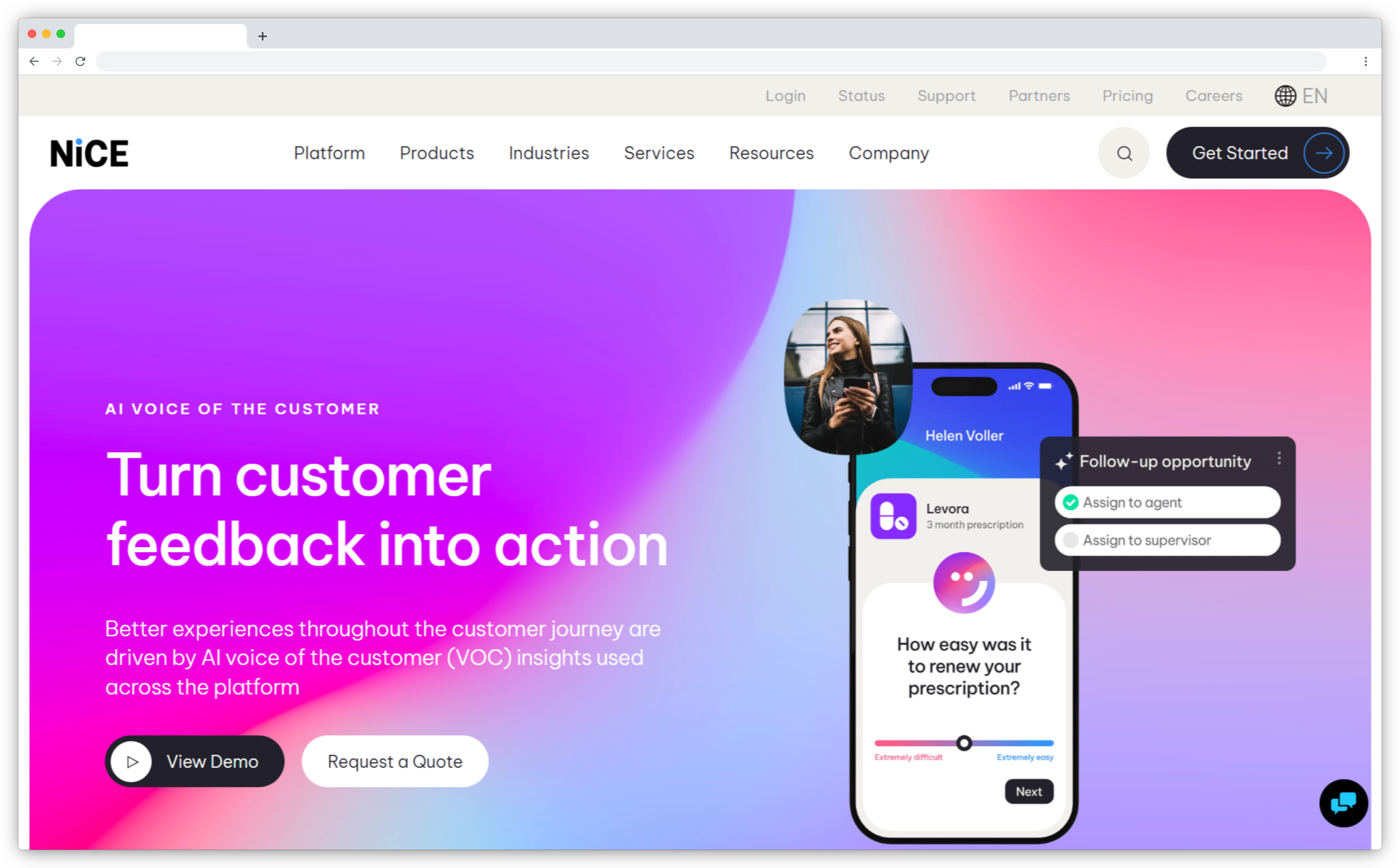
5. NICE Satmetrix: Best NPS Tool for Regulated, Compliance-Heavy BFSI CX Programs
NICE Satmetrix is a trusted enterprise NPS and CX platform widely used by traditional banks, credit unions, insurance companies, and financial institutions operating in highly regulated environments. It combines robust compliance features, close-the-loop case management, and multi-journey NPS capabilities — making it ideal for organizations that must balance customer experience excellence with strict oversight and operational governance.
- Best For: Large banks, credit unions, and financial institutions with complex compliance requirements and multi-department CX programs
- Use Case: Enterprise rNPS & tNPS, VoC governance, case management, service recovery, regulatory-grade reporting
- Watchouts: Best suited for institutions needing structured CX operations — not ideal for teams that want lightweight customization or quick-build surveys
- G2 Rating: Not available
Why Do Large or Regulated Banks Prefer Satmetrix in 2026?
NICE Satmetrix excels in organizations where CX governance, compliance, and structured service recovery matter as much as measuring NPS. Unlike lightweight survey tools, Satmetrix integrates deeply with operational workflows, ensuring every detractor triggers an accountable follow-up path. Banks choose NICE Satmetrix to maintain audit-ready CX operations, implement enterprise-level close-the-loop workflows, and standardize customer experience across branches and regions.
What Features Make NICE Satmetrix Ideal for BFSI Teams?
- Enterprise rNPS + tNPS Programs: Measure NPS across digital banking, branch interactions, call centers, loan processes, and card lifecycle journeys.
- Structured Case Management: Built-in workflows for detractor alerts, follow-ups, escalations, and resolution tracking.
- AI-Driven Feedback Categorization: Automatically groups feedback into banking-relevant themes using machine learning.
- Compliance-Friendly Architecture: Strong governance tools with audit trails, secure access control, and policy-aligned data handling.
- Multi-Channel VoC Collection: SMS, email, web, IVR, mobile app prompts, call center transcripts, and branch devices.
- Role-Based Dashboards: Tailored views for CX leaders, branch managers, product teams, and operational heads.
NICE Satmetrix Pros
- Strong governance and compliance features
- Mature case management and close-the-loop workflows
- Excellent for large, regulated BFSI environments
- AI analytics for issue categorization and risk detection
- Deep multi-channel feedback collection
NICE Satmetrix Cons
- Less flexible for custom survey logic or UI personalization
- More rigid than modern lightweight platforms
- Higher cost and longer implementation cycles
- Requires ongoing process ownership to maximize value
NICE Satmetrix Pricing
- Custom pricing based on business requirements
- Free trial for paid features may be available upon request
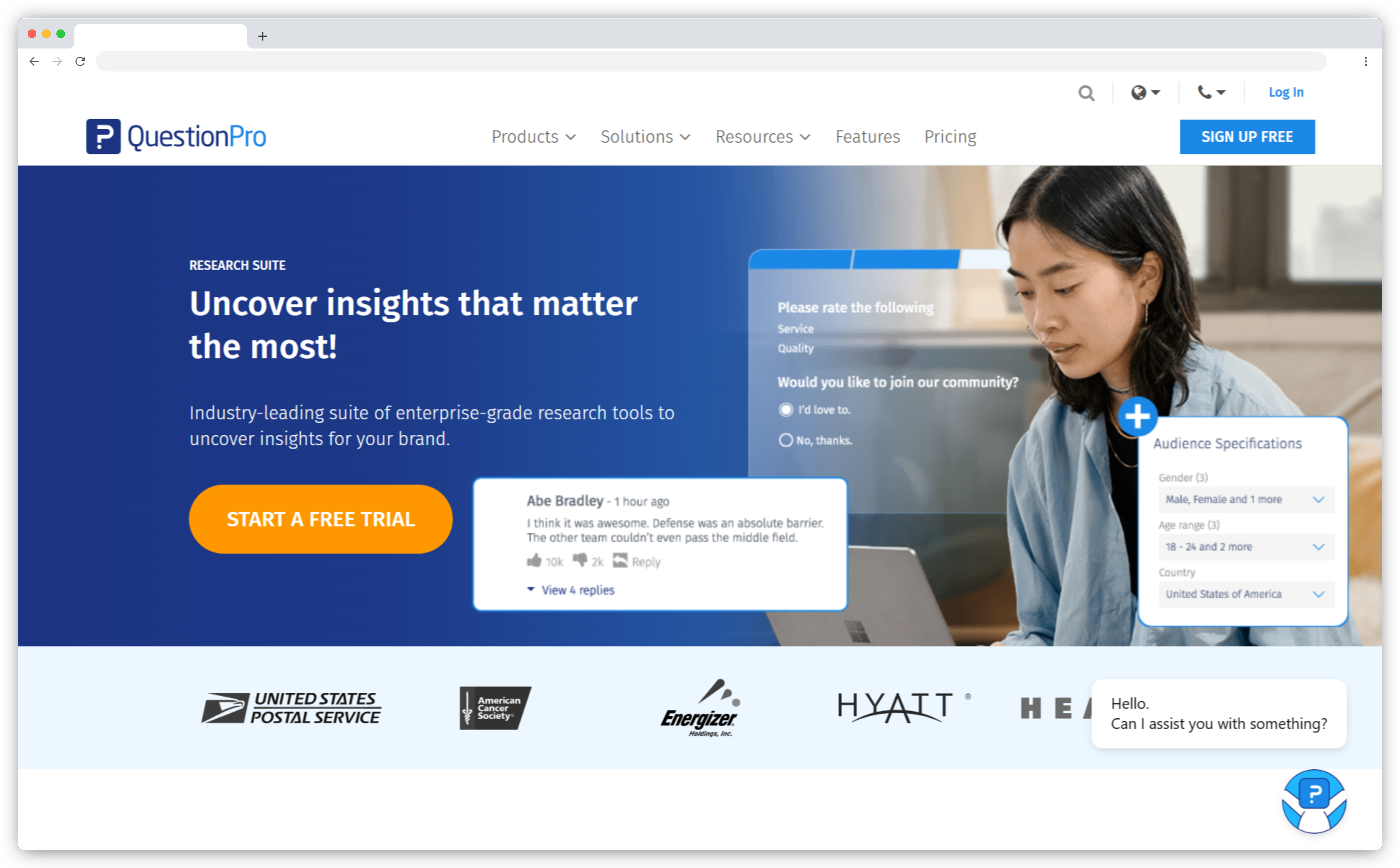
6. QuestionPro: Best Affordable NPS Platform for Small & Mid-Sized Banks & Financial Institutions
QuestionPro is a versatile and cost-effective NPS and survey platform widely used by small and mid-sized banks, credit unions, NBFCs, and fintechs that need reliable feedback collection without the complexity or cost of enterprise CX platforms. Known for easy setup, broad feature set, and strong survey customization, QuestionPro gives financial institutions a simple yet practical way to run NPS programs across digital and branch journeys.
- Best For: Small–mid-sized banks, credit unions, rural banks, microfinance institutions, and growing fintechs
- Use Case: Basic NPS measurement, customer feedback, branch surveys, digital experience surveys, loan & service interactions
- Watchouts: Best suited for teams needing quick deployment and affordability — not ideal for deep automation, advanced AI, or enterprise-level CX analytics
- G2 Rating: 4.5/5 (based on 1000+ reviews)
What Makes QuestionPro a Good NPS Option for Banks?
QuestionPro is chosen by BFSI organizations that want a flexible, economical, and easy-to-use NPS platform without the steep learning curve of enterprise tools. It supports banks in launching NPS programs quickly across digital, branch, and support channels — ideal for institutions building their CX practice or expanding from manual surveys to structured VoC programs.
What Features Make QuestionPro Ideal for Banking Teams?
- Easy-to-Launch NPS Surveys: Ready templates and quick setup for rNPS and tNPS programs.
- Multi-Channel Feedback Collection: Email, SMS, website embeds, QR codes, offline surveys, and field data collection.
- AI-Powered Text & Sentiment Analysis: Basic AI features categorize feedback and detect sentiment at scale.
- Customizable Banking Surveys: Tailor surveys for onboarding, loan servicing, ATM experience, branch interactions, card services, and digital banking flows.
- Branch & Location Analytics: Break down NPS and feedback by branch, region, or channel.
- Offline & Field Survey Support: Useful for microfinance and rural banking where connectivity is inconsistent.
- Integrations with CRMs & Tools: Available through APIs, Zapier, Salesforce, HubSpot, and more.
QuestionPro Pros
- Very easy to set up and use
- Cost-effective for SMB banks and fintechs
- Flexible survey builder with banking-relevant templates
- Multi-channel feedback support including offline mode
- Strong reporting and export capabilities
QuestionPro Cons
- Limited automation and advanced workflows compared to enterprise platforms
- AI features are more basic than competitors
- Dashboarding is functional but not sophisticated for complex BFSI needs
- Requires manual effort for deep analysis and operational mapping
QuestionPro Pricing
- Starts at $99/month
- Free version available
7. Delighted: Best Lightweight NPS Tool for Fintechs & Digital-First BFSI Teams
Delighted has historically been one of the simplest and fastest NPS tools used by fintechs and small financial teams. Recently, Delighted was officially sunset as part of product consolidation by Qualtrics. While existing customers may still use the platform, new BFSI teams typically look for alternatives. Still, Delighted remains a relevant reference point for light, frictionless NPS deployment — especially in early-stage fintech and digital-first banking teams.
- Best For: Small fintechs, early-stage digital banking teams, and lightweight CX programs (primarily legacy users)
- Use Case: Basic rNPS surveys, app feedback, support interaction feedback, simple sentiment tracking
- Watchouts: Delighted is no longer actively sold — new teams should choose Delighted alternatives
- G2 Rating: 4.7/5 (based on 60 reviews)
Should Fintechs Use Delighted for Simple NPS Tracking in 2026?
For fintechs and digital-first banking teams, Delighted was historically one of the easiest ways to launch NPS without heavy configuration or CX overhead. But because Delighted has been sunset, it's not recommended for new fintechs in 2026. Existing users may continue to operate the tool — for new implementations, consider supported alternatives. For fintechs building a long-term CX stack, especially those scaling into lending, cards, UPI/payments, or multi-product ecosystems, Delighted's lack of ongoing development and basic analytics make it unsuitable as a future-proof choice.
Delighted Pros
- Very easy to set up and operate
- High response rates due to clean UI
- Zero-friction NPS deployment
- Works well for early-phase CX programs
Delighted Cons
- Not suitable for enterprise BFSI needs or compliance-heavy institutions
- No longer actively developed — sunset by Qualtrics
- Limited tNPS or multi-touchpoint measurement
- Minimal automation or workflow depth
Delighted Pricing
- Starts at $19/month
- Free version available
How to Choose the Best Banking NPS Tools for Your Business?
Choosing the best NPS tool for banking and financial services requires more than comparing features. Banks operate across high-risk, multi-channel, compliance-heavy environments — meaning the right NPS platform must align with operational workflows, digital journeys, and regulatory expectations. Here's the BFSI-specific framework for making the right call.
a. Should You Choose tNPS, Relationship NPS, or Both?
Banks should ideally use both rNPS and tNPS because each serves a different purpose. Relationship NPS (rNPS) tells you the overall trust and loyalty customers have in your bank. Transactional NPS (tNPS) captures loyalty at specific touchpoints such as onboarding, loan approval, branch visits, payment failures, or support interactions. Fintechs and mid-sized banks typically start with tNPS to diagnose journey-level issues. Larger BFSI organizations need both to get a complete loyalty picture. For context on what is a good NPS score by industry and how BFSI benchmarks compare, see our benchmarks guide.
b. Which Compliance and Security Requirements Matter in BFSI?
Banks handle sensitive financial data, making compliance a top priority. This isn't negotiable — it's the baseline filter. Look for:
- Certifications: ISO 27001:2022, SOC 2 Type II, PCI DSS (if handling payment card data)
- Data privacy: GDPR compliance, CCPA, data residency options (regional storage)
- Access controls: Role-based access control (RBAC), SSO, IAM compatibility
- Audit trails: Who accessed what response, when, and what action was taken — essential for regulatory audits
- Right to erasure: How the platform handles GDPR deletion requests for NPS response data tied to financial records
If your NPS tool will integrate with core banking or CRM systems, security governance becomes non-negotiable. A certification checklist isn't bureaucratic overhead — it's what protects your institution when regulators ask questions.
c. Which Channels Do Your Customers Use (Branch, App, IVR, etc.)?
Your NPS tool must align with your highest-volume engagement channels:
- Branch: Tablets, kiosks, QR codes, SMS
- Digital Banking App: In-app prompts, push surveys
- Website: Web intercepts, embedded survey widgets
- Call Center/IVR: Post-call tNPS, SMS follow-ups
- WhatsApp: Conversational NPS flows
- Email/SMS: For broad rNPS pulses
Banks with hybrid customer journeys (branch + digital) need omnichannel NPS tools. Fintechs with app-heavy traffic need strong in-app NPS capabilities. For more on channel-specific response rates and what to expect from each, see our guide on NPS survey response rates.
d. Do You Need CRM/Helpdesk Integrations?
Integrations matter because NPS is not useful unless teams act on it. CRM and helpdesk integrations enable auto-triggering tNPS after ticket resolution, routing detractors to RMs or support teams, creating follow-up tasks based on feedback, linking NPS with account health or product usage, and tracking unresolved issues or repeat detractors. Banks using Salesforce, HubSpot, Zendesk, or Freshdesk should choose platforms with native integrations, not just custom API options.
e. Do You Need Multi-Entity or Holding Company Support?
This is the selection criterion most generic NPS comparisons skip. If your institution operates multiple brands, subsidiaries, or regional entities under a holding structure, the NPS platform needs to run fully separate programs per entity, maintain data segregation for compliance, and roll up consolidated reporting across the hierarchy. Without this, you'll either build a workaround that breaks eventually or sacrifice entity-level visibility that your compliance team actually needs.
f. Do You Need AI-Driven Root-Cause Analysis?
AI is no longer optional for banks processing thousands of NPS responses monthly. AI-powered tools help BFSI teams identify the top issues driving detractor scores, automatically categorize feedback, detect sentiment and emotion, spot patterns in digital versus branch journeys, and predict churn and operational risks. For a deeper view on how this plays out in practice, see our guide on NPS data analysis and reporting.
g. What is Your Budget?
Budget decisions for banking NPS tools go beyond subscription cost — they depend on how the tool will scale with your customer base, digital channels, and operational workflows. Instead of choosing purely on price, financial institutions evaluate total value: how well the platform reduces churn, improves digital and branch journeys, increases operational efficiency, and helps teams act faster on detractor signals. Determine what features your bank truly needs and choose a platform that aligns with those needs today and can scale with your CX maturity over time.
Best Practices for Implementing NPS in Banking & Finance
Implementing NPS in a banking environment isn't just about sending surveys — it's about capturing the right signals across high-stakes financial journeys and turning them into operational improvements. Here's a strategic, real-world view of how leading banks and fintechs run successful NPS programs.
1. Use Multichannel Feedback Collection to Capture Every Touchpoint
A multichannel approach helps you understand where friction is happening and ensures you're not only hearing from one type of customer. Banking customers move across channels constantly — from branch interactions to app logins to IVR support. If your NPS program only measures one channel, you'll get a distorted picture. Mix channels like SMS and WhatsApp for quick, high-response tNPS; in-app prompts for digital journey feedback; email for rNPS or monthly pulses; IVR for post-call experiences; and QR codes/kiosks at branches for on-premise insights.
2. Use Both Relationship NPS and Transactional NPS
If you want a clear, honest picture of how your customers feel, you can't rely on just one type of NPS score. Relationship NPS (rNPS) gives you the big picture — how customers feel about your brand as their long-term financial partner. Transactional NPS (tNPS) zooms into what happened today — during a loan update, a branch visit, a payment failure, or any high-stress financial moment. When you combine them, you get a layered understanding of customer loyalty that neither can provide alone. Customers may love your brand but struggle with one journey, or dislike one experience but still trust you overall. With rNPS + tNPS together, you can pinpoint where the relationship is strong, where it's fragile, and exactly which touchpoints need attention next.
3. Trigger NPS After High-Impact Banking Journeys
In banking, not every interaction carries the same emotional weight. Some moments are "make-or-break" experiences that define how customers feel about you — and these are where expectations are highest. Trigger transactional NPS right after these high-impact events: loan approvals or rejections, credit/debit card issuance or activation, branch visits and RM interactions, digital banking support or chat resolutions, contact center ticket closures, failed payments, disputes, or chargebacks.
4. Ask Follow-Up Questions to Understand Detractors
A detractor score alone doesn't tell you anything useful. You need to know why the customer felt disappointed or frustrated. Asking a simple follow-up question turns a vague score into a clear explanation your teams can act on. Try: "What could we have done better for you today?" or "What made your experience less than ideal?" These open-ended questions help customers articulate what went wrong. For you, that means faster troubleshooting, clearer priorities, and fewer assumptions about what needs fixing. NPS detractors who receive a thoughtful follow-up within 24 hours are significantly more likely to change their perception of the institution — in banking, where switching costs are high, that recovery matters.
5. Use Tagging and Sentiment Analysis to Find Root Causes
When you're handling thousands of NPS comments every month, manual analysis doesn't scale. Automated tagging and sentiment analysis save hours of effort and surface patterns immediately. You'll start spotting recurring issues like KYC or documentation delays, digital banking glitches, slow or inconsistent RM follow-up, long queue times at branches, and app payment or transaction failures. Instead of reacting to isolated complaints, you get a clear view of systemic issues across channels. This helps you address root causes, not symptoms.
6. Close the Loop Within 24–48 Hours
In banking, problems feel urgent. A delayed response can turn a frustrated customer into a lost one. An effective close-the-loop routine includes real-time alerts sent to the right RM or branch manager, follow-up tasks assigned directly from your NPS platform, and a brief acknowledgement or update to reassure the customer. A timely response shows customers that you value their time and their trust. Closing the feedback loop within 24–48 hours consistently outperforms delayed follow-up across every BFSI segment we've seen — and the lift in NPS score from a well-handled recovery is often larger than the loss from the original detractor event.
7. Share NPS Insights Across Product, Operations & CX Teams
If only your CX team sees NPS feedback, you're losing half the value. Product teams need it to refine digital experiences. Operations needs it to streamline processes and reduce friction. Branch/RM leaders need it to improve service consistency. Contact centers need it to reduce repeat issues. When every team that influences the customer experience has access to NPS insights, you get coordinated, organization-wide improvements instead of siloed fixes that solve symptoms without addressing causes.
Conclusion
A detractor score sitting in a dashboard isn't a feedback program. It's evidence that your institution is listening without acting. The difference between banks that improve NPS year over year and those that plateau isn't survey frequency or question design — it's what the platform does with the response in the 24 hours after it arrives.
Banking is an industry where trust is the product. Customers who score you a 3 after a loan delay aren't just unhappy about that one interaction — they're reconsidering the relationship. The right NPS tool detects that signal at the right moment, routes it to the RM who can actually call them back, and gives the product team the pattern data to fix the underlying process. That's a system. Not a survey.
If you're evaluating which platform to build that system on, Zonka Feedback is built for exactly this — rNPS and tNPS across branch and digital channels, AI that categorizes feedback into banking-specific themes automatically, ISO 27001:2022 and GDPR compliance for regulated environments, and closed-loop workflows that don't require a CX analyst to run manually.
The banks winning on loyalty aren't the ones collecting the most feedback. They're the ones responding the fastest to the right signals. The right tool is what makes that possible at scale.
Schedule a demo to see how it works across your specific banking journeys.

.png)
.png)

.png)
.png)