


.svg)
 Healthcare
 Finance
 Retail
 SaaS & Digital
 eCommerce
 Education
 Salesforce
  HubSpot
 Pipedrive
 Mailchimp
 Klaviyo
 Zendesk
  Intercom
 Freshdesk
 HelpScout
  Front
Front Jira
Jira Slack
Slack  MS Teams
 Zoom
Zoom Google Sheets
  Zapier
  Integrately
 Make
Make  Webhooks




 MS Teams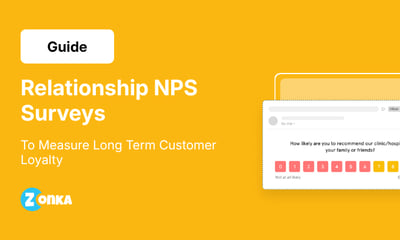



TL;DR
- Relationship NPS (rNPS) measures long-term customer sentiment and brand loyalty, providing insights into retention, advocacy, and expansion potential.
- It follows the same what is Net Promoter Score framework and is collected periodically (quarterly, biannually, or annually) to gauge overall relationship health.
- Deploy rNPS surveys at key lifecycle stages (post-onboarding, pre-renewal, long-term engagement) via email, in-app, customer success interactions, SMS, and more.
- To implement an effective rNPS program, align it with business goals, segment customers for meaningful insights, automate surveys, and integrate results into business tools.
- Customer expectations, ease of doing business, product experience, brand engagement, trust, and competitive market positioning shape relationship NPS scores.
Relationship NPS (rNPS) measures long-term customer loyalty and brand perception, not satisfaction with a single interaction. It's deployed periodically at key lifecycle stages to assess overall relationship health, predict churn, identify expansion opportunities, and activate brand advocates. The survey asks "How likely are you to recommend us?" and segments responses into Promoters (9-10), Passives (7-8), and Detractors (0-6). rNPS scores correlate directly with retention rates, expansion revenue, and referral activity when properly implemented with closed-loop workflows.
Your customers interact with your brand hundreds of times a year. Support tickets. Product updates. Renewal conversations. Each touchpoint shapes how they feel about you.
But here's the problem. Most companies measure satisfaction after each interaction and assume that tracking transactional sentiment gives them the full picture. It doesn't. A customer can rate every support call a 9 and still leave at renewal because the relationship isn't working.
That gap between transactional satisfaction and relationship health is where churn happens quietly. And by the time you notice it in your renewal data, it's too late to fix.
Relationship NPS closes that gap. It measures how customers feel about your brand over time, not how they felt about one moment. It tells you who's at risk before they churn, who's ready to expand, and who will advocate for you without being asked.
This guide covers everything: when to deploy rNPS surveys, how to structure them for real insights, which channels actually drive responses, how to automate collection at scale, what influences scores, and how to turn feedback into retention, expansion, and advocacy.
What is Relationship NPS?
Relationship NPS measures how customers feel about your brand overall, not how they felt about one interaction. It captures long-term loyalty, churn risk, and advocacy potential.
Here's why that distinction matters. A customer can have five great support interactions in a row and still leave at renewal because the product isn't solving their problem anymore. Transactional surveys catch satisfaction in the moment. Relationship NPS catches whether the entire experience is working.
Unlike transactional net promoter score surveys tnps, which fire after specific events (case closed, onboarding complete, feature adopted), relationship NPS is deployed periodically. Quarterly for SaaS. Annually for long-cycle B2B. After enough time has passed for customers to form a real opinion about the relationship.
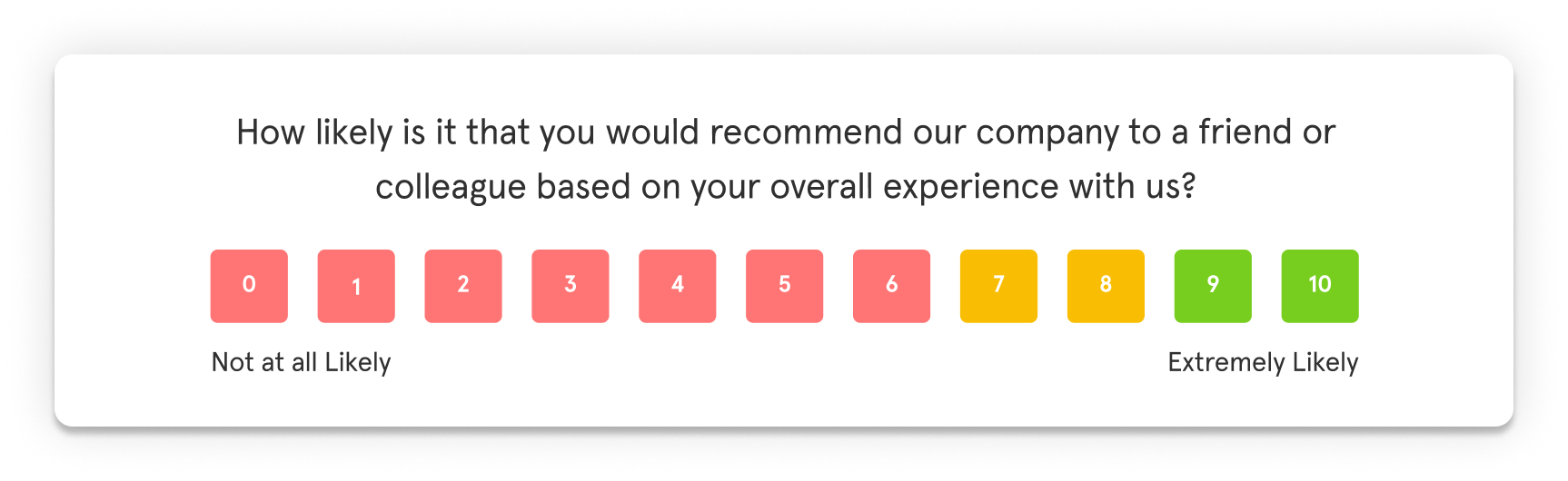
The core question stays the same: "On a scale of 0 to 10, how likely are you to recommend us to a friend or colleague?" Customers who respond 9-10 are Promoters. 7-8 are Passives. 0-6 are Detractors.
But the timing and context change everything. When you ask matters as much as what you ask.
Why Relationship NPS Matters
Most businesses track revenue churn. By the time that number moves, the decision to leave was made months ago. Relationship NPS gives you the early signal.
A customer scoring 6 or below isn't just dissatisfied. They're calculating whether it's worth the effort to switch. Research from Frederick Reichheld's original NPS research found that Promoters had a repurchase rate of 42%, while Detractors repurchased at just 18%. That gap compounds over time.
Relationship NPS also predicts expansion. Customers who score 9-10 aren't just staying. They're buying more, upgrading plans, and bringing colleagues with them. Amazon Prime is built on this principle: once customers become Promoters of the membership, they expand usage into Video, Fresh, and other services without additional marketing spend.
And then there's advocacy. Promoters refer without being asked. They defend you in competitive evaluations. They write case studies and speak at your events. Transactional NPS tells you if someone had a good experience. Relationship NPS tells you if they believe in your brand.
How is Relationship NPS Calculated?
Relationship NPS uses the same formula as standard Net Promoter Score: subtract the percentage of Detractors (0-6) from the percentage of Promoters (9-10). Passives (7-8) are counted in the total but don't affect the score directly.
For example: If 50% of respondents are Promoters and 20% are Detractors, your rNPS is 30.
The calculation itself is straightforward. What matters more is when you measure and who you survey. You don't survey someone two weeks after signup and call it relationship NPS. They haven't had enough experience to form a real opinion. You also don't wait until renewal to ask because by then, the decision is already made.
For the complete calculation methodology, scoring interpretation, and step-by-step examples, see our detailed guide on calculate net promoter score. For benchmarking context, see our guide on what is a good net promoter score.
When, Where, and How to Deploy Relationship NPS Surveys
You can calculate relationship NPS perfectly and still get useless data if you send the survey at the wrong time, through the wrong channel, or to the wrong people. Here's how to deploy rNPS so the insights actually matter.
When to Deploy Relationship NPS Surveys
Timing isn't just logistics. It determines whether you're measuring signal or noise.
Send too early and customers haven't formed a real opinion yet. A customer two weeks into a SaaS trial doesn't have a relationship with your brand. They have an impression. That's not the same thing.
Send too late and you've missed the moment when sentiment started shifting. If you wait until renewal to ask, you're not measuring relationship health. You're auditing a decision that's already been made.
Here's what works across different business models:
-
SaaS and subscription products: Run relationship NPS at 90 days post-onboarding, then quarterly or biannually. The 90-day mark is where initial excitement fades and actual value delivery becomes clear. After that, quarterly surveys track how sentiment evolves as usage deepens.
-
Enterprise B2B: Deploy before contract renewals or during Quarterly Business Reviews (QBRs). The goal isn't to ask if they're renewing. It's to understand relationship health while there's still time to fix issues.
-
Retail and e-commerce: Survey after multiple purchases, not just one. A single transaction doesn't create loyalty. Repeat behavior does. Wait until a customer has bought 3-5 times, then measure how they feel about the brand overall.
-
Financial services and healthcare: Annual surveys work well because these are inherently long-cycle relationships. Trust builds slowly. Survey too frequently and you're measuring noise, not meaningful shifts in sentiment.
One more thing: combine rNPS timing with behavioral triggers. If a long-time customer suddenly stops engaging with your product, that's a better time to survey than waiting for the next scheduled check-in. For comprehensive deployment guidance, see our guide on how when and where to collect net promoter score surveys.
Where to Deploy Relationship NPS Surveys
The channel you choose determines who responds and how seriously they take the survey. Meet customers where they already engage with your brand.
a. Email Surveys for Decision-Makers
If your audience is primarily B2B decision-makers or high-value customers who engage through email, this is your default channel. It gives respondents time to think through their answer rather than forcing an immediate reaction.
Best for: Long-term customers, C-level executives, account owners, key decision-makers.
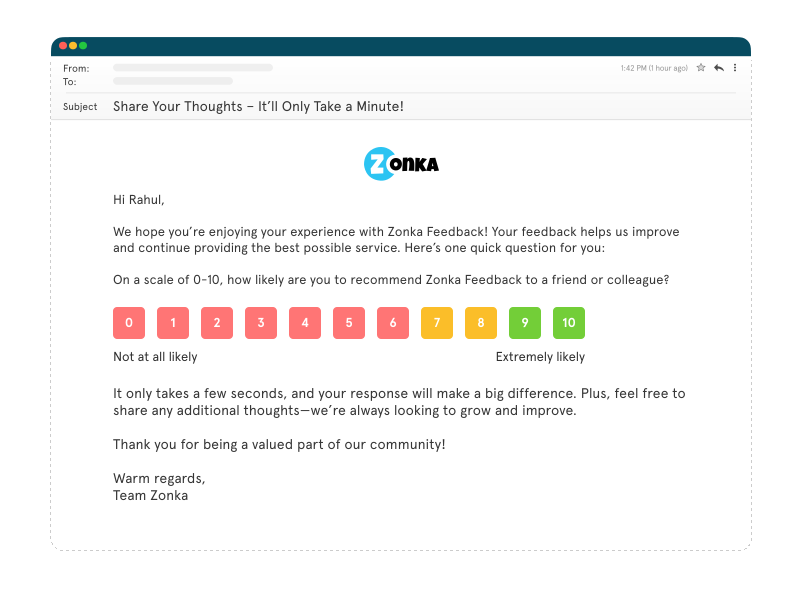
For email-specific tactics, see our guide on NPS survey email templates and best practices.
b. In-App and Web Surveys for Active Users
For digital products and SaaS platforms, embedding rNPS surveys directly in your product captures feedback from engaged users at moments when their experience is top of mind. Just don't interrupt their workflow. Trigger surveys when engagement is high: after completing a milestone, reaching a subscription anniversary, or successfully using a key feature.
Best for: SaaS platforms, e-commerce sites, digital services, and active software users.
c. Customer Success Interactions for High-Touch Accounts
For enterprise customers, relationship NPS should be integrated into ongoing account management. Customer success teams should collect rNPS during check-ins, QBRs, or renewal conversations. This makes it personal rather than transactional and ensures someone is there to address concerns immediately.
Best for: Enterprise B2B, managed accounts, long-term service relationships.
d. SMS and Messaging Apps for High-Response, Low-Friction Surveys
In industries where mobile engagement is high (hospitality, telecom, financial services), SMS or WhatsApp surveys get faster responses than email. Keep them short. One question, one follow-up. Customers should be able to respond in under 30 seconds.
Best for: Retail, hospitality, telecom, fast-paced service industries.
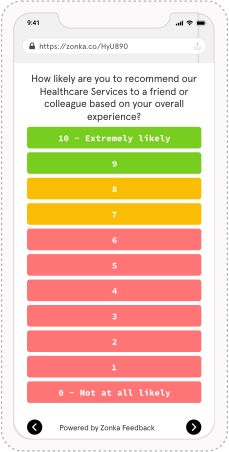
For multi-channel deployment strategies, see our guide on NPS surveys on whatsapp sms in app.
e. Embedded in Customer Portals and Communities
If customers actively use a self-service portal or online community, placing rNPS surveys there captures feedback from highly engaged users. These customers already have a relationship with your platform, so their responses tend to be thoughtful.
Best for: Enterprise platforms, membership-driven businesses, communities with high user interaction.
How to Structure Effective Relationship NPS Surveys
The core question is non-negotiable. But what you ask next determines whether you get data you can act on.
Step 1: Start with the Core Question
Always the same: "On a scale of 0-10, how likely are you to recommend [Company Name] to a friend or colleague?"
This question unlocks insights, but only if you follow up.
Step 2: Use Follow-Up Questions to Understand Why
The score tells you where someone stands. The follow-up tells you why they're standing there. This is where actionable insights live.
For Promoters (9-10): "What do you love most about working with us?"
Use this to identify strengths worth amplifying, build case studies, and structure referral programs around what's actually working.
For Passives (7-8): "What could we improve to make your experience even better?"
These customers aren't unhappy, but they aren't loyal either. This question reveals what's holding them back from becoming Promoters.
For Detractors (0-6): "What was missing or disappointing in your experience?"
This is where churn prevention starts. The patterns that emerge here should drive product roadmap, support improvements, and customer success interventions.
Step 3: Add Contextual Questions for Deeper Insights
Depending on your business priorities, add one more question that aligns with what you need to learn:
Product teams: "What features or improvements would add the most value for you?"
Customer success: "How can we better support your goals?"
Competitive analysis: "What made you choose us over alternatives?"
Keep it short. The entire survey should take 30 seconds or less. Longer surveys drive response rates down and data quality with them.
Step 4: Make It Frictionless
Every unnecessary click costs you responses. Auto-fill customer details. Ensure mobile-friendliness (more people respond on mobile than desktop). One primary question, one follow-up. That's the ceiling.
For question templates and examples, see our comprehensive guide on NPS survey question design.
How to Implement an Effective Relationship NPS Program
Collecting relationship NPS is easy. Turning it into a system that drives retention, expansion, and advocacy is where most businesses fail.
Too many companies treat rNPS as a reporting metric. They send surveys, calculate scores, share dashboards, and stop there. Nothing changes. Churn stays high. Expansion stays flat. Promoters never get activated.
An effective rNPS program isn't passive. It's a closed-loop system where every score triggers an action. Detractors get outreach. Passives get engagement. Promoters get asked to refer. Here's how to build that. For complete implementation guidance, see our guide on how to implement NPS.
1. Define Clear Business Goals
Before you deploy a single survey, decide what you're trying to move. Is customer churn the problem? Then relationship NPS should feed directly into retention workflows. Want to increase referrals? Then link rNPS to your advocacy program.
Set measurable targets. Not "improve rNPS" but "increase rNPS from 40 to 50 in six months by fixing onboarding friction." Specific goals create accountability.
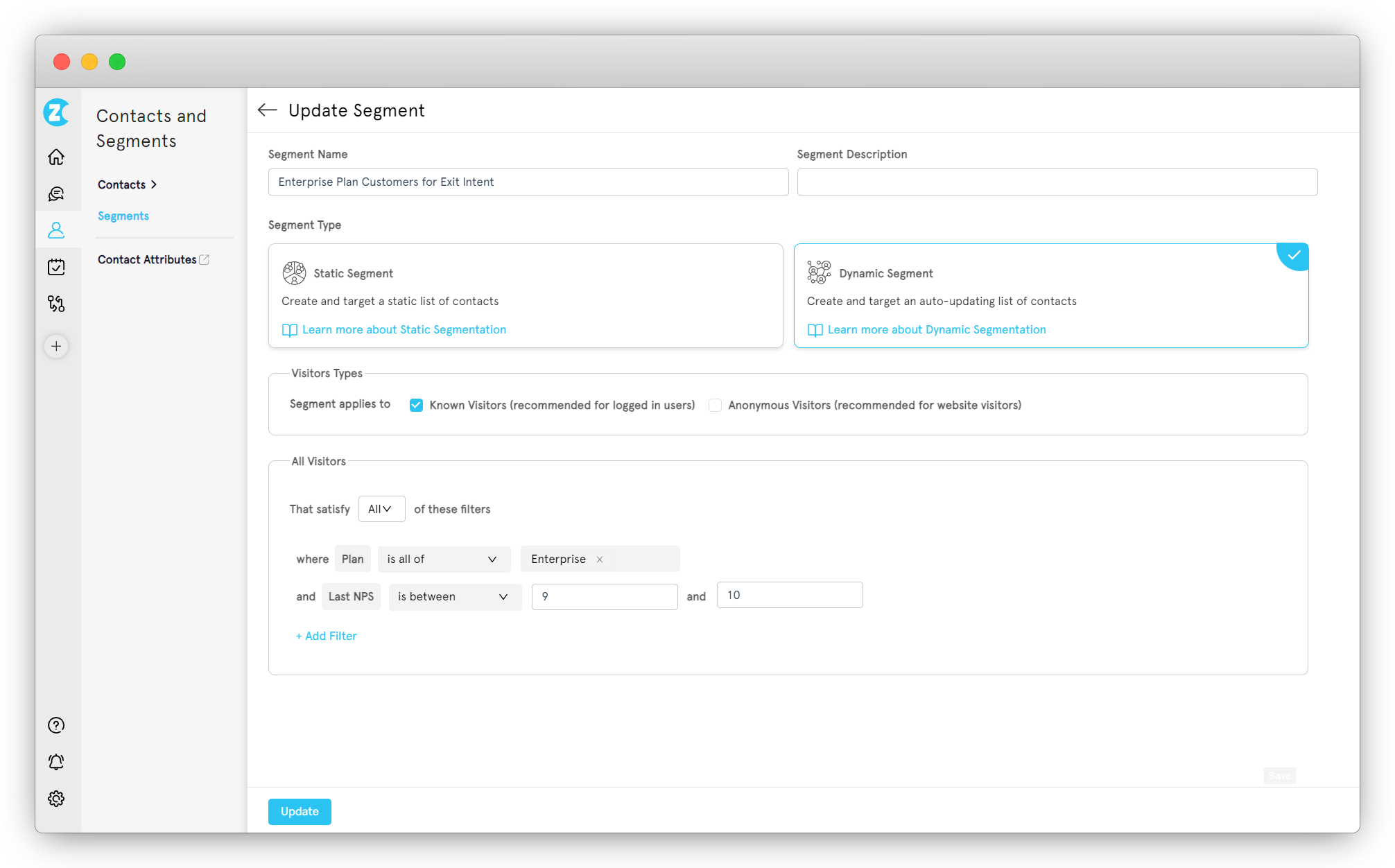
2. Segment Customers for Meaningful Insights
Not all customers should be surveyed the same way. Sending relationship NPS to the wrong audience distorts results and leads to bad decisions.
-
Segment by lifecycle stage: Long-term customers (12+ months) provide insights on sustained value delivery. New customers (0-6 months) highlight onboarding gaps.
-
Segment by role: In B2B, decision-makers influence renewals, but end-users determine daily engagement. Survey both, but separately.
-
Segment by plan tier: Customers on premium plans may have different loyalty drivers than those on basic tiers. Blend them and you lose the signal.
One more: don't treat all Detractors the same. A long-time customer scoring 4 is more alarming than a one-time user who never engaged. Prioritize accordingly.
3. Automate Survey Distribution
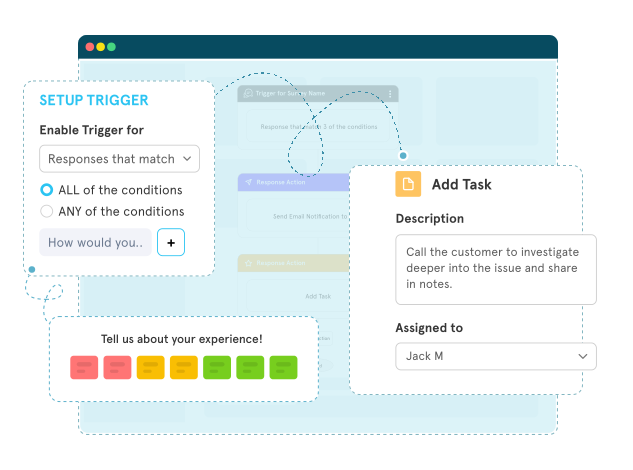
Manual survey rollouts lead to delays, low response rates, and fragmented insights. Automate survey triggers based on customer milestones instead.
-
90+ days post-onboarding: Capture early sentiment once users have had meaningful engagement.
-
Pre-renewal: Gauge retention risk before it's too late.
-
Post-milestone or feature usage: Identify whether key features are driving long-term satisfaction.
-
Quarterly or biannual health checks: Get periodic insights into overall brand perception.
Multi-channel distribution matters too. Email as primary, SMS as fallback if no mobile number exists. In-app prompts for active users. CRM workflows for high-touch accounts. For automation strategies, see our guide on NPS automation.
4. Integrate rNPS Data Into Business Systems
Relationship NPS isn't just a CX metric. It should flow across your entire business intelligence ecosystem.
-
Integrate with CRM so sales teams can factor relationship health into renewal conversations.
-
Connect to customer success platforms so CS teams can proactively manage at-risk accounts based on declining rNPS.
-
Feed into product analytics to correlate rNPS with feature usage trends.
-
Link to marketing automation to leverage Promoters for referral and brand advocacy campaigns.
Without integration, rNPS insights sit in a dashboard while decisions get made somewhere else.
5. Act on Insights, Not Just Scores
A common mistake: focusing on the number rather than the feedback behind it. Here's the action framework:
-
For Detractors (0-6): Trigger immediate follow-ups to understand pain points and offer resolutions. Don't wait. Speed matters here.
-
For Passives (7-8): Engage them with personalized value-adds. Educational content, deeper onboarding, exclusive access to features. Find out what's missing.
-
For Promoters (9-10): Activate them. Case studies, testimonials, referral programs. Turn satisfaction into advocacy.
Use AI-powered analysis to detect recurring themes in qualitative feedback. This helps prioritize which issues need urgent attention versus which are one-off frustrations. For sentiment analysis strategies, see our guide on using sentiment analysis to improve NPS.
6. Measure Impact and Iterate
Your relationship NPS program should improve over time. Track these metrics:
-
NPS trend over time: Are scores improving or declining across customer segments?
Detractor churn rate: Are you successfully reducing churn by addressing negative feedback?
Promoter revenue contribution: Are loyal customers driving referrals or expansion sales?
Response rate and engagement: Is your survey reaching the right audience effectively?
Don't just report scores. Run correlation analysis with revenue, churn, and retention data to prove business impact. That's how rNPS becomes a strategic asset rather than just another dashboard metric. For analysis frameworks, see our guide on NPS data analysis and reporting.
Factors That Influence Relationship NPS
Relationship NPS doesn't exist in a vacuum. It shifts based on experience, expectations, and evolving business relationships. Here's what actually moves the number.
1. Customer Expectations vs Brand Delivery
Loyalty isn't built on satisfaction alone. It's built on expectation alignment. Customers come to you with a vision of what they'll get. If your brand consistently delivers on that promise (or exceeds it), your rNPS stays strong. If it doesn't, even a good experience feels disappointing.
What kills alignment?
Overpromising during sales. If your marketing or sales teams set unrealistic expectations, even solid execution feels like underdelivery.
Competitor comparisons also matter. Customers don't just measure you against their past experiences. They compare you to industry leaders. If your value perception falls short, loyalty erodes even without major complaints.
Fix it by ensuring marketing and sales messaging aligns with actual experience. Benchmark your value against competitors on price, features, and support. Use post-onboarding surveys to adjust customer expectations early.
2. Ease of Doing Business
Even the best product won't keep customers loyal if working with your company is a hassle. Relationship NPS is heavily influenced by friction in the customer journey.
-
Complex onboarding kills momentum. If it takes too long to get started, customers disengage before they experience value.
-
Slow or inefficient support damages trust. Nothing tanks an rNPS score faster than feeling ignored when issues arise.
-
Excessive roadblocks create frustration. Complicated billing, contract renewals, or red tape in B2B relationships all add up.
Make onboarding effortless. Reduce setup time, automate key steps. Speed up support resolution and implement proactive assistance. Remove unnecessary friction in pricing, billing, and renewals.
3. Product Experience and Innovation
A strong relationship NPS doesn't just measure happiness today. It reflects confidence in your future. If your product isn't evolving with customer needs, they start looking elsewhere.
-
Feature gaps create frustration even if customers like your current offering. Product stability and reliability are non-negotiable. Frequent downtime, bugs, or performance issues erode trust fast.
-
Innovation and roadmap transparency matter. Customers want to see continuous improvement. If they feel your product is stagnating, they start considering alternatives.
Use rNPS feedback to prioritize roadmap decisions. Customers should see their voice reflected in product updates. Communicate your roadmap openly to keep them engaged in your vision. Ensure product reliability because stability is a loyalty prerequisite.
4. Customer Engagement and Relationship Strength
Relationship NPS reflects emotional connection, not just product satisfaction. Customers who feel valued and engaged are far more likely to be loyal advocates.
-
Personalization matters. Customers who feel like just another account number are less invested in your brand.
-
Proactive relationship management works. If you only check in when there's a renewal coming up, you're already losing them.
-
Brand community and thought leadership create stronger connections. Customers who engage with your content, events, or communities build deeper relationships with your brand.
Make engagement personal using customer data to tailor communications and experiences. Build long-term relationships, not just transactions. Ongoing check-ins matter. Create value outside your product through insights, exclusive access, or a strong brand community.
5. Trust, Reputation, and Competitive Landscape
Sometimes your relationship NPS isn't just about you. It's about the market you operate in. If customer trust in your industry shifts (for better or worse), your rNPS can change even if your service remains constant.
-
Trust in your industry affects perception. If competitors face scandals or bad press, it can impact how customers see you even if you're not involved.
-
Brand perception and public sentiment shape loyalty. Strong thought leadership and positive PR improve loyalty. Bad press damages it.
-
Competitor moves influence perception. A disruptive new competitor with better pricing or features can shift how customers view your offering.
Actively manage your brand reputation. PR and customer advocacy go hand in hand. Keep a pulse on the competitive landscape and be ready to pivot. Foster trust with transparency by owning mistakes and highlighting wins.
How to Maximize Your Relationship NPS Score
Your relationship NPS score predicts growth, retention, and long-term success. A strong score means customers don't just like your product. They believe in your brand and are invested in your success.
But loyalty isn't given. It's earned. Here's how to maximize your rNPS strategically. For proven improvement strategies, see our guide on bad NPS score how to improve.
1. Shift From Passive Feedback Collection to Proactive Relationship Management
Most companies wait for rNPS surveys to tell them where things are going wrong. The best companies predict and prevent issues before customers feel them.
Track behavior signals (low engagement, declining usage) before customers become Detractors. Create early intervention points. If a long-time customer suddenly disengages, trigger a proactive check-in before they respond negatively in a survey.
Embed relational health tracking in your CRM so customer success teams see rNPS trends alongside renewals, usage, and support history.
Map customer milestones (onboarding, post-adoption, renewal periods) and implement pre-survey check-ins to address friction before it impacts rNPS.
2. Fix the Experience Gaps That Matter Most
A weak relationship NPS usually isn't one thing going wrong. It's a mix of small friction points across the customer journey. The trick is prioritizing what will move the needle most.
Focus on onboarding and first impressions. Customers often form long-term perceptions early. A confusing start damages rNPS before you even have a chance to build loyalty.
Ensure ongoing value delivery. If customers don't consistently experience your product's full value, their enthusiasm fades even if they don't have immediate complaints.
Improve support and resolution speed. A great product won't make up for slow or impersonal service.
Run relationship NPS segment analysis to identify where Detractors are concentrated in the customer journey. Tackle those gaps first.
3. Move Passives to Promoters by Creating Value Beyond the Product
Passives (7-8) are your biggest untapped opportunity. They aren't unhappy, but they aren't emotionally invested either. If you can shift this group into Promoters, your rNPS score and customer advocacy will skyrocket.
What drives Passives? A lack of personal connection. They like your product, but they don't feel like you understand them. Minimal engagement outside of transactions. They use your solution but don't interact with your brand in meaningful ways. Unrealized potential. They might not be using all the features or services that could improve their experience.
Launch a customer engagement program with exclusive insights, personalized success roadmaps, and early access to features. Make them feel like they're part of something bigger than just a service. For engagement strategies specific to this segment, see our guide on NPS passives.
4. Turn Promoters Into Amplifiers
A high relationship NPS isn't just a measure of satisfaction. It's fuel for business growth. If you're not activating your Promoters, you're leaving advocacy, referrals, and expansion revenue on the table.
Turn them into content creators. Invite them to share their experiences in case studies, webinars, or guest articles.
Make referrals frictionless. Simplify the process for Promoters to introduce your product to others.
Incentivize advocacy strategically. Rewards don't have to be discounts. VIP access, exclusive content, and recognition go a long way.
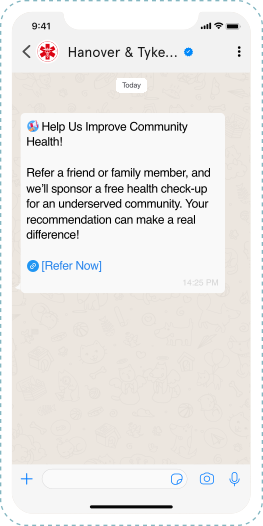
Identify your top 10% most engaged Promoters and create a structured advocacy program that rewards their loyalty with more than just a thank you. For activation strategies, see our guide on NPS promoters.
5. Drive Continuous Improvement With Closed-Loop Management
If you want to maximize relationship NPS long-term, you need more than a one-time fix. You need a system that constantly improves your customer relationships.
Act on feedback in real-time. Customers should see tangible improvements based on their responses.
Align internal teams. Make sure product, CX, and marketing teams all have visibility into rNPS insights and act on them collaboratively.
Measure impact. Track not just changes in rNPS, but how improvements influence retention, revenue, and engagement.
.svg)
Build an internal rNPS action committee that meets monthly to review feedback, prioritize initiatives, and ensure follow-through. For a complete framework, see our guide on closing the feedback loop with NPS surveys.
Acting on Relationship NPS Feedback
Too many companies collect relationship NPS feedback, look at the score, share a report, and move on. That's not how you build loyalty.
If you're not actively using rNPS feedback to shape strategy, improve customer experience, and drive retention, then you're leaving growth on the table. Here's how to turn feedback into action. For comprehensive workflow guidance, see our guide on the inner loop in net promoter system.
a. Prioritize Action Over Analysis
A high relationship NPS is meaningless if you don't act on it. Many companies get stuck in analysis paralysis, tracking numbers and building dashboards without making real changes.
Create a structured response system where every rNPS response is categorized and assigned to a team (CX, Product, Success, Sales).
Set a 48-hour rule for engagement. If a Detractor or Passive provides feedback, they should hear from someone within two business days.
Establish clear ownership. Who is responsible for following up with which customers, and how is success measured?
Implement automated workflows that trigger follow-up actions based on customer responses so no feedback gets lost.
b. Create Personalized Action Plans for Each NPS Segment
Most companies focus on saving Detractors, but you should be nurturing every segment because loyalty is built through engagement, not just crisis management.
-
For Detractors (0-6): Acknowledge their frustration and act fast. Silence worsens churn risk. Offer a resolution, not just an apology. Give them a clear plan for improvement. Identify recurring issues. If multiple Detractors cite the same concern, that's a business priority, not just a one-off issue. For detailed recovery strategies, see our guide on NPS detractors.
-
For Passives (7-8): Discover what's missing. A simple follow-up question like "What would make your experience a 9 or 10?" can reveal low-hanging fruit. Engage them proactively. If they haven't adopted key features, offer a product walkthrough or exclusive training. Make them feel valued. Often, Passives just don't feel a strong connection to the brand. Fixing that can turn them into Promoters.
-
For Promoters (9-10): Don't take them for granted. Activate them. Invite them to referral programs, beta tests, or loyalty programs. Recognize and reward their advocacy. Feature them in customer spotlights, offer VIP experiences, or provide early access to new releases. Make their positive experience contagious. Provide an easy way for them to share testimonials or refer others. For specific follow-up templates, see our guide on NPS follow up emails.
c. Link rNPS Feedback to Revenue and Churn Prevention
If relationship NPS insights don't drive revenue impact, you're missing a growth opportunity. It's not just a customer experience metric. It's a business growth indicator.
Identify expansion opportunities from Promoters. Customers who rate 9-10 are prime for upsells, renewals, and cross-sells.
Track churn correlation with declining rNPS. Low scores are often an early signal of upcoming attrition.
Use rNPS data to prioritize high-value accounts. Segment Detractors and Passives who have high annual contract value (ACV) and prioritize personalized retention efforts. For more on linking NPS to business outcomes, see our guide on NPS and customer lifetime value.
d. Integrate Insights Across Teams
Relationship NPS is not just a CX metric. It should guide decisions across product, marketing, sales, and customer success. If feedback is siloed, you're missing the chance to drive company-wide improvements.
Customer Success uses rNPS trends to predict and prevent churn by proactively engaging at-risk accounts. For CS-specific workflows, see our guide on NPS for customer success.
Product uses rNPS feedback to shape roadmap decisions based on real customer needs, not just assumptions. For how product teams leverage NPS, see our guide on NPS for product teams.
Marketing uses rNPS insights to refine messaging and highlight what customers love most.
Sales uses rNPS scores to identify referral and expansion opportunities among Promoters. For strategies connecting NPS to Google reviews, see our guide on increase google reviews with net promoter score NPS.
e. Identify Themes and Trends
If you're only tracking your relationship NPS number, you're missing the real story behind customer sentiment. The score is just the starting point. The why is what drives action.
Analyze qualitative responses. What common issues or praises keep coming up?
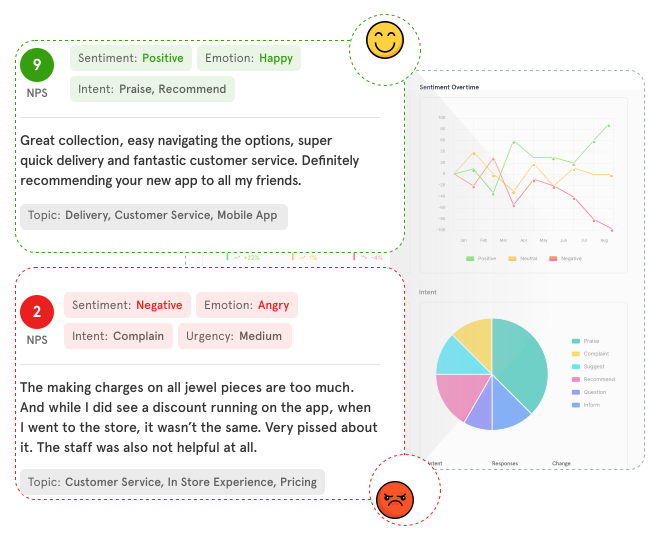
Use AI-powered sentiment analysis to detect patterns in feedback at scale.
Segment feedback by persona, industry, or contract value to uncover deeper trends.
Run quarterly sentiment analysis reports that categorize key trends from rNPS responses. This helps teams focus on impactful improvements, not just numerical changes.
f. Automate Feedback Management for Scale
Collecting relationship NPS data is easy. Acting on it at scale is the real challenge. Without automation, follow-ups get delayed, insights get buried, and customer sentiment shifts before you can respond.
Smart survey triggers move beyond scheduled surveys. Trigger them based on behavior: renewals, disengagement, or major feature adoption.
AI-powered feedback categorization stops manual sorting. Use AI to detect sentiment, flag at-risk accounts, and surface recurring themes.
Instant follow-ups and escalation ensure Detractors get immediate outreach, Passives receive engagement nudges, and Promoters are automatically invited to advocacy programs.
Seamless CRM and helpdesk integration feeds rNPS insights directly into Salesforce, HubSpot, or Zendesk so CX, product, and sales teams act in real time.
Automated reporting and trend analysis eliminate guesswork. AI-driven dashboards track NPS shifts, customer sentiment, and revenue impact. For dashboard setup and reporting frameworks, see our guide on NPS dashboards reports.
g. Close the Feedback Loop
Customers don't just want to give feedback. They want to see that it leads to change. Failing to close the loop turns surveys into empty gestures and damages trust.
Acknowledge every response. Detractors need direct outreach, Passives need engagement efforts, and Promoters need recognition.
Show actionable impact. Create "You Asked, We Delivered" updates that highlight changes based on customer feedback.
Align internal teams. CX, product, and sales should own their part of rNPS improvements, not just track the score.
Track and follow up on sentiment shifts. After major changes, re-engage customers to see if improvements worked. For enterprise-scale strategies, see our guide on the outer loop in net promoter system.
Relationship NPS Across Industries
Relationship NPS works differently depending on your industry, business model, and customer lifecycle. Here's how it applies across key sectors.
1. SaaS and Technology
Your CRM already tracks every lifecycle moment: trial start, onboarding completion, feature activation, renewal. Wire relationship NPS surveys to those events. NPS at 30 days post-onboarding, quarterly check-ins after that.
Map everything to the Contact and Account so CS teams can see account health in the same view as usage data and open opportunities. For SaaS-specific strategies, see our guide on saas NPS surveys.
2. Healthcare and Patient Services
Post-appointment surveys tied to patient records give care teams a feedback channel that doesn't rely on phone calls or manual outreach. Structured ratings plus open-text comments. Where regulations allow, file attachments let patients submit photos or supporting documents.
Everything syncs to the patient record, which makes issue validation faster. For healthcare applications, see our guide on NPS in healthcare and patient satisfaction.
3. Financial Services and Insurance
Relationship health matters more than individual transaction scores in this industry. Quarterly NPS across your client book, triggered from Account records. After policy renewals, claims resolutions, or advisor meetings, a short transactional survey.
Map NPS to the Account, transactional surveys to Cases or Opportunities. Advisors see account sentiment alongside portfolio data. Risk teams get signals on at-risk customers before they turn into churn. For financial services applications, see our guide on NPS tools software for banking financial services.
4. B2B vs B2C Differences
B2B relationship NPS programs focus on decision-makers and account health. Survey stakeholders who influence renewal decisions, not just end-users. Longer survey intervals (quarterly or annual) match longer sales cycles.
B2C programs prioritize volume and speed. Shorter surveys, higher frequency, mobile-first deployment. The goal is capturing sentiment at scale rather than deep account-level insights. For a detailed comparison, see our guide on NPS for B2B vs B2C.
5. Hospitality and Hotels
Post-stay surveys measure relationship perception after each visit. For returning guests, relationship NPS tracks loyalty over multiple stays, not just the most recent one.
High response rates come from SMS deployment within 24 hours of checkout. Simple one-question format with optional follow-up. For hospitality-specific strategies, see our guide on hotel NPS survey.
6. Education and EdTech
Students and educators have different relationship dynamics with educational platforms. Students care about learning outcomes and ease of use. Educators care about administrative efficiency and student engagement tools.
Survey both groups separately. Student NPS at semester end or course completion. Educator NPS quarterly or annually. For education applications, see our guide on NPS for education.
Employee NPS (eNPS)
The same relationship NPS framework applies internally. Employee NPS (eNPS) measures how likely employees are to recommend your company as a place to work.
Survey quarterly or biannually. Ask the same core question: "On a scale of 0-10, how likely are you to recommend [Company Name] as a place to work?" Follow up with "What's the primary reason for your score?"
Segment by department, tenure, and role. New hires (0-6 months) have different sentiment drivers than long-tenured employees. Remote vs office-based employees may have different concerns. Manager vs individual contributor perspectives differ.
Act on the data the same way you would with customer NPS. Detractors indicate retention risk. Passives need engagement. Promoters should be leveraged for recruitment and employer brand advocacy. For complete implementation guidance, see our guide on what is eNPS.
For benchmarks and scoring context, see our guide on eNPS benchmarks by industry.
Understanding Relationship NPS Limitations
Relationship NPS is powerful, but it's not perfect. Understanding its limitations helps you use it more effectively.
It doesn't tell you why scores change. The number moves, but without qualitative follow-up, you're guessing at causes.
It's culturally biased. Response patterns differ by region. Japanese customers tend to score more conservatively than American customers. That doesn't mean they're less loyal.
It's vulnerable to survey fatigue. Over-surveying the same customers drives response rates down and data quality with them.
It doesn't replace other metrics. Use rNPS alongside churn rate, expansion revenue, support ticket volume, and product usage data. The full picture requires multiple signals. For a complete discussion of when NPS falls short, see our guide on NPS limitations.
For context on how NPS compares to other customer experience metrics, see our guide on NPS vs CSAT vs CES.
Creating Your First Relationship NPS Survey
If you're building your first relationship NPS program, here's the practical starting point.
Choose your survey tool. You need something that integrates with your CRM, allows automated triggering based on customer milestones, supports multi-channel distribution (email, in-app, SMS), and provides real-time alerts for Detractor responses.
Define your survey cadence. Quarterly for SaaS. Biannually for long-cycle B2B. Annually for financial services and healthcare.
Build your survey. Core NPS question plus one follow-up. Keep it under 30 seconds.
Set up your response workflows. Detractors trigger immediate alerts to customer success. Passives enter nurture sequences. Promoters get invited to advocacy programs.
Test with a small segment first. Run it with 100-200 customers before rolling out to your full base. Use their feedback to refine timing, wording, and follow-up processes.
For step-by-step instructions on survey design, see our guide on how to create an NPS survey. For campaign planning, see our guide on NPS campaign strategy.
Optimizing Relationship NPS Response Rates
Low response rates kill the value of any NPS program. Here's what actually moves response rates.
Timing: Send within 2 hours of the trigger event for transactional surveys, but for relationship NPS, send during business hours on Tuesday, Wednesday, or Thursday. Avoid Mondays (inbox overload) and Fridays (weekend mode).
Channel: SMS outperforms email for mobile-first audiences. In-app surveys outperform email for active product users. Match channel to where customers already engage.
Survey length: One question gets 2-3x the response rate of five questions. If you need more data, send a follow-up survey to those who responded, not everyone.
Personalization: Use customer name, reference their specific usage patterns, and explain why their feedback matters. Generic mass emails get ignored.
Incentives: Use sparingly. They can bias responses. If you do offer incentives, make them charitable donations rather than personal rewards. For detailed tactics and benchmarks, see our guide on NPS survey response rates.
Conclusion
Measuring relationship NPS is not just about tracking a number. It's about understanding and strengthening the relationships that drive your business forward.
The best companies don't just collect relationship NPS data. They act on it to reduce churn, drive expansion, and create lasting brand advocates.
With the right strategy, automation, and closed-loop processes, you can turn relationship NPS into a competitive advantage. The question is: Are you capturing these insights and using them to fuel growth?