

 Healthcare
 Finance
 Retail
 SaaS & Digital
 eCommerce
 Education
 Salesforce
 HubSpot
 Pipedrive
 Mailchimp
 Klaviyo
 Zendesk
 Intercom
 Freshdesk
 HelpScout
 Front
 Jira
 Slack
 MS Teams
 Zoom
 Google Sheets
 Zapier
 Integrately
 Make
 Webhooks



 Sign In

 MS Teams




TL;DR
- This guide compares 13 patient experience tools across three categories: patient feedback & survey software, enterprise experience management, and patient engagement & communication.
- Top picks: Zonka Feedback for closed-loop patient feedback with AI analysis, Qualtrics for enterprise experience management, and NexHealth for EHR-integrated patient access.
- When choosing, weigh HIPAA compliance, EHR integration, multi-location scale, text analytics, and closed-loop follow-up.
- Zonka Feedback is AI patient feedback software that surfaces themes, sentiment, and churn risk, then closes the loop automatically.
Patients remember the long wait, the confusing discharge, and the call that never came back long after they forget the clinical details. Those moments shape satisfaction scores, online reviews, and whether a patient comes back, and most of them surface only through direct patient feedback, not internal audits.
Patient experience software is how healthcare teams catch those moments and act on them. The best patient experience tools collect feedback across appointments, visits, and post-care follow-ups through surveys, SMS, tablets, and web, analyze patient sentiment, and route issues to the right team, all while staying HIPAA compliant. The ones worth buying close the loop before a frustrated patient becomes a bad review.
This guide covers the best patient experience tools and software for hospitals, clinics, and health systems, grouped into three categories and evaluated on healthcare-specific capabilities, feedback channels, analytics depth, and compliance, so you can match the right one to your setting.
What is Patient Experience Software?
Patient experience software is a platform healthcare organizations use to collect, measure, and act on patient feedback across the care journey. In practice, that spans everything from appointment booking and check-in through treatment, discharge and post-care follow-up. You’ll also see it called a patient experience platform, patient experience management software, patient satisfaction survey software, or patient feedback software, depending on the vendor. The best patient experience platforms go beyond collecting surveys to analyze sentiment, flag issues, and close the loop with the right team before dissatisfaction turns into churn, complaints or negative reviews.
The category covers three distinct types of tools, and the right fit depends on which job you’re solving for:
- Patient feedback & survey software collects and analyzes patient feedback: satisfaction surveys, sentiment analysis, and closed-loop action across channels. This is where tools like Zonka Feedback, QuestionPro and SurveySparrow sit.
- Enterprise patient experience management platforms run large-scale, multi-location survey programs with benchmarking and advanced analytics: Qualtrics, Press Ganey, Medallia, NRC Health and InMoment.
- Patient engagement & communication platforms handle access and communication (scheduling, intake, reminders, two-way messaging and payments), usually integrated with your EHR, such as NexHealth, Phreesia and Luma Health.
Some platforms specialize in one layer; a few span more than one. The guide below groups the best patient experience software by these three categories so you can compare like with like.
Why Patient Experience Software Matters
Patient experience is often treated as a satisfaction score for the marketing wall. The research says it is far more than that, which changes how seriously you should treat the whole category.
It is a clinical signal. A systematic review of 55 studies in BMJ Open found consistent positive associations between patient experience and both clinical effectiveness and patient safety, across a wide range of conditions and settings. A recurring complaint about rushed communication or an unclear discharge is not only a satisfaction issue. It can be a safety signal.
It moves money. Under the CMS Hospital Value-Based Purchasing program, patient experience measured through HCAHPS makes up 25% of a hospital’s Total Performance Score, and that score decides how much of a 2% Medicare payment withhold a hospital earns back. Deloitte found hospitals with “excellent” HCAHPS ratings averaged a 4.7% net margin against 1.8% for hospitals with low ratings.
It drives loyalty. In Accenture’s benchmark survey of 10,000 US healthcare consumers, 91% of patients who trust their provider said they would stay, but only 57% currently trust their provider, and loyalty can fall by more than 50 percentage points when a patient’s engagement slips. The gap between measuring patient experience and acting on it is where most of that risk sits, which is why the tools below are judged on what they do with feedback, not just how they collect it.
Top Patient Experience Software & Tools Compared
Selecting the right patient experience software can significantly enhance your ability to collect, analyze, and act on patient feedback. The following are some of the best patient experience software companies and patient satisfaction survey vendors, grouped by category so you can compare like with like. Here are the top patient experience tools to consider:
| Tool | Category | Best For | G2 Rating | Pricing |
| Zonka Feedback | Feedback & Survey | Agentic closed-loop patient feedback + AI analysis | 4.7/5 | Custom pricing |
| QuestionPro | Feedback & Survey | Flexible, multi-channel patient surveys | 4.5/5 | From $99/month |
| SurveySparrow | Feedback & Survey | Conversational patient satisfaction surveys | 4.4/5 | From $19/month |
| SurveyStance | Feedback & Survey | In-moment feedback at the point of care | Not listed | From $39/month |
| PatientTrak | Feedback & Survey | Patient flow, wait-time & experience | Not listed | From $395/month |
| Qualtrics | Enterprise XM | Enterprise healthcare experience management | 4.4/5 | Custom pricing |
| Press Ganey | Enterprise XM | Hospital benchmarking & CAHPS analytics | 4.2/5 | Custom pricing |
| Medallia | Enterprise XM | Omnichannel healthcare feedback & analytics | 4.5/5 | Custom pricing |
| NRC Health | Enterprise XM | Healthcare benchmarking & experience intelligence | Not listed | Custom pricing |
| InMoment | Enterprise XM | Experience improvement + healthcare text analytics | 4.7/5 | Custom pricing |
| NexHealth | Engagement & Communication | EHR-integrated patient access & communication | 4.8/5 | Custom pricing |
| Phreesia | Engagement & Communication | Patient intake, registration & check-in | 4.1/5 | Custom pricing |
| Luma Health | Engagement & Communication | Patient engagement & communication across the journey | 4.8/5 | Custom pricing |
What are the Best Patient Experience Tools in 2026?
The best patient experience tools in 2026 are platforms that help healthcare organizations collect real-time patient feedback, analyze sentiment, and act on insights across the care journey. Leading tools include Zonka Feedback, Press Ganey, Medallia, QuestionPro, SurveySparrow, and NexHealth, along with enterprise platforms like Qualtrics and InMoment and specialized solutions such as PatientTrak, NRC Health, Phreesia and Luma Health. The right tool depends on your healthcare setting, feedback channels, compliance needs, and ability to turn patient feedback into timely improvements.
How We Evaluated These Tools
We assessed each platform on the criteria that matter most in healthcare: feedback collection channels (surveys, SMS, email, in-app, point-of-care), HIPAA compliance and data security, EHR and CRM integration, sentiment and text analytics, the ability to close the feedback loop through alerts and follow-ups, benchmarking depth, real user reviews, and pricing. We grouped the tools into three categories (feedback & survey software, enterprise experience management, and patient engagement & communication) so each is compared against peers solving the same job. Zonka Feedback is our product; we’ve noted that where it’s relevant and held it to the same evaluation standard as every other tool on this list.
Patient Feedback & Survey Software
These patient survey software and patient satisfaction survey tools focus on collecting patient feedback across channels and turning it into action: satisfaction surveys, sentiment analysis, and closed-loop follow-up. They’re the lightest to deploy and the natural starting point for clinics and health systems that want to measure and improve patient experience without a heavyweight enterprise rollout.
1. Zonka Feedback: Best Patient Feedback Software for Real-Time Healthcare Surveys, AI Sentiment Analysis & Closed-Loop Action
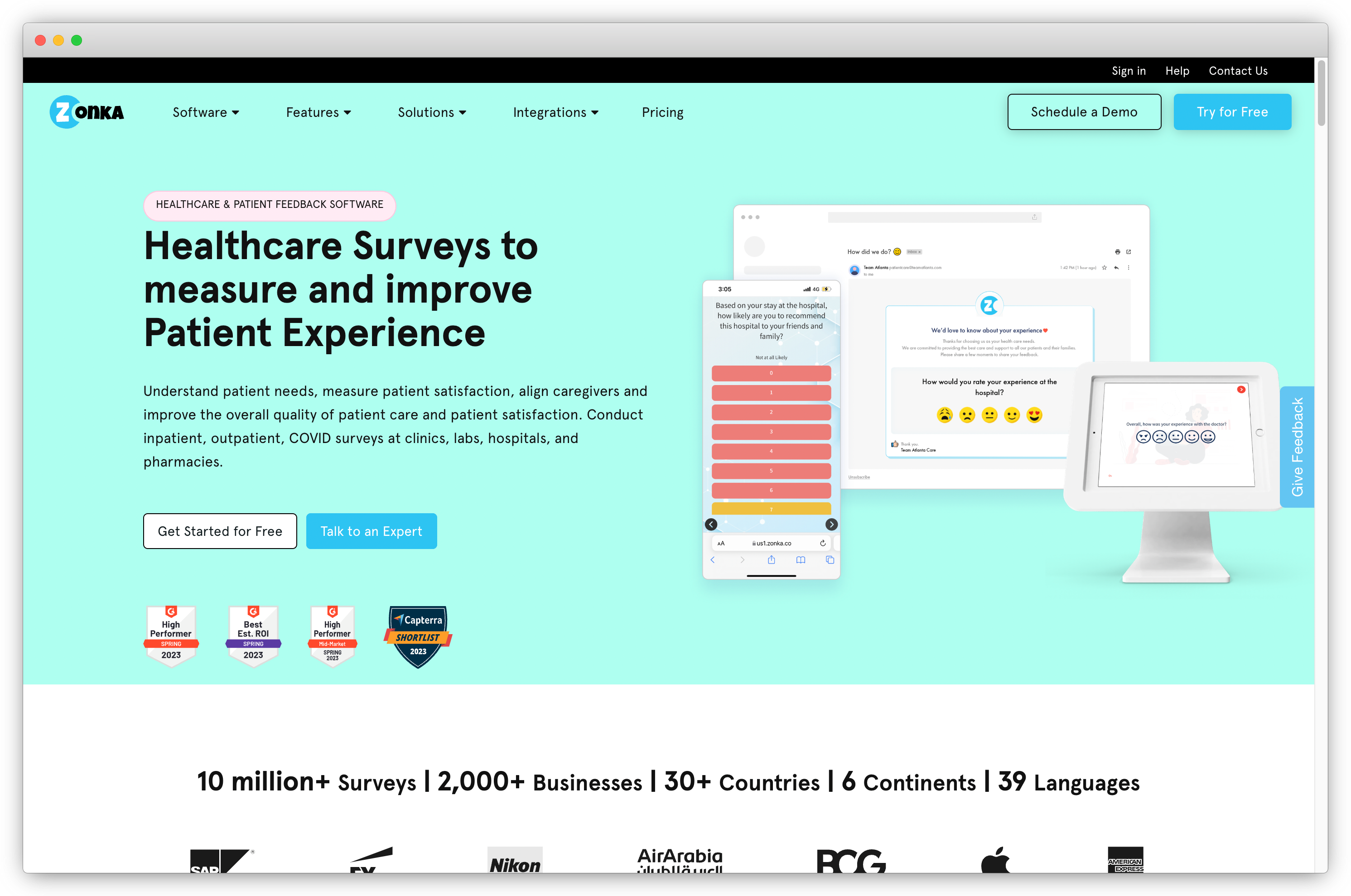
Zonka Feedback is AI patient experience and feedback software with agentic closed-loop workflows that turn unhappy patients into loyal ones, and deep CRM and helpdesk integrations like Salesforce, Zendesk, HubSpot and Intercom, so patient feedback programs run on autopilot. It collects patient feedback in real time across appointments, inpatient stays, discharge and post-care follow-ups, and helps healthcare teams act before dissatisfaction turns into churn, complaints or poor public reviews.
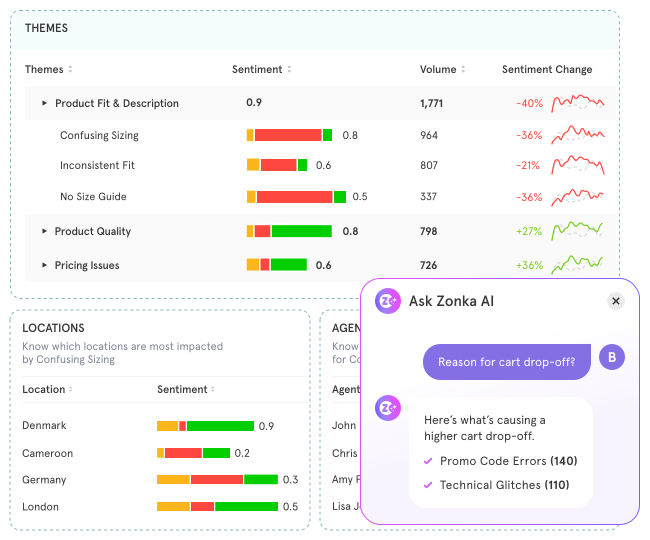
Its AI feedback analysis reads every response as it arrives, finding the themes, sentiment and key drivers behind each patient satisfaction score and flagging churn risk before it shows up in the numbers. AI agents route every response to the right owner, follow up on detractors, investigate why scores move, and turn satisfied patients into online reviews. The loop closes without someone chasing the data.
Key Features
- Multi-channel patient surveys across email, SMS, WhatsApp, in-app and web links, plus tablets and mobile devices at the point of care
- Agentic closed-loop workflows with AI agents for response routing, detractor recovery, and automated follow-up
- AI feedback analysis: thematic and sentiment analysis surfacing the key drivers and churn risk inside open-text patient comments
- 50+ integrations and data sources, with surveys triggered on Salesforce cases and Zendesk tickets, alerts in Slack and Microsoft Teams, and issues created in Jira
- HIPAA-compliant surveys with SSO, ISO 27001 and GDPR compliance for protected health data
Pricing
- Custom pricing based on business requirements.
G2: 4.7/5
Best for: Healthcare teams that want patient feedback collection and AI analysis with closed-loop action in one HIPAA-compliant platform
2. QuestionPro: Best for Flexible Patient Surveys & Multi-Channel Distribution
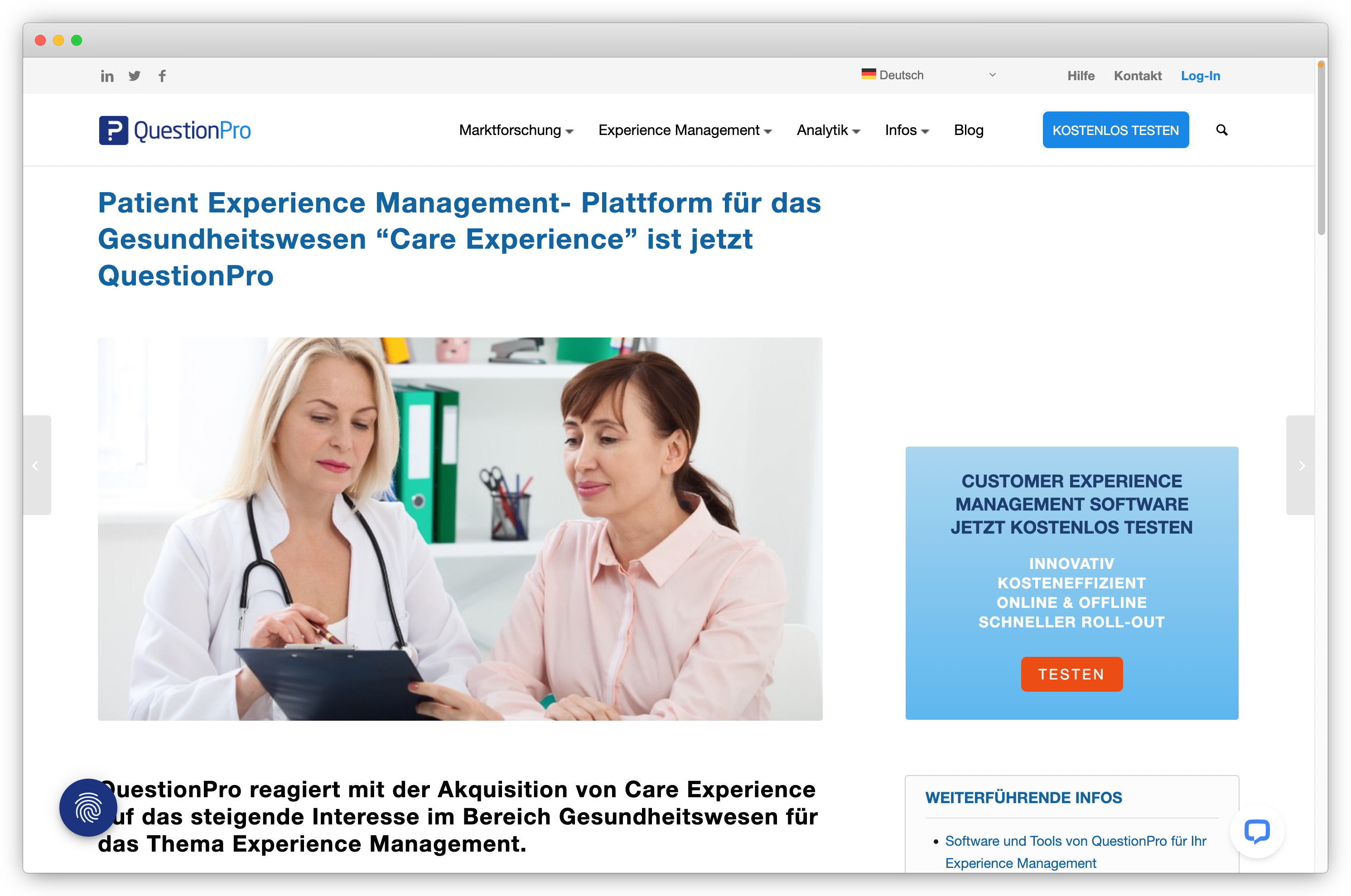
QuestionPro is a versatile survey builder that helps healthcare teams create, distribute, and analyze patient feedback efficiently. Its strength is flexibility: a wide range of question types, branching logic, and advanced analytics make it a capable option for clinics that run varied survey programs.
On distribution, it covers email, SMS, social, and website embeds, with integrations into popular EHR systems for cleaner data flow. Reporting is robust, with real-time dashboards and trend analysis. The trade-offs to know: advanced analytics sit in higher-priced tiers, and some teams find the interface less intuitive to set up than simpler tools.
Key Features
- Customizable surveys with multiple question types and logic
- Multi-channel distribution: email, SMS, social media, website embeds
- Advanced analytics and trend reporting
- Integrations with popular EHR and healthcare systems
Pricing
- Free plan available. Paid plans from $99/month.
G2: 4.5/5
Best for: Clinics and outpatient centers that need flexible, customizable patient surveys across multiple channels
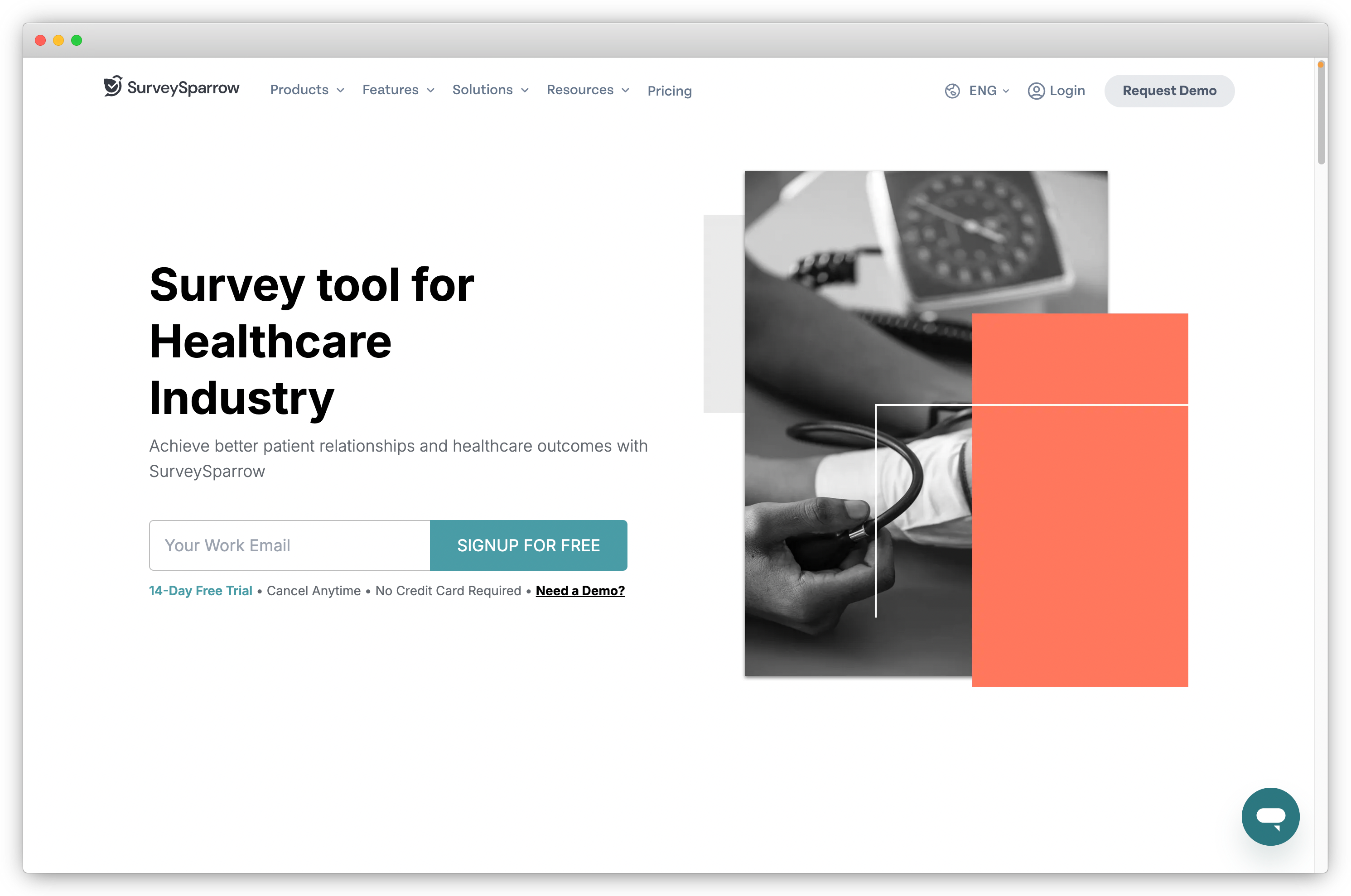
3. SurveySparrow: Best for Conversational Patient Satisfaction Surveys
SurveySparrow focuses on conversational, chat-style surveys that present one question at a time, which tends to lift completion rates, useful for post-visit patient feedback where drop-off is common. It also doubles as form builder software for lighter data collection.
Recurring NPS and CSAT programs are where it performs best, with automated reminders and clean reporting. The ceiling to know about: open-text analysis is basic: keyword tagging and sentiment percentages. Teams with high qualitative volume will outgrow it, and higher-tier plans add cost.
Key Features
- Conversational, chat-style surveys for higher completion
- Customizable templates and multi-channel distribution
- Automated reminders and recurring scheduling
- Real-time analytics on survey responses
Pricing
- Free basic plan available. Paid plans from $19/month.
G2: 4.4/5
Best for: Clinics running recurring patient NPS and CSAT programs where completion rate is the priority
4. SurveyStance: Best for In-Moment Patient Feedback at the Point of Care
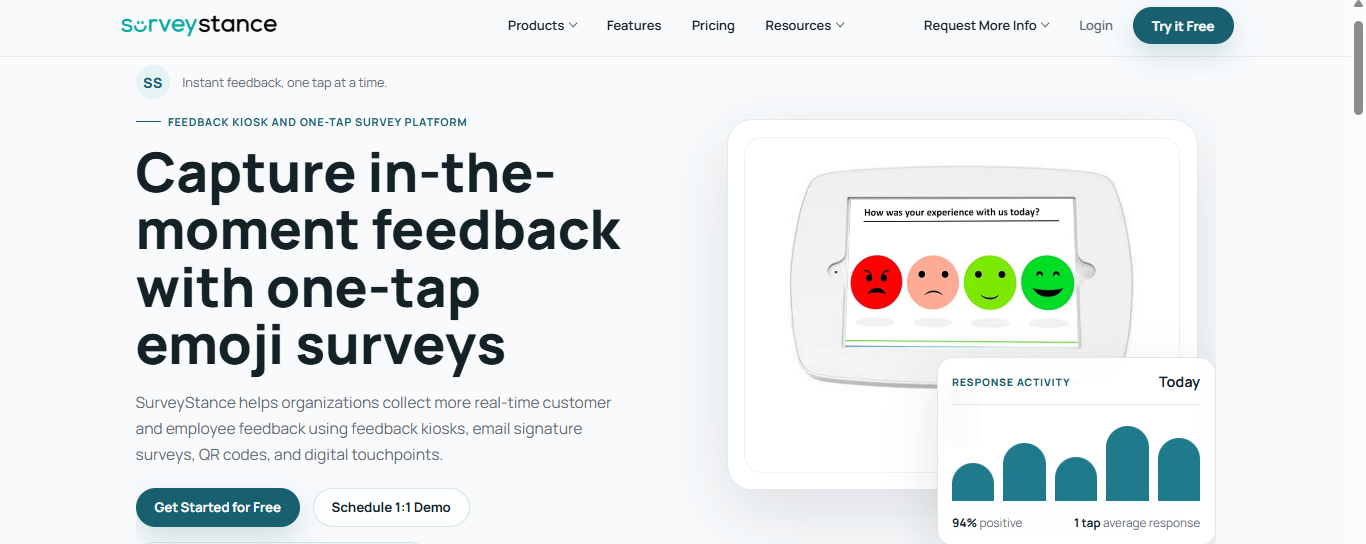
SurveyStance takes a different approach to patient experience: instead of surveying patients after they’ve left, it captures feedback while they’re still in the building. Patients tap a single emoji on a feedback kiosk at check-out, in the waiting room or in the dining area, then answer a short follow-up that identifies the “why” (wait time, staff interaction, cleanliness, communication). Low scores trigger real-time alerts so a manager can recover the experience the same day rather than reading about it in a report six weeks later. Teams typically run it alongside their post-discharge or CAHPS program, not in place of one.
Key Features
- One-tap emoji kiosk surveys on iPad-based Feedback Kiosks, with conditional follow-up questions and open comments
- Real-time alerts on low scores or keywords, routed to the right manager
- QR code and email-signature surveys for the same one-click format off-kiosk
- Multi-location support: centralized survey updates, dashboards, user access controls
- AI-powered summaries of open-ended comments, plus scheduled reports, API access and exports
- Designed to support HIPAA and GDPR compliance when configured accordingly; encrypted at rest and in transit, no PII collected unless a patient opts in
Pricing
- Feedback Kiosk $69/mo per kiosk (iPad and stand included). Software-only $39/mo per device.
Best for: Teams that want to capture in-moment patient feedback at the point of care and recover experiences the same day
5. PatientTrak: Best for Patient Flow, Wait-Time Tracking & Experience Optimization
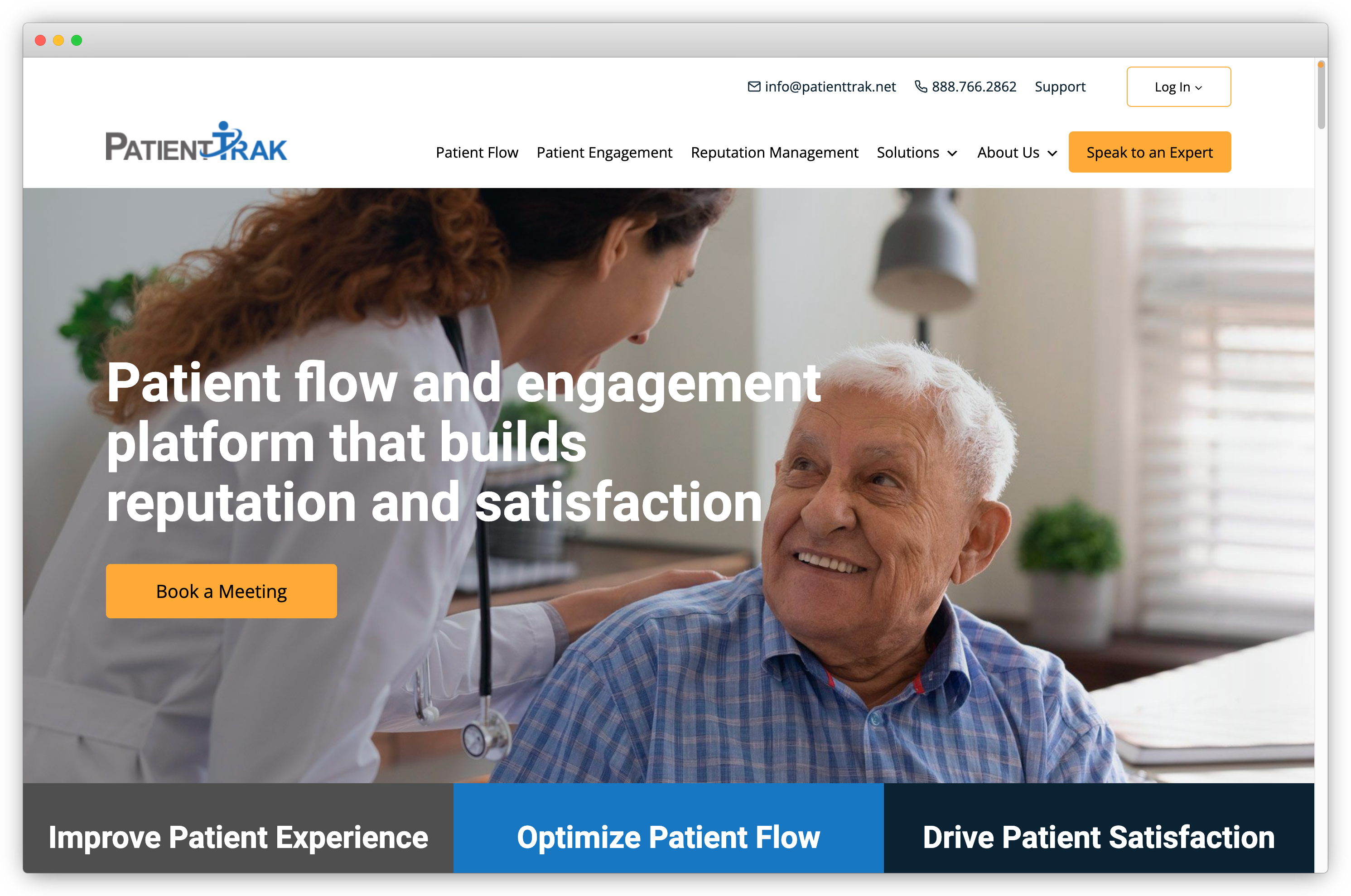
PatientTrak pairs patient experience management with patient flow and wait-time tracking, which makes it a fit for organizations whose biggest experience gap is time spent waiting. It collects real-time feedback and reports on both satisfaction and flow metrics in one place.
Alongside flow management, it offers customizable surveys, real-time feedback capture, and automated alerts on negative feedback. The trade-off is scope: it’s strongest on flow and wait-time use cases and lighter on deep text analytics, and advanced features add cost for smaller practices.
Key Features
- Patient flow management with real-time wait-time tracking
- Real-time feedback collection and automated alerts
- Customizable surveys and detailed reporting
- Integrations with existing healthcare systems
Pricing
- Plans from $395/month.
G2: Not listed
Best for: Clinics and hospitals focused on reducing wait times while capturing patient experience feedback
Enterprise Patient Experience Management Platforms
These patient experience management software platforms are built for scale: standardized, multi-location survey programs, benchmarking against national standards, and advanced analytics. Some vendors also call this category patient experience improvement software. They’re the choice for large hospitals and health systems that need governance, CAHPS/HCAHPS workflows, and enterprise-grade reporting, typically with heavier setup and custom pricing.
6. Qualtrics: Best for Enterprise Healthcare Experience Management
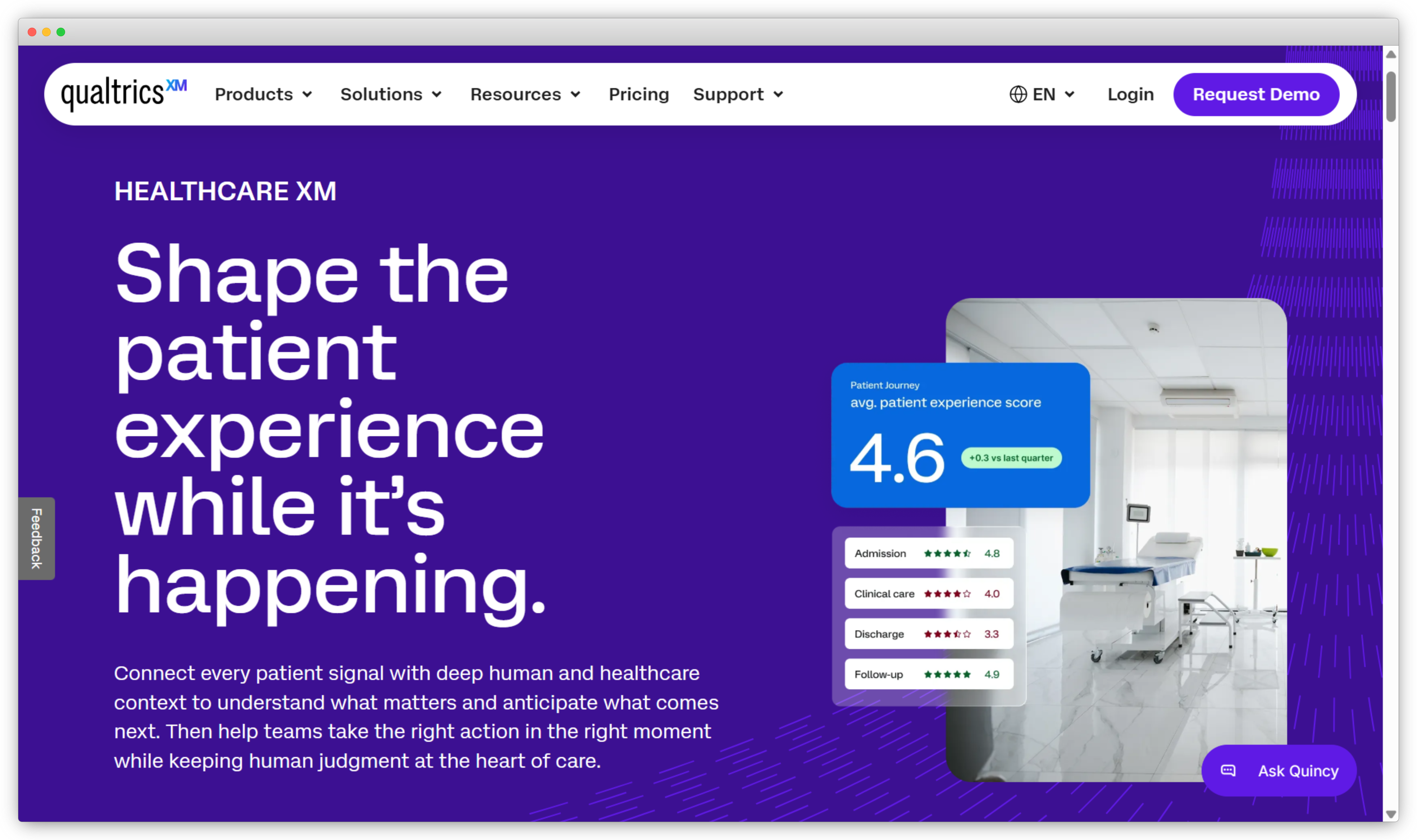
Qualtrics Healthcare Experience Management is built for large health systems that want to connect what patients experience with what their teams do next. It captures signals across the full patient journey (CAHPS and patient experience surveys, digital interactions, contact-center calls, online reviews, complaints and post-discharge outreach) and ties them to EMR, operational and workforce data. In May 2026, Qualtrics completed its $6.75 billion acquisition of Press Ganey Forsta, pairing its AI with patient-experience data from more than 41,000 healthcare facilities.
Its strengths are expert-designed survey content, real-time feedback capture, closed-loop follow-up, and key-driver analysis that shows which changes most improve retention and experience. The trade-offs are the familiar enterprise ones: a real learning curve and premium pricing that put it out of reach for smaller practices.
Key Features
- Expert-designed CAHPS and patient experience survey content
- Omnichannel signal capture across surveys, calls, reviews and portals
- Key-driver and predictive analytics tied to EMR and operational data
- Closed-loop follow-up with role-based dashboards and enterprise security
Pricing
- Custom pricing. Contact Qualtrics for a quote.
G2: 4.4/5
Best for: Large health systems running standardized, multi-location patient experience programs with benchmarking
7. Press Ganey: Best for Hospital Benchmarking & Performance Analytics
Press Ganey has been a mainstay of healthcare feedback for decades and is best known for its CAHPS and HCAHPS benchmark comparisons, which let you measure patient satisfaction against national and peer standards. For hospitals that need to know exactly where they stand on CAHPS, it’s a category staple. Press Ganey is now a Qualtrics company (Press Ganey Forsta), following Qualtrics’ $6.75 billion acquisition completed in May 2026.
The platform pairs extensive patient satisfaction surveys with powerful analytics, customizable dashboards, real-time reporting and EHR integration, plus improvement-plan resources. The trade-offs are cost and complexity: it can be expensive for smaller providers and carries a steep learning curve.
Key Features
- Extensive patient satisfaction and CAHPS survey options
- National, regional and peer benchmark comparisons
- Advanced analytics and customizable dashboards
- EHR integration and patient experience improvement plans
Pricing
- Custom pricing based on organization size and needs. Contact Press Ganey.
G2: 4.2/5 (Press Ganey Forsta HX Platform)
Best for: Hospitals and health systems that need national benchmarking and deep performance analytics
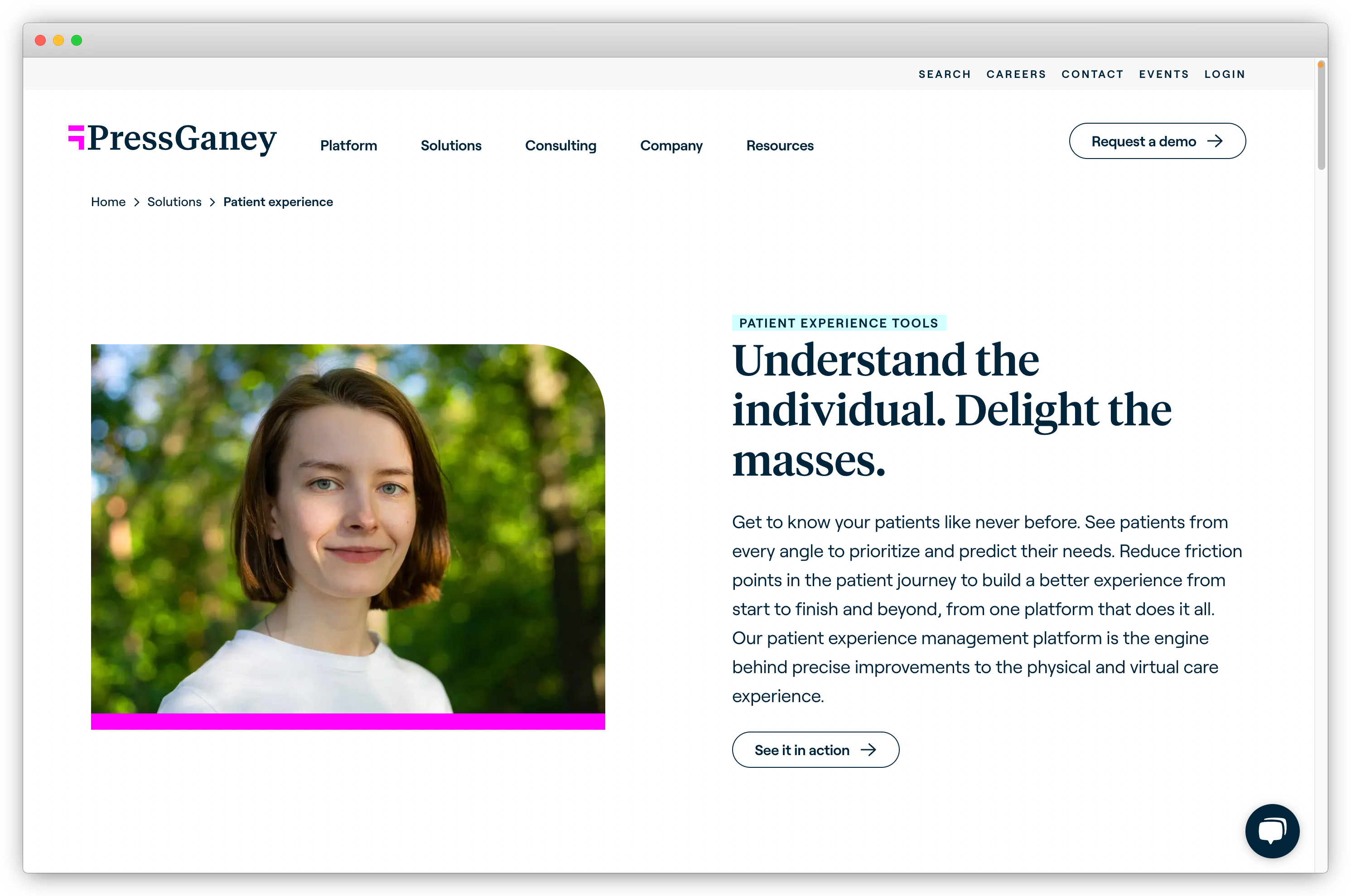
8. Medallia: Best for Omnichannel Healthcare Feedback & Analytics
Medallia is an enterprise survey software and experience management platform used across healthcare to capture patient feedback at many touchpoints in real time, from post-visit surveys to contact-center calls and online reviews. For large organizations, its strength is breadth of collection plus AI and machine-learning analytics that surface patterns and flag issues early.
Capabilities include multi-channel feedback (surveys, SMS, email, in-app), real-time analytics, customizable dashboards, EHR integration and automated alerts on negative feedback. As with other enterprise suites, cost and implementation complexity are the main considerations for smaller providers.
Key Features
- Multi-channel feedback collection across surveys, SMS, email and in-app
- Real-time analytics with AI and machine learning
- Customizable dashboards and automated alerts
- EHR and healthcare-system integrations
Pricing
- Custom pricing based on organization needs. Contact Medallia.
G2: 4.5/5
Best for: Enterprise health systems that need omnichannel feedback collection with advanced, predictive analytics
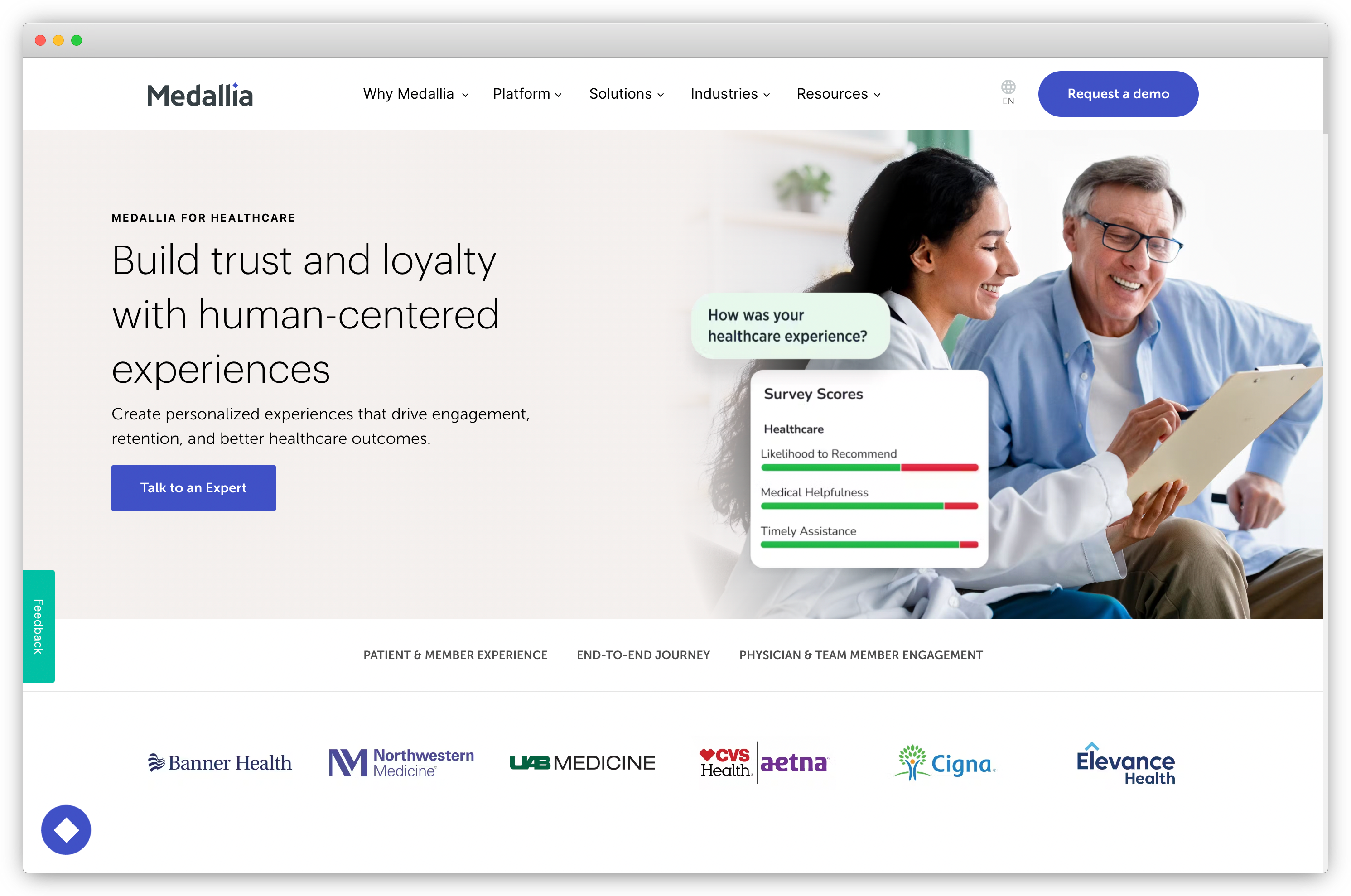
9. NRC Health: Best for Healthcare Benchmarking and Experience Intelligence
NRC Health is a healthcare-specific patient experience platform built around benchmarking. It collects real-time patient feedback and compares a provider’s scores against national healthcare panels, so teams can see exactly where they stand against peers.
Features include real-time feedback, advanced analytics, customizable surveys, benchmark comparisons, EHR integration and automated alerts. As a comprehensive enterprise platform, it carries cost and complexity that suit larger organizations more than small practices.
Key Features
- Real-time patient feedback and advanced analytics
- Benchmark comparisons against industry standards
- Customizable surveys and automated alerts
- EHR and healthcare-system integrations
Pricing
- Custom pricing based on organization needs. Contact NRC Health.
G2: Not listed
Best for: Health systems that want healthcare-specific benchmarking and experience intelligence at scale
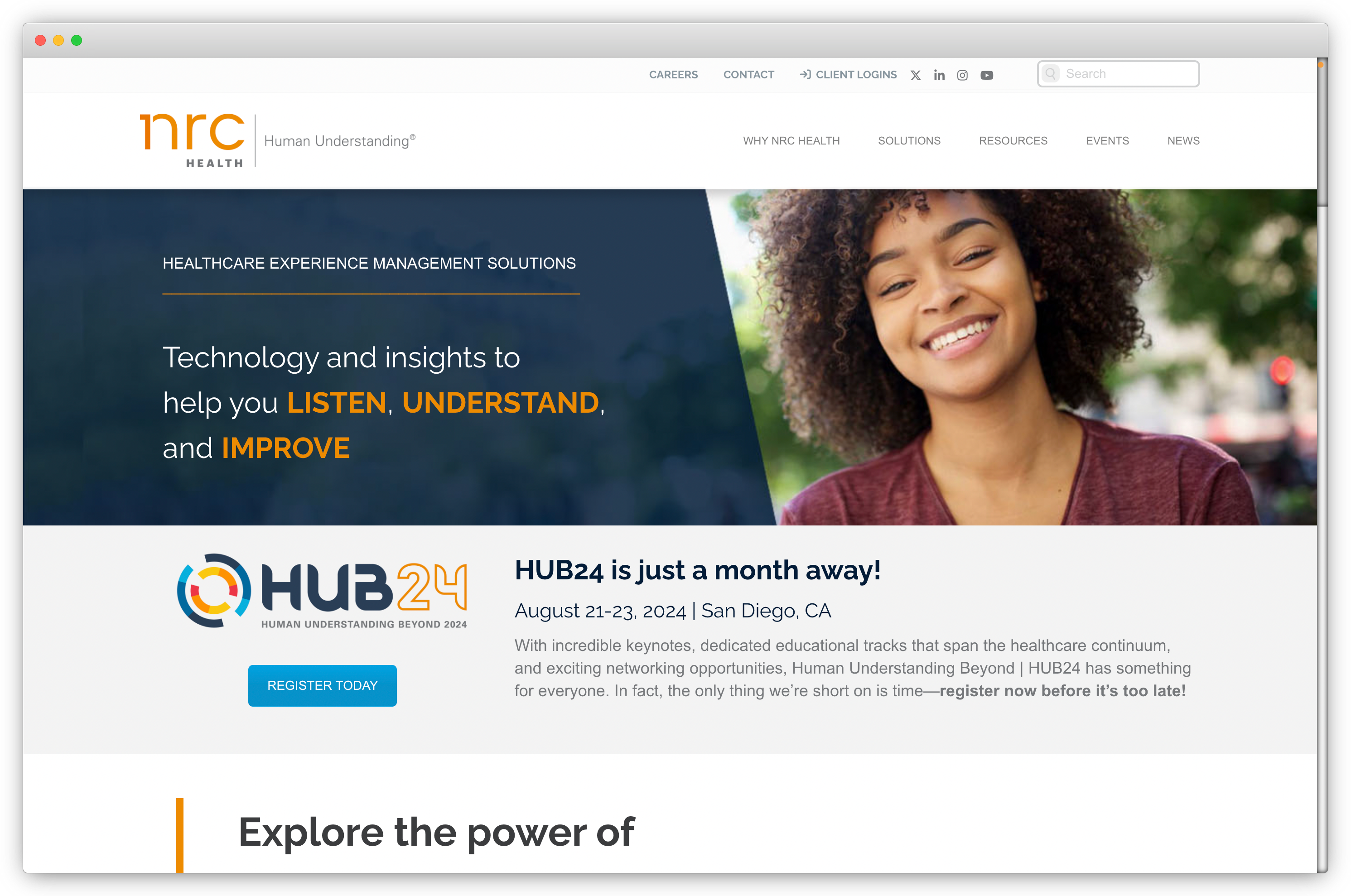
10. InMoment: Best for Experience Improvement & Healthcare Text Analytics
InMoment is an experience-improvement platform whose standout strength is text and sentiment analytics, turning open-text patient comments into themes, drivers and alerts. For health systems sitting on large volumes of unstructured feedback, that analysis layer is the draw. Note that InMoment is now part of Press Ganey Forsta, which Qualtrics acquired in May 2026, so expect its capabilities to converge with the Qualtrics platform over time.
It captures feedback across surveys, reviews and contact-center interactions, pairs it with predictive analytics and closed-loop case management, and integrates with healthcare systems. Like other enterprise platforms, it’s a custom-priced investment with an implementation lift best suited to larger organizations.
Key Features
- Advanced text and sentiment analytics on open-text feedback
- Multi-source collection across surveys, reviews and interactions
- Predictive analytics and closed-loop case management
- Healthcare-system integrations and role-based reporting
Pricing
- Custom pricing. Contact InMoment for a quote.
G2: 4.7/5
Best for: Health systems that need deep text analytics and experience improvement across high volumes of feedback

Patient Engagement & Communication Platforms
These patient experience platforms handle the access and communication side of the journey (online scheduling, digital intake, reminders, two-way messaging and payments), usually integrated with your EHR. They shape patient experience before and around the visit, and many pair naturally with a dedicated feedback tool from the first category.
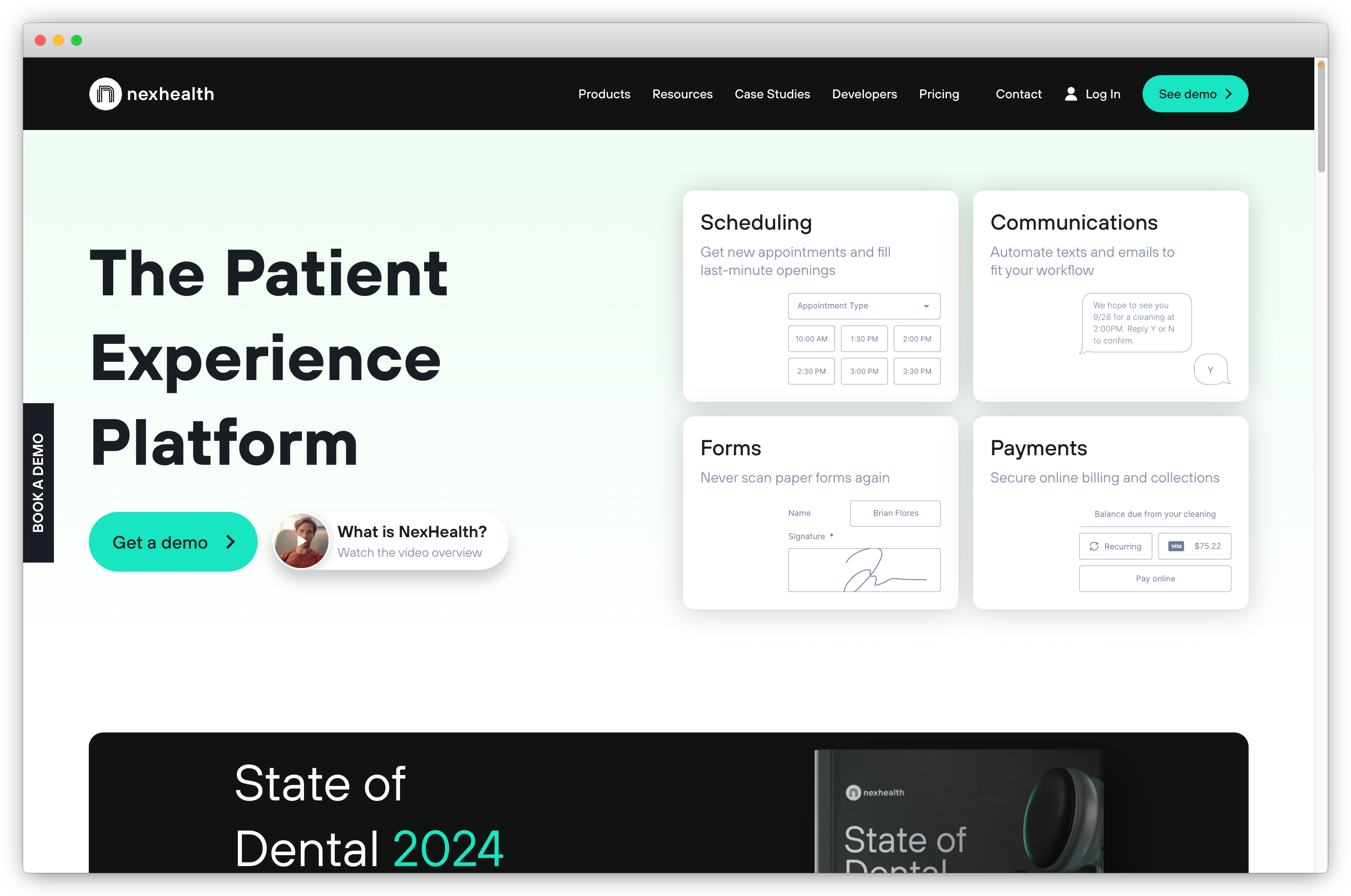
11. NexHealth: Best for EHR-Integrated Patient Access & Communication
NexHealth is a patient experience platform for dental and medical practices, best known for real-time, two-way sync with existing EHR and practice-management systems. It covers online scheduling, digital intake, reminders, two-way messaging, payments and reviews in one layer on top of the system you already run.
Its strengths are integration depth and ease of use, with strong reviews for customer support. The considerations are cost and implementation time for the full platform, which fit established practices better than the smallest clinics.
Key Features
- Real-time EHR and practice-management integration
- Online scheduling, digital intake and automated reminders
- Two-way patient messaging and online payments
- Reviews and recall to fill the schedule
Pricing
- Custom pricing. Contact NexHealth for a quote.
G2: 4.8/5
Best for: Dental and medical practices that want EHR-integrated scheduling, intake and patient communication
12. Phreesia: Best for Patient Intake, Registration & Check-In
Phreesia is a patient intake platform built for high-volume and enterprise providers. It digitizes registration, eligibility verification, consent, payments and patient-reported outcome surveys, shaping the experience at the front door and freeing front-office staff from manual work.
Its strengths are self-service intake at scale and PRO survey capture that connects to clinical workflows. It’s most at home in ambulatory and enterprise settings; smaller practices may find it more than they need, and pricing is quote-based.
Key Features
- Self-service patient registration and digital intake
- Eligibility verification, consent and payments
- Patient-reported outcome (PRO) surveys
- EHR integration and front-office automation
Pricing
- Custom pricing. Contact Phreesia for a quote.
G2: 4.1/5
Best for: Ambulatory and enterprise providers that need automated intake, registration and check-in at scale
13. Luma Health: Best for Patient Engagement & Communication Across the Journey
Luma Health is a patient engagement platform that connects scheduling, reminders, two-way messaging and outreach across the patient journey, integrated with the EHR. It’s aimed at reducing no-shows and keeping patients informed and connected between visits.
Its strengths are communication automation and strong user reviews for ease of use. As an engagement-first platform, it’s lighter on deep feedback analytics than a dedicated survey tool, so many teams pair it with one; pricing is quote-based.
Key Features
- Automated appointment reminders and recalls
- Two-way patient messaging and outreach
- Self-scheduling and waitlist management
- EHR integration across the patient journey
Pricing
- Custom pricing. Contact Luma Health for a quote.
G2: 4.8/5
Best for: Practices and health systems that want to automate patient engagement and communication across the journey
How to Choose the Right Patient Experience Software?
Selecting the right patient experience software for your healthcare institution is crucial for effectively collecting and managing patient feedback. It involves evaluating your specific needs, budget, and desired features. The best patient experience tool for a single clinic rarely looks like the patient experience platform a multi-site hospital network needs. Match the choice to your scale. Here are the essential considerations:
1. Understand your needs
- Identify your goal: improving patient satisfaction, streamlining feedback collection, or enhancing the overall patient experience.
- Determine the scale of your operations. Large hospitals may need enterprise experience management, while smaller clinics are better served by lightweight patient survey software.
2. Budget
- Balance cost with the features offered, and check whether the software scales with your needs.
- Note that most enterprise patient experience management platforms use custom pricing, while feedback and survey tools often publish entry-level plans.
3. Ease of Use
- Choose patient experience management software that is user-friendly and requires minimal training for staff.
- Check for customer support and onboarding resources from the vendor.
4. Integration Capabilities
- Ensure the software integrates with your Electronic Health Records (EHR) system, practice management software, and other tools.
- Integration consolidates patient data and provides a holistic view of patient experience.
5. Security and Compliance
- Verify the software complies with HIPAA. A HIPAA compliance tool helps you create and share HIPAA surveys that keep patient data secure.
- Look for data encryption, secure access controls, and audit logs.
Which Patient Experience Software Should You Choose?
| If you need... | Use... |
| Patient feedback collection + AI analysis with closed-loop action | Zonka Feedback |
| Flexible, multi-channel patient surveys | QuestionPro |
| Higher completion via conversational surveys | SurveySparrow |
| In-moment feedback at the point of care | SurveyStance |
| Enterprise, multi-location programs with national benchmarking | Qualtrics, Press Ganey, NRC Health |
| Omnichannel enterprise feedback with predictive analytics | Medallia, InMoment |
| EHR-integrated scheduling, intake and patient communication | NexHealth, Phreesia, Luma Health |
| Patient flow and wait-time optimization | PatientTrak |
Some Must-Have Features to Look For While Choosing the Right Tool
- Multi-Channel Feedback Collection: Support for tablets, mobile devices, email, SMS, and web links ensures comprehensive coverage and convenience for patients.
- Real-Time Reporting and Analytics: Real-time data, AI-powered sentiment analysis and text analysis provide deeper insight into patient emotions and experiences.
- Customizable Surveys: Various question types, logic and branching help you collect relevant, targeted feedback.
- Automated Workflows: Negative feedback can trigger alerts and follow-up actions, ensuring no critical feedback is overlooked.
- Benchmarking and Comparative Analysis: Compare performance against industry standards to identify areas for improvement.
- Scalability: The software should accommodate increasing patient volumes without compromising performance.
Conclusion
In today’s competitive healthcare environment, prioritizing patient experience is essential for improving patient satisfaction, loyalty, and overall health outcomes. The right patient experience software depends on your setting: lightweight patient survey software for a single clinic, an enterprise experience management platform for a multi-site health system, or a patient engagement platform to shape access and communication, often paired with a dedicated feedback tool.
Zonka Feedback stands out for healthcare teams that want patient feedback collection and AI analysis with closed-loop action in one HIPAA-compliant platform. Its AI feedback analysis surfaces the themes, sentiment and key drivers behind every patient satisfaction score and flags churn risk early, while agentic closed-loop workflows route and follow up on feedback automatically. You can schedule a demo to see how it can transform patient experiences in your healthcare facility.