

.svg)
 Healthcare
 Finance
 Retail
 SaaS & Digital
 eCommerce
 Education
 Salesforce
  HubSpot
 Pipedrive
 Mailchimp
 Zendesk
  Intercom
 Freshdesk
 HelpScout
  Front
Front Jira
Jira Slack
Slack  MS Teams
 Zoom
Zoom Google Sheets
  Zapier
  Integrately
 Make
Make  Webhooks




 MS Teams


What truly compels a patient to choose—and remain loyal to—your hospital? While exceptional medical care is undoubtedly vital, the entire patient journey—from arrival through follow-up—plays a critical role in shaping their experience.
A streamlined, patient-centric process that minimizes wait times, communicates clearly, and personalizes care builds lasting trust and loyalty. Conversely, inefficient processes, rushed consultations, and unclear instructions prompt patients to seek alternatives without offering feedback.
Recognizing these challenges, it is imperative to obtain timely, actionable insights. Without them, hospitals risk discovering operational issues only after they have adversely affected patient satisfaction and retention.
This is where patient experience surveys come in. These surveys let you strategically capture genuine customer insights, expose hidden challenges, and drive measurable improvements in care quality and operational efficiency.
Moreover, by leveraging these insights, healthcare organizations can directly boost financial performance, reducing costs through enhanced operational efficiency and increasing revenue by improving patient retention and loyalty.
In this guide, we delve into how to design, deploy, and analyze patient experience surveys to foster real change — enhancing service delivery, elevating patient loyalty, and ensuring adherence to industry standards.
TL;DR
- Patient experience surveys help you truly understand how patients feel at every step of their journey, from the first appointment to post-care follow-up, ensuring that every voice is heard.
- We explore various survey types—from standardized ones like HCAHPS, CAHPS, and NABH that meet regulatory needs, to specialty surveys for emergency, outpatient, surgical, telehealth, transitional, and pediatric care, as well as custom and qualitative methods for deep, tailored insights.
- By listening to the voice of patients carefully, you can boost patient loyalty, improve clinical outcomes, and even see a strong return on investment by reducing wait times, enhancing communication, and making your facility more comfortable.
- The blog also dives into common challenges like low response rates, survey fatigue, vague feedback, delayed analysis, and compliance issues, offering practical solutions along the way.
- A clear, step-by-step guide walks you through defining your goals, choosing the right survey tool to deploy the appropriate survey, asking the right questions, using the best distribution channels, analyzing patient feedback in real time, and acting quickly on insights.
- To help you continuously improve your health care, you must measure key metrics such as NPS, satisfaction scores, and response times.
- When executed effectively, patient experience surveys transform feedback into a catalyst for enhanced care quality, improved regulatory compliance, and sustained competitive advantage.
- Harness the strategic power of real-time insights with Zonka Feedback to turn patient voices into lasting improvements. Start your 14-day free trial or schedule a demo with Zonka Feedback to turn insights into real action.
Skyrocket Patient Experience with Smart Surveys 🔥
Capture patients' voices, track satisfaction, trigger real-time alerts, and take action instantly—turning feedback into better care with Zonka Feedback.

What is the Patient Experience Survey?
A patient experience survey is a survey used by healthcare providers, organizations, and researchers to gather feedback from patients about their experiences with healthcare services. The survey typically covers various aspects of care, including:
- Access to Care: How easily patients can schedule appointments, get timely care, and reach healthcare providers.
- Communication: How well healthcare providers communicate with patients, including explaining diagnoses, treatments, and medications.
- Quality of Care: Patients' perceptions of the effectiveness and appropriateness of the care they received.
- Coordination of Care: How well different healthcare providers and services work together to provide seamless care.
- Respect and Dignity: The extent to which patients feel respected and treated with dignity by healthcare providers.
- Patient Satisfaction: Overall satisfaction with the healthcare experience, including facilities, staff, and outcomes.
- Safety: Perceptions of safety and the extent to which patients feel their care was free from errors and harm.
These surveys are crucial for healthcare organizations to identify areas for improvement, enhance patient-centered care, and meet regulatory requirements. They can be conducted through various methods, including paper forms, online surveys, telephone interviews, or in-person interviews.
Types of Patient Experience Surveys
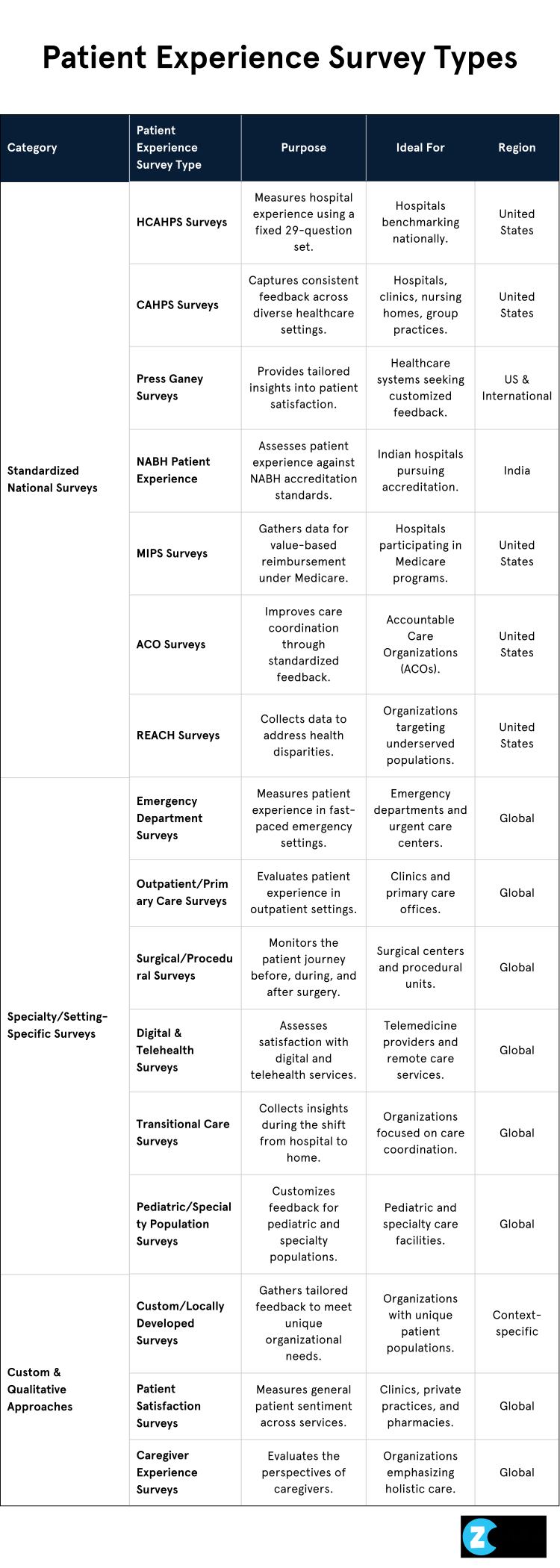
Here is a comprehensive overview of patient experience surveys, meticulously categorized into three:
1. Standardized National Surveys
These surveys are widely recognized, often mandated by regulatory bodies, and used for benchmarking and public reporting.
- HCAHPS: Uses a fixed set of 29 questions to measure hospital patient experience. Mandated by CMS for U.S. hospitals participating in Medicare programs, it evaluates key metrics such as staff communication, hospital environment, pain management, and discharge information.
- CAHPS: A family of surveys that capture standardized feedback across various settings, including outpatient, home health, and hospice care. It focuses on metrics like access to care, provider communication, and care coordination, primarily in the United States.
- NABH: Measures patient experience based on Indian healthcare standards, playing a critical role in Indian hospitals pursuing accreditation and aiming for quality improvement by assessing safety, care processes, and overall satisfaction.
- NHS Patient Experience Framework: Used by the UK’s NHS trusts, it assesses patient experience through metrics like dignity, involvement in decisions, and communication quality.
- MIPS: Captures key patient experience data, especially in areas such as communication and care coordination. Employed in the U.S. under the Medicare Incentive Payment System, it guides value-based reimbursement without a fixed question count.
- ACO: Focuses on integrated care by enhancing care coordination through standardized feedback. Primarily used by Accountable Care Organizations in the U.S. to drive performance improvements in value-based care.
- REACH: Designed to gather feedback aimed at addressing health disparities, REACH supports organizations in reducing disparities and improving community outcomes in the U.S.
2. Specialty/Setting-Specific Surveys
These surveys are tailored to specific healthcare settings or patient populations, addressing unique challenges and care processes.
- Emergency Department CAHPS: Captures patient experience in emergency departments, helping to reduce wait times and improve communication by focusing on timeliness, staff interaction, and pain management.
- Surgical/Procedural Surveys: Monitor the patient journey before, during, and after surgery, optimizing preoperative education, postoperative care, and discharge processes.
- Telehealth Surveys: Evaluate patient satisfaction with virtual care platforms by measuring ease of use, interaction quality, and technical reliability.
- Transitional Care Surveys: Gather insights during the transition from hospital to home, enhancing post-discharge support and reducing readmissions through improved discharge planning and follow-up care.
- Pediatric/Specialty Population Surveys: Customize feedback for pediatric or other specialized patient groups, addressing unique challenges such as family-centered care and age-appropriate support.
3. Custom Surveys
Designed to meet specific organizational needs, these surveys offer flexibility and targeted insights for local or context-specific challenges.
- Custom/Locally Developed Surveys: Collect feedback tailored to an organization's unique processes, supporting local regulatory compliance and targeted quality improvement.
- Patient Satisfaction Surveys: Use patient satisfaction surveys to measure overall patient sentiment, tracking key indicators like Net Promoter Score (NPS), overall satisfaction, and provider communication.
- Caregiver Experience Surveys: Assess the experiences of caregivers to identify support gaps and enhance services for those integral to the patient care continuum.
Each of these surveys plays a vital role in understanding patient needs, improving care quality, and ensuring regulatory compliance. By choosing the right survey for the right purpose—whether it’s addressing real-time issues, tracking overall satisfaction, or meeting CMS requirements—healthcare organizations can drive targeted improvements that truly resonate with their patients.
Moreover, complementing these quantitative tools with qualitative approaches, such as interviews and focus groups, offers rich narrative insights that uncover hidden challenges and add essential depth to your overall patient feedback strategy.
Maximizing ROI: The Strategic Value of Exceptional Patient Experience
Investing in patient experience is a strategic initiative that delivers tangible returns. When healthcare organizations optimize every step of the patient journey, the impact is felt directly on the bottom line.
- Enhanced Patient Loyalty & Revenue Growth:
Superior patient experiences foster loyalty, leading to increased repeat visits and powerful word-of-mouth referrals. Satisfied patients drive organic growth and higher revenue streams. - Improved Clinical Outcomes & Cost Efficiency:
Engaged patients are more likely to adhere to treatment plans, reducing complications and readmissions. Better clinical outcomes translate into lower costs associated with re-hospitalizations and chronic disease management, boosting overall operational efficiency. - Competitive Advantage & Market Differentiation:
In a crowded healthcare landscape, delivering an exceptional patient experience sets your facility apart. This differentiation attracts new patients, positions your organization as a quality leader, and supports premium pricing strategies that enhance market share. - Regulatory Compliance & Enhanced Reimbursement:
Adhering to standards such as CAHPS, MIPS, and NABH not only ensures high-quality care but also improves reimbursement rates. Strong performance on these metrics mitigates financial risk and secures long-term value. - Operational Efficiency & Reduced Overhead:
Systematic patient feedback helps identify bottlenecks and streamline workflows. Targeted improvements reduce waste and lower operational costs, ensuring a robust return on investment.
By transforming patient feedback into actionable improvements, healthcare providers create a virtuous cycle of enhanced care, increased patient loyalty, and financial growth. Every dollar invested in optimizing patient experience translates into measurable, sustainable value—driving both quality outcomes and a compelling ROI.
Common Challenges in Conducting Surveys
Patient experience surveys are essential for improving care, but many healthcare organizations struggle to collect meaningful, actionable feedback. Here are the most common challenges and how to fix them:
1. Are Your Patients Filling Your Surveys?
Patients are busy, and if a survey is too long or poorly timed, they’re likely to ignore it. A low response rate means incomplete data and unreliable insights.
💡 Keep your healthcare surveys short (under 10 questions), mobile-friendly, and sent at the right time (e.g., within 24 hours of a visit). Use SMS, WhatsApp, or email reminders to increase participation.
2. Sending Too Many Patient Surveys? Oh No!
When patients receive too many surveys or lengthy questionnaires, they either stop responding or rush through the answers without giving a thought.
💡 Create smart survey design with skip logic, so patients only see relevant questions based on their previous answers. Limit surveys to essential questions that provide actionable insights.
3. Getting Vague, Non-Actionable Patient Responses?
Open-ended questions often result in unclear or generic responses that don’t provide useful insights. If patients don’t know what kind of feedback is helpful, they may leave vague comments like "Everything was fine."
💡 Combine structured rating scales (NPS, Likert scale) with targeted open-ended questions. Ask specific questions like, "Was your treatment plan explained clearly?" instead of broad ones like, "How was your visit?"
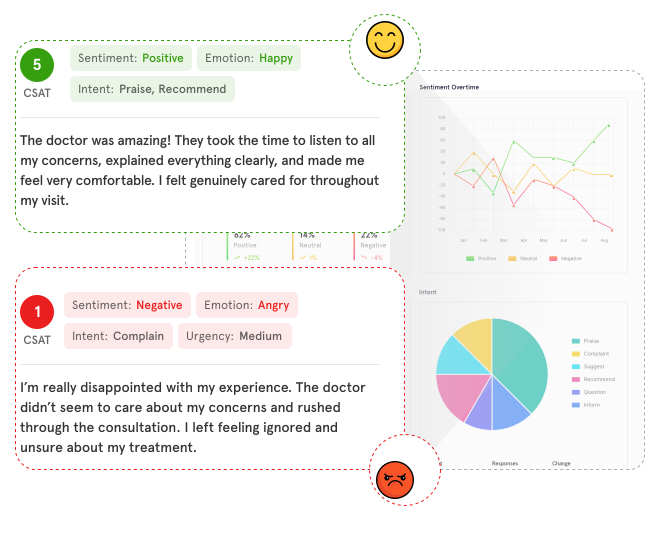
4. Feedback Is Coming in, But Unable to Analyze It in Real-Time?
Many organizations collect survey responses but lack the time or resources to analyze them quickly. By the time trends are identified, the opportunity for real-time service recovery is lost.
💡 Use AI-powered analytics and sentiment analysis to automatically categorize feedback, detect patterns, and flag urgent concerns. Implement real-time dashboards for quicker decision-making.
5. Are HIPAA & Compliance Concerns Holding You Back?
Surveys that collect patient data must comply with HIPAA and CMS regulations to protect patient privacy. Many organizations hesitate to send surveys due to concerns about data security and compliance.
💡 Ensure surveys don’t collect personally identifiable health information (PHI) and use HIPAA-compliant survey tools. Clearly communicate privacy policies so patients feel safe providing feedback.
Without addressing these challenges, surveys can become just another check-the-box task instead of a powerful tool for real improvement.
A Step-by-Step Guide to Conducting Effective Patient Experience Surveys
Collecting feedback is essential for improving care quality, streamlining operations, and ensuring compliance with CMS regulations. But simply running surveys isn’t enough—they need to be well-structured, reach the right patients at the right time, and provide data you can act on.
Follow these six steps to ensure your patient experience surveys deliver real value instead of just collecting responses.
Step 1: Define Clear Goals for Your Survey
Before designing your survey, clearly identify what you want to measure and improve. Without a defined goal, the feedback you collect may not lead to meaningful change. Consider these key questions:
- What is the main objective?
Are you trying to reduce wait times, improve provider communication, enhance post-discharge care, or meet CMS compliance? - Which touchpoints need focus?
Do you need feedback on specific interactions, such as appointment booking, in-clinic experiences, or post-visit follow-ups? - How will the data be used?
Will the insights drive internal quality improvement, support public reporting, or ensure regulatory compliance?
Setting clear, focused goals ensures that every question in your survey is purposeful. This alignment turns raw feedback into actionable insights that support your organization’s overall strategy and drive real improvements.
Step 2: Choose the Right Survey Type
Not all patient surveys serve the same purpose. Selecting the right survey type is key to gathering relevant insights without overwhelming patients. By setting up an effective patient feedback system, you can deploy multiple surveys using customizable templates and analyze responses in one place.
Consider these survey types:
-
Pre-visit Surveys: Capture patient expectations, concerns, and preferences before care begins.
-
HCAHPS Surveys: Measure hospital patient experience using 29 standardized questions. Mandated by CMS for U.S. hospitals, these surveys are essential for Medicare reimbursements and public reporting.
-
CAHPS & MIPS Surveys: Evaluate care quality in outpatient settings and physician groups. These surveys provide standardized feedback for regulatory compliance and are crucial for Medicare reimbursement in the U.S.
-
Post-visit Surveys: Assess the patient’s experience immediately after their visit to capture fresh, real-time impressions.
-
Discharge Surveys: Evaluate the discharge process and follow-up care instructions to ensure smooth transitions.
-
Follow-up Surveys: Monitor patient recovery and long-term satisfaction after care, providing insights for ongoing improvement.
-
NPS Surveys: Use Net Promoter Score surveys to measure patient loyalty and the likelihood of recommending your facility.
-
Specialized Caregiver Satisfaction Surveys: Gather feedback on specific departments or services, such as emergency care or maternity by launching caregiver satisfaction surveys where targeted insights are needed.
-
Emergency Care Surveys: Assess patient experience in emergency or urgent care settings to improve timeliness and staff communication.
-
Telehealth Experience Surveys: Assess patient satisfaction with virtual consultations and remote care services, ensuring technology meets patient needs.
-
Pediatric Care Surveys: Collect feedback from parents or guardians regarding pediatric care, focusing on family-centered service.
-
Chronic Care Management Surveys Measure patients' experiences managing long-term health conditions, helping to tailor ongoing care.
By choosing the right survey for each specific touchpoint, healthcare organizations can improve patient satisfaction, and operational performance, and meet regulatory requirements. This strategic approach ensures that every survey contributes to a comprehensive understanding of the patient experience, driving meaningful improvements without contradicting regulatory guidelines.
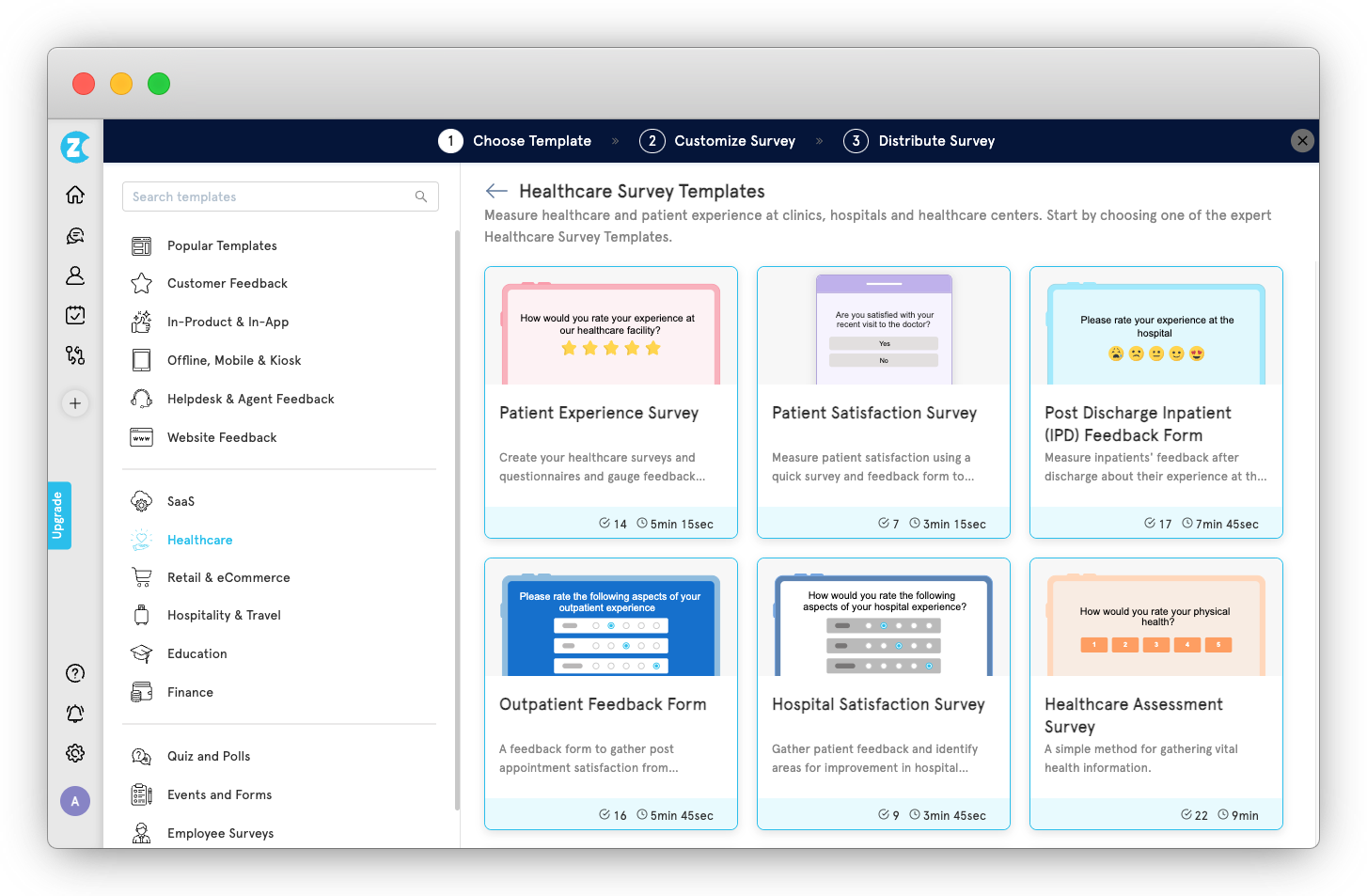
Step 3: Ask the Right Patient Experience Survey Questions
Designing the right questions is crucial for eliciting actionable insights without overwhelming patients. It’s essential to distinguish between survey formats mandated by regulatory bodies and those optimized for rapid, internal feedback.
- Regulatory Standards:
-
- CAHPS Surveys: In the U.S., CAHPS surveys are mandated for hospitals and include 29 standardized questions. This fixed format is essential for benchmarking, regulatory compliance, and national reporting.
- MIPS Surveys: The Medicare Incentive Payment System (MIPS) incorporates standardized survey elements to evaluate care quality. However, unlike CAHPS, MIPS does not specify an exact number of questions; it provides guidelines on essential domains such as communication and care coordination, offering more flexibility in survey design.
- NABH-Compliant Surveys: In India, NABH standards dictate specific quality benchmarks for patient feedback. Similar to MIPS, NABH emphasizes covering key areas of patient care without mandating a fixed number of questions, thus allowing hospitals to tailor their surveys according to operational needs.
- Custom or Real-Time Feedback Surveys: For ongoing quality improvement and immediate feedback, best practices recommend shorter surveys (typically under 10 questions). This streamlined approach minimizes survey fatigue, enhances response rates, and focuses on capturing timely, actionable insights across specific touchpoints in the patient journey.
Tips for Creating Effective Survey Questions:
- Use Clear, Specific Language: Instead of asking a generic "How was your visit?", target the inquiry with a question like "Did your healthcare provider explain your treatment plan clearly?"
- Include Standardized Metrics: Incorporate key performance indicators such as Net Promoter Score (NPS), Likert scales, and CAHPS-compliant questions when applicable to ensure consistency for benchmarking purposes.
- Avoid Overloading Patients: Tailor the survey length based on its purpose. While regulatory surveys like CAHPS require a detailed set of questions, internal surveys should remain concise to maximize engagement and completion rates.
Here are some patient experience survey question examples that you may use:
- On a scale of 0-10, how likely are you to recommend our healthcare services? (NPS- Rating Scale)
- Did our staff provide clear and helpful information about your visit? (Binar Scale: Yes/No, with optional comments)
- How easy was it to schedule your appointment? (CES Scale: Very easy – Very difficult)
- How can we improve the check-in and waiting process? (Open-ended survey question)
- How would you rate the friendliness of our staff? (Likert Rating Scale: Poor – Excellent)
- Were the amenities in the waiting area (seating, restrooms, refreshments) satisfactory? (Binary Scale: Yes/No, with optional comments)
- How can we improve the overall environment of our facility? (Open-ended)
- Was it easy to navigate our facility (finding reception, exam rooms, etc.)? (Binary Scale: Yes/No, with optional comments)
- How would you rate the cleanliness of the waiting area and exam rooms? (CSAT Scale: Poor – Excellent)
Step 4: Share Surveys Through the Right Channels
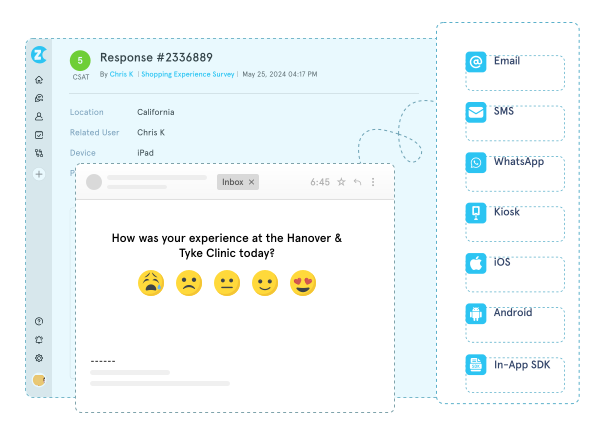
Even a well-designed survey is useless if patients don’t receive it where they prefer. The success of your survey depends on when and how it’s sent. It must be accessible, easy to complete, and reach the patient at the right time. Zonka Feedback lets you automate survey distribution across multiple channels, ensuring higher response rates and a seamless patient experience.
Here’s how it helps:
-
Send SMS or email surveys within 24 hours of a visit to increase engagement and capture timely patient feedback.
-
Reach patients on their most-used platform with WhatsApp surveys, ensuring faster responses and higher completion rates.
-
Collect real-time feedback with Kiosk surveys placed at reception or after a consultation, allowing patients to share their experience instantly.
-
Seamlessly integrate in-app surveys into telehealth platforms and digital patient journeys for quick and convenient feedback collection.
-
Make feedback effortless with QR code surveys, enabling patients to scan and respond instantly from their mobile devices.
-
Boost response rates with automated follow-ups that remind non-responders to complete their surveys without manual effort.
By offering multiple feedback channels, you ensure that patients can share their experiences in a way that feels effortless.
Step 5: Analyze Responses & Identify Key Trends
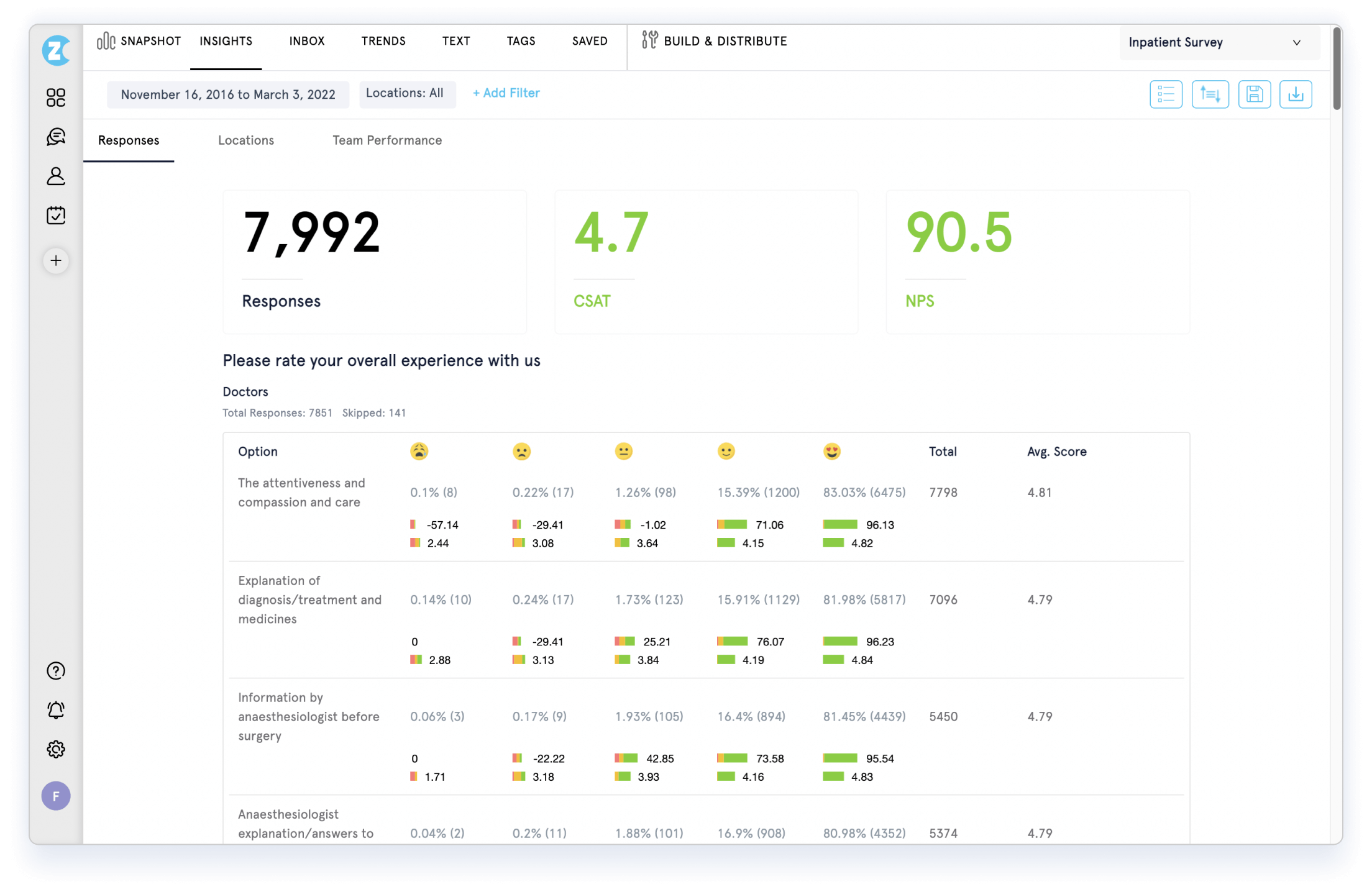
Collecting feedback is only valuable if it leads to measurable improvements. Manually reviewing responses slows down issue resolution, which can lead to dissatisfied patients and negatively impact your healthcare reputation. Zonka Feedback’s real-time analytics help healthcare providers detect trends, compare doctor performance across locations, and address concerns faster to improve care quality and maintain a strong reputation.
Here’s how it works:
- AI-Powered Sentiment Analysis: Automatically categorizes patient comments as positive, neutral, or negative using AI-driven sentiment analysis, allowing for quick identification of emerging issues.
- Customizable Dashboards: Consolidates key metrics such as NPS, CSAT, and CAHPS scores in one intuitive view for easy monitoring.
- Location & Provider Insights: Filters data by facility, service, or provider, allowing you to pinpoint areas that need attention and compare performance across different segments.
- Automated Reports & Alerts: Delivers real-time notifications for negative feedback, ensuring that your team can act immediately to resolve issues.
With real-time insights and performance tracking, healthcare providers can standardize care, improve operational efficiency, and enhance patient satisfaction.
Step 6: Act on Feedback & Close the Loop
Patients expect their feedback to lead to real improvements. If they take the time to share concerns but don’t see changes, they’re less likely to participate in future surveys. Closing the feedback loop builds trust, improves retention, and enhances care quality. With robust patient experience tools, healthcare providers can take immediate action by automating follow-ups, tracking resolutions, and ensuring every concern is addressed.
Here’s how:
- Resolve Issues Before They Escalate: Enable real-time alerts for negative feedback so teams can take immediate action and prevent patient dissatisfaction.
- Follow Up with Patients Effectively: Automate personalized responses to acknowledge feedback, offer resolutions, and improve patient relationships.
- Ensure Seamless Service Recovery: Assign feedback tickets to the right department or staff, ensuring timely issue resolution.
- Enhance Staff Training & Communication: Use patient insights to identify common concerns and improve staff training for better patient interactions.
- Align Leadership & Teams for Better Care: Share customized reports with physicians, administrators, and leadership to drive data-backed improvements.
By acting on feedback and communicating improvements back to patients, providers increase trust, loyalty, and engagement.
.svg)
How to Improve Patient Experience?
Improving patient experience goes beyond just collecting feedback—it’s about making real, measurable changes that enhance care, build trust, and improve patient outcomes. A positive experience increases patient retention, reduces complaints, and boosts regulatory scores like CAHPS and NPS.
Here’s how healthcare providers can take meaningful steps to improve patient experience.
→ Reduce Wait Times & Improve Appointment Scheduling
Long wait times are one of the biggest frustrations for patients. If they’re left waiting too long, their overall perception of care suffers—even if the medical treatment itself is excellent.
Here's how to improve:
- Offer online scheduling so patients can book at their convenience.
- Use automated appointment reminders to reduce no-shows and last-minute reschedule.
- Monitor real-time wait times and notify patients of delays.
- Adjust staffing during peak hours to keep patient flow smooth.
- Collect real-time feedback on wait times and act on trends.
→ Enhance Provider-Patient Communication
Patients don’t just want to be treated—they want to be heard, understood, and involved in their care. Poor communication leads to misunderstandings, dissatisfaction, and even non-compliance with treatment plans.
To improve, you can:
- Train staff to use clear, simple language when explaining diagnoses and treatments.
- Use patient-centered communication techniques like active listening and empathy to understand the voice of the patient and address their concerns.
- Provide printed or digital after-visit summaries with clear instructions.
- Allow patients to ask follow-up questions via email or a patient portal.
- Collect feedback on provider communication and use it for continuous improvement.
→ Make Facilities More Comfortable & Accessible
The physical environment plays a huge role in patient experience. A clean, welcoming, and well-organized facility helps reduce patient stress and improves satisfaction.
Steps to improve:
- Ensure waiting areas are clean, well-lit, and comfortable.
- Provide amenities like refreshments, charging stations, and reading materials.
- Make navigation easier with clear signage and digital check-in kiosks.
- Ensure facilities are accessible for patients with disabilities.
- Regularly collect feedback on facility cleanliness and comfort.
→ Focus on Service Recovery & Address Negative Feedback Promptly
No matter how efficient a healthcare facility is, issues will arise. The key is to resolve them before they escalate into patient dissatisfaction or bad reviews.
Following are the ways to improve:
- Set up real-time alerts for negative feedback so staff can take immediate action.
- Train employees on how to handle patient complaints professionally and empathetically.
- Follow up personally with patients who had a negative experience.
- Offer solutions like rescheduling appointments, assigning a different provider, or addressing concerns directly.
- Use feedback insights to prevent recurring issues.
→ Personalize the Patient Journey
Patients appreciate when healthcare feels personal, not transactional. Personalized care enhances the patient's journey, making them feel valued, respected, and more engaged in their treatment.
Here's what you can do:
- Address patients by name and acknowledge past visits or medical history.
- Offer personalized appointment reminders and follow-up messages.
- Use survey insights to tailor care recommendations based on patient needs.
- Provide digital engagement tools like telehealth options and mobile-friendly patient portals.
- Segment feedback data to understand different patient groups and their unique needs.
A great patient experience isn’t one-and-done—it requires continuous monitoring, feedback collection, and action. By focusing on reducing wait times, improving communication, enhancing facilities, resolving issues promptly, and personalizing care, healthcare providers can create a more positive, patient-centered environment.
Key Metrics to Track for Patient Experience
Improving patient experience starts with measuring the right data. These key metrics help you track patient experience data over time to measure progress and make informed decisions. Using survey themes can enhance the visual appeal of surveys, making them more engaging for patients.
|
Metric |
Why It Matters |
How to Use It |
|
Net Promoter Score (NPS) |
Measures patient loyalty & likelihood of recommending your facility |
Identify promoters and detractors, track trends over time |
|
Patient Satisfaction Score (PSS) |
Gives a direct rating of satisfaction with their experience |
Compare scores across departments, providers, or locations |
|
Response Rate |
Indicates how many patients are sharing feedback |
Improve survey design, keep surveys short, and send reminders |
|
Negative Feedback Response Time |
Tracks how quickly issues are addressed |
Set up alerts for negative feedback and resolve complaints faster |
|
Review Ratings |
Reflects public perception and impacts patient acquisition |
Monitor and respond to reviews, encourage satisfied patients to leave feedback |
Best Practices to Improve Patient Experience
Improving patient experience requires real-time feedback, streamlined operations, and personalized care. Here’s how to do it effectively:
- Build a Patient-Centric Culture:
Train your staff to prioritize empathy, clear communication, and proactive service. A culture that puts patients first drives loyalty and fosters trust. - Standardize Feedback Collection:
Implement automated surveys at every patient journey touchpoint. Consistent feedback helps you identify trends and areas for improvement across your organization. - Monitor Key Experience Metrics:
Track vital indicators such as Net Promoter Score (NPS), satisfaction scores, response rates, and the time taken for complaint management and resolution. These metrics provide a clear picture of your performance and highlight opportunities for enhancement. - Leverage Technology to Enhance Engagement:
Utilize AI customer insights, advanced analytics, and automated follow-ups to gather and analyze feedback in real time. Digital health tools and integrated platforms help streamline interactions and improve overall patient engagement. - Continuously Optimize Workflows:
Regularly review your scheduling, wait times, and care coordination processes to identify and eliminate bottlenecks. Optimizing these workflows not only improves efficiency but also enhances patient satisfaction.
Wrapping Up
Patient experience is no longer just a soft metric—it’s a strategic imperative that drives patient loyalty, financial performance, and healthcare reputation. As reimbursement models and competitive landscapes evolve, organizations must move beyond merely collecting feedback to leveraging it for measurable, data-driven improvements.
To stay ahead, healthcare leaders must adopt real-time Patient experience survey software that not only enhance care but also optimize operations and reduce churn. With AI insight tools, having powerful analytics and automated workflows enable providers to detect patterns, resolve issues proactively, and refine service delivery at scale.
By setting clear, ROI-driven goals and deploying patient experience survey platforms like Zonka Feedback, forward-thinking organizations can transform patient insights into a competitive advantage. This goes beyond satisfaction scores—it’s about increasing retention, improving operational efficiency, and driving long-term success.
The future of patient experience belongs to organizations that embrace innovation, agility, and AI-driven solutions. Those that act now will not only meet patient expectations but redefine industry benchmarks. Discover how Zonka Feedback can elevate your patient experience strategy—schedule a demo or start your free 14-day trial today.
FAQs: Patient Experience Surveys
1. How can we prevent survey fatigue?
Patients won’t complete surveys if they’re too long or repetitive. Keep your patient experience survey questions under 5-7 and use smart branching so patients only see relevant questions based on their responses.
2. What’s the best way to act on negative feedback for a hospital?
Ignoring negative feedback leads to lost patients and bad reviews. Use patient experience survey software for hospitals and set up real-time alerts to respond within 24 hours, address concerns immediately, and track recurring issues for long-term improvement.
3. Are patient surveys HIPAA-compliant?
Yes—if they don’t collect identifiable health information (PHI) and are conducted through secure, HIPAA-compliant platforms. Always follow data protection regulations to maintain trust.
4. Can surveys help improve online reviews?
Absolutely. Use surveys to identify satisfied patients and encourage them to leave positive reviews. At the same time, address negative feedback privately before it turns into a public complaint.
Skyrocket Patient Experience with Smart Surveys 🔥
Capture patients' voices, track satisfaction, trigger real-time alerts, and take action instantly—turning feedback into better care with Zonka Feedback.



%20in%20Healthcare%20%26%20Patient%20Satisfaction_%20Meaning%2c%20Calculation%2c%20Benchmark%20%26%20More.svg)