

.svg)
 Healthcare
 Finance
 Retail
 SaaS & Digital
 eCommerce
 Education
 Salesforce
  HubSpot
 Pipedrive
 Mailchimp
 Klaviyo
 Zendesk
  Intercom
 Freshdesk
 HelpScout
  Front
Front Jira
Jira Slack
Slack  MS Teams
 Zoom
Zoom Google Sheets
  Zapier
  Integrately
 Make
Make  Webhooks



 Sign In
 MS Teams


The 10 best product management tools in 2026 are Canny, Chisel, Zonka Feedback, Google Analytics, Inspectlet, Mixpanel, Productboard, ProductPlan, Jira, and Slack. These tools cover five functional areas: feedback collection, product analytics, roadmapping, execution, and cross-functional alignment. Most product teams run a stack of three to five, each doing one job well, because no single platform handles all five without real trade-offs.
TL;DR
- Product management tools are software platforms that help teams plan, build, and improve products across the full lifecycle, from capturing user feedback to shipping features and keeping stakeholders aligned.
- No single tool covers all five functional areas well. Most PM teams need at least three categories covered: feedback collection, product analytics, and roadmapping.
- This guide covers 10 tools grouped by function across four categories: Feedback & Insights, Product Analytics, Roadmapping & Planning, and Execution & Delivery.
- Tools evaluated: Canny, Chisel, and Zonka Feedback (feedback), Google Analytics, Inspectlet, and Mixpanel (analytics), Productboard and ProductPlan (roadmapping), Jira and Slack (execution and alignment).
- All 10 tools are evaluated with the same structure, features, pros, cons, pricing, and G2 rating. Including Zonka Feedback, which is our product.
Most PM tool guides give you a ranked list of 15 platforms, each claiming to do everything. You finish reading and know which tool ranked first. You still don't know which tool solves your actual problem.
Here's the thing: product management isn't one job. It's five. Collecting feedback from users. Understanding how those users behave inside your product. Translating both into a roadmap. Shipping what's on that roadmap. Keeping every stakeholder aligned through all of it. No single platform does all five well. The teams that get this right don't search for the perfect all-in-one tool. They build a stack, deliberately, category by category.
This guide covers 10 tools grouped by the job they actually do. Same evaluation structure for every tool: features, pricing, real pros, and real cons. Including Zonka Feedback, which we make. The goal isn't to push any one platform. It's to help you figure out which category to solve first, and which tool in that category fits your team.
What Are Product Management Tools?
Product management tools are software platforms that help product teams plan, build, and improve products across five functional areas: collecting user feedback, analyzing in-product behavior, planning and communicating roadmaps, managing execution, and keeping cross-functional teams aligned.
That's a wide definition by design. "PM tools" isn't a single category, it's five overlapping ones. A behavioral analytics tool like Mixpanel does something fundamentally different from a roadmapping tool like Productboard, which does something different from a feedback collection platform like Zonka Feedback or a feature request board like Canny. Each addresses a different stage of the product lifecycle. Each answers a different question. And most product teams need at least three of these five areas covered before the workflow stops breaking down.
Why Do Product Teams Need Dedicated PM Tools in 2026?
The average SaaS product team collects feedback from at least seven sources: in-app surveys, support tickets, sales calls, Slack threads, user interviews, NPS responses, and feature request emails. Almost none of it ends up in the same place. PMs piece it together manually before every planning meeting, make judgment calls on which signals matter, and move on. The roadmap ends up reflecting whoever was loudest in the last sprint review. Not the clearest data. The loudest voice.
That's the first problem. The second is behavioral. Teams run surveys and read results. They rarely cross-reference them with usage data, which features users actually open, which onboarding steps cause the drop-off, which workflows nobody touches. Feedback tells you what users say. Analytics tells you what they do. Both matter, and the gap between them is where bad product decisions get made.
The third is visibility. Most roadmaps live in a slide deck emailed to stakeholders once a quarter and never updated between sends. Engineering doesn't trust it. Leadership doesn't reference it. Design hasn't seen the latest version. Dedicated tools don't fix process problems, but they make the right process considerably easier to maintain.
What Should You Look For in a Product Management Tool?
The right criteria depend on which category you're evaluating. But across all five, a few questions separate useful tools from expensive noise:
- Feedback collection: Does it capture in-app, email, and qualitative feedback in one place, or does it add another silo to the stack you're already managing?
- Behavioral analytics: Does it show what users do inside the product, or just where they came from?
- Roadmapping: Can stakeholders see the current roadmap without you sending a new deck after every planning meeting?
- Execution: Does it connect to how your engineering team already works, or will you spend months fighting adoption?
- Team alignment: Can cross-functional partners follow product progress without Slacking you for a status update?
- Integration depth: Does it connect to your existing stack, or does it create new handoffs to manage?
- Pricing at your scale: Is the actual cost clear at your team size, or does it scale in ways the pricing page doesn't mention?
How Do You Choose the Right Product Management Tool for Your Team?
Start with the pain. Not the tool.
| If your biggest problem is... | Start with this category |
| Feedback is scattered and untracked | Feedback & Insights |
| You don't know how users behave in-product | Product Analytics |
| Roadmap is misaligned or invisible to stakeholders | Roadmapping & Planning |
| Engineering can't track what's in scope | Execution & Delivery |
| Teams keep asking for product status updates | Execution & Delivery (alignment layer) |
Team size changes the calculation significantly. A solo PM or two-person product team doesn't need Jira, a lightweight tracker and a shared doc will do. Once you're managing five or more engineers across multiple workstreams, the coordination overhead becomes real and a proper execution tool earns its keep fast.
On budget: every category on this list has a free or near-free option. Jira is free up to 10 users. Google Analytics is free for most teams. Canny has a free tier. Mixpanel's free plan covers 100,000 monthly tracked users. A functional PM stack is achievable under $50/month for a small team. Costs scale when you need enterprise security, deeper integrations, or analytics at volume.
Integration requirements matter more than most teams realize. If your engineering team is committed to Jira, buy tools that integrate with it, not tools that try to replace it. If your org runs on Google Workspace, Google Analytics becomes easier to justify. Start from what's already working, then fill what's missing.
How Did We Evaluate These Product Management Tools?
We evaluated 10 tools against criteria that reflect how product teams actually select and use PM software:
- Category fit: does the tool solve one PM job well, or spread thin across several?
- Feature depth for its primary use case, tested against the actual workflow it claims to support
- Pricing transparency and cost at realistic team sizes (not just the starting price, but what it costs at 10, 50, and 200 users)
- Integration depth with product and engineering stacks (Jira, Salesforce, HubSpot, Segment, Slack, and others verified against live documentation)
- Active development status and vendor stability, including acquisitions, sunsetting risk, and recent feature releases
- G2 rating and real user sentiment (minimum 25 reviews per tool, 15,000+ total reviews analyzed across all 10)
We excluded tools that are primarily project management platforms (Asana, Monday.com, ClickUp) rather than product management tools. We also excluded tools with fewer than 25 G2 reviews, as the sample size makes reliable evaluation difficult.
Full disclosure: Zonka Feedback is our product. It's evaluated in the Feedback & Insights category alongside Canny and Chisel, under the same structure as every other tool. That means real cons, including what Zonka doesn't do.
Product Management Tools Comparison Table (2026)
| Tool | Category | Best For | Key Strength | Pricing (starting) | G2 Rating |
| Canny | Feedback & Insights | Feature request management | Revenue-weighted prioritization | Free; from $19/mo | 4.6/5 |
| Chisel | Feedback & Insights | End-to-end product lifecycle | AI feedback + roadmap in one | Free; from $7/maker/mo | 4.7/5 |
| Zonka Feedback | Feedback & Insights | Multi-channel feedback collection | AI thematic + sentiment analysis | Custom; 14-day trial | 4.7/5 |
| Google Analytics | Product Analytics | Web and product usage tracking | Free, Google ecosystem native | Free; 360 from $12,500/mo | 4.5/5 |
| Inspectlet | Product Analytics | Session replay and heatmaps | Visual behavior analysis | Free; from $39/mo | 4.2/5 |
| Mixpanel | Product Analytics | Event-based behavioral analytics | Retention cohorts, funnel analysis | Free to 100k users; from $25/mo | 4.6/5 |
| Productboard | Roadmapping & Planning | Feedback-to-roadmap connection | Jira integration + insight linking | From $19/maker/mo | 4.3/5 |
| ProductPlan | Roadmapping & Planning | Visual roadmap communication | Unlimited stakeholder viewer sharing | Custom pricing | 4.3/5 |
| Jira Software | Execution & Delivery | Agile sprint and bug tracking | 3,000+ integrations, engineering-native | Free to 10 users; from $7.53/mo | 4.3/5 |
| Slack | Execution & Delivery | Cross-functional alignment | Workflow automation + Jira integration | Free; from $7.25/mo | 4.5/5 |
| Zite | Execution & Delivery Tools | AI-assisted software creation and workflow automation | AI builder + workflow automation | Free; from $15/mo | 4.5/5 |
What Are the Best Product Management Tools in 2026?
The best product management tools in 2026 include platforms that support different stages and responsibilities of the product lifecycle. These range from feedback collection and insights tools that capture and analyze user signals, to product analytics platforms that reveal how users behave in-product, roadmapping and planning software that translates those signals into a shared direction, and execution tools designed to help teams build, ship, and improve products at scale.
Tools such as Zonka Feedback, Canny, Chisel, Mixpanel, Google Analytics, Inspectlet, Productboard, ProductPlan, Jira Software, and Slack are commonly evaluated as product management tools. Product teams compare these platforms based on factors like feedback collection and analysis capabilities, behavioral analytics depth, roadmapping and prioritization features, execution and workflow support, integrations with existing product and CX stacks, and overall cost of ownership across team sizes.
Below, we take a closer look at each product management tool to help you understand where it fits best, which part of the PM workflow it supports, and how different teams can use these tools effectively in 2026.
Feedback & Insights Tools
Product feedback doesn't fail because teams don't collect it. It fails because it ends up in five different places and nobody owns the consolidation. This category covers tools that give product teams a dedicated home for user feedback, feature requests, survey responses, and qualitative signals across multiple channels. Without a feedback layer, roadmap priorities are guesswork dressed up as strategy. The product feedback guide covers the full lifecycle from collection to action if you want the strategic framework alongside the tools. If you want to go deeper on ways to collect product feedback beyond surveys, that guide covers the full range of methods.
1. Canny: Best for Feature Request Management and Feedback Prioritization
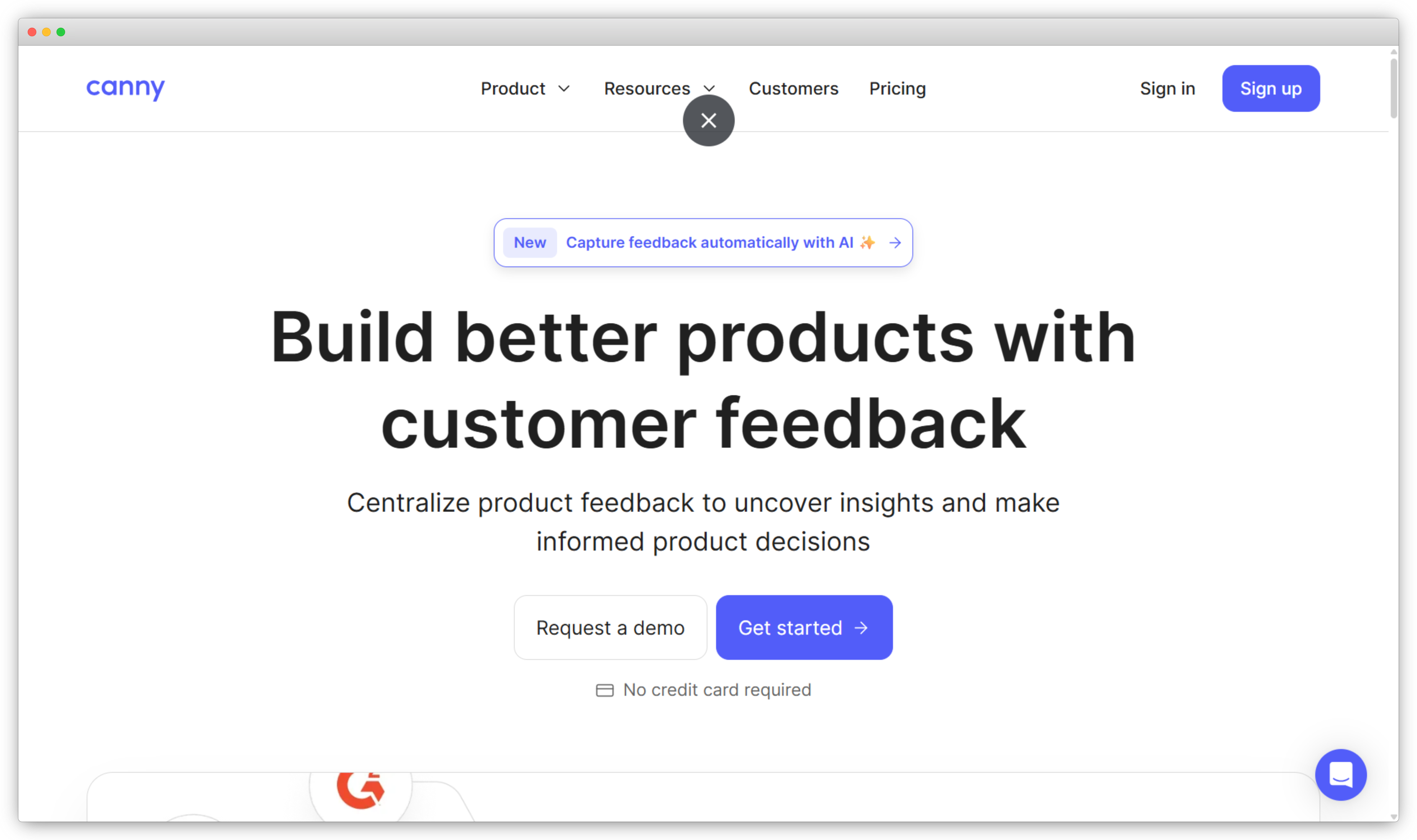
Canny is a feedback management platform built around one core problem: product teams collect feature requests through too many channels and most of them disappear. Slack threads, support tickets, sales emails — there's no organized place for users to submit what they want, no way to see which requests overlap, and no signal about which ones would actually move business metrics. Canny fixes that with public and private feedback boards where users submit requests, upvote ideas, and see what's already been suggested.
PMs get a ranked list of requests, weighted by revenue impact (MRR) on paid plans. The Autopilot feature captures feedback from existing conversations automatically, reducing manual inbox triage. Jira and GitHub integrations are strong for developer-centric teams. A G2 reviewer managing 50,000 users described the shift: their Jira-based request board was becoming "a graveyard" with priorities based on gut feel. Canny consolidated everything into one place with automatically adjusted scoring.
Key Features
- Public and private feedback boards with user upvoting and commenting
- Autopilot: AI captures feedback from existing conversations and deduplicates requests automatically
- MRR and Opportunity scoring to weight feature requests by revenue impact
- Public roadmap and product changelog to close the loop with users when features ship
- Integrations with Jira, Slack, Intercom, Salesforce, and GitHub
- RICE scoring that auto-adjusts based on vote data and company-defined variables
Canny Pros
- Fast setup — feedback boards are live in under an hour with no engineering required
- Jira and GitHub integrations are among the best in this category for developer-centric teams
- Revenue-weighted prioritization (MRR scoring) turns anecdotal requests into business-backed decisions
- Changelog feature automatically notifies users when their requested features ship
Canny Cons
- Tracked-user pricing scales fast — the $79/month Pro plan is priced for ~100 tracked users; at 700 users you're paying approximately $379/month
- UI is functional but dated compared to newer tools in the category
- Analytics depth is limited beyond feedback volume and vote counts — not a substitute for behavioral analytics
Canny Pricing
- Free plan: up to 25 tracked users
- Core: from $19/month
- Pro: from $79/month
- Business: custom pricing
G2 Rating: 4.6/5 on G2 (104 reviews)
Best Use Case: SaaS product teams that need a centralized, organized home for feature requests — especially teams tired of manually triaging duplicate requests across Jira, support channels, and sales emails.
2. Chisel: Best for End-to-End Product Lifecycle Management
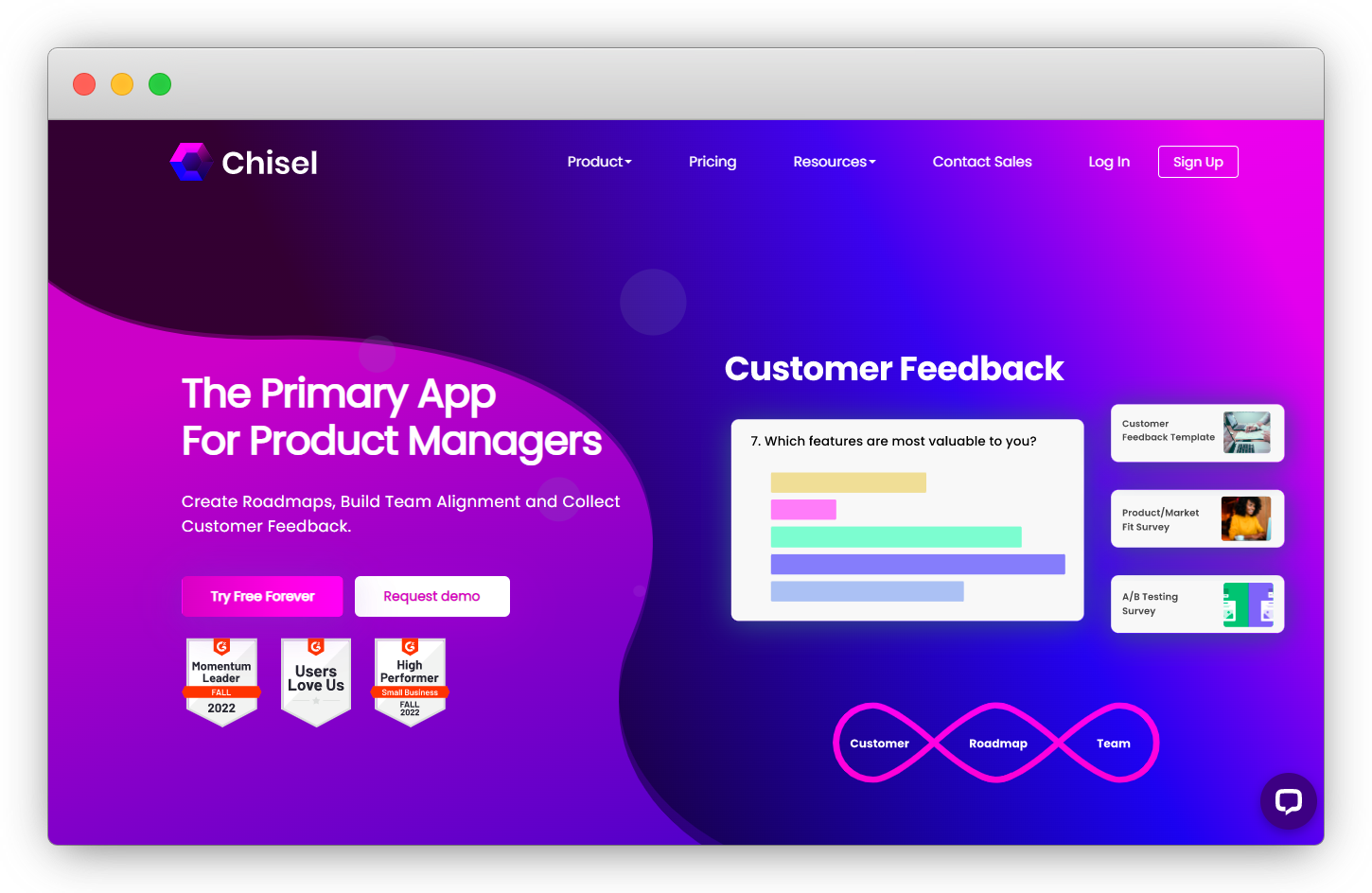
Chisel is an AI-powered product management platform that combines feedback collection, idea prioritization, and visual roadmapping in one tool. Where Canny focuses on feature request boards and Zonka Feedback handles survey-based collection, Chisel covers all three: collect ideas, score them with AI, and connect them directly to a roadmap. For PMs who want a single platform without maintaining three separate tools, it's worth a serious look.
The Idea Box centralizes all feedback and feature requests. The Feedback Portal captures direct customer input through customizable surveys. AI classification auto-tags and categorizes incoming feedback at scale, reducing the manual triage that consumes PM time. The G2 rating is the highest on this list at 4.7/5. One important note: Chisel was acquired by Pendo in early 2026 and is now being integrated into Pendo's broader product platform. The product continues to operate, but teams evaluating Chisel should monitor how the Pendo integration affects standalone availability over the coming months.
Key Features
- Idea Box: centralized repository for all feedback, feature requests, and product ideas
- Feedback Portal: direct customer input through customizable surveys on the platform
- AI auto-classification and tagging at scale, reduces manual feedback triage
- Release planning with visual roadmaps, sprints, and Kanban workflows
- Audience targeting for survey respondents based on demographics and user segments
- Team alignment scoring with cross-functional prioritization inputs
Chisel Pros
- AI auto-classification reduces the manual overhead of categorizing incoming feedback
- Combines feedback collection, prioritization, and roadmapping in one platform
- Free tier is functional for early-stage teams; paid plans start at $7/maker/month annually
Chisel Cons
- Acquired by Pendo in 2026 — teams should monitor how the Pendo integration affects the product roadmap and standalone availability
- AI features require upfront configuration to deliver full value
- Less flexible for teams with established workflows in other tools, migration friction is real
Chisel Pricing
- Free plan available
- Starter: $7/maker/month (billed annually) or $9/maker/month (billed monthly)
- Enterprise: custom pricing (minimum 10 maker seats)
G2 Rating: 4.7/5 on G2 (verified March 2026)
Best Use Case: Early to mid-stage SaaS PMs who want feedback collection, idea prioritization, and roadmapping in one platform, without managing three separate tools for the same workflow.
3. Zonka Feedback: Best for Collecting and Analyzing Product Feedback Across Channels
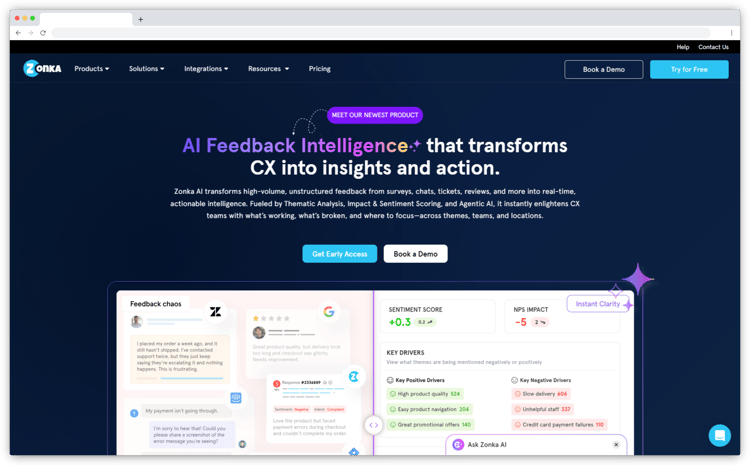
Zonka Feedback is a multi-channel feedback collection and AI analysis platform. PMs use it to run in-product surveys — NPS, CSAT, CES, and custom forms — collect feedback across email, SMS, in-app widgets, and website channels, and analyze responses using AI-powered thematic and sentiment analysis. It's the feedback collection and signal analysis layer in a PM stack: it tells you what users think and why, not what to build next. That's the job of a prioritization tool like Canny or a roadmapping platform like Productboard.
The AI Feedback Intelligence layer goes beyond standard survey tools. Rather than leaving PMs with a spreadsheet of responses to read manually, AI agents cluster themes, map feedback to specific product areas, and score sentiment across the full response set. A product team running 5,000 monthly surveys can't read each one. The AI surfaces the signal — which themes are emerging, which product areas are generating friction, which responses warrant follow-up — and closed-loop workflows automate what happens next.
Key Features
- In-product survey widgets, feedback buttons, and popups supporting NPS, CSAT, CES, and custom question types
- AI thematic analysis: clusters responses into themes without manual tagging
- Sentiment analysis: maps positive, neutral, and negative signals across the full response set
- Closed-loop workflows: automated follow-ups trigger based on response scores and segments
- Multi-channel distribution across in-product feedback, email, SMS, website, and in-app mobile SDK
- User segmentation and behavioral targeting — surveys sent based on user persona and journey stage
Zonka Feedback Pros
- Strong multi-channel coverage — in-app, email, SMS, and website feedback collection from one platform
- AI agents surface themes and sentiment automatically, reducing manual analysis overhead significantly
- Closed-loop automation handles follow-ups without requiring manual intervention on every response
- Fast time to first survey — setup doesn't require a lengthy implementation engagement
Zonka Feedback Cons
- Not a roadmapping or feature prioritization tool — you'll need Canny, Chisel, or Productboard alongside it for that job
- No public voting board for feature requests (unlike Canny) — different collection model entirely
- Advanced AI analysis features sit on higher-tier plans
Zonka Feedback Pricing
- Custom pricing based on feedback volume and integrations
- 14-day trial (available on request)
G2 Rating: 4.7/5 on G2
Best Use Case: Product and CX teams that need to collect structured feedback — surveys, NPS, CSAT — across multiple channels at scale, and analyze it with AI without building custom infrastructure. Not the right choice for teams looking primarily for feature request boards or public voting.
Product Analytics & User Behavior Tools
Feedback tools tell you what users say. Analytics tools tell you what they do. The two frequently contradict each other, which is exactly why you need both. A user can rate your onboarding 9/10 in a survey and still drop off at step three of your setup flow. Session data catches what survey data misses. Usage cohorts show which features actually drive retention, not which ones users claim to love. This category provides the behavioral evidence layer that honest product decisions are built on.
4. Google Analytics: Best for Tracking Product Usage and Web Performance
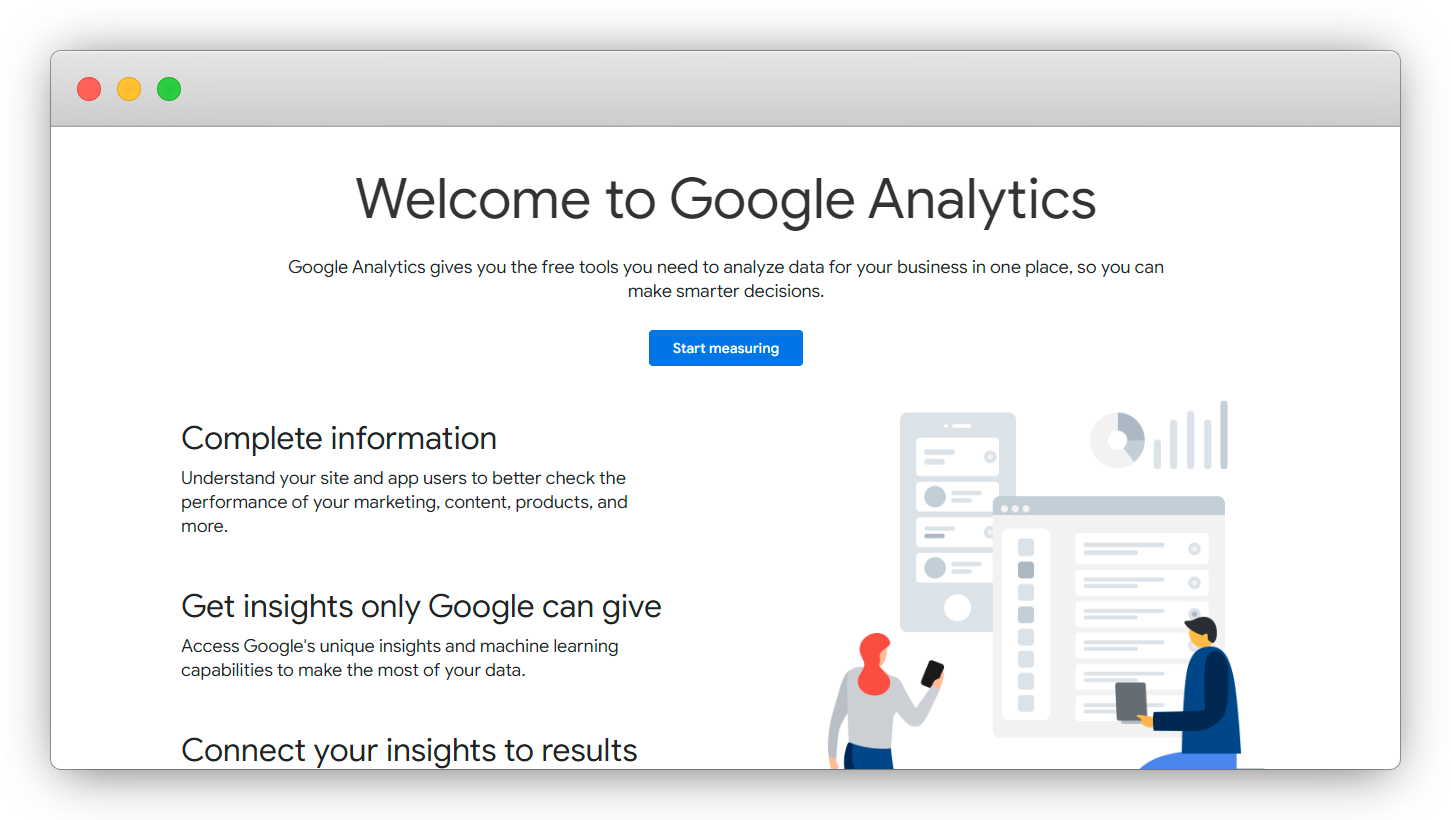
Google Analytics 4 tracks user behavior across web and mobile through event-based data collection — sessions, conversions, audience segments, funnel visualization, and cross-device tracking. For SaaS product teams, it's most useful for understanding acquisition-to-activation flows: where users come from, which channels produce users who actually activate, and where in the onboarding funnel the drop-off happens. It's also free for most teams, making it the default starting point for product analytics.
The honest caveat: GA4 is a web analytics tool first. It handles page views, sessions, and conversion events well, but doesn't track in-product user behavior at the granularity that dedicated behavioral analytics platforms do. If you need to understand which features a specific user activated, which onboarding steps they skipped, or which usage patterns predict six-month retention, Mixpanel goes the rest of the distance. Most mature product analytics setups run both.
Key Features
- GA4 event-based tracking across web and mobile apps
- Audience reports with interest, demographic, and behavioral segmentation
- Funnel visualization and behavioral flow mapping
- Custom dashboards and reporting for product-specific metrics
- Cross-device user tracking with unique IDs
- Native integration with Google Ads and Search Console
Google Analytics Pros
- Free for most teams — no budget justification required to start
- Deep Google ecosystem integration (Ads, Search Console, Looker Studio)
- Cross-functional familiarity — most teams already know the interface
- Strong for acquisition funnel analysis and conversion tracking
Google Analytics Cons
- Not built for deep in-product behavioral analytics — Mixpanel goes significantly further on feature adoption and retention cohorts
- GA4 learning curve is steeper than its predecessor — the new interface takes meaningful time to navigate confidently
- Data sampling at high traffic volumes affects accuracy on the free plan
- The 360 plan ($12,500/month) puts enterprise-grade capabilities out of reach for most teams
Google Analytics Pricing
- Free plan: available for most teams
- Google Analytics 360: from $12,500/month
G2 Rating: 4.5/5 on G2 (6,690 reviews)
Best Use Case: Teams that need web traffic, acquisition funnel, and conversion data — especially those already embedded in the Google ecosystem. Not the right standalone choice for teams focused primarily on in-product feature adoption or user retention cohorts.
5. Inspectlet: Best for Session Replay and Visual User Behavior Analysis
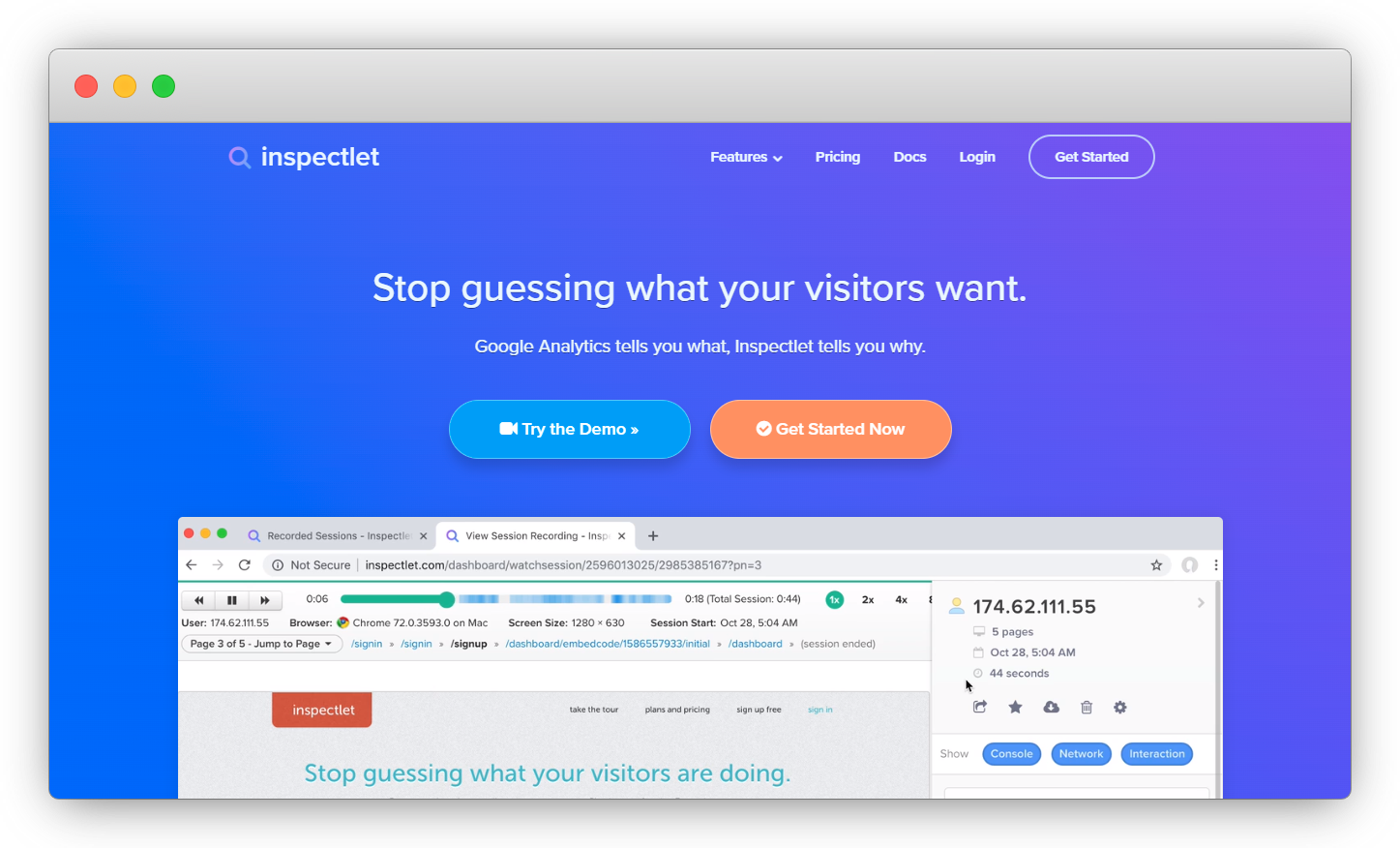
Inspectlet records user sessions and generates heatmaps, scroll maps, and click maps, giving PMs a visual record of how users actually interact with a product rather than what they report in surveys. Users rarely say "I found the navigation confusing." They just leave. Session recordings show the hesitation before a click, the repeated scrolling past a CTA, the rage-clicking on a non-interactive element — patterns no survey will ever surface.
Inspectlet is particularly useful during post-launch diagnostics and conversion optimization. When a feature ships and adoption is lower than expected, session recordings are frequently the fastest path to understanding why. The affordable entry point — free plan included, $39/month for the Micro tier — makes it accessible for smaller teams that need behavioral evidence without a large analytics budget. Most teams use it alongside Mixpanel or GA4 rather than as a standalone analytics solution.
Key Features
- Session video recordings with behavioral filtering options
- Click maps, scroll maps, and eye-tracking heatmaps
- Form analytics and error tracking
- Cart abandonment and new visitor segmentation
- Filter sessions by specific behaviors: rage clicks, u-turns, specific pages
- Conversion tracking to identify which UI elements drive action
Inspectlet Pros
- Affordable entry point — the free plan and $39/month Micro tier make it accessible for smaller teams
- Session recordings surface UX problems no survey will catch
- Heatmaps give a clear visual overview of user attention without manual data interpretation
Inspectlet Cons
- UI feels dated compared to newer session replay tools like FullStory or Hotjar
- Analytics depth is limited beyond behavioral visualization — not a substitute for event-based analytics
- Lower G2 review volume than category peers, making it harder to validate for specific use cases
Inspectlet Pricing
- Free plan available
- Micro: $39/month
- Startup: $79/month
- Growth: $149/month
- Premium: $299/month
- Business: $399/month
G2 Rating: 4.2/5 on G2 (25 reviews)
Best Use Case: PMs and UX researchers who need to watch real user sessions to understand why users struggle with specific flows — especially useful when feature adoption is lower than expected post-launch and the reason isn't obvious from quantitative metrics alone.
6. Mixpanel: Best for Event-Based Product Analytics and Retention Analysis
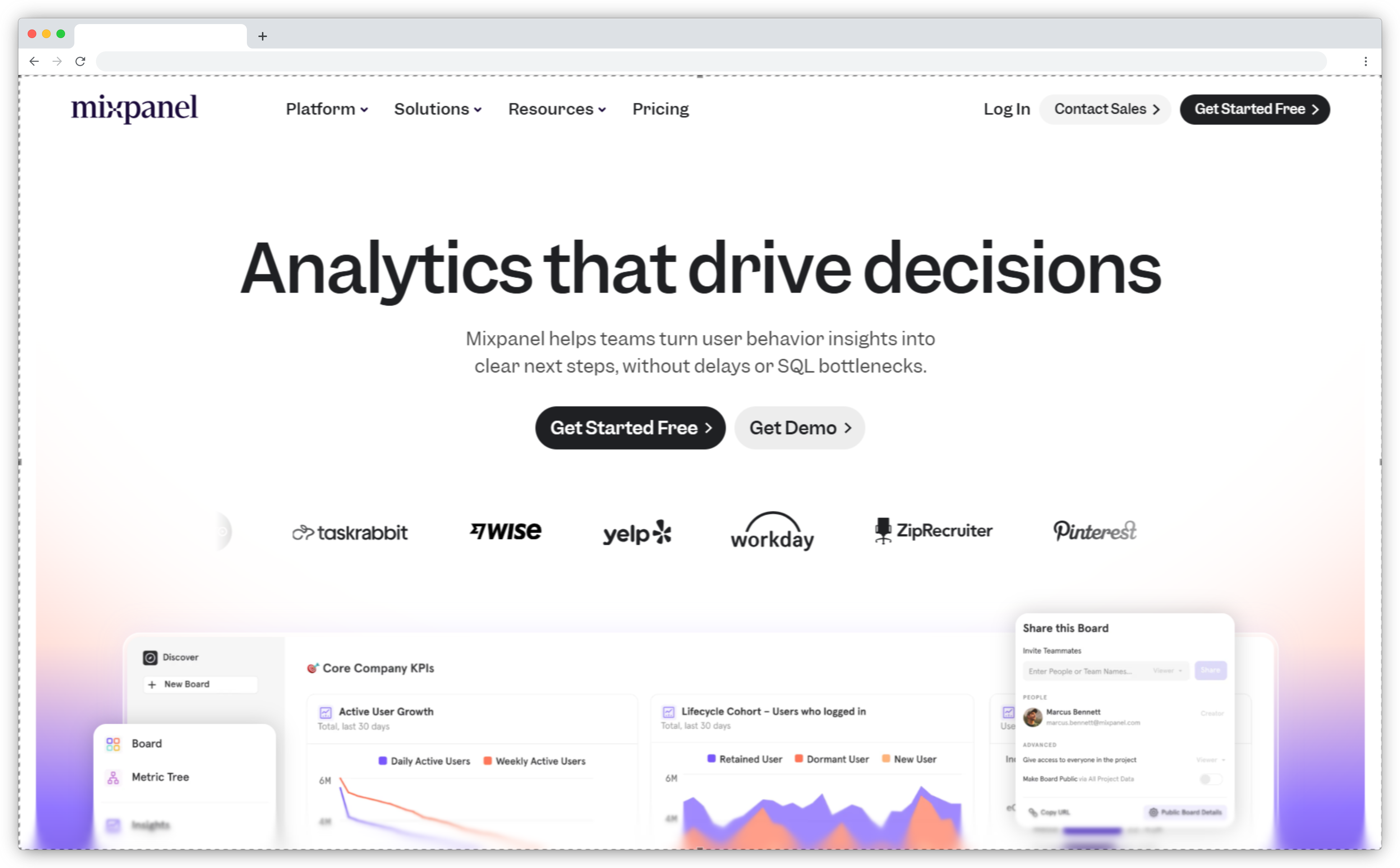
Mixpanel is an event-based analytics platform that tracks what users actually do inside the product — clicked a button, completed onboarding, upgraded a plan, skipped a feature for the third week in a row — rather than just how they got there. Every action becomes a trackable event, and the analysis layer lets PMs build funnels, retention cohorts, and user segments on top of that data.
For SaaS teams, this is where behavioral analytics starts driving real product decisions. You can see exactly which onboarding steps have the highest drop-off rate, build a cohort of users who activated a specific feature, and track whether their retention is higher six weeks later. Figma uses Mixpanel to identify highly engaged teams versus struggling ones. The free tier covers up to 100,000 monthly tracked users, though the steeper learning curve is real — Mixpanel rewards teams that invest in a clean tracking plan from the start.
Key Features
- Event-based tracking for any user action across web and mobile
- Funnel analysis with unlimited steps and filter conditions
- Retention cohort analysis and behavioral user segmentation
- Real-time reporting dashboards
- A/B test measurement and experiment impact tracking
- AI assistant for querying behavioral data in plain language
Mixpanel Pros
- Free tier covers up to 100,000 monthly tracked users — genuinely useful at early-stage SaaS scale
- Highly customizable event tracking adapts to any product's specific behavior model
- Real-time data visibility supports fast iteration cycles
- Strong retention cohort analysis for understanding which features drive long-term engagement
Mixpanel Cons
- Steeper learning curve than GA4 — PMs without an analytics background typically need onboarding time
- Event-based model requires upfront instrumentation work — engineers need to define and implement events before analysis is possible
- Pricing scales with tracked users and can become significant at high volume
Mixpanel Pricing
- Free: up to 100,000 monthly tracked users
- Growth: from $25/month
- Enterprise: custom pricing
G2 Rating: 4.6/5 on G2
Best Use Case: SaaS product teams that need to understand in-product user behavior — specifically which features drive adoption, where users drop off in key flows, and which usage patterns predict long-term retention.
Roadmapping & Planning Tools
Once you've collected feedback and understood how users behave, the next problem is direction: what to build, in what order, and how to make that decision visible to everyone who needs to see it. Roadmapping tools solve the translation problem, turning feedback signals and behavioral data into a shared plan that engineering, design, marketing, and leadership can all align around. A roadmap that lives in a slide deck nobody updates is a wish list. These tools make it a working document. For a closer look at how customer data should shape those roadmap decisions, see how teams handle building product roadmaps with customer feedback.
7. Productboard: Best for Connecting Customer Feedback to Product Roadmaps
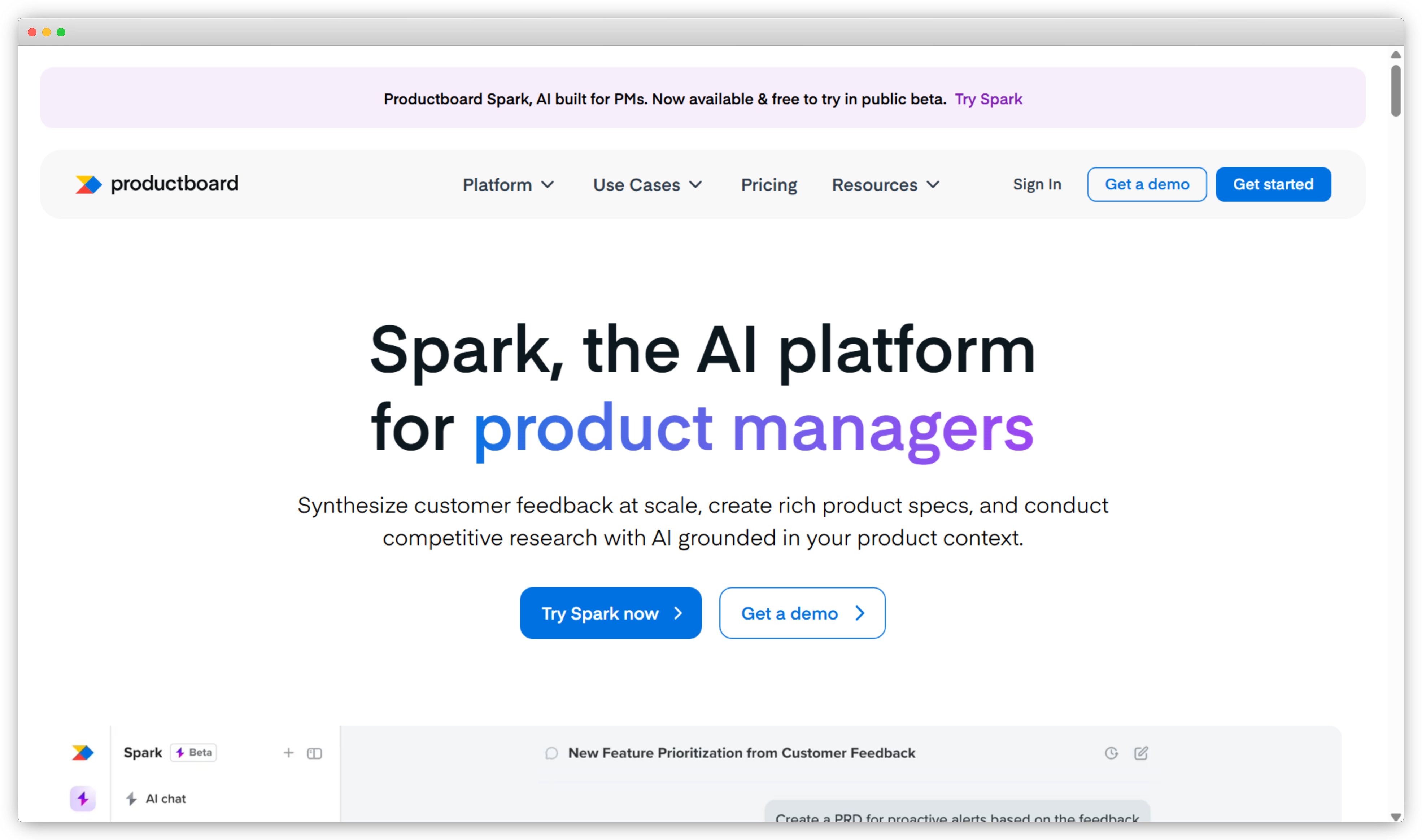
Productboard is built around one job: taking scattered customer feedback and connecting it directly to roadmap decisions. It pulls in signals from Jira, Slack, Zendesk, and Salesforce, lets PMs tag and link them to specific features, and surfaces which features have the most validated customer demand. Over 6,000 companies use it, including Zoom, Microsoft, and Cartier.
Where most PM setups treat feedback and roadmapping as separate concerns, Productboard treats them as two sides of the same problem. The insights hub centralizes what customers say. The roadmap shows what you're doing about it. The Jira two-way integration bridges both: when a feature moves from roadmap to sprint, the feedback context stays intact. The cons are worth naming: enterprise pricing runs $70k–$100k/year for 20 makers, the learning curve typically requires four to eight weeks of onboarding, and AI features are a $20/maker/month add-on rather than included in base plans.
Key Features
- Centralized customer insights hub pulling from Jira, Slack, Zendesk, and Salesforce
- Feedback-to-feature linking and prioritization scoring
- Visual roadmap builder with stakeholder sharing and access controls
- Feature voting portal for customer input validation
- Jira two-way integration for discovery-to-delivery handoff
- AI insight summarization available as a paid add-on
Productboard Pros
- Strongest feedback-to-roadmap connection of any tool on this list — purpose-built for that handoff
- Jira integration is best-in-class for Atlassian-first teams
- Trusted by enterprise product teams at scale (Zoom, Microsoft, Cartier)
- Clean roadmap UI that non-technical stakeholders can navigate without a walkthrough
Productboard Cons
- Expensive at scale — enterprise pricing at $70k–$100k/year for 20 makers is a significant commitment
- Steep learning curve — enterprise onboarding typically takes four to eight weeks
- AI features are a $20/maker/month add-on, not included in base plans
- No changelog feature — can't close the loop with users directly through the platform
Productboard Pricing
- Essentials: $19/maker/month (billed annually)
- Pro: approximately $59/maker/month (billed annually)
- Enterprise: custom pricing
- 15-day free trial available — no credit card required
G2 Rating: 4.3/5 on G2 (253 reviews)
Best Use Case: Mid-to-large product teams that need to connect scattered customer feedback directly to roadmap priorities — particularly those already using Jira for execution who want a dedicated discovery and planning layer on top of it.
8. ProductPlan: Best for Visual Product Roadmapping and Stakeholder Alignment
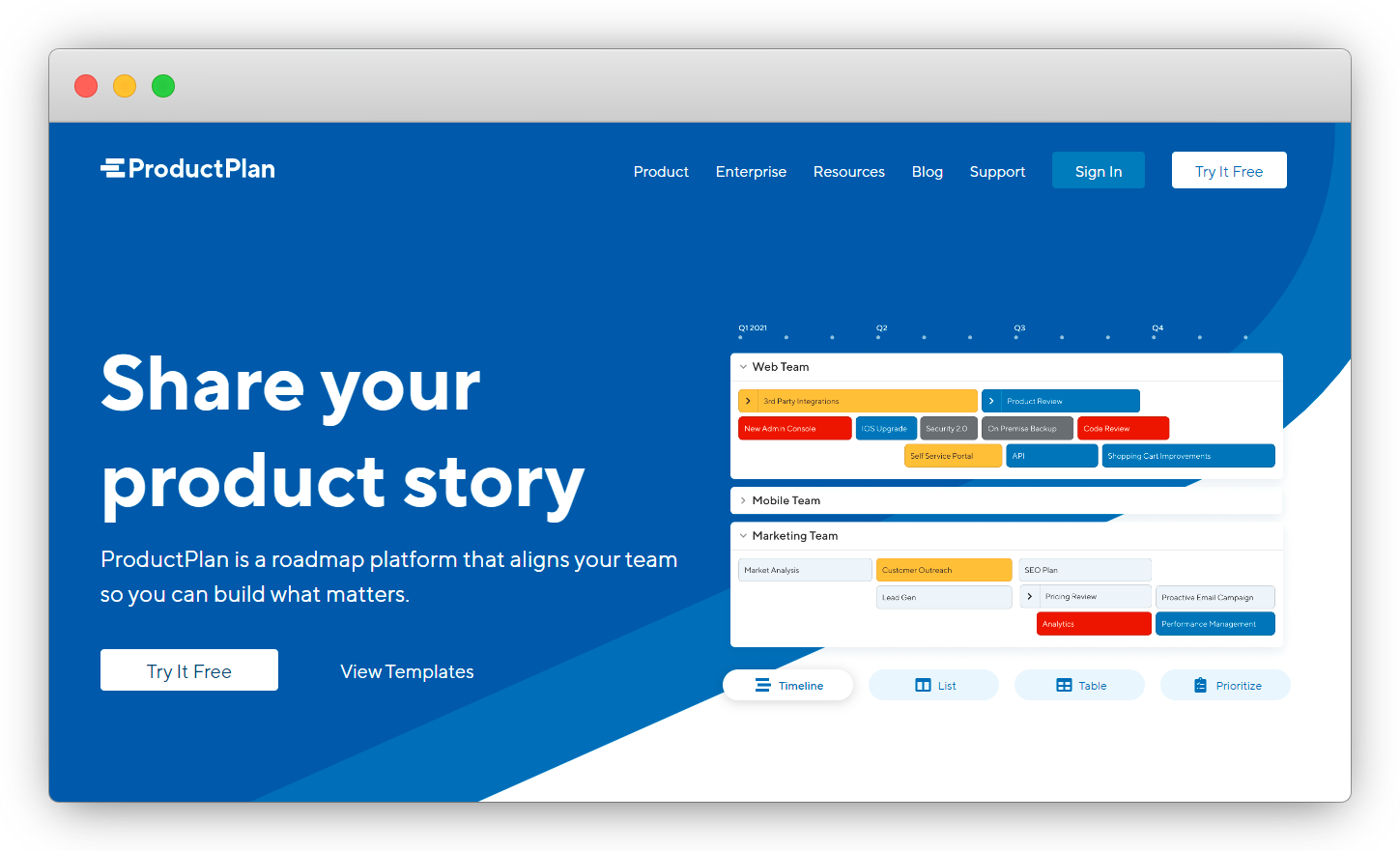
ProductPlan does one thing and does it well: roadmapping. Building it, sharing it, updating it, and keeping stakeholders looking at the current version rather than an emailed deck from two sprints ago. The key differentiator is unlimited viewer sharing via secure private link — every stakeholder, from engineering leads to executives to external partners, sees the live roadmap without you re-sending a new version after every planning cycle.
ProductPlan supports timeline, list, table, and portfolio views, which means you can communicate differently to different audiences using the same underlying data: a timeline view for an executive deck, a list view for sprint planning, a portfolio view for multi-product orgs. It's not built for feedback collection or execution tracking — it pairs with Jira, it doesn't replace it. But for teams that need a clean, polished roadmap that non-technical stakeholders will actually read and trust, it's the most focused tool on this list for that specific job.
Key Features
- Drag-and-drop visual roadmap builder with no coding required
- Multiple layout views: timeline, list, table, and portfolio
- Unlimited viewer sharing via secure private links on all plans
- External stakeholder collaboration without requiring edit access
- API and integrations for connecting to Jira, Pivotal, and other tools
- SOC2 certification for teams with enterprise security requirements
ProductPlan Pros
- Fast setup — visual roadmaps go live in hours, not weeks
- Unlimited viewers on all plans — stakeholders always have access to the current version
- Multiple layout views let you communicate the same roadmap differently to different audiences
- Clean, polished output that holds up in board reviews and executive decks
ProductPlan Cons
- Custom pricing model with no public rates — requires a sales conversation before you know the cost
- Limited feedback collection — you need a separate tool for the upstream signal layer
- Not built for execution tracking or sprint management — pairs with Jira, doesn't replace it
ProductPlan Pricing
- Custom pricing — contact ProductPlan sales
G2 Rating: 4.3/5 on G2
Best Use Case: Product teams that need a clean, always-current roadmap that executives and external stakeholders can view and comment on — without giving them edit access to a Jira board or a shared Confluence page.
Execution & Delivery Tools
Having the right feedback and a solid roadmap doesn't matter if the execution layer breaks down. This category covers tools that turn roadmap decisions into organized sprints, tracked tasks, and shipped features, and keep cross-functional teams aligned through delivery. Most product teams don't choose their execution tools from scratch. They inherit what engineering is already using. That fact shapes both tools in this category. For a broader view of how delivery connects back to the feedback cycle, the product feedback loop guide covers how teams close the gap between what ships and what users actually needed.
9. Jira Software: Best for Agile Sprint Management and Bug Tracking
Jira is on every PM tools list for one reason: engineering teams are already using it. Buying a different execution tool when your dev team lives in Jira creates more handoff friction than the alternative tool is worth. PMs meet engineers where they work, and for most software teams, that's Jira.
The agile boards are the core value — Scrum for sprint-based teams, Kanban for continuous flow. Backlog management, bug tracking, workflow automation, and velocity reporting all live together. The 3,000+ app integrations connect Jira to almost everything else in a PM's stack: Confluence for documentation, Slack for notifications, Figma for design handoff, Productboard for the discovery-to-delivery bridge. One thing worth clarifying: Jira Software handles execution. Jira Product Discovery is a separate Atlassian product for roadmapping and idea management — different tools, different pricing, worth evaluating separately before committing.
Key Features
- Scrum and Kanban agile boards for sprint planning and workflow visualization
- Backlog management with drag-and-drop prioritization
- Drag-and-drop automation for repetitive workflow steps
- Company-managed and team-managed project options for flexible configuration
- 3,000+ app integrations including Slack, Confluence, Figma, and Salesforce
- Velocity reports and sprint performance dashboards
Jira Software Pros
- Engineering teams are already on it — zero adoption friction for most product organizations
- Unmatched integration ecosystem at 3,000+ apps
- Free plan covers up to 10 users — functional for small teams without a budget
- Scales from a 5-person startup to enterprise without changing platforms
Jira Software Cons
- Steep learning curve for non-technical PMs — the interface rewards familiarity and punishes casual users
- Can become overcomplicated for small teams without a Jira admin managing configurations
- Jira Software ≠ Jira Product Discovery — roadmapping and discovery require a separate Atlassian product with its own pricing
Jira Software Pricing
- Free: up to 10 users
- Standard: $7.53/user/month
- Premium: $15.25/user/month
- Enterprise: custom pricing
G2 Rating: 4.3/5 on G2 (7,513 reviews)
Best Use Case: Software product teams of any size where engineering already uses Jira. If dev is on Jira, PMs should be on Jira. The integration depth alone justifies the decision.
10. Slack: Best for Cross-Functional Product Alignment and Feedback Routing
Slack earns its place in a PM toolkit not as a feedback tool or a roadmapping platform, but as the connective tissue between all of them. Product managers spend a significant part of their day routing information — a CS team surfaces a critical piece of user feedback, a sales rep flags a missing feature blocking a deal, an engineer needs context on a prioritization decision from three sprints ago. None of that moves well through formal channels. It moves through Slack.
The Workflow Builder is where real PM value lives. It automates routine routing without engineering: when a Canny request hits 50 votes, post to the product channel. When a Jira sprint closes, summary goes to stakeholders. The risk is equally real — Slack is not a system of record. Feedback buried in a thread is feedback lost. Use it as a routing and alignment layer, not as a replacement for any tool in categories one through three.
Key Features
- Workflow Builder for automating routine PM notifications and feedback routing
- Channel organization by team, product area, project, and topic
- 2,200+ integrations including Jira, Google Drive, Zoom, and Salesforce
- Searchable message and file history
- File sharing and async collaboration for distributed product teams
- Enterprise key management for data access control
Slack Pros
- Most engineering and product teams are already using it — adoption is immediate
- Jira integration surfaces execution status inside Slack without context-switching
- Workflow Builder automates basic PM process notifications with no code required
- Async-friendly for distributed teams across time zones
Slack Cons
- Feedback buried in threads is feedback lost — Slack is not a substitute for a dedicated feedback tool
- 90-day message history limit on the free plan creates gaps for teams that need to reference older decisions
- Notification overload is a genuine productivity risk for PMs managing multiple product channels
Slack Pricing
- Free: basic plan with 90-day message history
- Pro: $7.25/user/month (billed annually)
- Business+: $15/user/month (billed annually)
- Enterprise Grid: custom pricing
G2 Rating: 4.5/5 on G2 (38,176 reviews)
Best Use Case: Product teams using Slack as their team OS who need real-time cross-functional alignment and automated feedback routing — as the connective layer between all the other tools, not as a standalone PM platform.
11. Zite: Best for Building Custom Software with AI in a Controlled Environment

Zite sits in a very different part of the product stack than traditional execution tools. It is not a task tracker or messaging layer. It is an AI workspace where anybody can build software and internal tools using natural language—no coding required.
For product teams, this shows up in practical ways: building internal tools, creating workflows between systems, and prototyping product ideas in minutes instead of weeks. Everything stays in one workspace, so outputs aren’t lost between prompts, docs, and tickets. They’re immediately usable and buildable.
Zite doesn’t replace Jira, Slack, or Productboard. It sits alongside them as an AI layer for actually building software, not just planning it. It closes the gap between “idea,” “spec,” and “working product.”
Key Features
- AI-powered software generation using prompts
- Built-in authentication using login pages and access controls
- Integration with tools like Airtable, HubSpot, Slack, and more
- Custom native workflow builder that connects to other tools
- Selective edits to manually tweak elements and improve UI/UX
- Built-in database for storing and exporting data
Zite Pros
- Turns ideas directly into working software
- Reduces tool switching across AI, docs, and execution tools
- Speeds up product iteration cycles
- Works for both prototypes and real workflows
Zite Cons
- Not a replacement for Jira or Slack—works alongside them
- No offline mode for building and iterating
Zite Pricing
- Free: unlimited users with limited AI credits
- Pro: $15/month with unlimited users, 100 AI credits, and 100,000 database records
- Business+: $55/month with unlimited users, 200 AI credits, and 250,000 database records
- Team: $250/month with unlimited users, 800 AI credits, and 1,000,000 database records
- Enterprise: custom pricing
G2 Rating: 4.5/5 on G2
Best Use Case: Product and engineering teams that want to move from writing about products to actually building them—using AI to go from idea to working software in one flow, without code or tool-hopping.
How Do Product Management Tools Work Together?
Picking the right tools is only half the job. The other half is making sure they actually talk to each other, because a PM stack where feedback, analytics, roadmapping, and execution live in separate silos delivers far less value than one where each layer feeds the next.
The PM Tool Stack: How the Five Categories Connect
Most PM tool failures aren't a selection problem. They're a connection problem.
Teams pick good tools, Mixpanel for analytics, Canny for feature requests, Productboard for roadmapping, Jira for execution, Slack for communication. Then each tool becomes its own silo. The PM who owns analytics doesn't own the feedback board. The engineer running Jira hasn't seen the Productboard roadmap in weeks. The user signal in Canny never makes it into a Mixpanel retention cohort. The stack has all five categories covered and still isn't working.
The stack only works when each layer feeds the next. Here's what that looks like:
Collect. Zonka Feedback captures what users think through surveys, NPS, and CSAT. Canny captures what users want through structured feature requests. Chisel handles both. This is raw signal, unfiltered, distributed across channels.
Understand. Mixpanel shows what users do, which features they actually open, where they abandon a flow, which activation steps they skip. Google Analytics handles the acquisition layer. Inspectlet fills the gap with session recordings when you need to see why a flow is broken, not just that it is.
Prioritize and plan. Productboard connects the feedback signal, what Canny and Zonka surface, to specific features on the roadmap. ProductPlan communicates that roadmap to stakeholders in a format they'll actually read. The connection between "understand" and "plan" is where most teams lose the thread. Behavioral data exists in Mixpanel. Feedback exists in Zonka or Canny. Neither makes it into the prioritization conversation because they live in separate tools with separate owners. The PM who builds that bridge is the one whose roadmap engineering trusts.
Execute. Jira turns roadmap decisions into sprint tasks, bug tickets, and trackable delivery. The Productboard integration means engineers can see the user feedback that informed a decision, context that usually disappears between planning and building.
Align. Slack routes signals between all the layers. New feedback threshold hit in Canny? Workflow Builder posts to the product channel. Sprint closed in Jira? Summary goes to stakeholders automatically. The loops close without manual intervention.
You don't need all ten tools at once. But the tools you do choose should talk to each other, because a PM stack where information moves between categories is fundamentally different from five good tools that happen to coexist. Build the connections deliberately. That's the work.
Which Product Management Tool Is Right for Your Team?
Start with your biggest pain point and one category. Don't try to solve all five layers simultaneously, that's how teams end up paying for tools they don't use.
If feedback is scattered, start with Canny or Zonka Feedback. If you don't know how users behave in-product, start with Mixpanel or Google Analytics. If your roadmap is misaligned or invisible to stakeholders, start with Productboard or ProductPlan. If execution is breaking down, Jira. Most teams need feedback, analytics, and roadmapping covered before the execution and alignment layers start returning real value. Get those three working together first. The rest follows.
If product feedback strategy is where your team needs to start, Zonka Feedback helps product teams collect structured feedback across channels, analyze it with AI, and close the loop automatically. Schedule a demo to see how it fits into your existing stack, and which parts of the workflow it actually covers.

.png)
.svg)