

.svg)
 Healthcare
 Finance
 Retail
 SaaS & Digital
 eCommerce
 Education
 Salesforce
  HubSpot
 Pipedrive
 Mailchimp
 Klaviyo
 Zendesk
  Intercom
 Freshdesk
 HelpScout
  Front
Front Jira
Jira Slack
Slack  MS Teams
 Zoom
Zoom Google Sheets
  Zapier
  Integrately
 Make
Make  Webhooks




 MS Teams
%20in%202025_%20Strategies%20That%20Work.svg)


TL;DR
- SaaS customer experience is every touchpoint from trial → onboarding → support → renewal, re-decided every billing cycle.
- Do first: nail onboarding, collect in-product micro-feedback, close the loop visibly, instrument key workflows with CES.
- Measure with three layers: experience (NPS/CSAT/CES), product (activation, TTV, feature adoption, DAU/WAU), and revenue (gross retention, NRR, expansion MRR).
- Benchmark honestly: B2B SaaS median NPS sits around 30-41 depending on the source; anything above 50 is top-quartile.
- 90-day playbook: map journeys → launch micro-surveys with SLAs → ship top 5 fixes → announce via changelog.
- What moves CX scores fastest: acting on the signal, not just collecting it. Weekly theme reviews with named owners beat quarterly reports every time.
Every SaaS company says it cares about customer experience. It lives in the OKRs. It has a VP. It shows up in board decks next to ARR and gross margin.
And then a customer cancels on day 47.
They didn't cancel because your strategy failed. They cancelled because they couldn't figure out how to invite a teammate. Because a support ticket took four days. Because the billing page threw an error they didn't have time to troubleshoot. Because something small broke and nobody noticed.
This is what SaaS customer experience actually is. Not the strategy slide. The moments.
The moments where your product surprises the user in a good way. The moments where support resolves something before they even follow up. The moments where onboarding works on the first try. The moments where the renewal feels automatic because the value is obvious.
You can't buy those moments off the shelf. But you can design for them. And once you measure them honestly, at the right touchpoints, with the right metrics, the pattern behind the churn numbers starts to show.
That's what this guide covers. Not CX theory. The actual tactics SaaS teams run to improve experience where it matters: onboarding, in-product friction, support, renewal. Plus how to measure the whole thing so you know if it's working.
Let's start with what SaaS customer experience actually means, and why it's different from "customer experience" in general.
What is SaaS Customer Experience?
SaaS customer experience is the cumulative perception a customer forms across every touchpoint with a subscription software product: trial, onboarding, in-product usage, support, billing, renewal, and offboarding.
Most definitions of SaaS CX sound the same. Every touchpoint. Every interaction. Every moment.
Fine. But SaaS CX has a shape that generic customer experience doesn't.
It's cyclical, not linear. Your customer makes a buying decision every month (or every year) when the invoice hits. A great onboarding in January doesn't carry them through October. The experience resets.
It's product-led. Most of the experience happens inside the software, without a human in the loop. The product IS the brand. A bad error message can do more damage than a rude support agent.
It's usage-dependent. Customers who don't activate don't churn at renewal. They churn in silence. You won't find them on a CSAT survey. You'll find them on a usage dashboard at 2% of average activity.
The seven stages of the SaaS customer journey
- Trial or signup: first impression of the product
- Onboarding: the window where activation happens (or doesn't)
- Activation: the moment value becomes obvious
- Ongoing use: feature adoption, habit formation
- Support: when things break or questions arise
- Renewal: the re-decision point
- Expansion or offboarding: the fork in the road
Each stage needs its own feedback program. None of them stands alone.
SaaS CX vs B2B CX vs Generic CX: What's Actually Different?
The fastest way to get SaaS CX wrong is to borrow your playbook from generic customer experience.
Generic CX was built for transactional relationships. Retail. Banking visits. Hotel stays. Discrete interactions that start and end.
B2B CX was built for contract relationships. Enterprise sales. QBRs. Annual renewals with dedicated account managers.
SaaS is different from both. You're building a product that has to win the customer back every month. The experience is mostly unattended. The signals are mostly quiet.
| Dimension | Generic CX | B2B CX | SaaS CX |
| Relationship length | Transactional or repeat | Multi-year contracts | Month-to-month or annual, always re-decided |
| Primary risk | Lost sale | Contract non-renewal | Silent churn + downgrade |
| Key moments | Purchase, support | Kickoff, QBRs, renewal | Trial, activation, feature adoption, renewal |
| Core metrics | CSAT, NPS | NPS, account health | NPS + TTV + activation + expansion MRR |
| Dominant feedback channel | Email, in-store | Calls, QBRs, email | In-product, in-app, email |
| CX ownership | Support | Account management | Shared: Product + CS + Support |
For a deeper breakdown of the B2B side, including account health scoring and QBR cadence, see our guide to B2B customer experience.
Why SaaS Customer Experience Matters
Most CX research pools SaaS in with the broader customer experience category. That's useful for establishing that CX matters. It's less useful for understanding why it matters differently in SaaS.
The math is specific to the subscription model. A SaaS company with 90% annual retention loses 10% of ARR every year before it grows. A SaaS company with 95% retention loses half that. Over five years, the compounding difference is enormous.
Customer experience is what moves that retention number. Not pricing. Not positioning. The actual lived experience of the software.
What good SaaS CX pays for:
- Reduced churn. Every churn-prevented dollar is ARR protected. This is the primary outcome.
- Expansion revenue. Happy customers upgrade and add seats. This is where net revenue retention crosses 100%.
- Lower CAC. Word-of-mouth referrals from satisfied users reduce what the next customer costs you.
- Faster time-to-value. Users who hit activation faster churn less, upgrade sooner, refer more.
Bain & Company's work on NPS, developed by Fred Reichheld in 2003, established the link between customer loyalty and revenue growth. Bain found that industry NPS leaders grow at more than 2x the rate of competitors. Two decades later, that relationship hasn't changed. It's just gotten more measurable.
Top 8 Ways to Improve Your SaaS Customer Experience
Eight tactics. Each with the specific moves that work, the metric that tells you if it's working, and where real SaaS companies have put this into practice.
1. Nail the Onboarding Experience
New users don't churn loudly. They churn by not coming back.
Onboarding is the window where that pattern sets. If a new user doesn't activate, which means hit their first meaningful outcome, within the first week, their odds of being active at 90 days drop sharply. Onboarding is the single highest-impact intervention in SaaS CX.
What good onboarding does:
- Removes ambiguity. Users know what to do next without thinking.
- Delivers a win in the first session. Something works, something ships, something saves time.
- Triggers habit. Day 2 and Day 7 nudges bring them back when it matters.
- Collects friction signals. A CES slide-up after each step reveals where people stall.
For SaaS teams running structured onboarding feedback, our SaaS onboarding survey template saves time on question design. Pair it with activation data from your product analytics and you'll see the story within 10 days: which step breaks, which step converts, which step predicts retention.
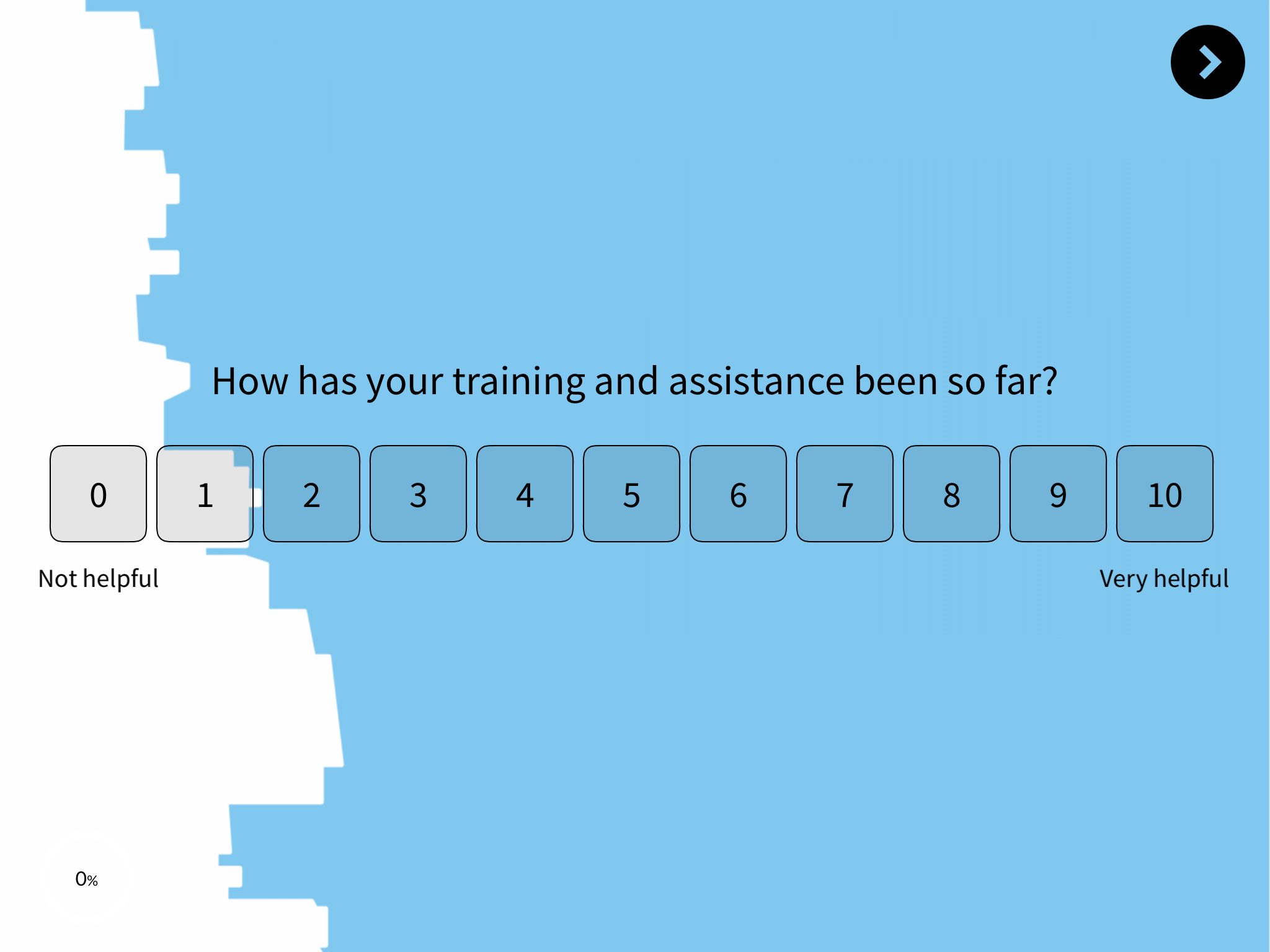
Measure with: activation rate, Day-7 CSAT, time-to-first-value, onboarding CES.
Onboarding isn't marketing. It's product.
2. Provide Omnichannel Support That Carries Context
Most SaaS support is reactive, single-channel, and lagging. A customer emails. Someone responds. Eventually.
Real omnichannel support means being on the right channels for your users, with context that follows them across surfaces. The goal is continuity, not coverage.
The pieces that matter:
- A searchable knowledge base that handles 40-60% of questions before a human sees them
- Email support with response SLAs measured in hours, not days
- In-product help (tooltips, embedded chat) that doesn't require leaving the product
- Live chat or a chatbot for urgent issues
- A human escalation path that's visible, not hidden behind three forms
SmartBuyGlasses runs post-purchase NPS across 30+ countries through popups and side tabs, pulling in 84,000+ responses. One multilingual survey, not thirty. That's what omnichannel looks like when it's built right: one system, many surfaces.
Measure with: post-ticket CSAT, CES, first-response time, resolution rate.
3. Collect Feedback Where the Memory is Still Fresh
Email surveys have a problem. They arrive when the memory is already cold.
In-product feedback is different. It catches the customer in the moment. The micro-survey slides up after they finish a task. The feedback button gets clicked when something breaks. The CES prompt fires after the onboarding step they just completed. The memory is fresh. The signal is specific.
For SaaS specifically, digital feedback should be your dominant channel. Email works well for relationship surveys like quarterly NPS. In-product works better for everything else.
The touchpoints that generate the highest-signal feedback:
- Post-onboarding (Day 0 and Day 7)
- After key feature use (third time a workflow runs)
- Before cancellation (exit survey)
- Post-support closure (CSAT + CES)
- After upgrade or downgrade (what changed their mind)
A purpose-built SaaS customer feedback platform lets you run all of these from one place without stitching together a separate tool for each surface. You collect the signals. The system routes them.
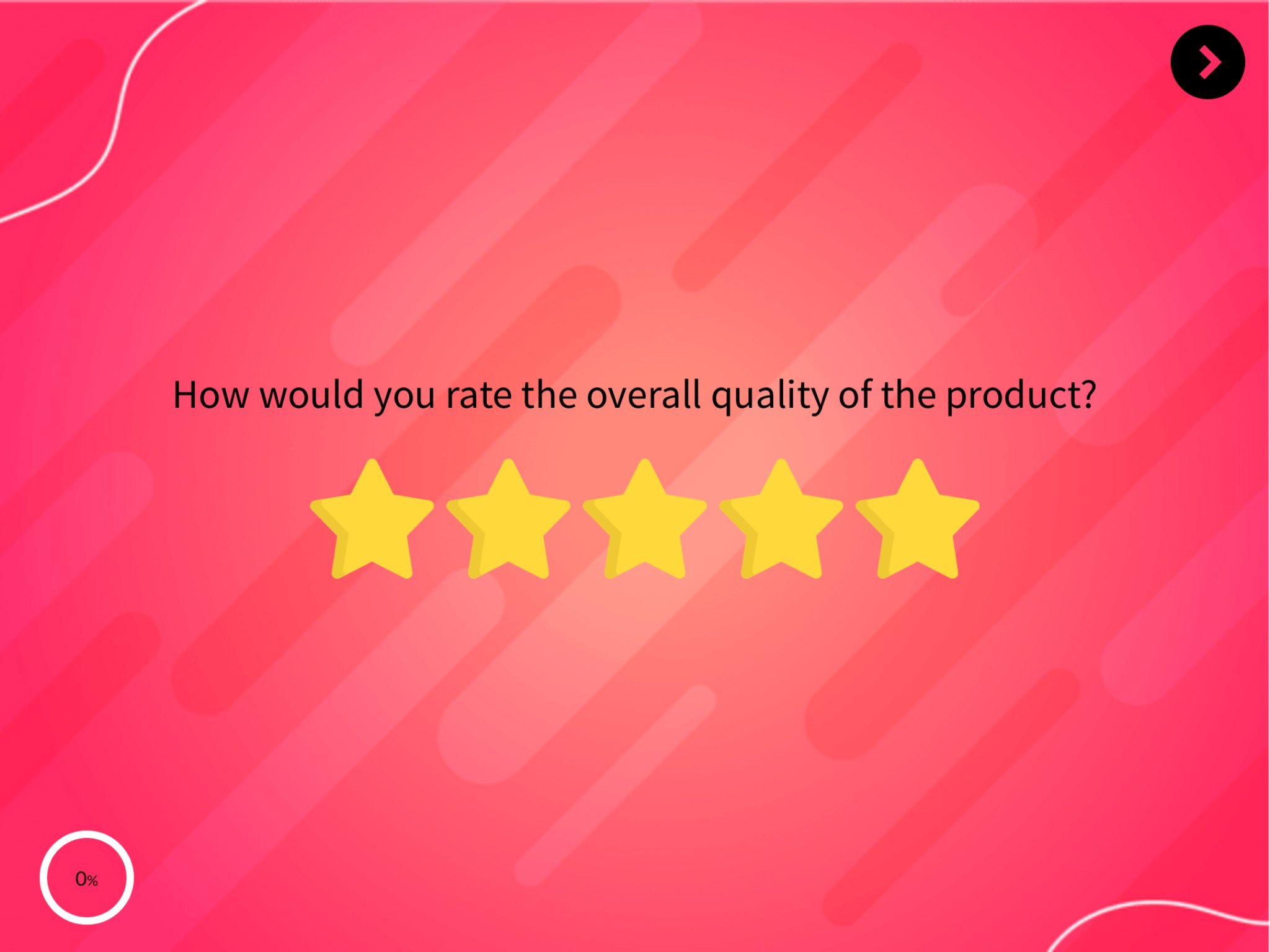
Measure with: response rate per touchpoint, signal volume by stage, feedback-to-action cycle time.
4. Act on the Feedback You Collect
Collecting feedback is the easy part. Acting on it is where most programs fall apart.
The failure mode is predictable. The signals come in. They pile up. The team means to do something about them. Three months later the dashboard has 40,000 responses and nobody remembers what the top themes were.
What works instead:
- Weekly theme reviews with a product and CS owner assigned to each theme
- A single queue for all feedback, not five separate tools to check
- Tagging that maps to your roadmap, not to survey questions
- A visible changelog where customers see what shipped because of their feedback
- Personal follow-up to the customer who sparked a change that shipped
That last one changes the relationship. When a customer gets an email saying "remember that thing you mentioned in May? We just shipped it," their next survey response is twice as honest.
This is what we mean by closing the customer feedback loop. It isn't a reporting cadence. It's a commitment.
Celo uses Zonka's AI Feedback Intelligence to cluster themes automatically across their feedback sources. Their weekly review starts with "here are the 5 themes that grew this week" instead of "let me scroll through 2,000 responses." AI agents do the synthesis. The humans do the judgment.
For the full workflow from intake through action, see our guide to SaaS feedback management.
Measure with: feedback-to-ship cycle time, theme resolution rate, loop-closure rate.
5. Measure Support Experience Separately From Product Experience
Product CX and support CX aren't the same thing. A customer can love your product and hate your support. Both affect renewal.
Measure support with:
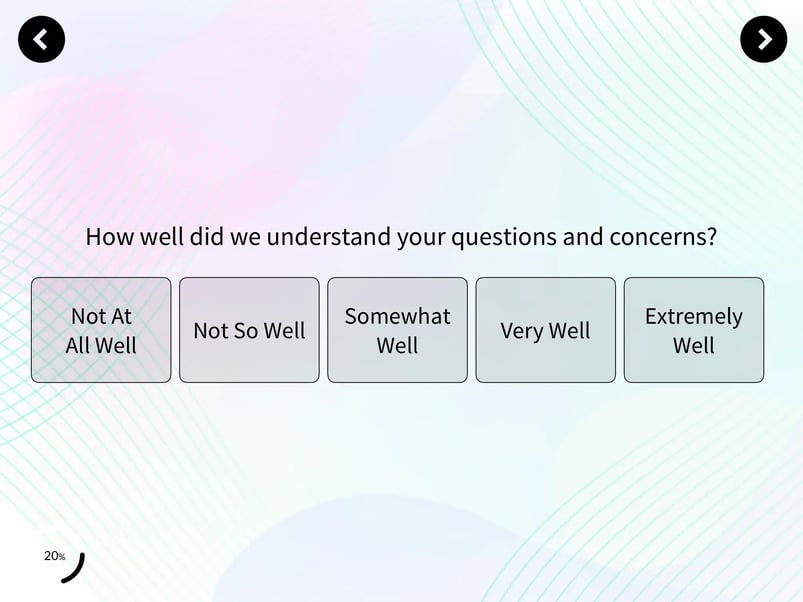
- CSAT on every closed ticket. Not just the ones where you ask nicely. Aggregate by agent, by issue type, by resolution time.
- CES post-resolution. Catches friction in the support process itself.
- Time-to-first-response and time-to-resolution as team-level metrics.
- First-contact resolution rate. How many tickets close on first touch vs. need escalation.
Agent-level CSAT changes behaviour faster than any training program. When an agent sees their CSAT drop from 4.6 to 4.1 in a week, they look at the tickets themselves. That's the fastest coaching loop in customer operations.
6. Treat Your Website as Part of the CX
Your marketing website is part of your customer experience. Not adjacent to it.
This is where prospects form their first impression. It's also where existing customers land when they search for help, compare plans, or look for a feature. The experience has to work for both audiences.
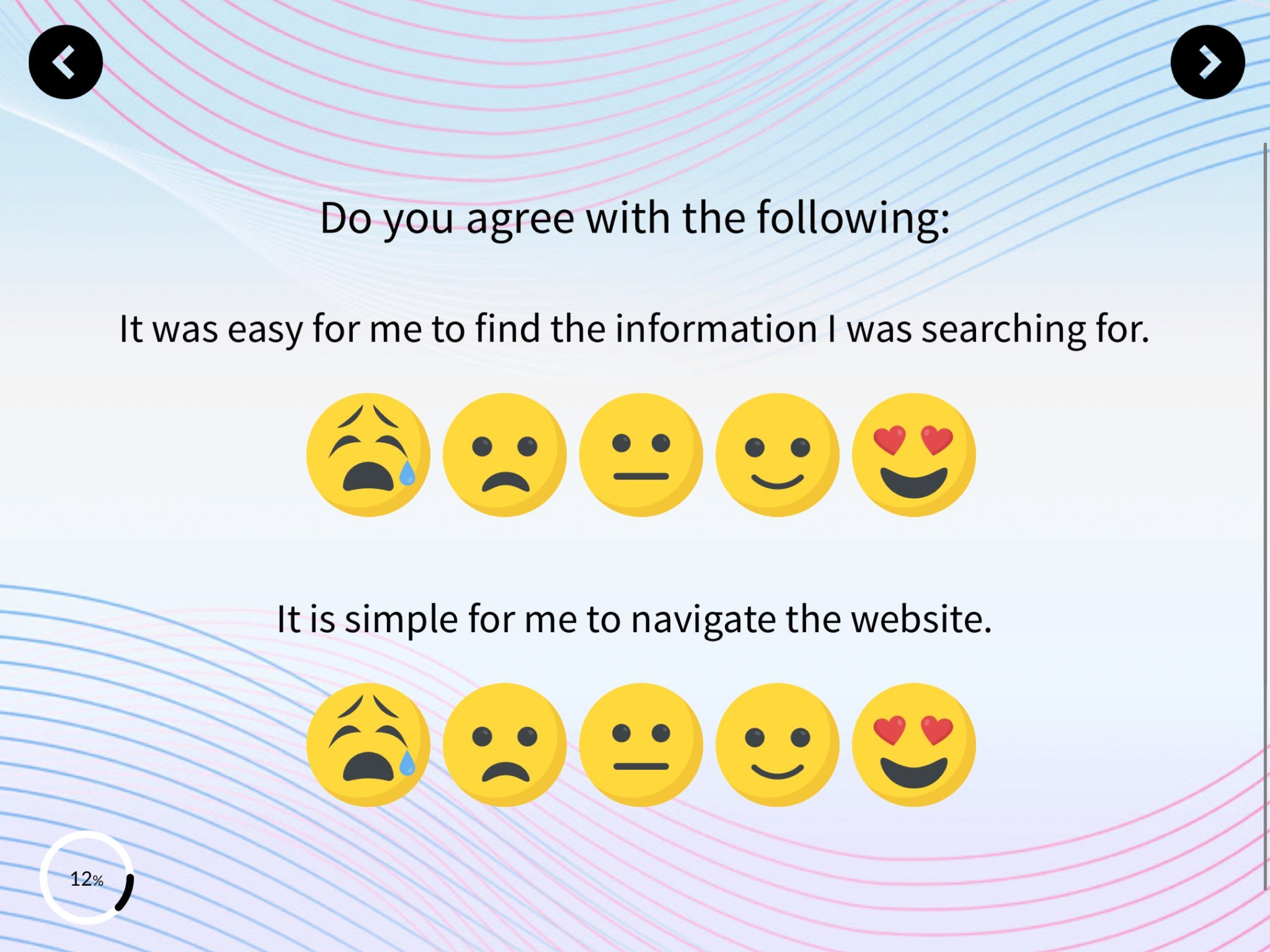
G2 figured this out early. They run website slide-up widgets on three different page types: review submission, pricing, and research. Each survey matches the page context. One visit, one relevant question. They've collected 33,700+ responses this way and fed the signals directly into product and UX decisions.
For SaaS teams running a marketing site, the high-value pages to instrument:
- Pricing (intent signal, friction signal)
- Feature pages (interest signal)
- Comparison pages (decision signal)
- Help center (effort signal)
- Cancellation or downgrade (loss signal)
Don't survey every visitor. Target the ones whose signal matters most.
Measure with: website CSAT, page-specific intent signals, exit-reason clustering.
7. Track the Right SaaS CX Metrics (All Three Layers)
SaaS CX needs three metric layers working together.
Experience metrics (NPS, CSAT, CES) tell you what customers feel. They're lagging indicators. But they're the most honest signal you'll get. Someone taking 30 seconds to rate their experience is giving you something usage data won't.
Product metrics (activation rate, feature adoption, DAU/WAU, TTV) tell you what customers do. They're leading indicators. By the time experience scores drop, usage has usually already softened.
Revenue metrics (gross retention, net revenue retention, expansion MRR) tell you what it's worth. These are the business outcomes CX is ultimately trying to move.
You need all three. Experience without product metrics is vanity. Product without experience is blind. Neither without revenue is unfunded.
For the full list of what to track and how to structure it, see our breakdown of SaaS customer success metrics.
8. Exceed Expectations to Drive Delight (and Referral)
Customer satisfaction is table stakes. It's what you owe the customer. It won't grow your ARR.
Delight is what moves retention. And delight in SaaS is usually small and specific:
- The surprise feature upgrade for someone who's been on the plan for a year
- The human email from a product manager after a user submitted a thoughtful bug report
- The personal outreach when usage dips, before the customer asks for help
- The credit automatically applied when an outage affected them, before they noticed
Delight compounds. A customer who's been surprised once starts watching for the next moment. They become advocates. They refer. They renew without thinking.
This isn't about discounts. It's about noticing.
Measure with: advocate NPS, referral rate, expansion MRR, unsolicited testimonial volume.
NPS vs CSAT vs CES for SaaS: Which Metric, When?
The three CX metrics answer different questions. Run all three.
| Metric | What it Measures | When to Run | Scale | Example Question | Best Channel |
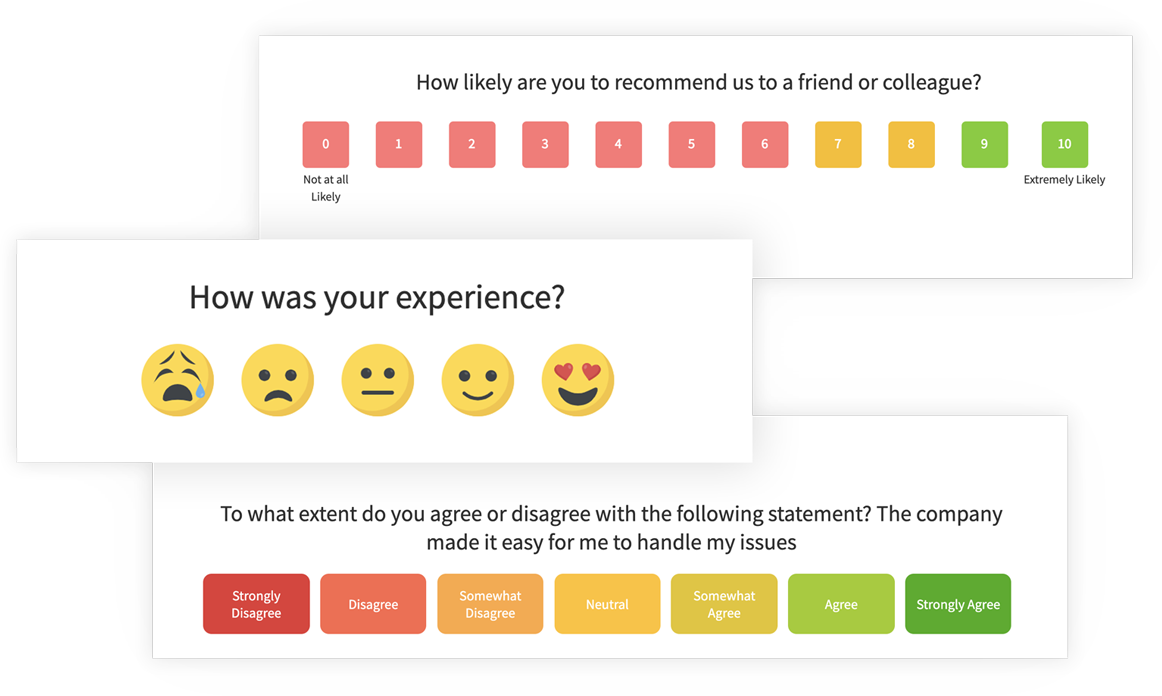
| NPS | Loyalty / advocacy | Quarterly relationship survey | 0–10 | "How likely are you to recommend [product] to a colleague?" | Email, in-app |
| CSAT | Moment satisfaction | After key events: onboarding, feature ship, support closure | 1–5 or 1–7 | "How satisfied were you with [experience]?" | In-app, email, post-ticket |
| CES | Effort / friction | After support closure or key workflows | 1–5 or 1–7 | "How easy was it to [complete task]?" | In-app slide-up, post-ticket |
NPS tells you if customers will stay. CSAT tells you if they're happy now. CES tells you where the friction lives. Run all three.
SaaS CX Benchmarks: What Good Actually Looks Like
SaaS sits mid-pack on CX benchmarks compared to other industries. Here's what the 2025-2026 data shows.
SaaS NPS benchmarks (across multiple sources):
- Retently's 2025 benchmarks place B2B Software & SaaS at an average NPS of 41.
- ChurnWard's analysis of multiple benchmark sources puts the B2B SaaS range at 30-41.
- Lorikeet's 2026 data shows Software and SaaS median NPS sitting at 30-36, near the bottom of industry rankings, below manufacturing (65), healthcare (53-80), and retail (50).
What to take from this: there isn't one "correct" SaaS NPS benchmark. The number shifts depending on who measures, what segment, and how the sampling is done. A B2B developer tool at +45 is outperforming its segment. A B2C productivity app at +45 is underperforming.
Useful mental model:
- Above 0: positive territory. You have more promoters than detractors.
- Above 30: doing well for SaaS.
- Above 50: excellent. Top-quartile.
- Above 70: world-class. Only about 3% of companies across all industries score above 70.
One more honest note. A MeasuringU replication study found NPS explains about 38% of variability in future company growth, which is substantial but meaningfully lower than Reichheld's original claim of 76%. NPS is a useful signal. It isn't a crystal ball. Pair it with product metrics and revenue metrics to get the full picture.
CSAT and CES benchmarks for SaaS:
- Post-support CSAT: healthy SaaS teams target 85%+ satisfied.
- Post-onboarding CSAT: 80%+ is solid; below 70% means onboarding needs rework.
- CES post-support: most teams target a 5+ on a 7-point scale.
- Activation rate: 30-50% is typical for SMB SaaS; 60%+ for best-in-class products.
- TTV: under a week for SMB SaaS, under 30 days for mid-market.
Your most reliable benchmark is your own historical performance when measuring consistently. The external benchmarks give you directional context, not absolute targets.
How to Measure SaaS Customer Experience (Quick Map)
| Goal | What to Measure | What to Use |
| Loyalty & advocacy | Quarterly relationship survey | NPS |
| Moment satisfaction | After key events (onboarding, feature ship, support closure) | CSAT |
| Ease of resolution | Post-support | CES |
| Product maturity | Monthly | Activation, TTV, adoption, DAU/WAU |
| Risk | Rolling | Churn risk signals (ticket volume, usage drop, low NPS) |
| Expansion opportunity | Mid-cycle | Usage growth, feature adoption, power-user signals |
SaaS Companies Doing CX Right
Four examples. Different problems. Different tactics. Same idea: instrument the right moments, act on the signals.
G2: Page-level feedback at scale
The challenge: global SaaS review platform, millions of visits, needed page-specific feedback from different visitor types.
The tactic: website slide-up widgets targeted to three distinct page types: review submission, pricing, and research. One workspace. Per-page targeting. Different questions depending on context.
The result: 33,700+ responses feeding product and UX decisions directly.
SmartBuyGlasses: Omnichannel NPS across 30+ countries
The challenge: global e-commerce SaaS serving a multilingual audience across three continents.
The tactic: a single multilingual NPS survey running via popups and side tabs. Auto-translated, no per-country maintenance, one system to manage.
The result: 84,000+ responses collected and NPS lifted by 30%.
Celo: AI-powered feedback intelligence
The challenge: unstructured feedback at volume needed thematic clustering the team couldn't do manually.
The tactic: Zonka's Customer Feedback Platform + AI Feedback Intelligence. AI agents cluster themes automatically. Sentiment scoring at the response and theme level. Entity mapping connects themes to specific product areas.
The result: feedback triaged by theme automatically. The weekly review starts with signals, not raw responses.
Adani One: In-app feedback at airport touchpoints
The challenge: capturing travel-app feedback at specific airport moments (Duty Free, F&B, Parking, Rewards).
The tactic: in-app NPS surveys tied to specific touchpoints inside the app. Each touchpoint gets its own signal stream, tagged to location and service.
The result: 38,000+ responses mapped to specific experience moments.
30-60-90 Day Implementation Plan
A realistic first quarter. Owners assigned, not just actions.
Days 0–30 (Foundation)
Owner: CS + Product
- Map customer journeys for your top 2 personas.
- Launch onboarding checklist + Day-0 / Day-2 nudge emails.
- Set up post-ticket CSAT/CES and a quarterly relationship NPS.
- Publish or refresh your top 20 KB articles.
Days 31–60 (Instrumentation)
Owner: CX Ops
- Add in-app micro-surveys to 3-5 key workflows.
- Start feedback tagging and theming with weekly reviews.
- Define SLAs and routing rules; publish them to the team.
Days 61–90 (Optimization)
Owner: Product + CS
- Ship top 5 improvements driven by feedback themes.
- Launch a customer-facing changelog and close-the-loop messages.
- Pilot a customer champions program with 10 accounts.
Common Pitfalls (and Fixes)
The programs that stall usually stall for the same reasons.
- Too many questions. Keep micro-surveys to 1-2 questions. Always.
- Collecting but not acting. Weekly theme reviews. Named owners. Deadlines.
- No loop closure. Proactively inform customers when their feedback ships. Email, changelog, both.
- One-size-fits-all onboarding. Tailor the flow by persona and use case. Not every user wants the same tour.
- Support hidden behind forms. Clear paths to real humans for complex issues.
- Measuring NPS quarterly but never acting between measurements. NPS is a lagging indicator. You need leading signals running continuously.
- Treating feedback as CS-only. CX is shared: Product owns in-product, Support owns post-ticket, CS owns relationship. All three need to see the signals.
Conclusion
SaaS customer experience is the sum of moments, not the sum of strategies.
The teams that get it right instrument the moments that matter, act on what the signals reveal, and close the loop visibly with the customers who spoke up. The teams that don't end up with dashboards full of data and a churn rate they can't explain.
Start with the smallest workable piece. One in-product survey at your biggest friction point. One weekly review with a name attached to each theme. One message to the customer whose feedback changed something real.
That's where CX programs actually compound. Pick the SaaS customer experience platform that fits your scale second. The discipline matters more than the tool.

.svg)
.png)