

.svg)
 Healthcare
 Finance
 Retail
 SaaS & Digital
 eCommerce
 Education
 Salesforce
  HubSpot
 Pipedrive
 Mailchimp
 Klaviyo
 Zendesk
  Intercom
 Freshdesk
 HelpScout
  Front
Front Jira
Jira Slack
Slack  MS Teams
 Zoom
Zoom Google Sheets
  Zapier
  Integrately
 Make
Make  Webhooks



 Sign In
 MS Teams


TL;DR
-
Refiner is widely used for in-app surveys and contextual feedback across web and mobile apps, especially for NPS and product sentiment tracking.
-
As feedback programs grow, teams often seek stronger analytics, broader channel coverage, flexible targeting, and better workflows to turn insights into action.
-
This guide compares the top Refiner alternatives across in-app survey tools, NPS platforms, product feedback systems, and enterprise CX software.
-
Leading competitors include Zonka Feedback, Qualaroo, Satismeter, Survicate, Hotjar, SurveyMonkey, Alchemer, Typeform, Jotform, and Userpilot.
-
Each tool was assessed on (1) native in-app SDK depth and platform coverage, (2) behavioral and event-based targeting flexibility, (3) survey types supported (NPS, CSAT, CES, PMF, custom), (4) analytics and open-ended response processing, (5) closed-loop workflows and integration depth, and (6) pricing structure relative to feedback volume.
-
Note: This guide is written by the team at Zonka Feedback. Tools are included based on independent research, official documentation, G2 reviews, and practical use-case analysis. The list is not sponsored or ranked by paid placement.
Looking to run in-app surveys with Refiner, but wondering if there’s a better fit for your feedback program?
Refiner is a well-known tool for collecting contextual feedback inside web and mobile applications, especially for in-app surveys and NPS. As teams scale, the right platform often depends on how you want to target surveys, analyze responses, and connect feedback to your broader product and customer experience workflows.
That’s why many teams explore Refiner alternatives. In this guide, we compare the best Refiner competitors in 2026 to help you choose a tool that matches your in-app feedback needs today and supports your customer experience strategy as it evolves.
Quick Decision Guide: Which Refiner Alternative Fits Your Use Case?
Not sure where to start? Use this table to match your primary need to the most relevant tool.
| If you need… | Consider… |
| In-app feedback + omnichannel + AI analysis on open-ended responses in one platform | Zonka Feedback |
| Recurring in-app NPS with minimal setup | Satismeter |
| In-app surveys tied to product adoption and onboarding flows | Userpilot |
| Multi-channel: in-product + web + email surveys | Survicate |
| Lightweight website and in-app micro-surveys | Qualaroo |
| Continuous NPS across service or customer success touchpoints | AskNicely or Wootric |
| UX friction analysis paired with feedback | Hotjar |
| Large-scale survey distribution and research | SurveyMonkey or Alchemer |
| Salesforce-integrated CX surveys | GetFeedback |
| Enterprise CX with advanced text analytics | Qualtrics |
Why Look for a Refiner Alternative?
Refiner is a capable in-app survey tool, and for many SaaS teams it covers the basics well. But as feedback programs mature, specific gaps tend to appear that are difficult to work around inside the platform.
Here are the most common reasons teams start evaluating Refiner alternatives.
- No AI analysis on open-ended responses
Refiner collects open-text feedback but doesn't auto-tag themes, surface patterns, or categorize sentiment at scale. Teams running NPS or CSAT programs at volume typically end up manually reviewing text responses or exporting them to a separate tool — which adds operational overhead and slows down action. - Survey data stays siloed
Refiner doesn't natively route detractors into Zendesk tickets, trigger Slack alerts, or assign low-score responses to a CSM. If you want closed-loop follow-up built into the same workflow, you're usually piecing that together with Zapier or custom code outside the platform. - Response-based pricing scales with volume
Refiner's pricing is tied to response volume, which can create friction for teams running always-on NPS programs or high-frequency in-app surveys. As your active user base grows, costs scale in ways that aren't always predictable against your roadmap. - Coverage stops at in-app and email
If your feedback program needs to extend to SMS, kiosks, QR codes, offline frontline teams, or web intercepts outside the product environment, Refiner doesn't cover those channels. For teams managing CX across digital and physical touchpoints, this becomes a real constraint.
These aren't deal-breakers for every team — but if any of them sound familiar, it's worth looking at tools built for broader feedback programs. Many businesses move toward tools that support stronger customer feedback loops and enable teams to turn responses into action more efficiently. If your focus is expanding beyond basic surveys, it is also worth understanding how in-app surveys can be used strategically across the customer journey to capture timely and contextual insights.
How to Choose the Right Refiner Alternative?
When comparing Refiner alternatives and competitors, it is important to look beyond surface-level features and focus on how well a tool supports your feedback goals as your business grows. The right platform should not only help you collect responses, but also make it easier to analyze insights and take action across teams.
Here are the key factors to consider when evaluating a Refiner alternative.
- In-app survey capabilities and flexibility
If in-app feedback is a core use case, look for tools that offer native in-app surveys with flexible targeting and triggers. The ability to show surveys based on user behavior, milestones, or feature usage is critical for collecting contextual feedback without disrupting the user experience. - Support for multiple survey types
A strong Refiner competitor should support common survey frameworks such as NPS, CSAT, and CES, along with product feedback and custom surveys. This allows teams to run relationship surveys alongside transactional and in-product surveys without switching tools. - Analytics and text analysis depth
As response volume grows, analytics become just as important as data collection. Look for platforms that offer real-time dashboards, filtering, segmentation, and text analysis to help teams understand trends and prioritize action. - Omnichannel feedback collection
Many teams need feedback from more than just in-app touchpoints. Choosing a tool that supports feedback collection across web, email, SMS, and other channels makes it easier to get a complete view of the customer journey. This is especially important when building a scalable omnichannel customer experience strategy. - Integrations and workflow automation
Feedback is most valuable when it connects to existing systems. Tools that integrate with CRMs, helpdesks, analytics platforms, and collaboration tools help teams close the loop faster. Automation also plays a key role in enabling effective closed-loop feedback processes.
Ultimately, the best Refiner alternative depends on your use case, team structure, and CX maturity. Evaluating tools against these criteria will help you choose a platform that not only replaces Refiner, but also supports long-term feedback and experience management goals.
Top 10 Best Refiner Alternatives for 2026: Comparison Table
| Tools | In-App Surveys | Multi-Channel Feedback | NPS/CSAT/CES Support | Analytics Depth | Best Fit | G2 Rating(Out of 5) |
| Zonka Feedback | Native (Web + Mobile) | Email, SMS, WhatsApp, Web, Kiosks, QR, Offline | NPS, CSAT, CES | Real-time dashboards + sentiment analysis | All-in-one feedback + in-app + omnichannel | 4.7 |
| Qualaroo | Limited (Nudges + web prompts) | Website + mobile web | NPS, CSAT, CES | Basic reporting | Website + in-app micro-surveys | 4.3 |
| Satismeter | Native (Web + Mobile) | Web + Email | NPS, CSAT | Basic dashboards | Continuous in-app NPS programs | 4.7 |
| Survicate | Embedded + widget-based in-product | Web, Email, Link-based | NPS, CSAT, CES | AI-assisted insights + segmentation | Multi-channel feedback collection | 4.6 |
| Hotjar | Feedback widgets (Web apps) | Web-based feedback | Limited CX metrics | Heatmaps + session recordings | Product & UX feedback | 4.3 |
| SurveyMonkey | No native in-app surveys | Email, Web, Embedded | NPS, CSAT, CES | Advanced reporting + exports | Large-scale surveys + research | 4.4 |
| Alchemer | No native in-app surveys | Email, Web, Panels | NPS, CSAT, CES | Advanced logic + reporting | Research-grade surveys | 4.4 |
| Typeform | No native in-app surveys | Web + Email | Supported via templates | Basic analytics | Conversational surveys | 4.5 |
| Jotform | No native in-app surveys | Web + Email | Supported via templates | Basic analytics | Flexible forms + surveys | 4.7 |
| Userpilot | Native (Web apps) | Primarily in-app (product-led) | NPS, CSAT (and custom) | Product usage + engagement analytics | Product-led in-app feedback + adoption | 4.6 |
What are the Best Refiner Alternatives in 2026?
The best Refiner alternatives in 2026 include Zonka Feedback, Qualaroo, Satismeter, Survicate and Hotjar based on in-app survey capabilities, support for NPS, CSAT, and CES, analytics depth, targeted survey delivery, and integration flexibility.
Let’s take a closer look at each of these Refiner alternatives and how they compare based on features, use cases, and best-fit scenarios.
1. Zonka Feedback — Best All-in-One Refiner Alternative for In-App & Omnichannel Feedback
Best For: In-app surveys, omnichannel feedback collection, AI-powered analytics, structured follow-up workflows
G2 Rating: 4.7/5
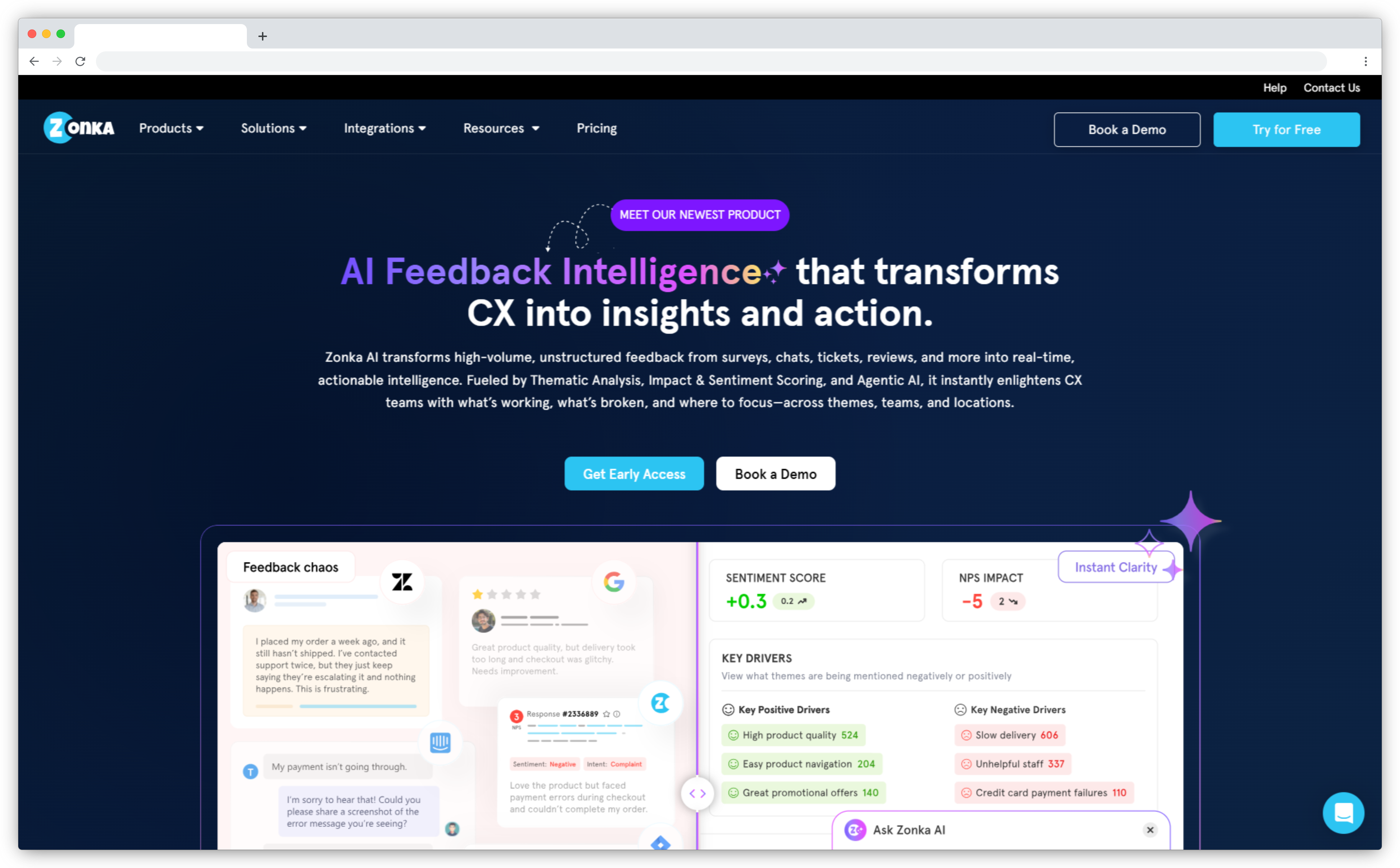
Zonka Feedback is a Refiner alternative for teams that want in-app surveys combined with broader feedback collection and deeper analytics.
Zonka Feedback enables product and CX teams to deploy native in-app surveys across web and mobile applications, collecting NPS, CSAT, CES, and product feedback based on user behavior and attributes. Multiple in-app formats including embeds, slide-outs, popups, and popovers allow teams to control survey UI, branding, and multilingual experiences.
Beyond in-product surveys, the platform supports feedback collection across email, SMS, WhatsApp, web, QR codes, kiosks, and offline channels. Feedback can be tied to user attributes such as plan type, lifecycle stage, and feature usage, helping teams segment responses and analyze trends more precisely.
To support action, Zonka includes AI-powered text and sentiment analysis, survey frequency controls to prevent over-surveying, response routing, and role-based dashboards so feedback can be reviewed and assigned efficiently.
 Key features
-
Native in-app surveys for web and mobile with behavioral and attribute-based targeting
-
Multiple in-app formats including embed, slide-out, popup, and popover with branding, theming, and multilingual controls
-
Omnichannel survey distribution across email, SMS, WhatsApp, web, QR codes, kiosks, and offline
-
AI-powered text and sentiment analysis to surface themes and trends
-
Survey frequency controls including throttling, sampling, and targeting rules to reduce survey fatigue
-
Feedback tied to user attributes and segments such as plan, lifecycle stage, and feature usage for targeted analysis
Why it’s a strong Refiner alternative
Zonka Feedback supports native in-app surveys similar to Refiner, including contextual targeting based on user behavior and attributes. It also includes structured response management features such as automated routing, ownership assignment, and follow-up tracking.
The platform provides role-based dashboards so different teams can view feedback relevant to their responsibilities, which helps maintain visibility across product, CX, and support functions.
Zonka Feedback Pros
- Combines in-app surveys, omnichannel collection, and AI analytics in one platform
- Flexible targeting, segmentation, and survey fatigue controls
- Built-in response routing and role-based dashboards for follow-up
Zonka Feedback Cons
- Voice analytics and speech feedback still on the roadmap
- Advanced AI features live on higher paid plans
Zonka Feedback Pricing
- Custom pricing available based on business requirements
- Free trial for paid features available for 14 days
2. Qualaroo — Best Refiner Alternative for Website & In-App Micro-Surveys
Best For: Website feedback, contextual nudges, lightweight micro-surveys
G2 Rating: 4.3/5
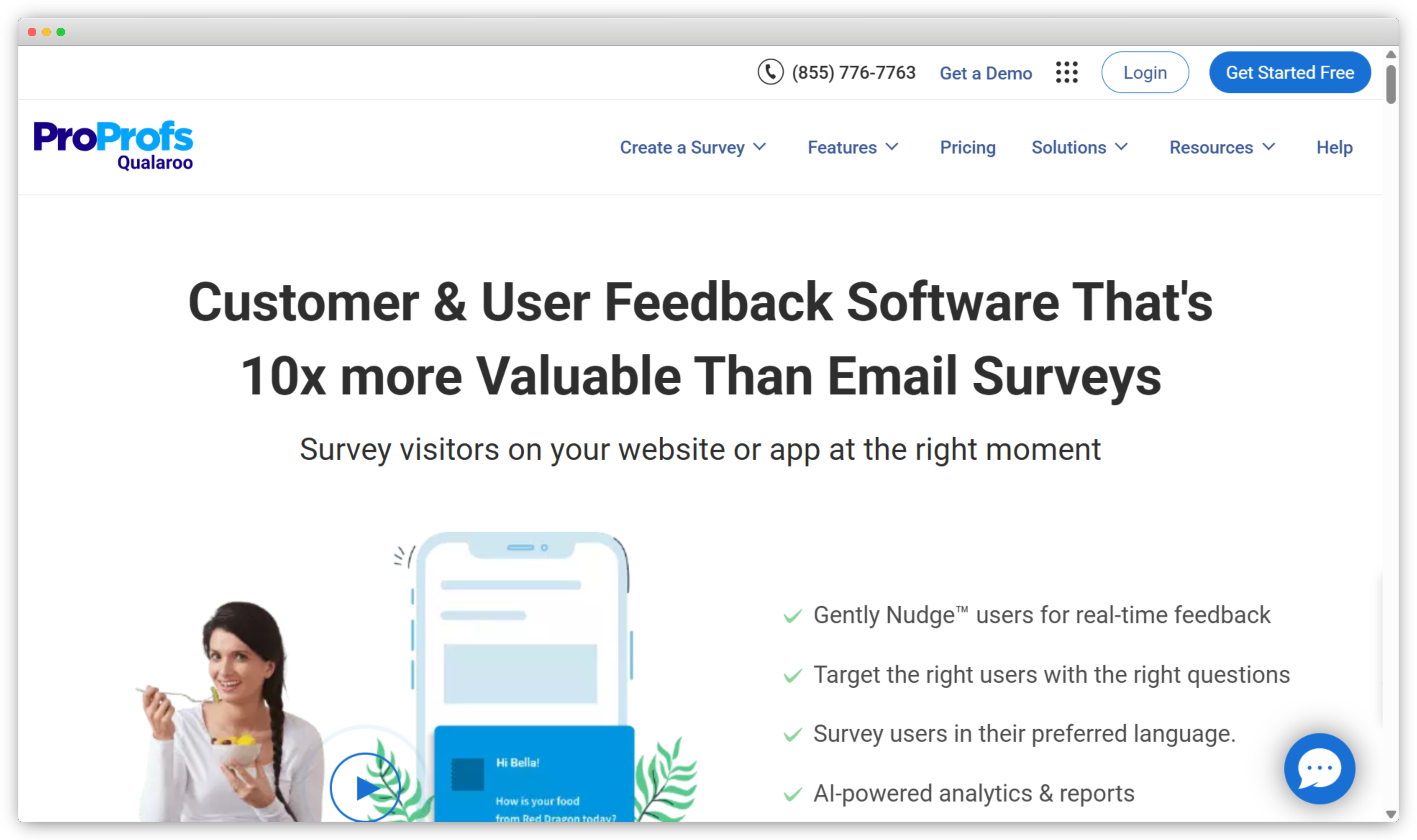
Qualaroo is a Refiner alternative for teams that want contextual micro-surveys on websites and lightweight in-app prompts.
Qualaroo enables product, marketing, and growth teams to deploy short surveys triggered by user behavior and page-level conditions. It supports NPS, CSAT, CES, and custom questions, primarily delivered through website “Nudges” and limited in-app placements to capture feedback at specific interaction points.
Beyond simple survey display, Qualaroo offers behavioral targeting rules and basic reporting dashboards to filter and review responses. Surveys can be customized with logic and branding controls to align with different user journeys and site experiences.
To support analysis, the platform includes response segmentation and integrations with CRM and analytics tools. However, its capabilities are centered on lightweight feedback collection rather than structured response management or advanced workflow automation.
 Key features
-
Website micro-surveys and feedback widgets using Nudges, with customizable placement and display states
-
Behavioral targeting using visitor activity and context, so surveys appear at relevant moments
-
Mobile Nudges for collecting responses from users on mobile browsers
-
Support for multiple CX metrics such as NPS, CSAT, and CES
-
Survey logic features such as skip logic and templates (highlighted across product overviews)
If your goal is to run short, targeted questions, this guide on microsurveys can help you decide where to place them and what to ask. And if you are exploring website-based feedback collection more broadly, this breakdown of website surveys covers common formats and best practices.
Why it’s a Strong Refiner Alternative
Qualaroo supports contextual survey triggering similar to Refiner, particularly for website and limited in-app interactions. It enables teams to display targeted micro-surveys based on user behavior and page-level conditions.
However, its focus remains on lightweight feedback collection rather than structured response management or advanced analytics. This may make it suitable for teams that prioritize quick, behavior-based micro-surveys over broader feedback workflows.
Qualaroo Pros
- Strong for quick, contextual website surveys with targeting based on user behavior
- Works well for micro-survey programs that focus on specific pages and journeys rather than broad, periodic surveys
Qualaroo Cons
- Pricing can scale based on usage and plan requirements, so teams often need to evaluate the right tier for traffic and survey volume
- Some capabilities are plan-dependent, and teams may need a higher tier for advanced requirements
Qualaroo Pricing
- Starts at $49.99/month (Business plan, billed annually), with higher-tier Enterprise plans available
- Free plan available with limited responses, and a 14-day free trial for paid plans
3. Satismeter — Best Refiner Alternative for In-App NPS Surveys
Best For: In-app NPS tracking, SaaS feedback programs, recurring metric surveys
G2 Rating: 4.7/5
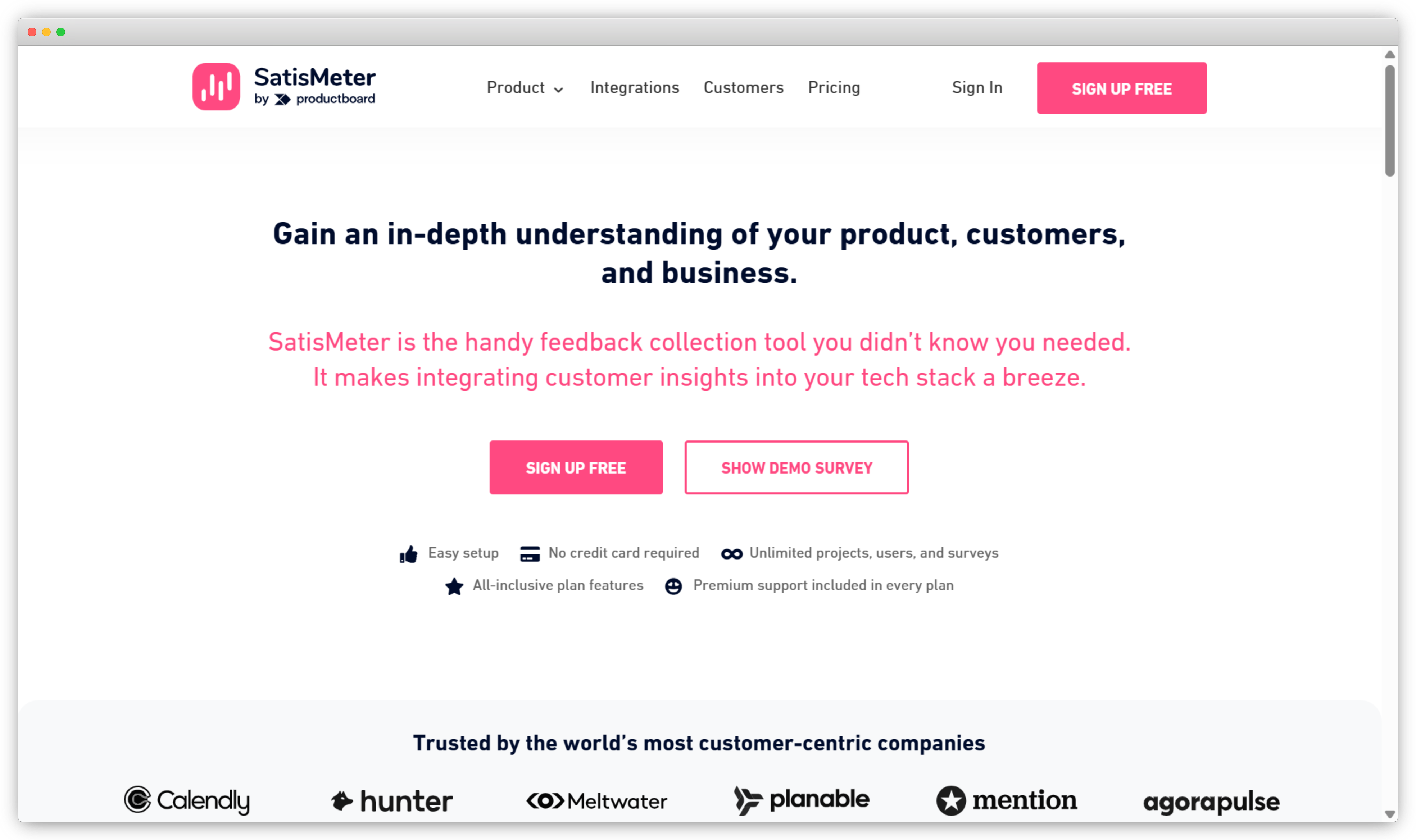
Satismeter is a Refiner alternative for SaaS teams that want a straightforward way to run in-app NPS and CSAT surveys.
It is built primarily for collecting feedback inside web and mobile products, with event-based triggers that allow surveys to appear at specific points in the user journey. Many teams use it for recurring NPS programs and continuous sentiment tracking within subscription businesses.
Features like sampling and throttling help manage how often users see surveys, reducing the risk of over-surveying. In addition to in-app collection, email surveys are supported for relationship-style outreach.
Reporting focuses on score tracking, trends over time, and basic segmentation. Compared to broader feedback platforms, Satismeter stays centered on ongoing metric measurement rather than expanding into multi-channel orchestration or workflow-heavy feedback management.
 Key features
-
In-app surveys across web and mobile environments, including iOS and Android
-
Targeting by user attributes and event-based triggers
-
Recurring surveys, throttling, and sampling to prevent over-surveying
-
Multiple channels supported, including web, in-app, and email
-
Integrations (listed on the pricing page) and data export options
Why it’s a Strong Refiner Alternative
Satismeter focuses on native in-app surveys similar to Refiner, particularly for running recurring NPS and CSAT programs within SaaS products. It allows event-based targeting and user-level triggers to collect feedback at relevant moments in the product journey.
Its feature set is centered around continuous CX metric measurement rather than broader omnichannel collection or advanced workflow management. This may suit teams that want a focused in-app NPS solution without expanding into a wider feedback management system.
Satismeter Pros
- Built for in-app NPS and recurring CX metric surveys with targeting and event triggers
- Includes controls like throttling and sampling to manage survey fatigue
Satismeter Cons
- Better suited for in-app NPS style programs than broad omnichannel feedback collection
- Response-based plans can require upgrading as feedback volume grows
Satismeter Pricing
- Free plan at $0/month with 25 responses/month
- Paid plan listed at $199/month with 1,000 responses/month, with Enterprise pricing available via custom plan
4. Survicate — Great Choice for Flexible Website, Email & In-Product Surveys
Best For: Multi-channel surveys, web and in-product feedback, AI-assisted insights
G2 Rating: 4.6/5
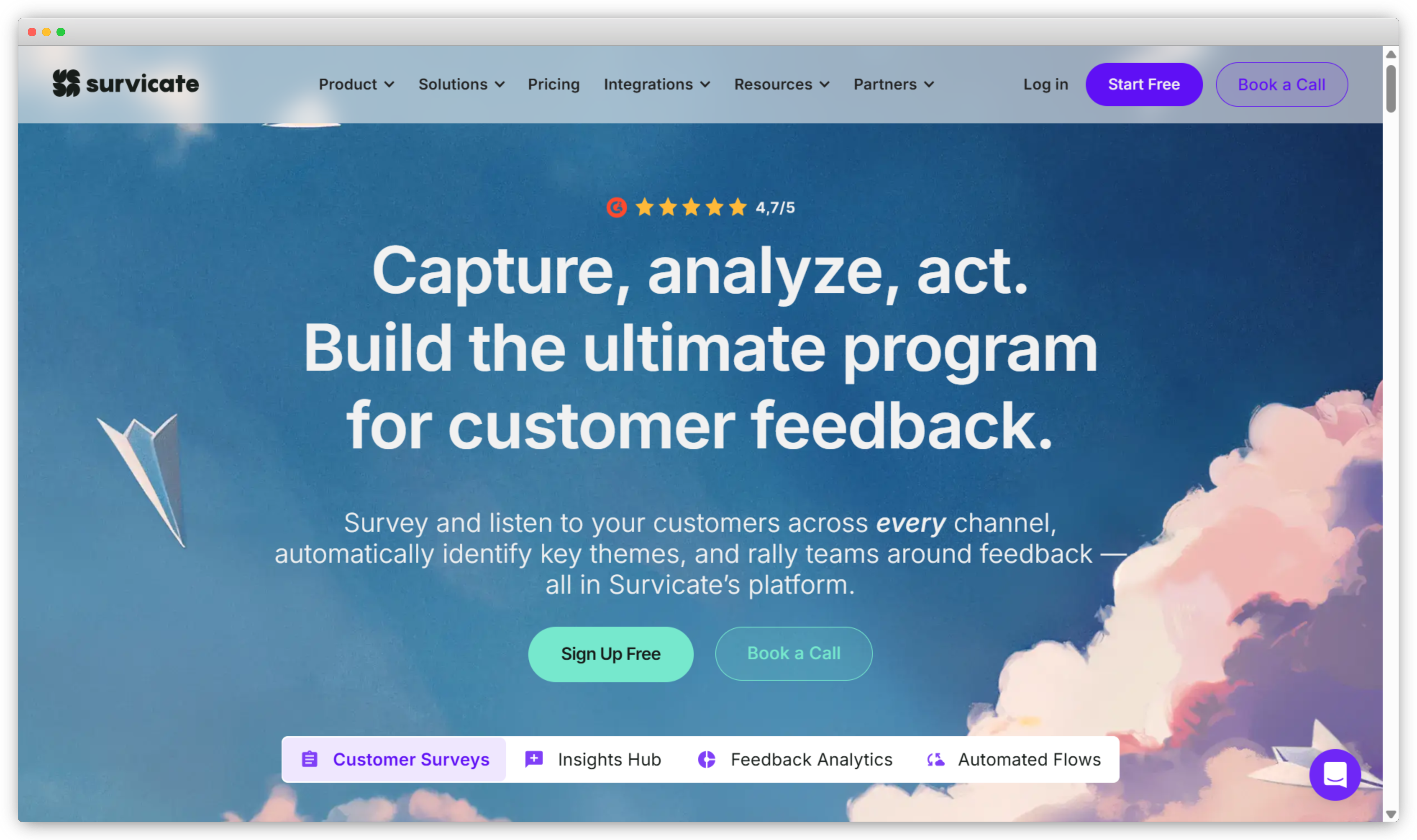
Survicate is a Refiner alternative for teams that want in-product surveys along with broader multi-channel feedback collection.
Survicate allows teams to deploy surveys inside web applications using embedded widgets, while also supporting distribution through email and shareable links. It is often used to run NPS, CSAT, and CES programs across different stages of the customer journey.
Behavioral and attribute-based targeting help ensure surveys appear at relevant moments, and recurring survey options support ongoing measurement. The platform also includes AI-assisted insights to help organize open-text responses and identify recurring themes.
Compared to tools focused purely on in-app feedback, Survicate places more emphasis on flexibility across channels. It can be suitable for teams that want contextual surveys inside the product while also collecting feedback through web and email touchpoints.
 Key features
-
Multi-channel survey support across web, email, link-based surveys, and in-product widgets
-
Behavioral and attribute-based targeting to trigger surveys at relevant moments
-
Recurring NPS, CSAT, and CES tracking across multiple touchpoints
-
AI-assisted insights and sentiment analysis for open-ended responses
-
Real-time analytics and customizable dashboards
-
Native integrations with CRMs, product analytics, and support tools
Why it’s a Strong Refiner Alternative
Survicate supports embedded and in-product surveys similar to Refiner, while also extending feedback collection across web, email, and link-based channels. It allows behavioral and attribute-based targeting to capture contextual responses during the user journey.
In addition to survey deployment, Survicate includes AI-assisted insights and segmentation capabilities. This may make it suitable for teams that want broader channel flexibility alongside in-app feedback collection.
Survicate Pros
- Supports feedback collection across web, in-product, email, and link-based channels
- AI-powered insights and flexible targeting help teams analyze feedback at scale
Survicate Cons
- Pricing can increase as response volume grows
- Advanced configurations and integrations may require additional setup effort
Survicate Pricing
- Free plan available with basic feedback collection features
- Paid plans start at $79/month, with higher tiers offering increased usage limits and advanced capabilities
5. Hotjar - Best Tool for UX Feedback and Behavioral Analytics
Best For: UX research, behavioral analytics, website friction analysis — not a direct in-app survey replacement
G2 Rating: 4.3/5
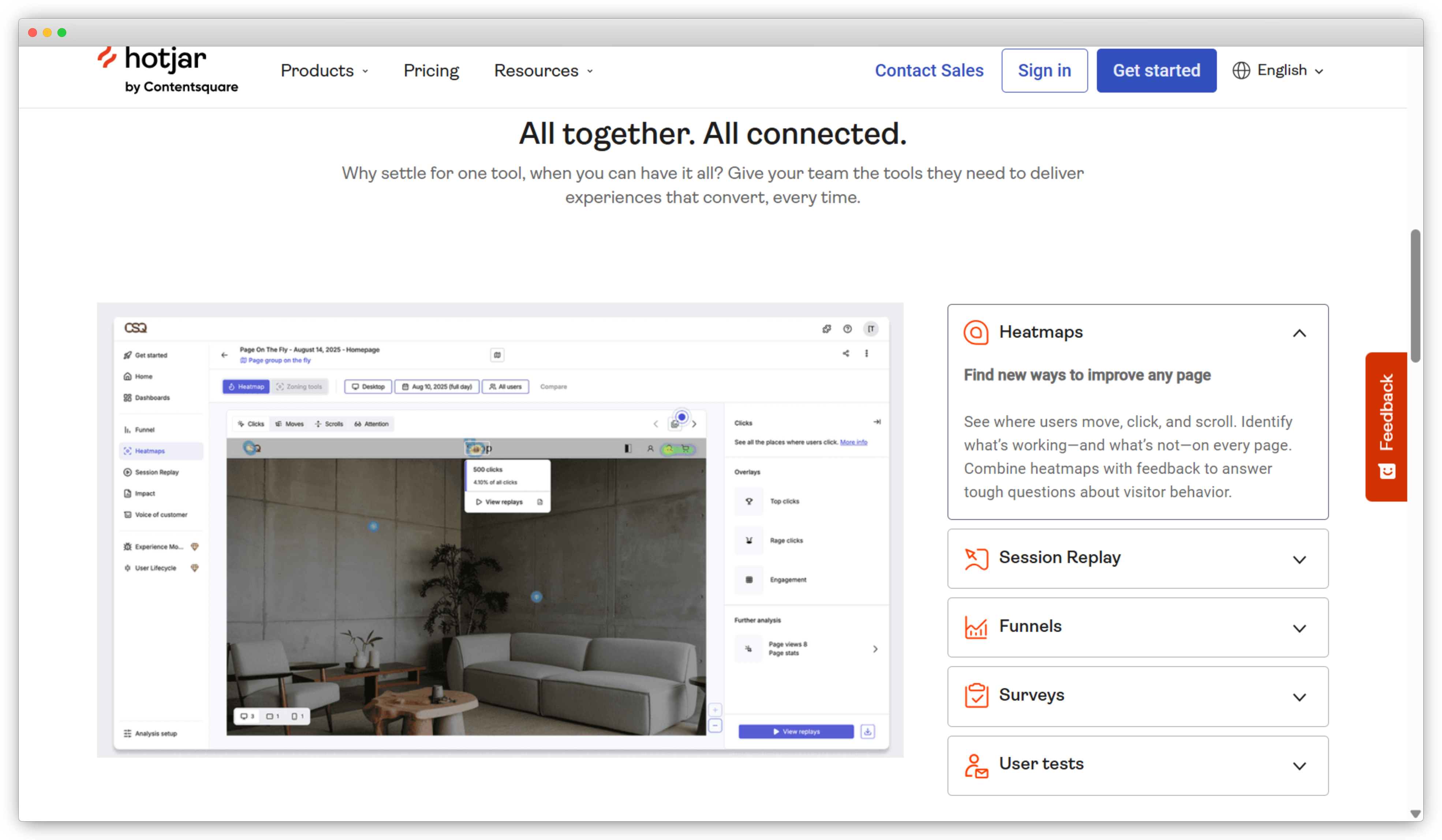
Hotjar is worth considering alongside a Refiner alternative, but with an important caveat: it is a UX analytics and behavioral research tool, not an in-app survey platform. If your goal is to understand why users drop off or where friction exists in your product, Hotjar does things no survey tool can — heatmaps, session recordings, and funnel analysis. But if you're looking for a like-for-like replacement for Refiner's targeted NPS or CSAT surveys inside your product, Hotjar isn't the answer.
Hotjar combines on-page surveys and feedback widgets with tools like heatmaps and session recordings. Surveys can be triggered on specific pages, allowing teams to gather contextual input while also observing how users interact with the interface.
It is commonly used by product and UX teams to identify friction points, drop-offs, and usability issues. Rather than focusing heavily on structured NPS or CSAT programs, Hotjar emphasizes qualitative insight into user behavior.
Many teams run Hotjar in parallel with a dedicated in-app survey tool — using Hotjar for behavioral context and the survey tool for metric tracking and CX programs.
 Key features
-
Heatmaps that show where users click, scroll, and focus on pages
-
Session recordings for observing real user behavior over time
-
Feedback widgets and surveys to collect sentiment directly from visitors
-
Conversion funnels and form analysis to spot drop-off points and friction
-
Trends and insights dashboards for tracking engagement patterns
-
Integrations with analytics, CRM, and collaboration tools to connect insights into workflows
You can also look at how website surveys complement UX feedback to create a full view of user experience.
Why it’s a Strong Refiner Alternative
Hotjar offers feedback widgets and on-page surveys that can be triggered during website interactions. It enables teams to collect qualitative feedback alongside behavioral data such as clicks, scrolls, and navigation patterns.
However, its primary focus is user behavior analytics rather than structured CX metric programs or in-app product surveys. Teams often use Hotjar as a complement to a dedicated survey tool rather than a direct Refiner replacement — particularly when they want to understand the behavioral context behind low NPS scores or product friction.
Hotjar Pros
- Combines user feedback widgets with heatmaps and session recordings to reveal UX friction.
- Easy to set up and use for collecting qualitative feedback on websites and web apps.
- Visual behavior insights help product and UX teams understand how users interact with pages and flows.
Hotjar Cons
- Limited support for in-app surveys and CX metrics like NPS, CSAT, and CES.
- Pricing and data limits can become restrictive for high-traffic websites or advanced analysis needs.
Hotjar Pricing
- Free plan available with basic features including limited heatmaps and session recordings
- Paid plans start around $39 per month for expanded sessions and insights, with higher tiers and custom enterprise pricing available
6. SurveyMonkey - Established Platform for Large-Scale and Enterprise Surveys
Best For: Large-scale surveys, structured research, advanced survey logic
G2 Rating: 4.4/5
SurveyMonkey is a Refiner alternative for teams that need large-scale survey distribution and advanced survey design.
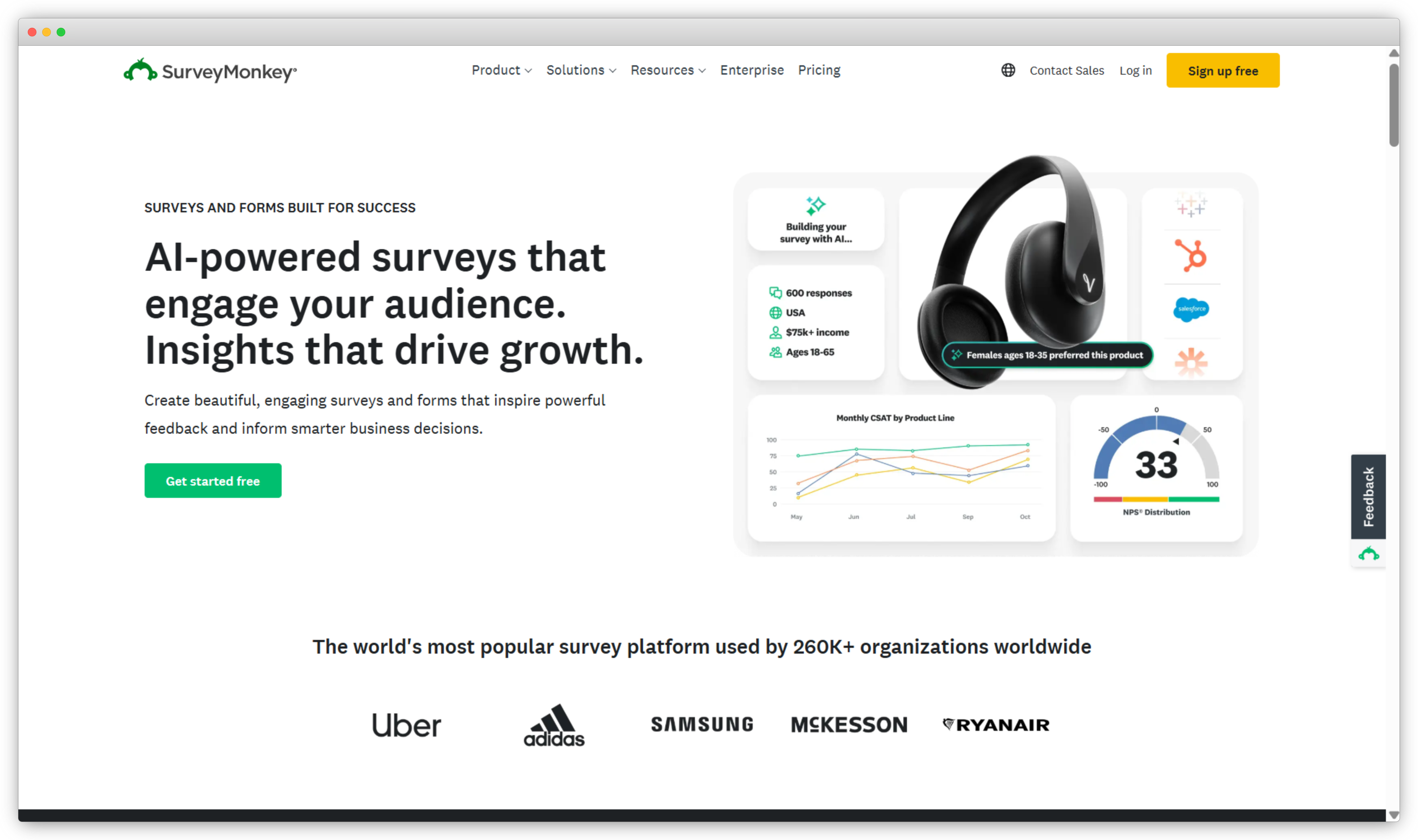
SurveyMonkey is widely used for creating structured surveys that can be distributed through email, web links, and embedded forms. It supports NPS, CSAT, and custom surveys, along with advanced logic such as branching and skip patterns for more complex questionnaires.
Many organizations use it for customer research, employee feedback, and market studies rather than contextual in-app feedback. Its strength lies in survey flexibility and reporting depth across broad audiences.
For teams comparing it to Refiner, the difference is mainly in deployment style. SurveyMonkey focuses on external and large-scale survey programs, while Refiner centers more on targeted in-app feedback inside web and mobile products.
 Key features
-
Survey distribution via email, web links, and embedded surveys
-
Advanced logic including skip logic, branching, and piping
-
Pre-built templates and question banks for customer experience, market research, and employee feedback
-
Reporting dashboards with filters, exports, and visualizations
-
Collaboration features for teams with shared workspaces
-
Integrations with CRMs, analytics platforms, and productivity tools
If you are considering tools in the survey space more broadly, this blog comparing SurveyMonkey alternatives and competitors provides useful context on how SurveyMonkey stacks up against other survey platforms.
Why it’s a Strong Refiner Alternative
SurveyMonkey supports NPS, CSAT, and custom surveys similar to Refiner, but is primarily designed for large-scale survey distribution via email, web links, and embedded forms. It offers advanced logic, branching, and reporting capabilities suited for structured research and broad audience outreach.
Unlike product-focused in-app tools, SurveyMonkey does not emphasize contextual or behavior-triggered surveys inside applications. This may suit teams that prioritize comprehensive survey design and large-scale distribution over in-product feedback collection.
SurveyMonkey Pros
- Strong survey logic with extensive templates and controls
- Scales well for large teams and high response volumes
SurveyMonkey Cons
- Limited support for in-app and behavior-triggered surveys
- Advanced collaboration features are restricted to higher-tier plans
SurveyMonkey Pricing
- Starts at $25 per user per month (billed annually) for individual plans
- Team plans start at $75 per user per month, with higher plans available for enterprise needs
7. Alchemer - Advanced Survey Platform with Deep Logic and Reporting
Best For: Research-grade surveys, advanced logic workflows, enterprise reporting
G2 Rating: 4.4/5
Alchemer is a Refiner alternative for organizations that require advanced survey logic and research-grade reporting.
Alchemer is built for designing highly customizable surveys with complex branching, piping, and workflow controls. It supports NPS, CSAT, CES, and custom surveys distributed through web links, email, and panels, making it suitable for structured data collection across different audiences.
It is commonly used by research and CX teams that need deeper analytical control over survey design and response outputs. Reporting options include detailed exports and cross-tab analysis for more comprehensive evaluation.
Compared to Refiner’s in-app, behavior-triggered approach, Alchemer is oriented toward flexible survey architecture and enterprise-level customization rather than contextual product feedback inside applications.
 Key features
-
Comprehensive survey builder with advanced logic, branching, and piping capabilities.
-
Large set of question types and templates for complex research and structured data collection.
-
Reporting and analytics tools, including export options and cross-tabulation.
-
Integrations with CRM, analytics platforms, and marketing tools.
-
Multi-channel distribution via email, web links, kiosks, and panels.
-
Options for custom branding, API access, and enterprise controls.
Why it’s a Strong Refiner Alternative
Alchemer supports NPS, CSAT, CES, and highly customized surveys with advanced branching and logic controls. It is designed for structured data collection and detailed reporting across web, email, and panel-based distribution.
Unlike Refiner’s product-focused in-app approach, Alchemer emphasizes complex survey architecture and enterprise-level analysis. This may suit teams that require deep survey customization and reporting rather than contextual in-app feedback deployment.
Alchemer Pros
- Advanced survey logic and branching support complex, research-grade survey designs
- Strong reporting and data export options for in-depth analysis and enterprise use cases.
Alchemer Cons
- Not designed for native in-app or behavior-triggered surveys inside products
- Feature depth and setup complexity can be overwhelming for smaller or less technical teams
Alchemer Pricing
- Plans generally start at around $55 per user per month for core features, with higher tiers such as Professional and Full Access available for more advanced capabilities
- Enterprise plans with custom pricing are available for larger organizations
8. Typeform - Best Refiner Alternative for Conversational Surveys
Best For: Conversational surveys, web-based feedback, engagement-focused forms
G2 Rating: 4.5/5
Typeform is a Refiner alternative for teams that prioritize conversational survey design and engagement.
Typeform is known for its one-question-at-a-time interface, which creates a more interactive survey experience compared to traditional forms. It supports NPS, CSAT, and custom surveys that can be shared via web links or embedded on websites.
The platform is commonly used for customer feedback, lead capture, and general data collection where presentation and response rates matter. Logic jumps and design customization allow teams to tailor surveys to different audiences.
Unlike Refiner’s in-app, behavior-triggered model, Typeform focuses on external survey experiences rather than contextual product feedback. It may be suitable for teams that value design and engagement over in-product targeting.
 Key features
-
Conversational one-question-at-a-time interface that boosts engagement.
-
Drag-and-drop form builder with templates for surveys, quizzes, and forms.
-
Conditional logic (logic jumps) to tailor question paths based on responses.
-
Custom branding, themes, and design controls on paid plans.
-
Integrations with tools like Slack, Zapier, HubSpot, and more.
-
Data export, analytics, and reporting dashboards.
Why it’s a Strong Refiner Alternative
Typeform supports NPS, CSAT, and custom surveys delivered through web links and embedded formats. Its one-question-at-a-time interface is designed to increase engagement and completion rates across external audiences.
Unlike Refiner’s contextual in-app survey deployment, Typeform focuses on conversational survey experiences rather than behavior-triggered product feedback. This may suit teams that prioritize survey design and respondent experience over in-app targeting and product-based triggers.
Typeform Pros
- Conversational, one-question-at-a-time surveys improve engagement and completion rates
- Flexible design and branding options make surveys feel polished and user-friendly
Typeform Cons
- Pricing tiers based on response limits can be restrictive for high-volume use
- Not built for in-app contextual surveys the way product feedback tools are
Typeform Pricing
- Free plan available with limited responses and basic features.
- Paid plans start at $29 per month for the Basic tier, with custom Enterprise options available.
9. Jotform- Flexible Form Builder for Surveys and Data Collection
Best For: Flexible forms, web-based surveys, workflow-driven data collection
G2 Rating: 4.7/5
Jotform is a Refiner alternative for teams that need flexible form-based surveys and general data collection.
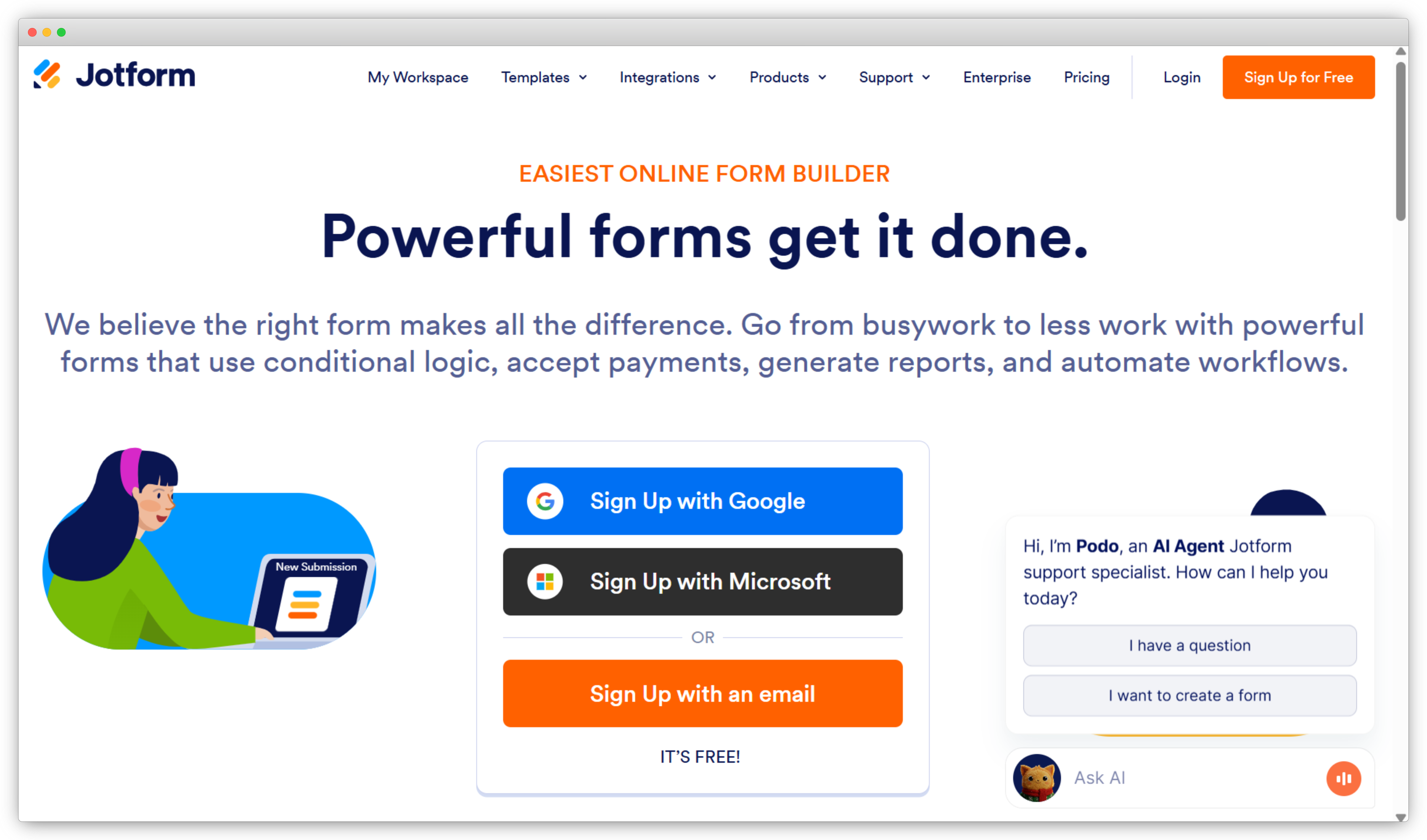
Jotform provides a drag-and-drop builder for creating surveys, feedback forms, and workflow-driven forms that can be shared via links or embedded on websites. It supports conditional logic, calculations, and integrations with a wide range of third-party tools.
The platform is often used for structured data capture across marketing, operations, HR, and support use cases. While it can handle customer feedback surveys, its primary focus is broad form creation rather than contextual in-app product surveys.
Compared to Refiner’s behavior-triggered in-app deployment, Jotform is better suited for external or process-driven feedback collection rather than moment-based feedback inside web or mobile applications.
 Key features
-
Drag-and-drop form builder with a large library of templates.
-
Support for surveys, feedback forms, registrations, and internal workflows.
-
Conditional logic, calculations, and approval flows.
-
Multiple distribution options including links, embeds, email, and mobile forms.
-
Integrations with CRMs, payment gateways, cloud storage, and automation tools.
-
Data exports, basic analytics, and form response management.
Why it’s a Strong Refiner Alternative
Jotform supports survey and form creation through web links and embedded formats, allowing teams to collect structured feedback across external touchpoints. It includes conditional logic and workflow features suited for general data collection use cases.
Unlike Refiner’s in-app and behavior-triggered survey model, Jotform focuses on flexible form building rather than contextual product feedback. This may suit teams that need adaptable survey forms instead of in-product listening capabilities.
Jotform Pros
- Very easy to use with minimal setup required.
- Highly flexible templates and integrations for non-technical teams.
Jotform Cons
- Not designed for in-app or behavior-triggered surveys
- Analytics and insight depth are limited compared to dedicated feedback platforms
Jotform Pricing
- Free plan available with limited forms and monthly responses.
- Paid plans start at $39 per month (Bronze), with higher tiers at $49 per month (Silver) and $129 per month (Gold), billed monthly.
10. ProProfs SurveyMaker - Simple and Affordable Tool for Online Surveys
Best For: Simple surveys, budget-friendly feedback, small teams
G2 Rating: 4.3/5
ProProfs SurveyMaker is a Refiner alternative for teams looking for a simple and affordable way to run online surveys.
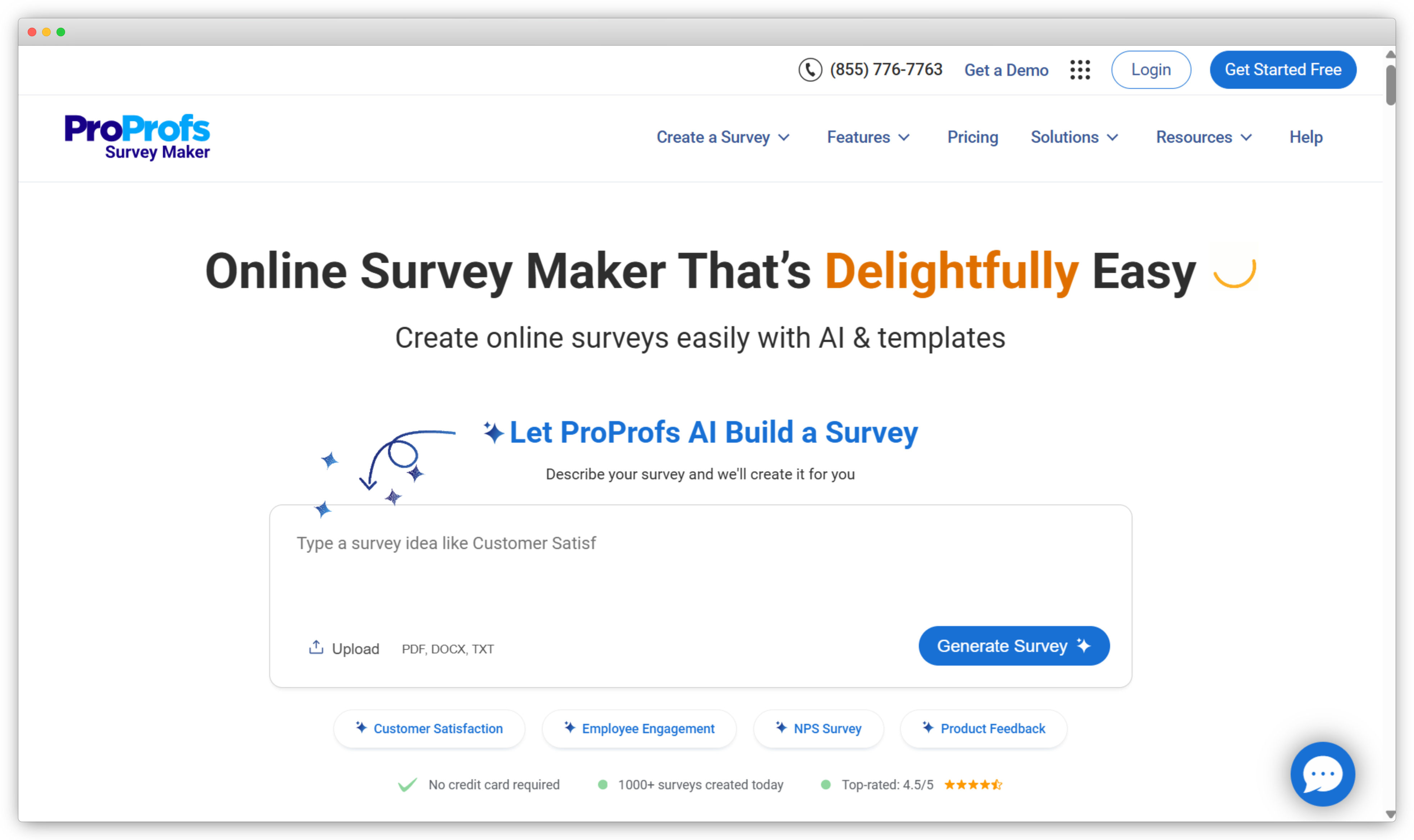
The platform allows users to create and distribute surveys through web links and embedded forms, supporting common formats such as NPS, CSAT, quizzes, and general feedback forms. It includes basic logic controls and reporting dashboards for reviewing responses.
ProProfs is typically used by small teams or organizations running periodic feedback programs rather than continuous in-app surveys. Its strength lies in ease of setup and straightforward deployment across external channels.
Compared to Refiner’s contextual in-product targeting, ProProfs focuses more on general survey distribution and simplicity. It may suit teams that need lightweight feedback collection without advanced targeting or analytics requirements.
 Key features
-
Survey and quiz builder with ready-to-use templates.
-
Support for common question types, including multiple choice, rating scales, and open-ended questions.
-
Logic and branching to control question flow based on responses.
-
Survey distribution via links, email sharing, and website embeds.
-
Basic reporting and response analysis dashboards.
-
Integrations with tools such as Salesforce, Zendesk, and Google Sheets.
Why it’s a Strong Refiner Alternative
ProProfs SurveyMaker supports NPS, CSAT, and general feedback surveys through web links and embedded formats. It offers basic logic and reporting features suited for straightforward survey distribution.
Unlike Refiner’s contextual in-app targeting, ProProfs focuses on ease of use and affordability rather than behavior-triggered product surveys. This may suit teams that need simple, periodic feedback collection without advanced targeting or analytics requirements.
ProProfs SurveyMaker Pros
- Easy to set up and use with minimal learning curve
- Affordable pricing compared to many enterprise survey tools
ProProfs SurveyMakerCons
- Limited analytics and reporting depth for large-scale CX programs
- Not built for in-app, event-triggered, or product-led feedback collection
ProProfs SurveyMaker Pricing
- Paid plans start at $19.99 per month when billed annually
- Free plan available with limited features and responses
11. Userpilot: Best Refiner Alternative for Product-Led In-App Feedback
Best For: Product-led growth, in-app feedback, feature adoption tracking
G2 Rating: 4.6/5
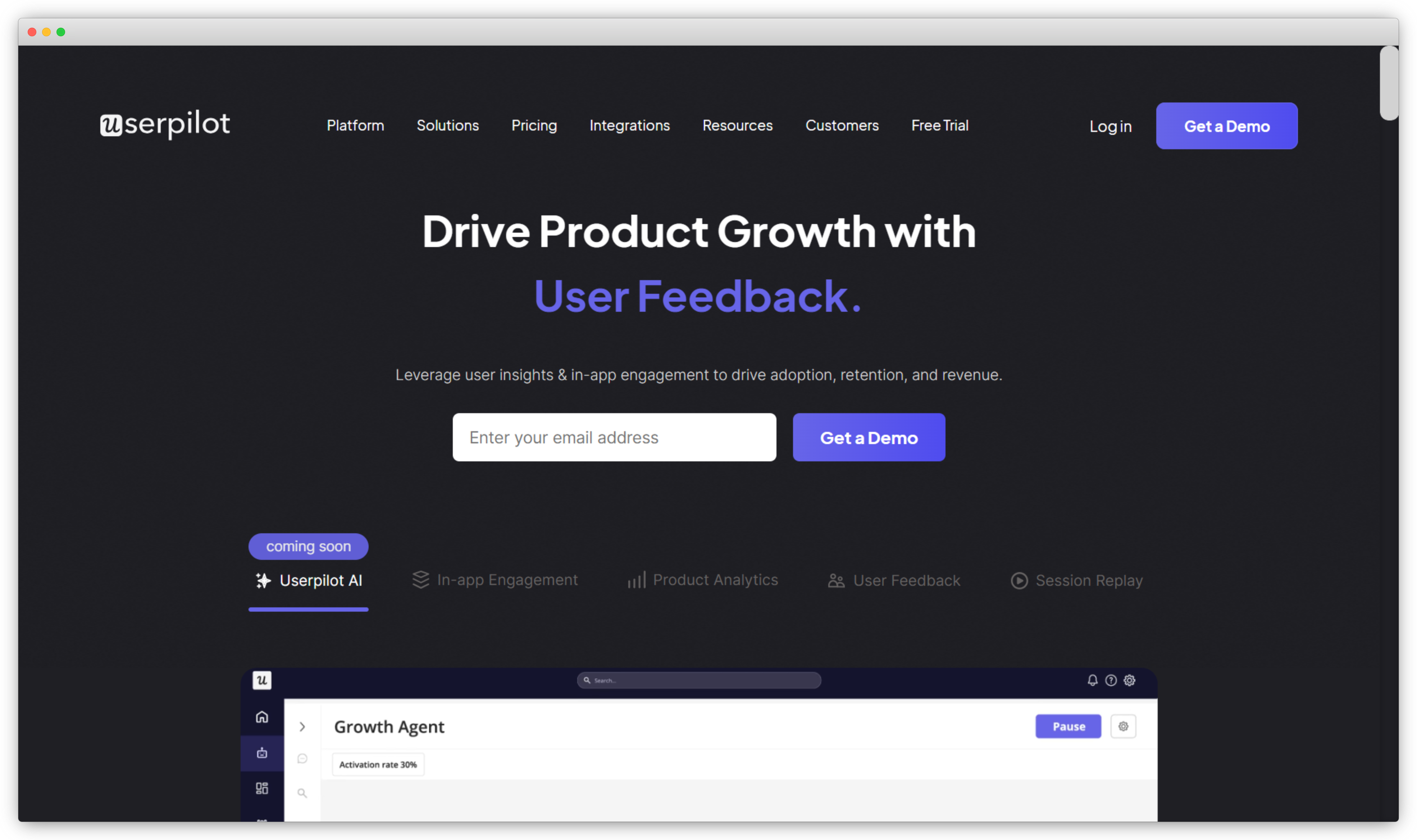
Userpilot is a Refiner alternative built for product-led teams that want feedback tightly connected to in-app experiences.
It allows teams to launch surveys directly inside web applications, triggered by user actions, feature usage, or lifecycle stages. NPS, CSAT, and custom feedback can be collected in context, often alongside onboarding flows, tooltips, and feature announcements.
Because Userpilot links feedback with product usage data, responses can be analyzed alongside behavioral insights. This makes it particularly relevant for teams focused on adoption, retention, and feature performance.
Where Refiner centers primarily on in-app survey delivery, Userpilot combines feedback collection with broader in-product engagement elements. It may suit organizations that want surveys embedded within product growth and onboarding workflows.
Key Features
-
Native in-app surveys for web applications, including NPS, CSAT, and custom product feedback
-
Event-based and attribute-based targeting to trigger surveys at specific moments
-
In-app UI patterns such as modals, tooltips, and checklists for user guidance
-
User segmentation based on behavior, lifecycle stage, and attributes
-
Feedback and engagement analytics tied to product usage data
-
Integrations with analytics, CRM, and customer success tools
Why it’s a Strong Refiner Alternative?
Userpilot supports native in-app surveys similar to Refiner, including NPS, CSAT, and custom feedback triggered by user behavior and events. It allows teams to collect contextual responses directly within web applications.
In addition to surveys, Userpilot connects feedback with product usage data and in-app engagement flows. This may suit product-led teams that want feedback closely tied to feature adoption and lifecycle interactions rather than broader omnichannel survey programs.
Userpilot Pros
- Strong in-app survey capabilities tightly linked to user behavior and events
- Combines feedback collection with in-product experiences and engagement tools
- Intuitive interface for building surveys and targeting user segments
Userpilot Cons
- No native mobile app (iOS/Android) in-app survey support
- Less suited for omnichannel feedback programs beyond the product
Userpilot Pricing
- Paid plan listed at $299/month
- Demo available on request
12. Wootric (InMoment) - Continuous NPS Tracking and CX Analytics for Growing Teams
Best For: Continuous NPS tracking, multi-touchpoint CX measurement, sentiment categorization
G2 Rating: 4.9/5
Wootric (now part of InMoment) is a Refiner alternative designed for ongoing NPS and customer experience measurement across touchpoints.
It enables teams to collect NPS, CSAT, and CES feedback through in-app prompts, email, SMS, and web surveys. Many organizations use it to run continuous relationship and transactional surveys throughout the customer lifecycle rather than limiting feedback to a single interaction point.
The platform also includes theme categorization and sentiment analysis to help organize qualitative responses at scale. Its structure is centered around recurring metric tracking and customer journey monitoring.
While Refiner emphasizes contextual in-app surveys, Wootric leans more toward structured, always-on CX measurement across channels. It may be suitable for teams that prioritize ongoing sentiment tracking beyond product interactions.
 Key features
-
Supports NPS, CSAT, or CES tracking, depending on the plan and setup.
-
Multiple delivery channels including web app, mobile app, email, link, and Intercom Messenger, with SMS available on Growth.
-
Auto-categorization of feedback themes across plans.
-
Advanced survey targeting and broader triggering options on higher plans.
-
“Voice of the Customer” package adds text and sentiment analytics and the ability to import feedback from other sources.
Why it’s a Strong Refiner Alternative
Wootric supports in-app, email, and web-based surveys for NPS, CSAT, and CES, similar to Refiner’s contextual feedback model. It allows teams to run continuous relationship and transactional surveys across different stages of the customer journey.
In addition to survey deployment, Wootric includes theme categorization and sentiment analysis capabilities. This may suit teams that prioritize ongoing CX metric tracking across multiple touchpoints rather than focusing primarily on in-app survey programs.
Wootric Pros
- Strong fit for continuous CX measurement across key metrics and multiple channels
- Useful for organizing qualitative feedback through theme categorization and sentiment analysis
Wootric Cons
- Plan structure is based on “journey points” and packaged capabilities, which may feel restrictive if you want more mix-and-match flexibility
- Advanced analytics and broader VoC capabilities are tied to the higher “Voice of the Customer” package
Wootric Pricing
- Wootric lists Professional and Growth plans plus a Voice of the Customer package, but it does not publish plan prices publicly
- For pricing, teams need to choose a plan or contact sales, especially for the Voice of the Customer package
13. AskNicely- Service-Focused NPS and Customer Feedback Platform
Best For: Service-based NPS programs, frontline coaching, continuous customer sentiment tracking
G2 Rating: 4.7/5
AskNicely is a Refiner alternative focused on continuous Net Promoter Score (NPS) programs and service-driven feedback collection.
The platform helps organizations collect customer sentiment through automated NPS and CSAT surveys delivered via email, SMS, and web links. It is frequently used by service and customer success teams that want regular feedback tied to interactions or account touchpoints.
AskNicely also emphasizes team-level visibility, allowing performance tracking across locations or frontline teams. Feedback results are often used for coaching, recognition, and service improvement initiatives.
Compared to Refiner’s in-app, product-centered survey approach, AskNicely is more oriented toward relationship surveys and service performance measurement. It may be suitable for organizations prioritizing ongoing customer sentiment tracking outside the product environment.
 Key features
-
Automated NPS surveys delivered via email, SMS, or web with real-time feedback capture.
-
Workflow automation for follow-ups, alerts, and reinforcement of service standards.
-
Customer feedback dashboards that visualize trends and performance metrics.
-
Role-based insights and frontline coaching tools to empower teams with actionable data.
-
Integrations with CRM and support systems to unify customer feedback with operational workflows.
Why it’s a Strong Refiner Alternative
AskNicely supports automated NPS and CSAT surveys delivered via email, SMS, and web, enabling continuous customer sentiment measurement similar to Refiner’s metric-focused surveys. It allows teams to track feedback across service interactions and customer touchpoints.
Unlike product-centered in-app survey tools, AskNicely emphasizes frontline performance tracking and service-driven feedback workflows. This may suit organizations that prioritize ongoing NPS measurement and team-level visibility over contextual product feedback deployment.
AskNicely Pros
- High user satisfaction with ease of setup and a user friendly interface
- Strong customer support and real-time feedback workflows that help teams act quickly
AskNicely Cons
- Pricing and plan structure are on the higher end, which can make it less accessible for smaller teams
- Reporting and deep segmentation can be more limited than in broader CX analytics platforms
AskNicely Pricing
- AskNicely does not publish standard list pricing publicly
- Pricing plans are typically available by contacting sales for a custom quote tailored to responses and usage.
14. GetFeedback - Salesforce-Native Survey Tool for CX Teams
Best For: Salesforce-native surveys, CRM-linked feedback, relationship and transactional programs
G2 Rating: NA
GetFeedback is a Refiner alternative built for organizations that operate within the Salesforce ecosystem.
It enables teams to design and distribute NPS, CSAT, CES, and custom surveys through email and web channels, with responses syncing directly to Salesforce records. Surveys can be targeted using CRM data, allowing feedback to align with specific customer segments or journey stages.
Because of its Salesforce-native foundation, reporting and workflows are closely connected to existing CRM processes. Many teams use it to tie customer feedback directly to account management and operational follow-ups.
Unlike Refiner’s focus on contextual in-app surveys, GetFeedback is centered on CRM-driven survey programs. It may be suitable for teams that prioritize tight integration with Salesforce over behavior-triggered product feedback.

Key features
-
Salesforce-native survey creation with direct syncing to Salesforce CRM data.
-
Support for NPS surveys, CSAT surveys, CES surveys, and custom surveys.
-
Survey distribution via email, web links, and embedded surveys.
-
Drag and drop interface for building surveys without coding skills.
-
Targeted surveys based on Salesforce data and customer journey stages.
-
Dashboards and reporting within Salesforce for analyzing survey responses.
Why it’s a Strong Refiner Alternative
GetFeedback supports NPS, CSAT, and custom surveys delivered via email, web, and embedded formats, similar to Refiner’s structured feedback collection. It enables targeted surveys based on CRM data and customer journey stages within the Salesforce ecosystem.
Unlike product-focused in-app survey tools, GetFeedback is designed to connect responses directly to Salesforce records and workflows. This may suit organizations that prioritize CRM-integrated feedback management over contextual in-app targeting.
Also Read: Guide on GetFeedback alternatives and competitors
GetFeedback Pros
- Deep Salesforce integration that keeps customer feedback and CRM data in one place
- Easy to design surveys using a user friendly interface and prebuilt templates
GetFeedback Cons
- Limited flexibility outside the Salesforce ecosystem
- Pricing and setup can be restrictive for small businesses or non-Salesforce teams
GetFeedback Pricing
- GetFeedback pricing is not publicly listed and is offered via custom quotes, typically as part of Salesforce-based packages
- A free trial is available, with final pricing dependent on Salesforce edition and usage requirements
15. Qualtrics - Enterprise-Grade Customer Experience Management Platform
Best For: Enterprise CX, advanced analytics, multi-channel surveys
G2 Rating: 4.3/5
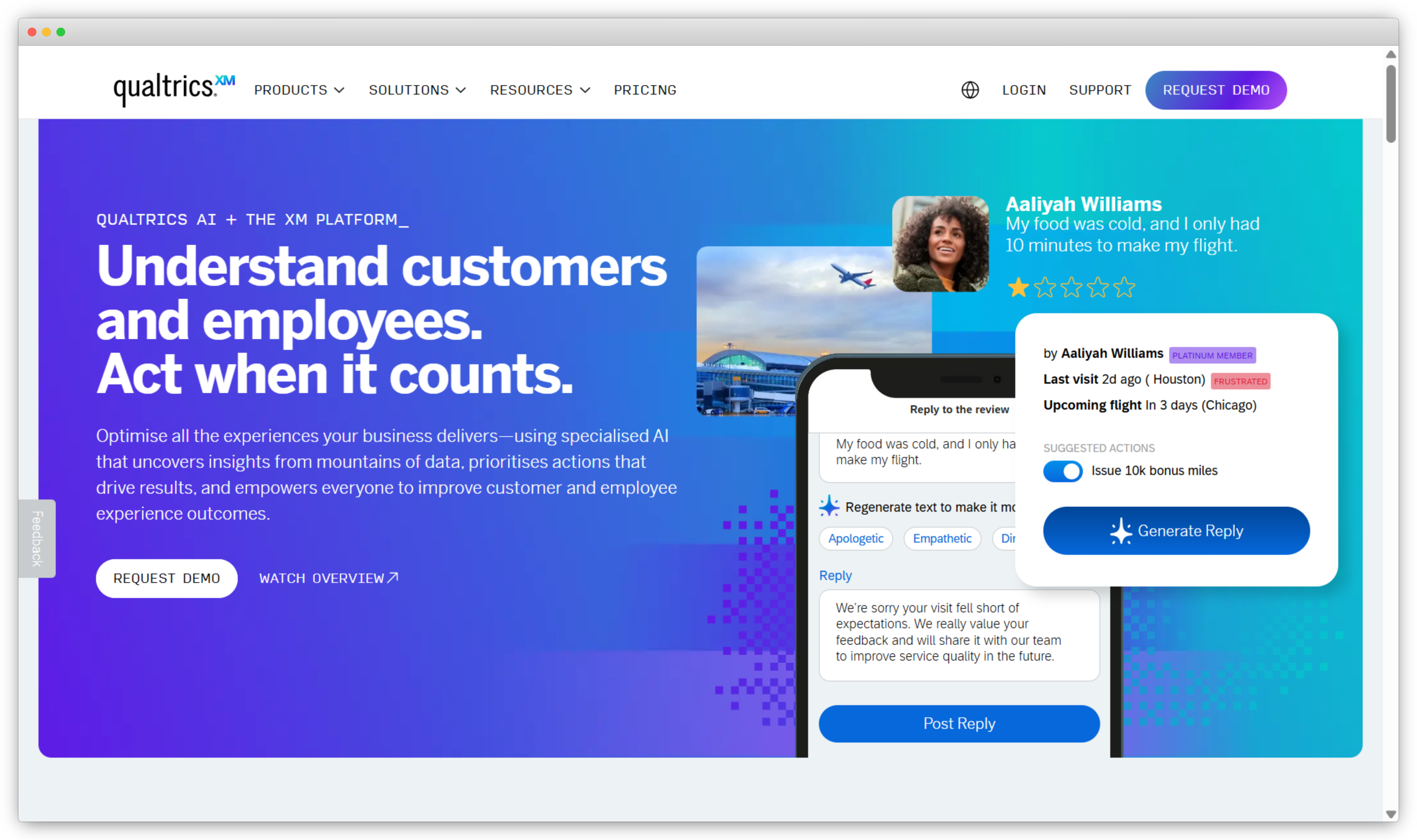
Qualtrics is a Refiner alternative suited for organizations running large-scale customer experience and research programs.
It supports survey distribution across web, email, mobile apps, SMS, and kiosks, covering NPS, CSAT, CES, and advanced custom research studies. The platform is often used by enterprises that require structured experience measurement across multiple departments and touchpoints.
Qualtrics also includes advanced text analytics, segmentation, and predictive reporting capabilities. Many teams rely on it for centralized experience management rather than focusing only on in-product survey collection.
While Refiner centers on targeted in-app feedback inside digital products, Qualtrics is designed for broader enterprise-wide experience programs. It may be suitable for organizations that need extensive analytics and governance across large customer datasets.
 Key features
-
Multi-channel survey distribution including web, email, mobile apps, SMS, and kiosks.
-
Support for NPS surveys, CSAT surveys, CES surveys, and advanced custom surveys.
-
Advanced logic, branching, and question customization.
-
Real-time dashboards and reporting with segmentation and filtering.
-
Text analytics and sentiment analysis for open-ended feedback.
-
Predictive insights and machine learning for trend detection.
-
Integrations with CRM, BI, HR systems, and enterprise data platforms.
-
Closed-loop workflows and alerts to operationalize feedback across teams.
Why it’s a Strong Refiner Alternative
Qualtrics supports in-app, web, email, mobile, and SMS survey distribution, including NPS, CSAT, and CES programs similar to Refiner’s feedback model. It allows organizations to deploy structured surveys across multiple touchpoints in the customer journey.
In addition to survey collection, Qualtrics provides advanced analytics, text analysis, and enterprise-level reporting capabilities. This may suit organizations that require broader experience management infrastructure beyond contextual in-app feedback deployment.
Qualtrics Pros
- Extremely robust analytics and reporting for advanced experience programs
- Supports feedback across many channels, enabling multi-touchpoint insights
Qualtrics Cons
- Higher cost and complexity, which may not suit small teams or lightweight survey use cases
- Learning curve due to the depth of features and configuration options
Qualtrics Pricing
- Qualtrics does not publish list pricing publicly; pricing is provided via custom quotes
- Plans are typically structured around experience categories (Customer Experience, Product Experience, Brand Experience, etc.)
Which Refiner Alternative Should You Choose?
Choosing from the many Refiner alternatives depends on how and where you want to collect customer feedback, the complexity of your surveys, and how deeply feedback ties into your customer experience and business workflows. Here are some clear decision paths to help you choose the right survey tool.
1. Choose an in-app survey focused tool if contextual feedback matters most
If your goal is to collect user feedback directly inside your web app or mobile apps, look for platforms that support in-app surveys with targeting based on user behavior, feature adoption, or lifecycle events. Tools like Qualaroo, Satismeter, and Userpilot allow teams to capture feedback at the right moment and tailor surveys to specific target users.
2. Pick an omnichannel feedback platform to gather insights across touchpoints
If you need to gather feedback across multiple channels such as email, SMS, web forms, in-app, and offline touchpoints, an all-in-one platform works better than a basic survey tool. Omnichannel tools help you capture feedback across the full customer journey and connect survey responses into a single feedback loop for deeper insights.
3. Use simple survey tools for basic or periodic feedback
For small businesses or teams running basic surveys like customer satisfaction checks, registration forms, or feedback forms, lightweight tools such as ProProfs Survey Maker, Jotform, or Typeform can be sufficient. These tools offer drag and drop or online form builder capabilities and are easy to use without coding skills, but they are not built for advanced customer experience management.
4. Choose NPS-focused tools for continuous metric tracking
If your primary focus is tracking customer satisfaction through NPS surveys or NPS CSAT programs, tools like Wootric and AskNicely are designed for continuous measurement. They work well for ongoing customer interactions but offer limited flexibility for custom surveys or broader user research.
5. Select enterprise platforms for advanced analytics and scale
For organizations running large-scale customer experience or market research programs, enterprise platforms like Qualtrics or Salesforce-native tools such as GetFeedback provide advanced features like sentiment analysis, complex branching logic, and deeper insights across teams. These platforms are best suited for mature CX programs with dedicated resources.
6. Go with a flexible CX platform if you want to scale over time
If you are looking for a Refiner alternative that can grow with your needs, prioritize a customer experience management platform that combines in-app surveys, multi-channel surveys, advanced analytics, and automation. This allows you to collect insights, analyze customer behavior, and make data-driven decisions without switching tools as your feedback program matures.
Conclusion
There isn’t one “best” option among the many Refiner alternatives in 2026. The right choice depends on what your team needs today and how you plan to collect and use feedback going forward.
If your focus is in-app and contextual surveys, look for tools with strong targeting and product-based triggers. If you need feedback across email, web, SMS, or offline touchpoints, an omnichannel platform may be more suitable. For ongoing NPS programs, some tools specialize in continuous measurement. And for enterprise research or advanced analytics, larger CX platforms may be a better fit.
Before deciding, consider how feedback will be used in your daily workflows. Review survey flexibility, reporting depth, segmentation options, and how insights are shared across teams.
The goal is not simply to replace Refiner, but to choose a platform that aligns with your processes and supports your feedback program as it evolves.


.png)
.png)