

.svg)
 Healthcare
 Finance
 Retail
 SaaS & Digital
 eCommerce
 Education
 Salesforce
  HubSpot
 Pipedrive
 Mailchimp
 Klaviyo
 Zendesk
  Intercom
 Freshdesk
 HelpScout
  Front
Front Jira
Jira Slack
Slack  MS Teams
 Zoom
Zoom Google Sheets
  Zapier
  Integrately
 Make
Make  Webhooks




 MS Teams


TL;DR
- SaaS customer support is the help a cloud software company provides its users before, during, and after they use the product. Mostly in-app, async by default, tied directly to retention.
- It's not the same as traditional customer service. A retail customer waits on a package. A SaaS customer is blocked from doing their job inside your product, right now.
- The five KPIs that matter: CSAT (target 80%+), CES (5.5/7+), FCR (70-79%), FRT (under 2 min chat, under 4 hrs email), and ticket deflection rate (25-40%).
- The 10 practices in this guide cover hiring, training, metric tracking, feedback automation, loop closure with product, deflection-first self-service, and tool selection.
- Eight companies set the 2026 bar for SaaS support: Zendesk, HubSpot, Slack, Shopify, Atlassian, Intercom, Basecamp, and Salesforce. The specific thing each does well is in the guide.
- The biggest predictor of renewal isn't how fast you resolve a ticket. It's whether the ticket shapes what your product team builds next.
SaaS customer support used to be a cost line. Separate team. Separate floor. Separate scorecard from the product people who actually built the thing customers were complaining about.
That world is gone.
In 2026, the companies winning on retention aren't the ones with the fastest reply times. They're the ones where a Tuesday support ticket becomes a Thursday product decision. Where CSAT isn't just a score; it's a signal that feeds the roadmap. Where "close the loop" means closing it with the customer and with the engineer in the same week.
This guide covers what SaaS customer support actually looks like now. The definition. The metrics and benchmarks. The 10 practices that separate mature programs from chaotic ones. The 8 companies setting the bar. And the tools that hold the whole thing together.
If you're setting up a support function from scratch, start with the metrics section. If you're scaling one, skip to practices 4, 8, and 9. If you just want to benchmark, the CSAT and FCR tables are below.
What is SaaS Customer Support?
SaaS customer support is the ongoing help a software-as-a-service company provides its users across the product lifecycle, from signup through renewal, delivered mostly in-product, async by default, and tied directly to retention. Unlike traditional customer service, it spans signup, onboarding, active use, renewal, and offboarding, and ties to metrics like churn and net revenue retention rather than one-time transaction satisfaction.
The goal isn't just resolving tickets. It's keeping every paying user productive enough to renew.
That reframe changes everything downstream. It changes which channels matter (in-app and chat over phone). It changes which KPIs you watch (CES alongside CSAT). It changes how tightly support has to work with product. And it changes what "good" looks like, because a SaaS company with great support isn't the one that answers fastest. It's the one where customers rarely need to ask.
SaaS vs Traditional Customer Service
The difference isn't tone. It's structure.
| Dimension | Traditional Customer Service | SaaS Customer Support |
| Primary goal | Resolve a transaction | Keep the user productive |
| Success metric | CSAT, NPS | CSAT + CES + retention impact |
| Dominant channel | Phone, email | In-app, chat, email, community |
| Revenue tie-in | One-time sale | Recurring; every ticket touches renewal |
| Feedback loop | Lives with support | Feeds product roadmap directly |
A retail customer wants their package. A SaaS customer wants to finish their workflow. Same word, different job.
Why SaaS Customer Support Matters
The honest answer: because churn is expensive, and support is where churn gets decided.
Bain & Company's longstanding finding still holds in 2026. A 5% improvement in retention drives 25% to 95% profit growth, with subscription businesses clustered at the upper end of that range (Forrester CX Index 2026 and Bain & Company). For a SaaS company, that's not a soft benefit. That's the business.
And support sits right at the pressure point. Per Zendesk's CX Trends Report 2026, more than 70% of consumers will switch to a competitor after multiple bad experiences. One bad support interaction used to be forgivable. Now the average customer has 14 alternatives open in browser tabs, and they'll close yours before your second reply lands.
But here's the part most SaaS companies miss: support isn't just about preventing churn. It's about improving the product. Every ticket is a data point about what's broken, what's confusing, what's missing. Companies that treat support as a feedback engine, not a ticket-closing engine, ship better products. Companies that don't, ship features their customers never asked for. Support sits inside a broader set of SaaS customer experience best practices, but it's the one function that sees friction in real time.
The teams getting this right are investing in support as a growth function. They're measuring support-attributed expansion revenue. They're tying CSAT scores to renewal rate. They're reading every detractor response themselves. For a broader view of how support connects to the wider feedback program, see our guide to SaaS feedback management.
None of that works if support and product don't talk. More on that in Practice 8.
Key Metrics & Benchmarks for SaaS Customer Support
Most SaaS support teams watch too many metrics and miss the five that actually matter. These are those five, with 2026 benchmarks.
1. CSAT (Customer Satisfaction Score)
What it measures: how satisfied a customer was with a specific support interaction, usually on a 1-5 or 1-10 scale.
SaaS benchmark: industry average sits at 78% positive, per Retently's 2026 CSAT benchmark data. Top-quartile SaaS teams clear 85%. Anything below 75% means something is structurally off, usually either staffing or self-service deflection.
2. CES (Customer Effort Score)
What it measures: how much work a customer had to do to get their issue resolved. Usually scored 1-7.
Target: 5.5/7 or higher. CES is more predictive of loyalty than CSAT for SaaS specifically, because the question isn't "were you happy." The question is "how hard did we make this." The lower the effort, the higher the renewal probability.
3. FCR (First Contact Resolution)
What it measures: percentage of tickets resolved in a single interaction with no follow-up.
SaaS benchmark: 70-85% for general tech, dropping to roughly 60% for pure technical support, per SQM Group and Lorikeet's 2026 data. World-class starts at 80%+. Only about 5% of contact centers ever hit that number consistently. Every 1% improvement in FCR correlates with a 1% lift in CSAT.
4. FRT (First Response Time)
What it measures: how long a customer waits for the first reply after opening a ticket.
SaaS benchmark by channel:
| Channel | Top Performers | Industry Average |
| Live chat | Under 40 seconds | Under 2 minutes |
| Under 4 hours | 7-12 hours | |
| Social | Under 1 hour | 2-4 hours |
82% of customers expect a response within 10 minutes. Most SaaS teams miss that on email. The ones that hit it do so by pairing AI triage with human escalation, not by throwing more headcount at the queue.
5. Ticket Deflection Rate
What it measures: percentage of customer questions resolved through self-service (knowledge base, in-app help, community) before a ticket gets opened.
SaaS benchmark: 25-40% for most teams. Mature programs hit 60%+. Deflection isn't a vanity metric. It's the cheapest CSAT lever you have, because the fastest resolution is the one the customer finds themselves. And when tied to product signals, these metrics become a view of SaaS customer success metrics beyond just support.
Benchmarks by Company Size
| Metric | Startup (<100 customers) | Mid-market | Enterprise |
| CSAT | 75%+ | 80%+ | 85%+ |
| CES | 5.0/7 | 5.5/7 | 6.0/7 |
| FCR | 60% | 70% | 75%+ |
| FRT (chat) | <5 min | <2 min | <1 min |
| FRT (email) | <12 hrs | <4 hrs | <2 hrs |
Track these weekly. Report them monthly. Act on them quarterly.
Components of a Smart SaaS Customer Support Strategy
A SaaS support strategy is a stack, not a checklist. These are the components that actually matter, and when each one starts to matter.
| Component | What It Does | When You Need It |
| Ticketing system | Tracks customer issues end-to-end | Day one |
| In-app help | Answers questions without leaving the product | 100+ weekly active users |
| Knowledge base | Self-serve deflection for common questions | 50+ tickets per week |
| Multi-channel presence | Meets customers where they already are | First paying customer |
| Feedback loop | Connects support signals to product team | First product hire |
| Analytics & reporting | Surfaces what's actually going wrong | Day one |
| Community | Lets customers help each other | 1,000+ active users |
| Tiered support | Routes complex cases to specialists | 500+ tickets per week |
The common mistake is starting with tiered support and community before the feedback loop is wired. Build the plumbing first. Scale the people later.
10 Best Practices for SaaS Customer Support Teams
1. Hire and Train for Support Skills, Not Just Product Knowledge
Product knowledge is learnable. Empathy, patience, and written communication aren't.
The best SaaS support hires tend to share a specific set of traits. They ask questions before they solve. They're comfortable saying "I don't know yet." They write clearly under time pressure. They recognize when to escalate. Product training happens on the job. The other stuff has to already be there.
A good hiring signal: ask candidates to respond to a sample angry customer message in writing. Watch what they do with tone, structure, and boundaries. That exercise tells you more in 20 minutes than three rounds of behavioral interviews.
2. Track the Five Metrics That Matter
CSAT alone tells you how people felt. It doesn't tell you why they felt that way, how much effort they spent, or whether they'll come back. You need all five metrics working together.
CSAT is your satisfaction signal. CES is your friction signal. FCR is your efficiency signal. FRT is your speed signal. Deflection rate is your scale signal. Drop any one, and you're flying with instruments missing.
Report them on a single weekly dashboard. Look at them together, not in isolation.
3. Ask for Feedback After Every Resolved Ticket
Per Deloitte's Customer Service Excellence research, resolution time is the #1 thing customers care about when contacting support. 33% of respondents cited it as their top priority. But speed alone isn't satisfaction. The only way to know if your resolution actually landed is to ask.
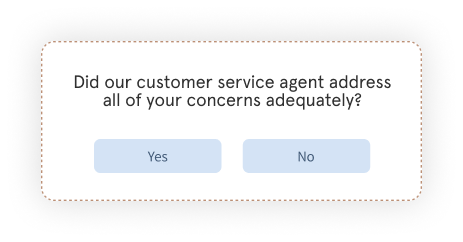
Send a single-question CSAT survey right after ticket close. Keep it to one rating plus one optional open-ended comment. Resist the urge to add four more questions. Response rates collapse past question two.
4. Automate Feedback Follow-ups When Ticket Status Changes
Manual feedback collection never scales. By the time a support manager remembers to send a CSAT email, the customer has moved on and the sentiment has faded.
The fix is trigger-based automation. When a ticket status changes to "Resolved" in Zendesk, Freshdesk, or Intercom, a survey fires automatically. When a ticket escalates to a manager, a different survey fires. When a customer replies "still broken," a workflow alerts the original agent. No human memory required.
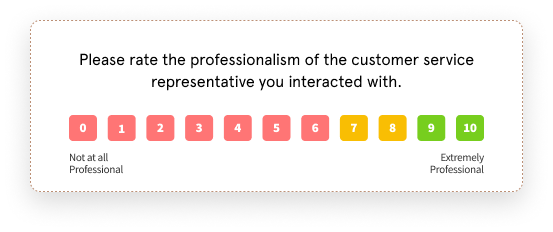
Tools like Zonka Feedback let you connect ticket-status triggers to CES and CSAT workflows, then route the responses back into your helpdesk as tags on the original ticket. The automation isn't fancy. It just has to be reliable.
5. Use CES to Measure Real Friction, Not Just Satisfaction
CSAT asks "were you happy." CES asks "how hard was this." For SaaS, the second question is more useful.
A high-effort interaction, even one that ended with the issue resolved, is a retention risk. The customer got what they needed, but they had to work for it. They remember the work. They factor it into the renewal decision.
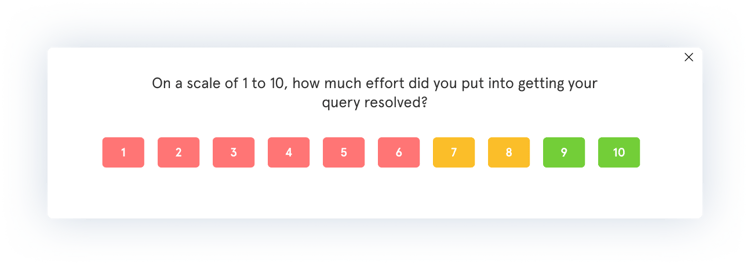
Send a CES survey after every resolved ticket, same as CSAT. Use a 1-7 scale. Track the median weekly. When it drops, the question isn't "are our agents worse." The question is "what workflow got harder." And that's a product question, not a support one.
6. Close the Loop With the Customer
When a customer takes the time to submit feedback, positive or negative, tell them what happened next.
Not "thanks for your feedback" autoresponders. Actual follow-ups. If they flagged a bug, email them when it's fixed. If they requested a feature, email them when it ships. If they complained about a workflow, email them when it's redesigned.
Linear does this well. Every product release note tags the customer requests it closed. Customers see their name next to a shipped feature, and they stay. That's the cheapest retention move in SaaS.
7. Instrument Onboarding With CES, Not Just NPS
Onboarding is where SaaS churn begins. Users who hit friction in the first two weeks rarely recover.
Don't wait for NPS at day 90. By then, they've already decided. Instead, run a CES survey after every major onboarding step: first login, first action, first invite, first integration. Three questions max. One rating, one open-ended, one skip button.
The signal to watch: which step has the lowest CES median. That's where your product team goes next. A ready-made SaaS onboarding survey template covers the standard trigger points.
8. Close the Loop Between Support and Product Teams
This is the practice that separates mature SaaS support from everyone else.
Most companies treat support and product as separate systems. Support answers tickets. Product ships features. The two only meet at quarterly planning, and by then the signal is three months stale.
The mature version looks different. Every ticket gets tagged by theme: "billing confusion," "export slowness," "permissions bug." Themes aggregate weekly. The top three themes by volume show up in the product team's Monday standup. Engineers see real quotes, not summary stats. The team ships a fix. Support tells the customers it's fixed. The cycle closes.
When done right, this isn't an extra process. It's the operating system of the company. Zonka Feedback's close the support feedback loop workflow handles the ticket-to-theme-to-product routing without manual tagging.
Simpl built this playbook into their support stack. The Indian fintech SaaS is a buy-now-pay-later platform serving millions of users across 26,000+ merchants. They integrated Zonka Feedback with Zendesk to fire SMS surveys automatically the moment a support ticket closed. Every response landed tied to the ticket it came from. Support and product saw the same signal from the same interaction, not two separate reports of it. The team used that loop to spot friction early and adjust services before small issues compounded (see the Simpl case study for the full setup). That's what the loop looks like when it's wired into how support operates, not bolted on after the fact."
9. Deflect First, Build Self-Service Before You Scale Headcount
The fastest resolution is the one the customer never had to ask for.
Every ticket that could've been a help-doc article is a ticket tax on your margins. The cheapest CSAT lever you have is the one that keeps the customer from opening the ticket in the first place. That means a searchable knowledge base. Contextual in-app help. AI-powered help widgets that surface the right article based on which page the user is on.
Per Zendesk's CX Trends data, mature SaaS teams deflect 40%+ of tickets through self-service. The ones that don't end up hiring their way out of a problem that content could've solved.
Build the help center before you hire the fifth support agent. You'll save both.
10. Pick Tools That Close the Loop, Not Tools That Just Collect
Every SaaS team ends up with some combination of ticketing, in-app messaging, knowledge base, and feedback tooling. The mistake is picking each one independently, then stitching them together with Zapier six months later.
Pick tools that talk to each other natively. Your ticketing system should talk to your feedback tool. Your feedback tool should talk to your product analytics. Your knowledge base should talk to your in-app help. If the stack can't close the loop, your team will spend more time exporting CSVs than talking to customers.
For a full comparison of what to look for, see our guide to SaaS customer feedback tools.
8 SaaS Companies with Great Customer Support
Eight companies that set the bar in 2026. For each one, the specific thing they do well, not generic praise.
1. Zendesk
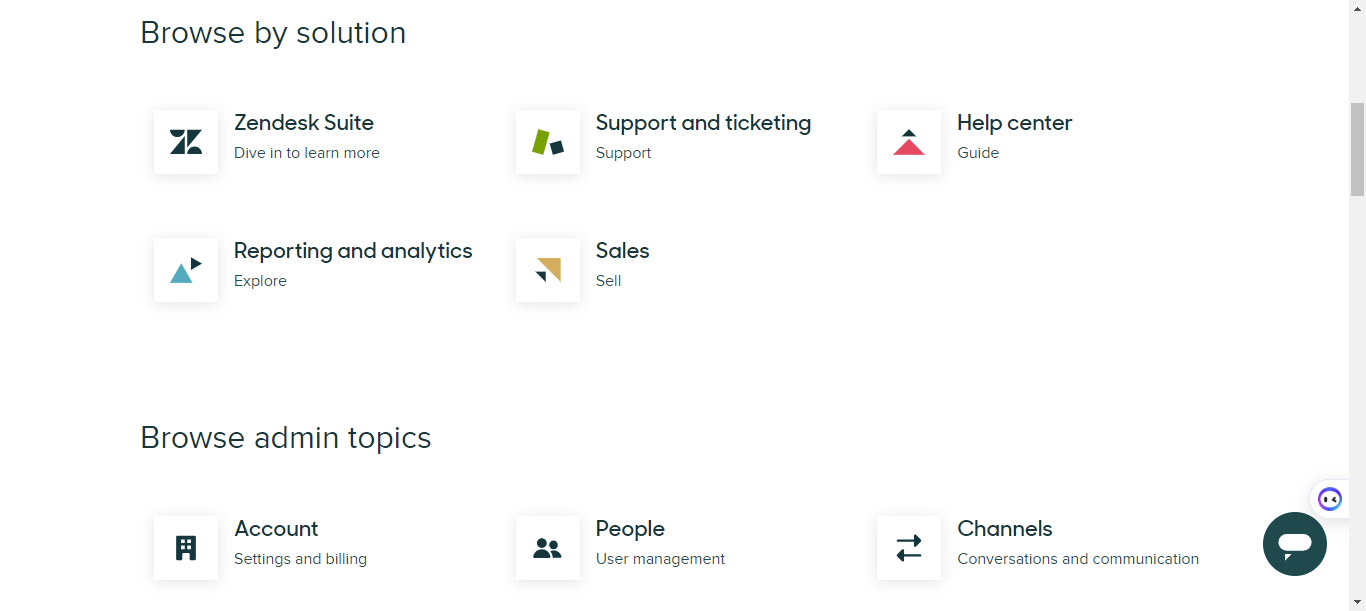
Runs its own product internally and publishes its CX Trends Report based on aggregate customer data. The in-product Get Help chatbot handles Tier-1 queries before they reach an agent. Public CSAT scores across its customer base average 87%.
2. HubSpot Service Hub
Free tier includes live chat, email ticketing, and a knowledge base. That's a rarity in SaaS support. The unified inbox stitches every channel into one view, which means customers don't repeat themselves across conversations.
3. Slack
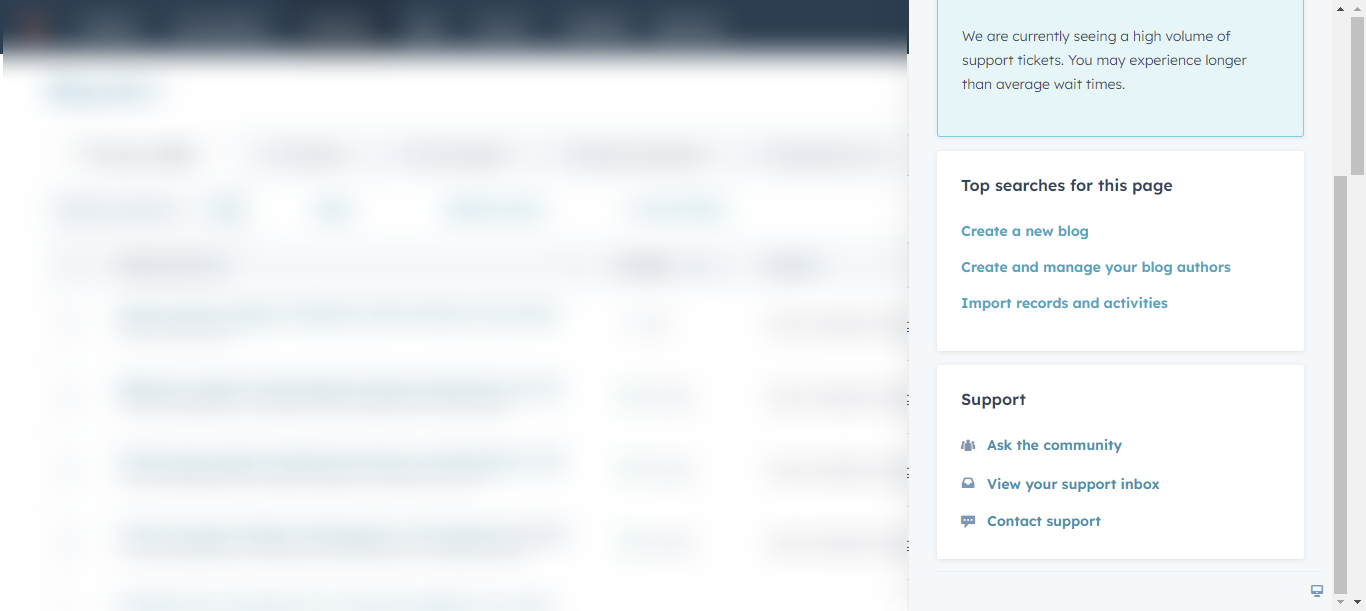
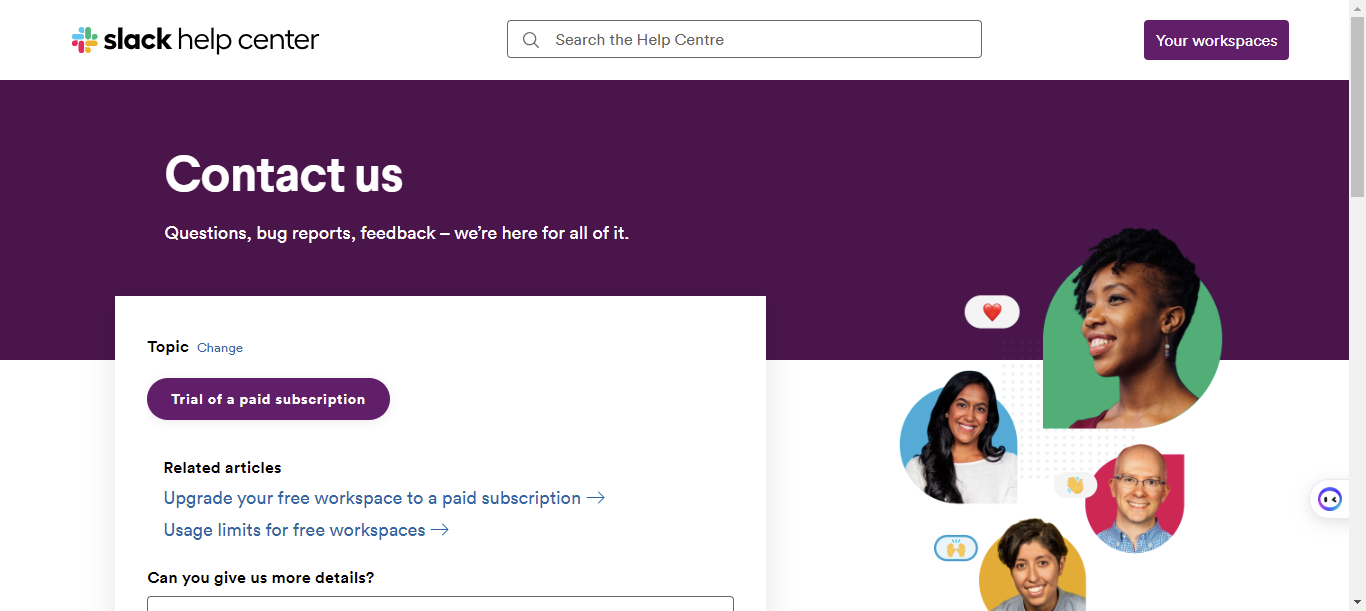
Sub-2-hour median response time across email and chat. Runs a public status page with real-time incident updates. When something breaks, you see it before you have to ask about it. That transparency is the actual product.
4. Shopify
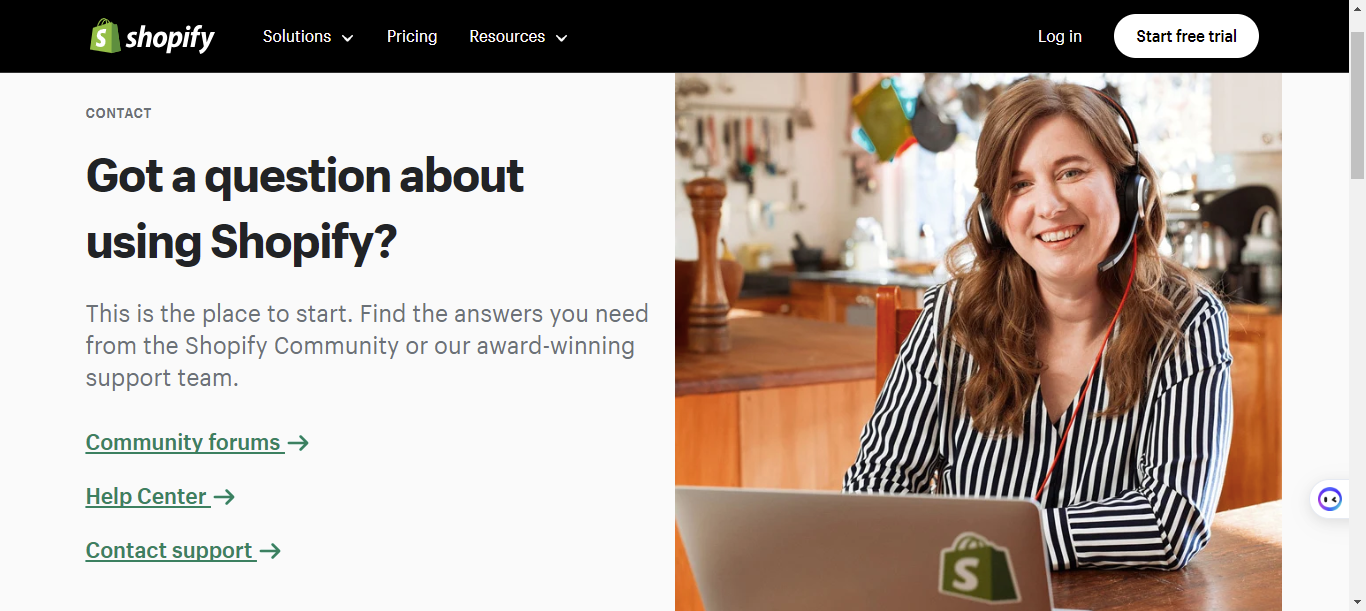
24/7 support across chat, email, and phone in multiple languages. Serves 5M+ merchants without letting response times collapse. The Shopify community forum handles another layer entirely. Merchants answer each other faster than staff can.
5. Atlassian
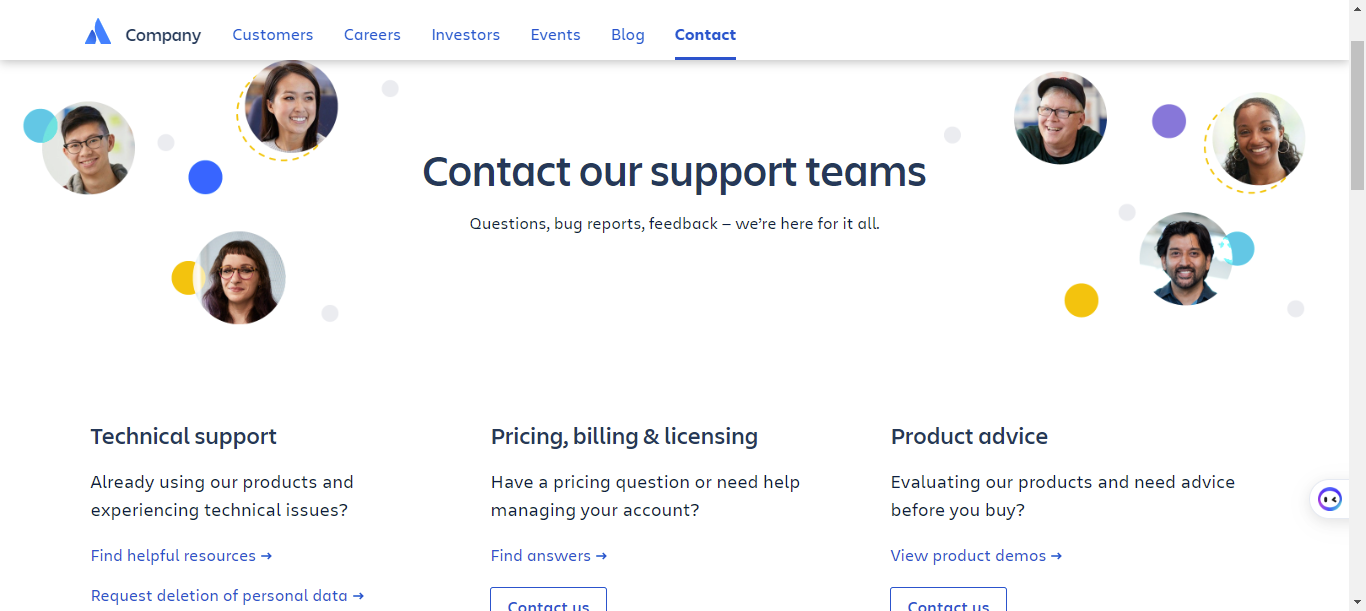
Runs a community-driven support model at massive scale. 6M+ community members answer each other's questions. The named ACE (Atlassian Community Experts) program gives power users recognition, which keeps them contributing. Support headcount doesn't scale linearly with customer count.
6. Intercom
Pioneered the in-app messenger model of support. Their own help center is built on the same product they sell, which means every UX improvement is dogfooded first. The team writes publicly about what works and what doesn't.
7. Basecamp
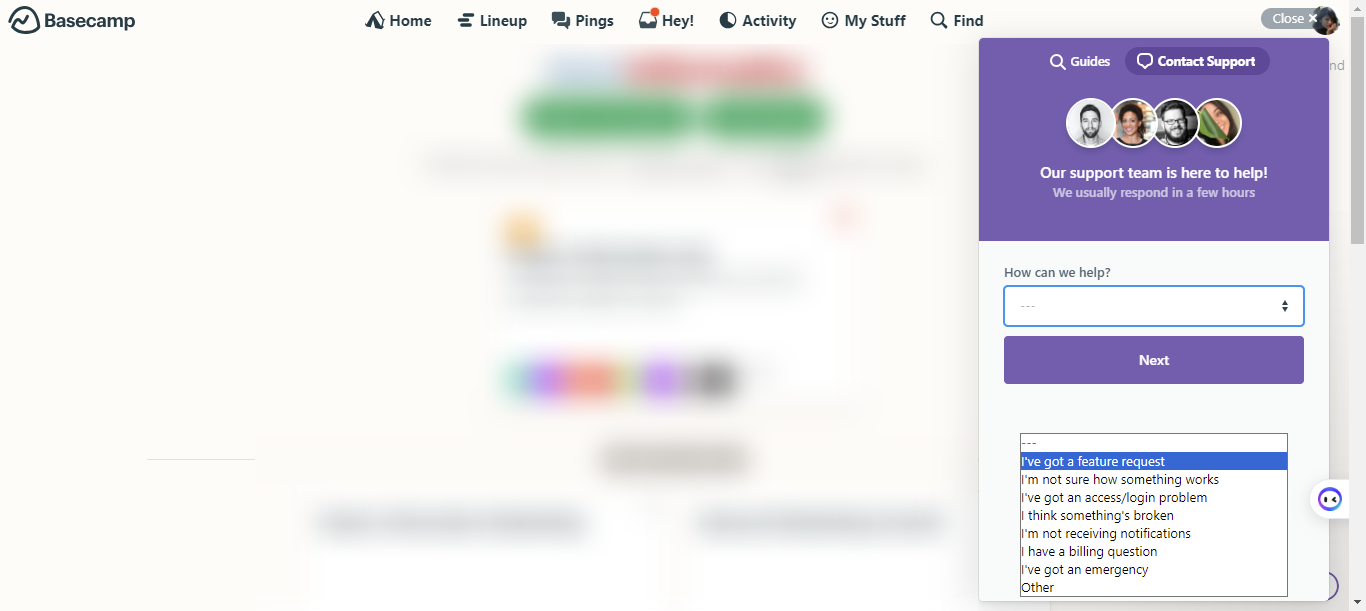
Small team. Personal responses. Publishes a response-time commitment on their website ("we'll reply within one business hour"). That public commitment holds the team accountable, and it signals to customers that support isn't an afterthought.
8. Salesforce
The Trailblazer Community is the blueprint for SaaS peer-to-peer support. Success Plans give enterprise customers dedicated resources with published SLAs. Documentation is dense but searchable, and the in-product help is increasingly AI-driven.
What these eight have in common: they all treat support as a product, not a department.
Tools Your SaaS Support Team Needs
Most SaaS teams build the stack backwards. They buy ticketing on day one, community in month six, and only realize by year two that feedback should've come second.
Build in this order: ticketing first (Zendesk, Freshdesk, or Intercom). Feedback layer second (Zonka Feedback is ours; Survicate and Refiner are alternatives worth looking at). In-app messaging (Intercom, Drift) comes third, once you know where users get stuck. Knowledge base (Notion, HelpScout Docs, Document360) rounds out the base. Community and tiered support come later, when the foundation is stable.
The question isn't which brand. It's which brand talks to which. A ticketing system that can't forward tagged themes to product analytics creates work for humans. A feedback tool that can't trigger on ticket status changes collects signals nobody sees. Stacks compound when integrations are native and break down when they're bolted on. Get this right and you get something most SaaS teams never build: one view of which customers churned, why, and what product change would've kept them.
That's the difference between growing NRR and losing it. For teams also building top-of-funnel, partnering with the best saas seo agencies ensures you're not just retaining users, but consistently acquiring the right ones.
Conclusion
SaaS customer support isn't about resolving tickets. It's about keeping every paying user productive enough to renew — and turning every ticket into a signal that makes the product better.
Get the metrics right. Close the loop with product. Treat support as a growth function, not a cost center. The companies that do will own the next decade of SaaS retention. Start with one practice from this guide, implement it this week, and measure the shift over the next month.