What is Net Promoter Score?
NPS isn’t just another feedback metric—it’s a predictor of business momentum. It tells you whether your customers are merely content or if they’re engaged enough to fuel your growth through referrals, repeat business, and brand advocacy.
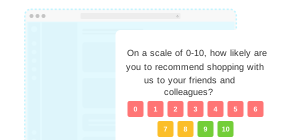
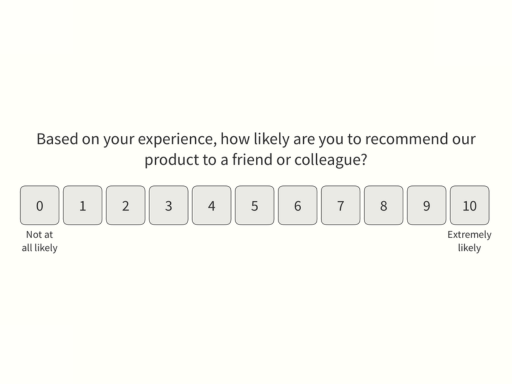
At its core, NPS is built around one deceptively simple question:
“How likely are you to recommend us to yourfriends or colleagues?”
This single question does what long-winded surveys fail to do—it captures the emotional connection between a brand and its customers, their likelihood to stay, and their potential to influence others. It quantifies who will drive your business forward and who might hold it back.
The Origin of NPS: A Metric that Changed the Game
In 2003, Fred Reichheld of Bain & Company introduced NPS in his book, The Ultimate Question: Driving Good Profits and True Growth. His research revealed that customer loyalty was the single most accurate predictor of long-term business success.
His premise was simple yet revolutionary: companies that create loyal customers grow faster than those that don’t. And the easiest way to gauge loyalty? By understanding if customers are willing to recommend you.
This insight changed the way businesses measured success. No longer was customer satisfaction enough—the real goal became turning customers into advocates.
Since then, over two-thirds of Fortune 1000 companies have adopted NPS, embedding it into their growth strategies. Companies like Apple, Amazon, Tesla, and American Express use NPS not just as a feedback tool, but as a strategic growth driver—aligning products, customer experience, and marketing around loyalty-driven growth.
For example, a company analyzing customer reviews finds the following recurring complaints:
- “I waited 30 minutes to speak to someone.”
- “My issue wasn’t resolved after multiple calls.”
- “The agent gave a generic response.”
- “I was billed twice for the same subscription.”
- “Still no refund and the invoice total doesn’t match my purchase.”
These reviews could be categorized under broad themes like:
- Customer Support Issues
- Billing Complaints
Why Thematic Analysis Matters?
Numbers alone cannot explain the reason behind customer sentiment. A drop in NPS or CSAT scores tells a company that satisfaction is declining, but it does not reveal why. Thematic analysis fills this gap by:
- Identifying Core Issues and Emerging Needs: AI customer feedback analysis pinpoints persistent complaints, commonly praised features, and new requests, enabling businesses to enhance products and services effectively.
- Adding Depth to Performance Metrics: Scores indicate trends, but thematic analysis uncovers the real drivers behind customer sentiment, whether frustration with response times, appreciation for usability, or expectations for future improvements.
- Anticipating and Preventing Setbacks: Instead of reacting to problems, businesses detect early warning signs, refine operations, and elevate experiences before issues impact retention.
Businesses that implement AI-powered thematic analysis don’t just gain better insights—they gain a competitive and financial edge. According to KPMG's Global Customer Experience Excellence Report, for every $1 invested in AI, businesses see an average return of $3.5, with 5% of companies reporting a return of $8, proving that leveraging AI-driven insights leads to smarter, more profitable decision-making.


.svg)
 Healthcare
 Finance
 Retail
 SaaS & Digital
 eCommerce
 Education
 Salesforce
  HubSpot
 Pipedrive
 Mailchimp
 Klaviyo
 Zendesk
  Intercom
 Freshdesk
 HelpScout
  Front
Front Jira
Jira Slack
Slack  MS Teams
 Zoom
Zoom Google Sheets
  Zapier
  Integrately
 Make
Make  Webhooks



 Sign In
 MS Teams