

.svg)
 Healthcare
 Finance
 Retail
 SaaS & Digital
 eCommerce
 Education
 Salesforce
  HubSpot
 Pipedrive
 Mailchimp
 Klaviyo
 Zendesk
  Intercom
 Freshdesk
 HelpScout
  Front
Front Jira
Jira Slack
Slack  MS Teams
 Zoom
Zoom Google Sheets
  Zapier
  Integrately
 Make
Make  Webhooks




 MS Teams


Canny is a popular choice for SaaS companies that want a simple way to collect user feedback, manage feature requests, and run public feedback voting boards. For early-stage product teams, its straightforward feedback portal and idea boards make it easy to track feature requests and keep customers informed about new features and roadmap updates.
However, as product organizations scale, a consistent gap starts to appear. Canny is primarily built around feedback boards and voting, with limited capabilities for managing customer feedback across multiple touchpoints. Product managers looking to gather customer feedback from in-app widgets, feedback forms, support tools, or multiple boards often find it difficult to analyze feedback, prioritize features strategically, or close the feedback loop at scale. There’s also minimal support for advanced feedback management, user insights, or connecting feedback to broader product management and customer satisfaction goals.
That’s why many SaaS companies, product teams, and enterprise organizations actively search for Canny alternatives and competitors that offer a fully integrated feedback management system. In this blog, we compare the best Canny alternatives based on real-world product feedback workflows—covering feedback collection, feature request tracking, prioritization, integrations, pricing, and advanced capabilities that modern teams need to manage feedback effectively.
TL:DR
- Teams look for Canny alternatives when feedback moves beyond simple voting boards and requires multi-channel feedback collection, deeper analysis, and better feature prioritization. Canny works for basic feature requests, but it can be limiting for managing customer feedback at scale and closing the feedback loop effectively.
- In 2026, the best Canny competitors include tools that support centralized feedback management, feature request tracking, prioritization beyond upvotes, public roadmaps, and—in some cases—AI-powered feedback intelligence to analyze user feedback and surface insights.
- We evaluated the best Canny alternatives across key categories: AI-driven feedback management systems, structured product feedback platforms, enterprise idea management tools, Jira-native discovery tools, GTM-led feedback solutions, and lightweight feedback board software—based on feedback collection capabilities, prioritization depth, AI features, scalability, pricing, and G2 ratings.
- Top options include Zonka Feedback, UserVoice, Productboard, Aha! Ideas, Jira Product Discovery, Savio, Featurebase, Upvoty, Nolt, and Rapidr, each suited to different product team needs.
- Looking for the best AI-powered alternative to Canny? Zonka Feedback stands out for teams that want to collect feedback across channels, analyze feedback with AI, prioritize feature requests intelligently, and move beyond voting boards. Schedule a demo to see how it works in practice.
Measure Customer Feedback & User Insights
Try the best Canny alternative & competitor to understand what users need and learn ways to delight your customers.

Why Look for Canny Alternatives?
From hands-on evaluations and conversations with product managers, one thing is consistent: most teams don’t outgrow Canny because it’s a bad tool—they outgrow it because their feedback workflow becomes more complex.
Canny works well as a basic feature request tracking system. But as SaaS companies scale, customer feedback starts flowing in from far more places than a single feedback portal. Teams need to collect feedback, manage feedback, and analyze feedback across the entire customer journey—not just on feedback voting boards.
Common reasons teams look for alternatives to Canny include:
- Feedback scattered across tools, making it hard to organize feature requests
- Limited ability to categorize feedback and surface user insights
- Difficulty prioritizing feature requests beyond upvotes
- No clear way to close the feedback loop and keep customers up to date
- Basic reporting that doesn’t support advanced product or customer satisfaction goals
As feedback volume grows, product teams need a customer feedback management system that supports unlimited feedback, multiple boards, feedback widgets, and deeper analysis. This is where more advanced Canny competitors stand out, offering fully integrated feedback solutions designed to help teams prioritize feedback, track user requests, and turn customer needs into informed product decisions.
What to Look for in a Canny Alternative?
Not all Canny alternatives are built to support modern product feedback workflows. While many tools offer similar feedback boards or voting boards, the real difference lies in how effectively a platform helps teams collect customer feedback, manage feedback, and turn user requests into prioritized product decisions.
When evaluating alternatives to Canny, you should look beyond basic features and focus on a feedback management system that supports scale, complexity, and long-term product growth.
Key capabilities to prioritize include:
- Comprehensive feedback collection: The ability to gather customer feedback through feedback forms, in-app widgets, feedback widgets, and feedback portals—so feedback isn’t limited to a single board.
- Centralized feedback management: A customer feedback management tool that consolidates product feedback from multiple sources, supports unlimited feedback and unlimited users, and makes managing customer feedback easier as volume grows.
- Feature request tracking and prioritization: Tools that go beyond voting boards to help teams prioritize feature requests, track existing feature requests, and organize feature requests based on customer needs, impact, and business goals.
- Advanced analysis and user insights: Look for advanced features that help analyze feedback, categorize feedback, and surface meaningful user insights—especially for SaaS companies managing large-scale product feedback.
- Feedback loop and customer communication: Support for public roadmaps, multiple roadmaps, and automated updates to keep customers informed and close the feedback loop effectively.
It’s also important to note that not all Canny.io alternatives are designed the same way. Some tools are primarily feedback boards, best suited for voting, public roadmaps, and keeping customers informed. Others are full customer feedback management systems, built to collect feedback across channels, analyze feedback at scale, and support more advanced product and customer satisfaction workflows.
Ultimately, the best Canny alternative is not the one with the same features but the one that enables product teams to manage feedback, prioritize features, and ship new features with confidence
Best Canny Alternatives & Competitors Compared
| Canny Alternative | Best for | AI Features | Core Strength (vs. Canny) | G2 Rating |
| Zonka Feedback | AI feedback intelligence + insights | Auto-categorization, sentiment and thematic analysis, role-based dashboard | Multi-channel feedback collection + prioritization beyond upvotes | 4.6 |
| UserVoice | Structured product feedback management | Thematic analysis, sentiment analysis (feature set) | Strong feedback portal + prioritization workflows | 4.5 |
| Productboard | Roadmapping + customer-driven prioritization | Productboard AI for analyzing imported feedback | Connect feedback → insights → roadmap | 4.3 |
| Aha! (Ideas) | Enterprise idea governance | No AI-first positioning | Heavy-duty workflows + scoring to prioritize features | 4.4 |
| Jira Product Discovery | Jira-native discovery + delivery linkage | Atlassian Intelligence (assistive AI) | Best for Jira + project management alignment | 4.6 |
| Savio | Feature requests from support & sales tools | No AI-first positioning | Pulls feedback from GTM tools, great for tracking demand | 4.8 |
| Featurebase | Modern feedback boards + updates | AI-powered support layer (not feedback insights-first) | Polished portal + roadmap + changelog bundle | 4.7 |
| Upvoty | Feedback boards + widget + roadmap | No notable AI | Canny-style boards + roadmap + changelog | 3.1 |
| Nolt | Simple voting boards + fast setup | No | Lightweight feedback portal + roadmap updates | 4.9 |
| Rapidr | Lightweight boards + request tracking | No | Simple feature request tracking + voting | 4.8 |
What are the Best Canny Alternatives in 2026?
The best Canny alternatives in 2026 are tools that go beyond basic feedback boards to help teams collect customer feedback across channels, analyze user feedback, and prioritize feature requests effectively. Top options include Zonka Feedback for AI-powered feedback intelligence, UserVoice and Productboard for structured product feedback and prioritization, Aha! Ideas and Jira Product Discovery for enterprise and project management workflows, and lightweight feedback tools like Featurebase, Upvoty, and Nolt for public feedback voting boards and roadmaps.
The right choice depends on how advanced your feedback management needs are. Let us look at each of these Canny alternatives in detail.
1. Zonka Feedback: Best for AI Feedback Intelligence & Actionable Insights
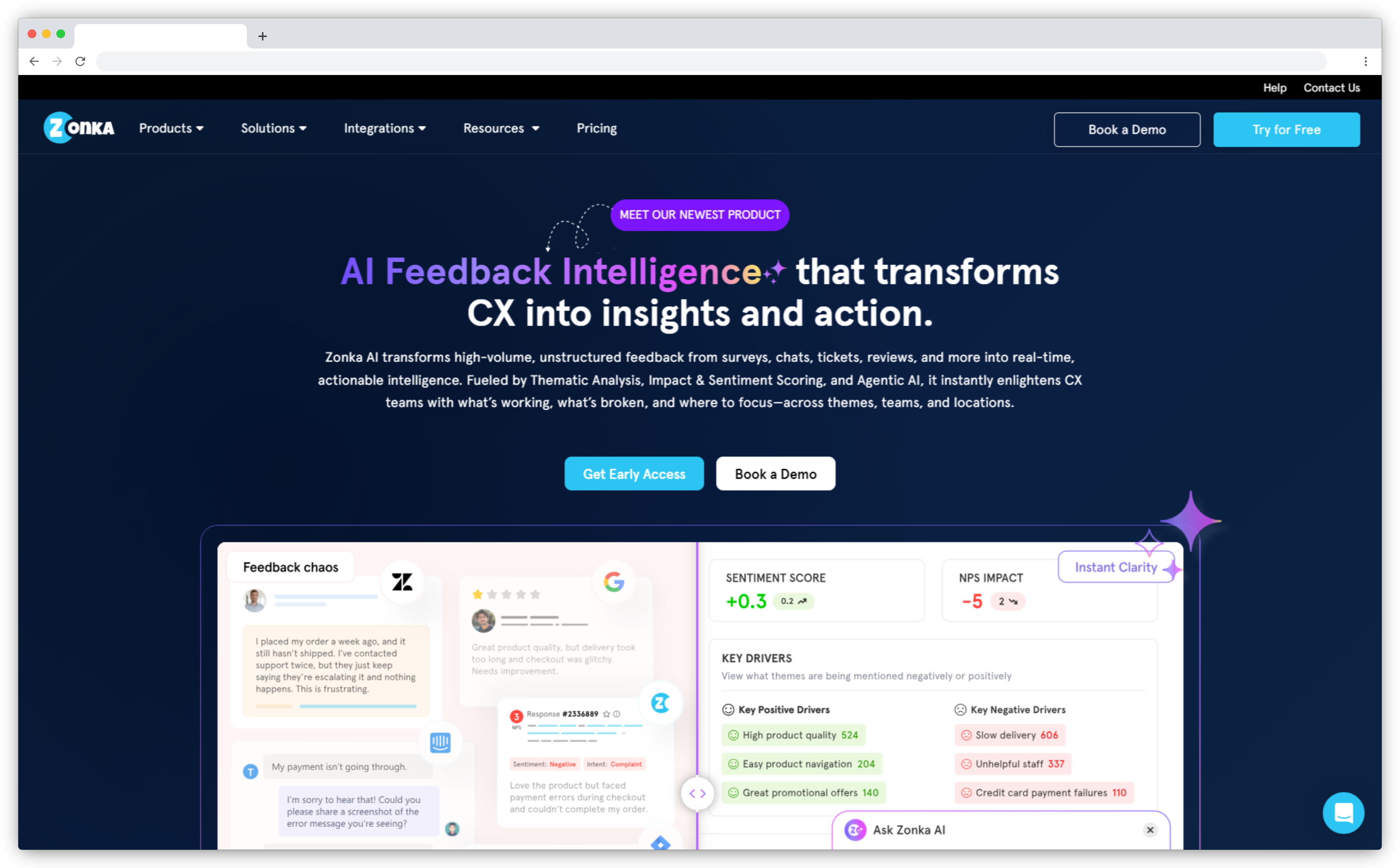
Zonka Feedback is the strongest Canny alternative for teams that want to move beyond basic feedback boards and feature request voting. Unlike survey tools focused primarily on feedback idea boards, Zonka Feedback is a fully integrated feedback management system that helps product teams collect customer feedback across channels, analyze user feedback at scale, and prioritize feature requests using AI-driven insights.
- Best for: SaaS companies, product managers, CX and product teams, mid-market and enterprise companies, teams looking to replace or complement feedback boards with advanced feedback management
- Use Case: Collecting user feedback via in-app widgets and feedback forms, managing customer feedback from multiple sources, organizing and categorizing feature requests, prioritizing feedback using AI insights, closing the feedback loop, and connecting feedback to product decisions
- G2 Rating: 4.6/5
What Makes Zonka Feedback the Best Canny Alternative in 2026?
Zonka Feedback is designed for teams that treat product feedback as an ongoing system, not a static list of feature requests. While many Canny competitors focus on replicating similar voting boards, Zonka Feedback addresses the bigger challenge: helping teams analyze feedback, understand patterns across user requests, and prioritize features based on real customer impact.
The tool supports comprehensive feedback collection through feedback widgets, in-app widgets, surveys, and feedback forms, allowing teams to gather customer feedback wherever users interact with the product. All feedback is centralized into a single customer feedback management tool, making it easier to manage feedback, track existing feature requests, and avoid duplication across multiple boards.
What truly differentiates Zonka Feedback is its AI Feedback Intelligence suite. Instead of relying only on upvotes, the platform automatically categorizes feedback, identifies recurring themes, analyzes sentiment, and surfaces actionable user insights. This allows your product teams to prioritize feature requests based on customer needs, frequency, and qualitative context, not just popularity.
Zonka Feedback also helps teams close the feedback loop by routing insights to the right teams, enabling follow-ups, and supporting workflows that keep customers up to date as new features are planned and shipped.
What are the Key Features of Zonka Feedback?
- AI-powered feedback analysis: Automatically analyze feedback, categorize feedback, detect sentiment, and surface recurring themes without manual tagging
- Multi-channel feedback collection: Collect customer feedback via in-app widget, feedback widget, surveys, and feedback forms
- Centralized feedback management: Manage unlimited feedback and user requests across multiple sources in one system
- Feature request tracking and prioritization: Organize feature requests, track existing feature requests, and prioritize features using qualitative and quantitative insights
- Feedback loop workflows: Route feedback to teams, trigger alerts, and support customer communication to close the feedback loop
- Scalable for growth: Designed for SaaS companies and enterprise companies managing large-scale product feedback
Zonka Feedback Pros
- Goes beyond feedback boards with advanced AI-driven insights
- Strong feedback collection and management across multiple touchpoints
- Helps prioritize features based on real customer needs
- Scales well from growing SaaS teams to enterprise environments
- Supports closing the feedback loop, not just collecting feedback
Zonka Feedback Cons
-
Advanced AI insights are most valuable when feedback volume reaches scale
- Not a lightweight, voting-board–only tool for teams that want a simple public idea board
Zonka Feedback Pricing
- Custom pricing based on business requirements
- Free trial for paid features available upon request
2. UserVoice: Best for Product Feedback Management & Feature Request Prioritization
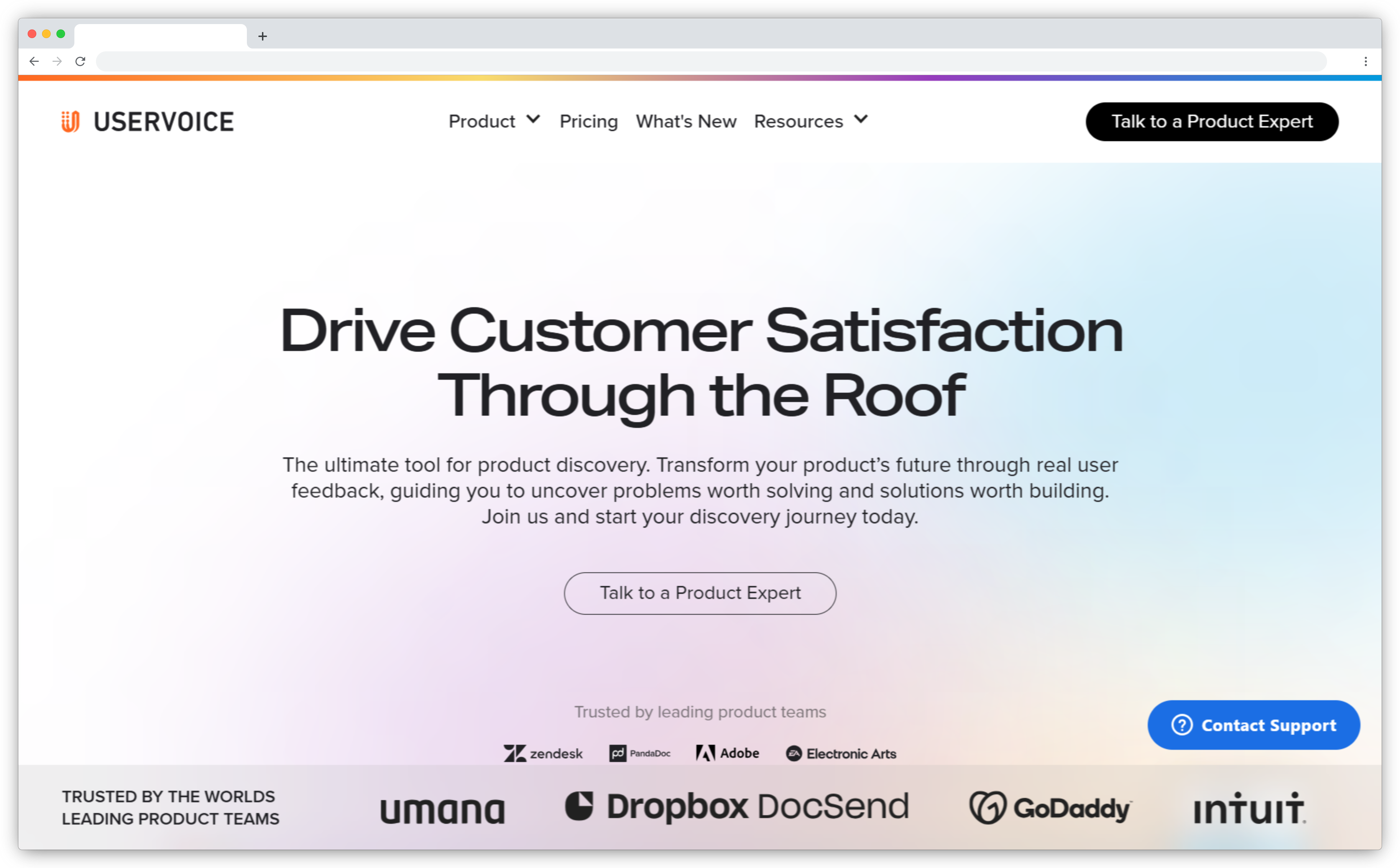
UserVoice is one of the most established Canny alternatives for product teams that want a structured way to collect user feedback, manage feature requests, and prioritize what to build next using account context, not just votes. It works especially well when feedback is coming from both customers and customer-facing teams, and you need a central feedback management system to track, sort, and act on existing feature requests over time.
- Best for: Product managers and product teams, SaaS companies scaling feedback operations, mid-market and enterprise companies, teams that need structured customer feedback management beyond basic feedback boards
- Use Case: Feature request tracking and prioritization, feedback portal for gathering customer feedback, managing customer feedback from support and sales inputs, organizing feature requests by segments and accounts, tracking feature demand over time
- G2 Rating: 4.5/5
What Makes UserVoice a Strong Canny Alternative in 2026?
UserVoice is built for teams that want a repeatable feedback loop—collect feedback, consolidate it, and turn it into clear priorities with stakeholder-ready reporting. Instead of treating requests as a simple voting board, UserVoice positions itself as a product feedback management system that captures ideas from users and internal teams, keeps everything in one place, and improves visibility into what matters most.
A major advantage vs board-first tools is prioritization depth. UserVoice supports workflows like curated idea lists and impact-style reporting so teams can evaluate feature requests using more than popularity, helping product managers weigh customer needs, account value, and urgency when they prioritize features.
What are the Key Features of UserVoice?
- Feedback portal + feedback boards: Central place to collect customer feedback, capture feature requests, enable voting and comments
- Centralized feedback management: Store and manage user feedback from customers and customer-facing teams in one system
- Prioritization workflows: Idea lists, impact-style reporting, segmentation and custom fields to prioritize feature requests
- Tracking feature requests: Reduce duplicates, organize feature requests, and track existing feature requests over time
- Integrations: Designed to fit into product workflows (commonly paired with tools like Jira/GitHub in product stacks)
UserVoice Pros
- More structured feature request tracking than simple feedback boards
- Strong for prioritizing feature requests with account and revenue context
- Easy-to-use and intuitive feedback management
- Solid ecosystem with BI tools like Jira, Slack, Salesforce, Zendesk integrations
- Works well for ongoing feedback loops and internal alignment
UserVoice Cons
- Limited advanced analytics and qualitative data analysis
- Customization and reporting can feel rigid for complex workflows
- Less flexible for multi-channel feedback collection beyond the portal
- Can feel heavier than lightweight voting-board tools for small teams
UserVoice Pricing
- Starts at $19/month
- Free version available
3. Productboard: Best Canny Alternative for Product Roadmapping & Prioritized Customer Feedback
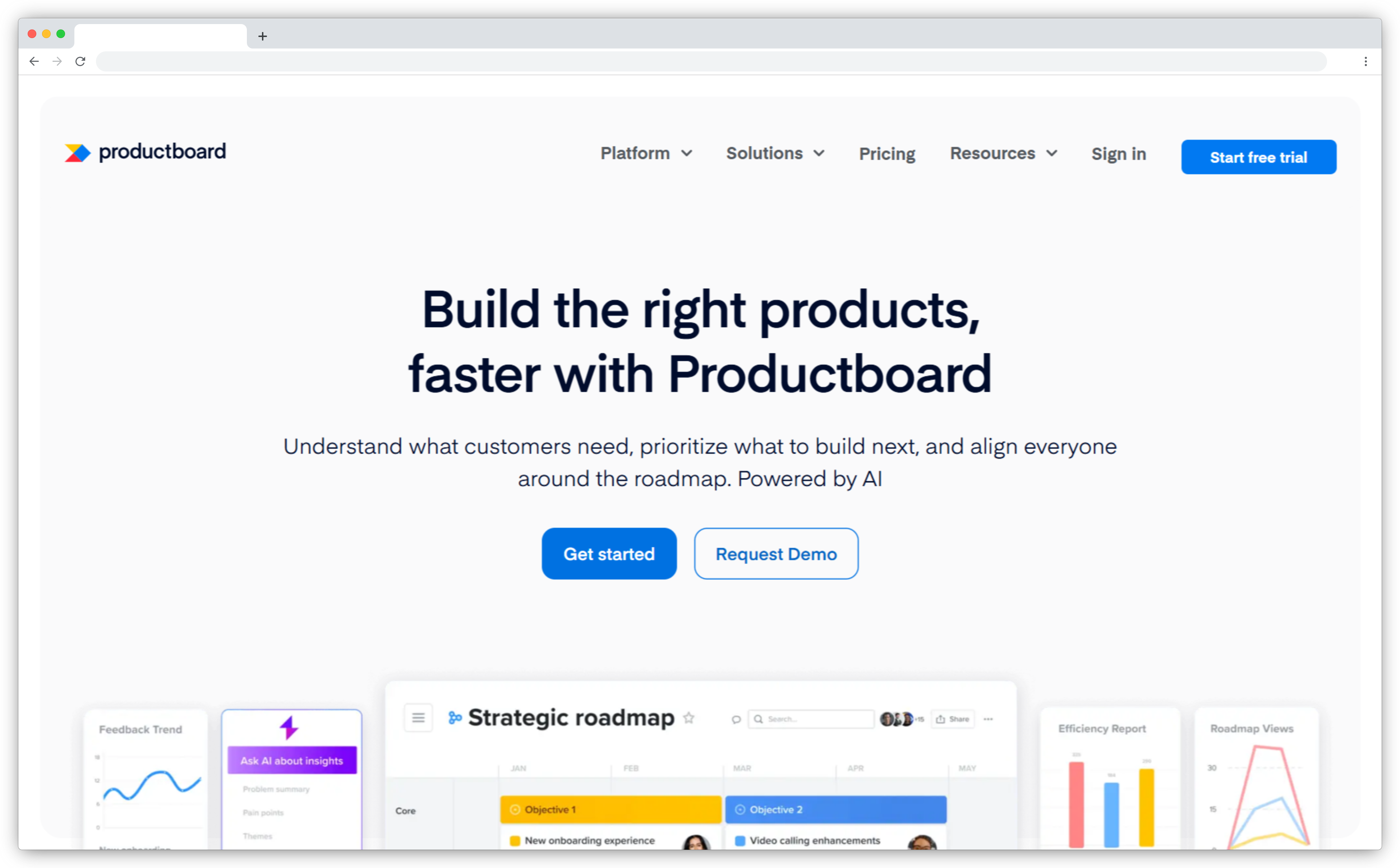
Productboard is a well-known Canny alternative for product teams that want to connect customer feedback directly to product strategy and roadmaps. Rather than operating primarily as feedback boards or voting boards, Productboard positions itself as a product feedback tool that helps teams gather customer feedback, prioritize features, and align product decisions with customer needs and business goals.
- Best for: Product managers, product-led SaaS companies, mid-market and enterprise teams, organizations focused on structured product discovery and roadmapping
- Use Case: Gathering customer feedback from multiple sources, managing product feedback in a centralized system, organizing and tracking feature requests, prioritizing features using impact and customer insights, aligning feedback with product roadmaps, supporting cross-functional product planning
- G2 Rating: 4.3/5
What Makes Productboard a Strong Canny Alternative in 2026?
Productboard is built for teams that see managing customer feedback as an input into long-term product strategy, not just a list of user requests. While Canny focuses on feedback portals and voting, Productboard emphasizes prioritization frameworks, product insights, and roadmap alignment.
The platform allows teams to collect user feedback from multiple sources—including customer conversations, support tools, and internal notes—and centralize it into a single feedback management system. This makes it easier to track feedback trends, organize feature requests, and ensure customer needs are reflected in roadmap decisions.
Its strength lies in how it helps product teams prioritize features. Instead of relying solely on upvotes, teams can assess feature requests based on impact, customer segments, and strategic fit. This makes it a strong option for organizations that have outgrown basic feedback boards and need a more structured approach to product management.
What are the Key Features of Productboard?
- Centralized feedback collection: Gather and manage customer feedback from multiple sources in one system
- Feature request tracking: Track existing feature requests and link feedback to product initiatives
- Prioritization frameworks: Prioritize features based on impact, customer value, and business goals
- Product roadmaps: Create and manage public or internal roadmaps to keep stakeholders and customers informed
- Feedback organization: Categorize feedback and user requests to surface insights for product decisions
- Enterprise-ready workflows: Designed for product teams managing complex product portfolios
Productboard Pros
- Strong roadmap and planning workflows
- Great for feedback management and feature prioritization at scale
- Useful integrations with tools like Jira and Slack
- Helps teams prioritize features based on user needs, not just votes
Productboard Cons
- Noticeable learning curve during onboarding
- Search and findability can be frustrating for submitted requests
- Performance/UX friction can show up with large datasets
Productboard Pricing
- Starts at $19/month
- Free trial available
4. Aha! Ideas: Best Canny Alternative for Enterprise Idea Management & Structured Feedback Governance
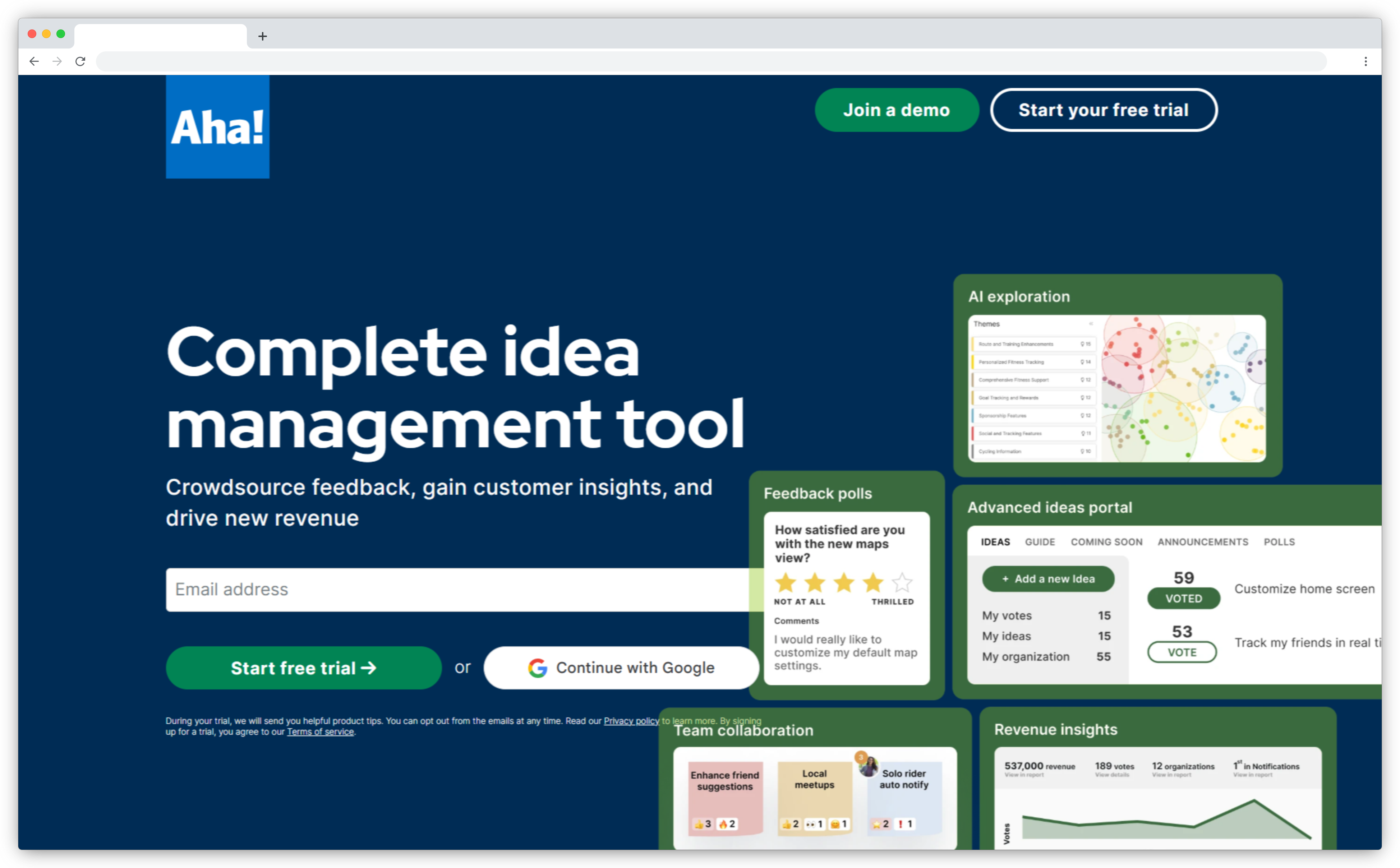
Aha! Ideas is a well-established Canny alternative for organizations that need a structured way to collect customer feedback, manage feature requests, and govern product ideas across large teams. It’s part of the broader Aha! product suite and is commonly used by enterprise companies that want formalized feedback management, clear ownership, and tight alignment between feedback, product planning, and roadmaps. Compared to lightweight feedback boards, Aha! Ideas is designed for scale, process consistency, and cross-functional visibility rather than fast, ad-hoc feedback collection.
- Best for: Enterprise companies, product managers leading multiple product lines, organizations with mature product operations, teams needing structured feedback governance
- Use Case: Collecting customer feedback through feedback portals, managing large volumes of feature requests, organizing and categorizing feedback across multiple products, prioritizing features using defined workflows, maintaining public or internal roadmaps
- G2 Rating: 4.3/5
What Makes Aha! Ideas a Strong Canny Alternative in 2026?
Aha! Ideas is built for teams that require more control than traditional feedback boards can offer. While Canny focuses on simplicity and voting boards, Aha! Ideas emphasizes process-driven feedback management, allowing organizations to standardize how feedback is collected, reviewed, prioritized, and promoted into product plans.
The platform provides a centralized feedback management system where teams can gather customer feedback, track existing feature requests, reduce duplicates, and manage user requests across multiple products or business units. This makes it particularly suitable for enterprise environments where feedback volume, stakeholders, and approval workflows are more complex.
Rather than prioritizing features based purely on votes, Aha! Ideas supports structured scoring, segmentation, and internal review, helping product managers prioritize features based on customer needs, strategic value, and business impact.
What are the Key Features of Aha! Ideas?
- Feedback portals: Collect customer feedback and feature requests through branded idea portals
- Centralized feedback management: Organize, categorize, and manage feedback across multiple products
- Feature request tracking: Track existing feature requests and manage duplicates at scale
- Prioritization workflows: Score and prioritize features using defined criteria, not just voting
- Roadmaps and communication: Support public and internal roadmaps to keep customers informed
- Enterprise-ready controls: Permissions, workflows, and governance for large teams
Aha! Ideas Pros
- Strong governance for managing customer feedback at scale
- Unlimited portal users for crowdsourcing feature requests
- Powerful scoring to prioritize feature requests beyond votes
- Tight roadmap alignment when used with Aha! Roadmaps
- Powerful customer support
Aha! Ideas Cons
-
Steep learning curve, can feel overwhelming
-
Complex setup for teams wanting a simple feedback board
-
Dashboard/reporting UX could be a concern
Aha! Ideas Pricing
- Starts at $59/month
- Free trial available
5. Jira Product Discovery: Best Canny Alternative for Jira-Native Product Discovery & Prioritization
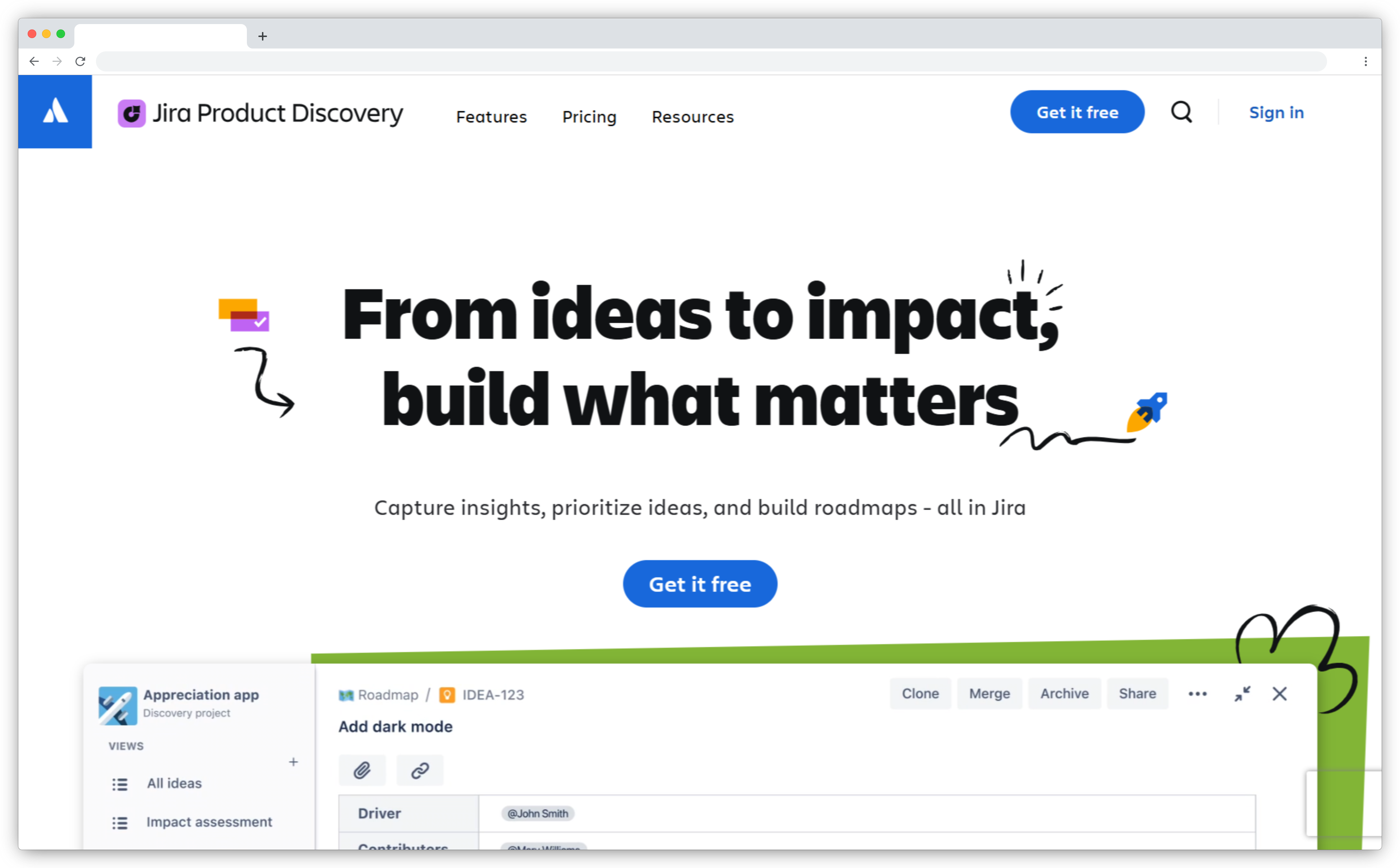
Jira Product Discovery is a strong Canny alternative for teams that already run project management and delivery in Jira and want a structured way to collect user feedback, manage feature requests, and prioritize what to build next inside the Atlassian ecosystem. Unlike feedback boards that focus on public voting boards, Jira Product Discovery is designed for internal product discovery workflows: capturing ideas, adding context, scoring/prioritizing, and linking everything to delivery work.
- Best for: Product managers and product teams using Jira, SaaS companies in the Atlassian stack, mid-market and enterprise companies needing structured prioritization and delivery linkage
- Use Case: Managing product feedback in Jira, tracking feature requests from internal teams, prioritizing feature requests with fields and views, linking ideas to Jira issues/epics, organizing existing feature requests, keeping stakeholders informed through structured roadmaps
- G2 Rating: 4.3/5
What Makes Jira a Strong Canny Alternative in 2026?
Jira Product Discovery works best when your feedback loop is closely tied to delivery. Product teams can capture and organize opportunities, user requests, and feature requests, then add structure using custom fields and views to prioritize feedback, without running a separate feedback management system outside Jira.
Its biggest advantage over feedback-board tools is traceability: ideas can be linked to Jira issues so product managers and engineering teams can track progress from discovery to delivery. For teams that already live in Jira and Confluence, that tight integration reduces context switching and keeps product decisions aligned with execution.
What are the Key Features of Jira?
- Ideas + custom fields: Capture ideas and structure them with fields that match your scoring and prioritization model
- Views for prioritization: Use different views to evaluate and prioritize features and feature requests
- Integrations for insights: Connect tools like Slack, Pendo, Salesforce (and more) to bring inputs into discovery
- Link to delivery in Jira: Create/link Jira issues and track delivery progress from idea to execution
- Built for product discovery: Designed to capture, prioritize, and align teams around product opportunities
Jira Pros
- Best fit if your team already uses Jira for project management
- Strong traceability from feature requests → delivery work
- Flexible prioritization using fields and views
- Good for internal alignment across product and engineering
Jira Cons
- Not a classic public feedback portal or feedback voting boards tool (external collection usually needs workarounds/integrations)
- Best experience assumes Atlassian ecosystem adoption
- Can feel complex vs a simple alternative to Canny for lightweight feedback boards
Jira Pricing
- Starts at $10/creator/month
- Free version available
6. Savio: Best Canny Competitor for Capturing Feature Requests from Support, Sales & GTM Tools
Savio is a strong Canny alternative for teams that don’t want feedback trapped in a single feedback portal or voting board. It’s built to collect customer feedback and track feature requests from where they actually show up—support tickets, sales conversations, Slack threads, CRMs—and turn that into a centralized feedback management system your product managers can use to prioritize features and plan new features..
- Best for: SaaS companies, product managers working closely with support and sales, B2B teams managing high volumes of feature requests, teams that need a GTM-led feedback loop
- Use Case: Tracking feature requests from Slack/Intercom/Zendesk/HubSpot/Salesforce, managing customer feedback in one tool, organizing existing feature requests, prioritizing feature requests by segment/account context, closing the feedback loop with customers and internal teams
- G2 Rating: 4.8/5 (5 reviews)
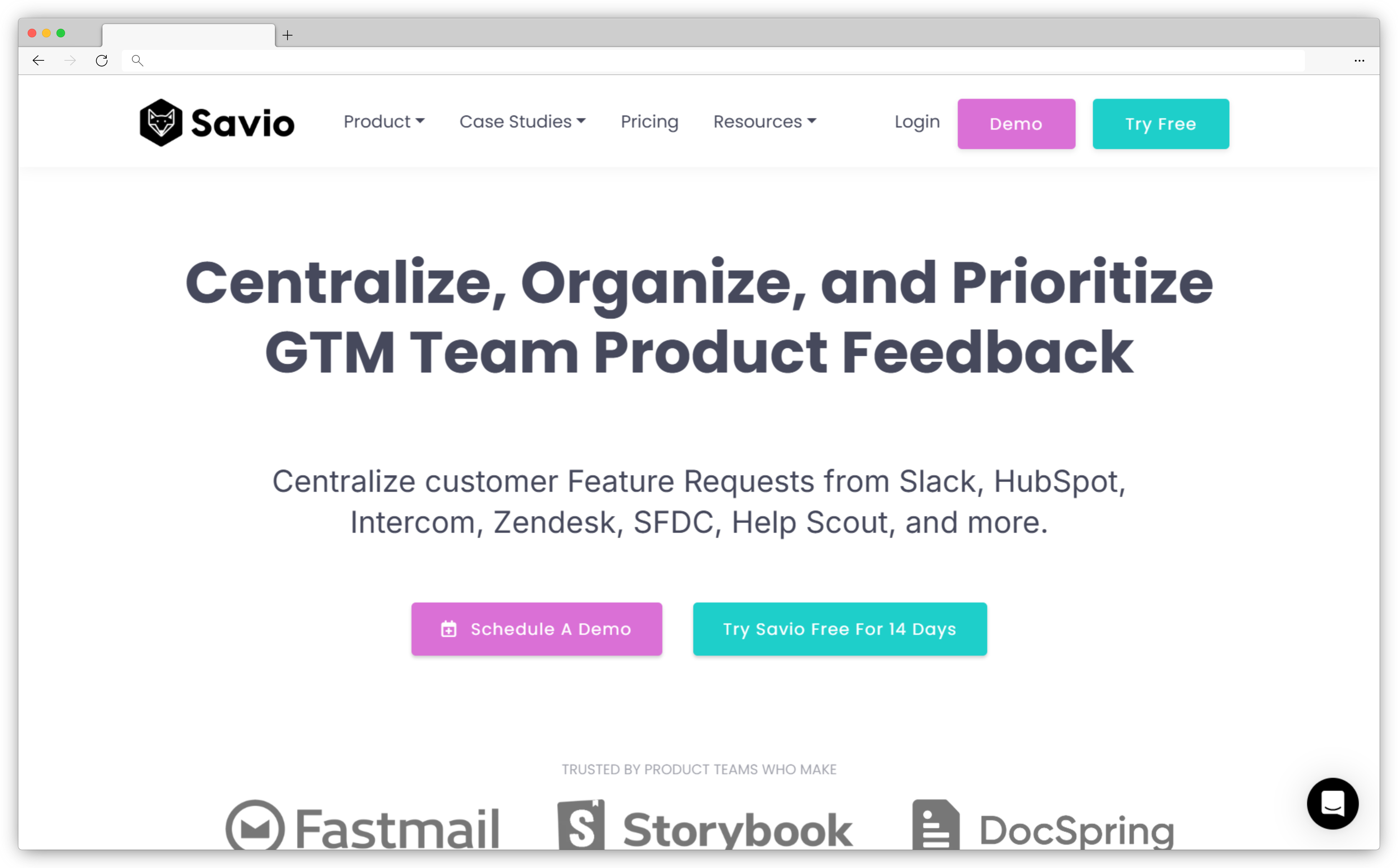
What Makes Savio a Strong Canny Alternative in 2026?
Savio is designed for the real-world problem most teams face after adopting feedback boards: feedback doesn’t stay on the board. It lands in support tools, CRMs, email, and Slack—and becomes hard to manage feedback, avoid duplicates, and understand which user requests matter most. Savio’s approach is to centralize that scattered user feedback into one place, so teams can categorize feedback, track demand over time, and prioritize feedback with more context than upvotes alone.
It’s particularly useful for product teams that want a feedback management tool tightly connected to customer-facing teams. Instead of forcing everyone into a single feedback portal, Savio lets GTM teams log and route feedback quickly, then gives product managers a structured way to organize feature requests and connect them to roadmap planning.
What are the Key Features of Savio?
- GTM-first feedback collection: Centralize feature requests from Slack, HubSpot, Intercom, Zendesk, Salesforce, Help Scout, and more
- Fast feedback capture: Log product feedback via integrations and a Chrome extension
- Feature request tracking: Organize and track existing feature requests in one system
- Prioritization context: Prioritize features for important customer segments (beyond raw voting)
- Close the feedback loop: Push status updates and close-the-loop workflows with customers and internal teams
Savio Pros
- Best for tracking feature requests from support and sales tools
- Strong alternative to Canny when feedback is multi-source
- Helps prioritize feature requests with richer context than votes
- Built to support closing the feedback loop
Savio Cons
- Not ideal if you mainly want public feedback voting boards
- Feedback portal experience is not the primary focus vs board-first tools
- Advanced analysis is more workflow-driven than AI-led insights
Savio Pricing
- Starts at $39/month
- Free trial available
7. Featurebase: Top Canny Alternative for Modern Feedback Boards, Public Roadmaps & Product Updates
Featurebase is a popular Canny alternative for SaaS companies that want a clean, modern way to collect user feedback, manage feature requests, and keep customers informed through feedback boards, voting, and a public roadmap. It’s often chosen by teams looking for a more polished user interface and a lighter-weight feedback management tool compared to enterprise-focused platforms. Unlike full feedback intelligence systems, Featurebase focuses on making feedback collection, feature request tracking, and customer communication simple and visible.
- Best for: SaaS companies, startups and SMBs, product managers who want modern feedback boards, teams focused on public feedback and customer-facing roadmaps
- Use Case: Collecting customer feedback through a feedback portal, managing feature requests with voting boards, tracking existing feature requests, prioritizing feedback using votes, publishing a public roadmap, sharing product updates and changelogs, keeping customers up to date
- G2 Rating: 4.7/5
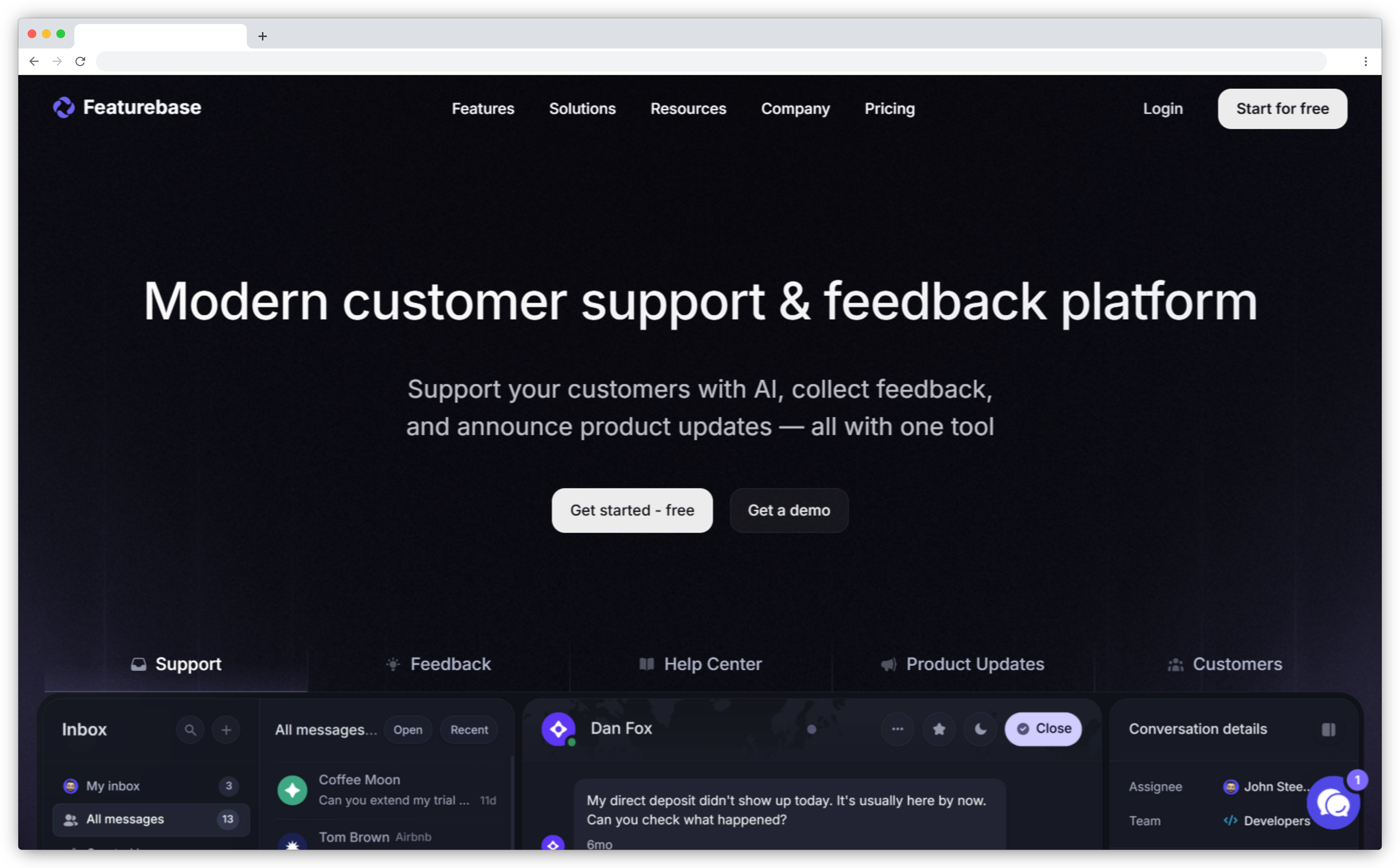
What Makes Featurebase a Strong Canny Alternative in 2026?
Featurebase appeals to teams that want the core Canny experience—feedback idea boards, feature request voting, and roadmap visibility—but with a more modern UX and faster setup. It’s designed to help product teams manage feedback without heavy configuration or complex workflows.
For teams that primarily need a feedback portal to gather customer feedback, track user requests, and communicate progress on new features, Featurebase delivers a familiar and intuitive experience. It also combines feedback boards, roadmaps, and changelogs in one place, which helps close the feedback loop on the customer-facing side. However, Featurebase is intentionally lightweight. It works best when feedback volume is manageable and when prioritization is largely driven by voting rather than deep analysis or cross-channel feedback management.
What are the Key Features of Featurebase?
- Feedback boards & voting: Collect user feedback, enable upvotes, and manage feature requests
- Feedback portal: Central place for customers to submit and track feature requests
- Public roadmap: Share planned, in-progress, and shipped features
- Changelog & updates: Keep customers informed about new features
- Simple prioritization: Prioritize feedback primarily through voting and status updates
- Modern user interface: Clean UI designed for customer-facing feedback
Featurebase Pros
- Clean, modern alternative to Canny for feedback boards
- Easy to set up and use with minimal configuration
- Strong customer-facing experience for feedback and roadmaps
- Combines feedback, roadmap, and changelog in one tool
Featurebase Cons
- Limited advanced feedback analysis and user insights
- Not designed for multi-channel feedback collection
- Prioritization relies mostly on votes rather than deeper context
Featurebase Pricing
- Starts at $29/month
- Free version available
8. Upvoty: Best Canny Alternative for Feedback Boards, Voting & Customer-Facing Roadmaps
Upvoty is a strong alternative to Canny for teams that want classic feedback boards and feedback voting boards, plus a lightweight way to keep customers informed through a public roadmap and changelog. It’s built for product teams that want to collect customer feedback, track feature requests, and close the feedback loop with clear status updates—without turning feedback management into a heavy process.
- Best for: SaaS companies, product managers, startups and SMBs, teams that want feedback idea boards + product updates in one place
- Use Case: Feedback portal for collecting user feedback and feature requests, voting boards to prioritize feature requests, feedback widget for in-app collection, tracking existing feature requests, keeping customers up to date via roadmap + changelog, closing the feedback loop with status updates
- G2 Rating: 3.1/5
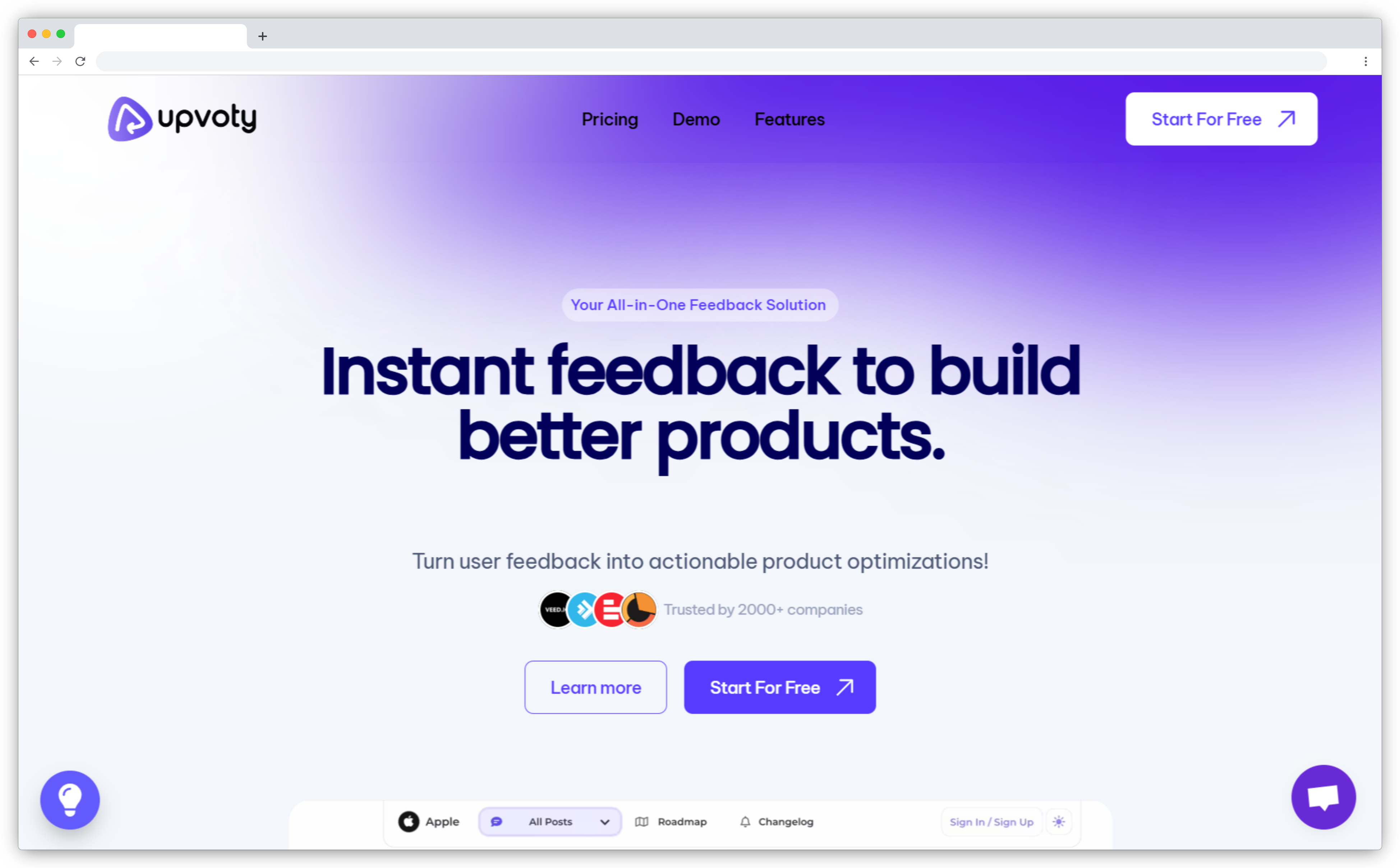
What Makes Upvoty a Strong Canny Alternative in 2026?
Upvoty fits teams that want the “Canny-style” workflow—feedback collection → feature request tracking → voting → roadmap updates—in a single, customer-facing system. Instead of trying to be a full customer feedback management platform with deep analysis, it focuses on doing the core feedback board experience well: capturing user requests, organizing and prioritizing them (often via votes), and making progress visible so customers stay informed.
It also supports the “public + private” approach many product teams need, where you can run feedback boards for external users and maintain internal workflows for managing customer feedback behind the scenes. Upvoty’s help docs highlight core modules like feedback portal, roadmap, feedback widget, integrations, and changelog—covering the key building blocks people expect when comparing Canny alternatives and competitors.
What are the Key Features of Upvoty?
- Feedback boards + voting: Collect user feedback, manage feature requests, and prioritize feedback with upvotes
- Feedback portal: Central place to gather customer feedback and track existing feature requests
- Feedback widget: Add a widget to collect feedback without forcing users to leave your product
- Product roadmap + changelog: Keep customers informed, announce new features, and help close the feedback loop
- Integrations: Connect with common tools (e.g., Jira, Slack, Intercom, Zapier, Crisp)
- Custom domain support: Run the portal on your own domain for a branded experience
Upvoty Pros
- Strong Canny-style feedback boards and voting boards
- Roadmap along with changelog helps keep customers up to date
- Feedback widget supports in-product feedback collection
- Useful integrations for product teams
Upvoty Cons
- Limited advanced analysis and user insights vs deeper feedback management systems
- Prioritization is mainly vote-driven, less context-rich than enterprise tools
- Smaller review footprint on some sites (can make enterprise validation harder)
Upvoty Pricing
- Starts at $15/month
- Free version available
9. Nolt: Best Canny Alternative for Simple Feedback Boards, Voting & Fast Public Roadmaps
Nolt is a clean, lightweight Canny alternative for teams that want to spin up feedback boards quickly, collect user feedback, and prioritize feature requests using voting boards, without the overhead of a heavier customer feedback management tool. It’s built around the core Canny-style workflow: collect feedback, organize feature requests, publish a public roadmap, and keep customers up to date with automated updates.
- Best for: SaaS companies, startups and SMBs, product managers who want simple feedback idea boards, teams prioritizing speed and ease of setup
- Use Case: Feedback portal for gathering customer feedback, feedback voting boards to prioritize feature requests, tracking existing feature requests, managing product feedback in one board, public roadmap updates to keep customers informed, closing the feedback loop through status
- G2 Rating: 4.7/5
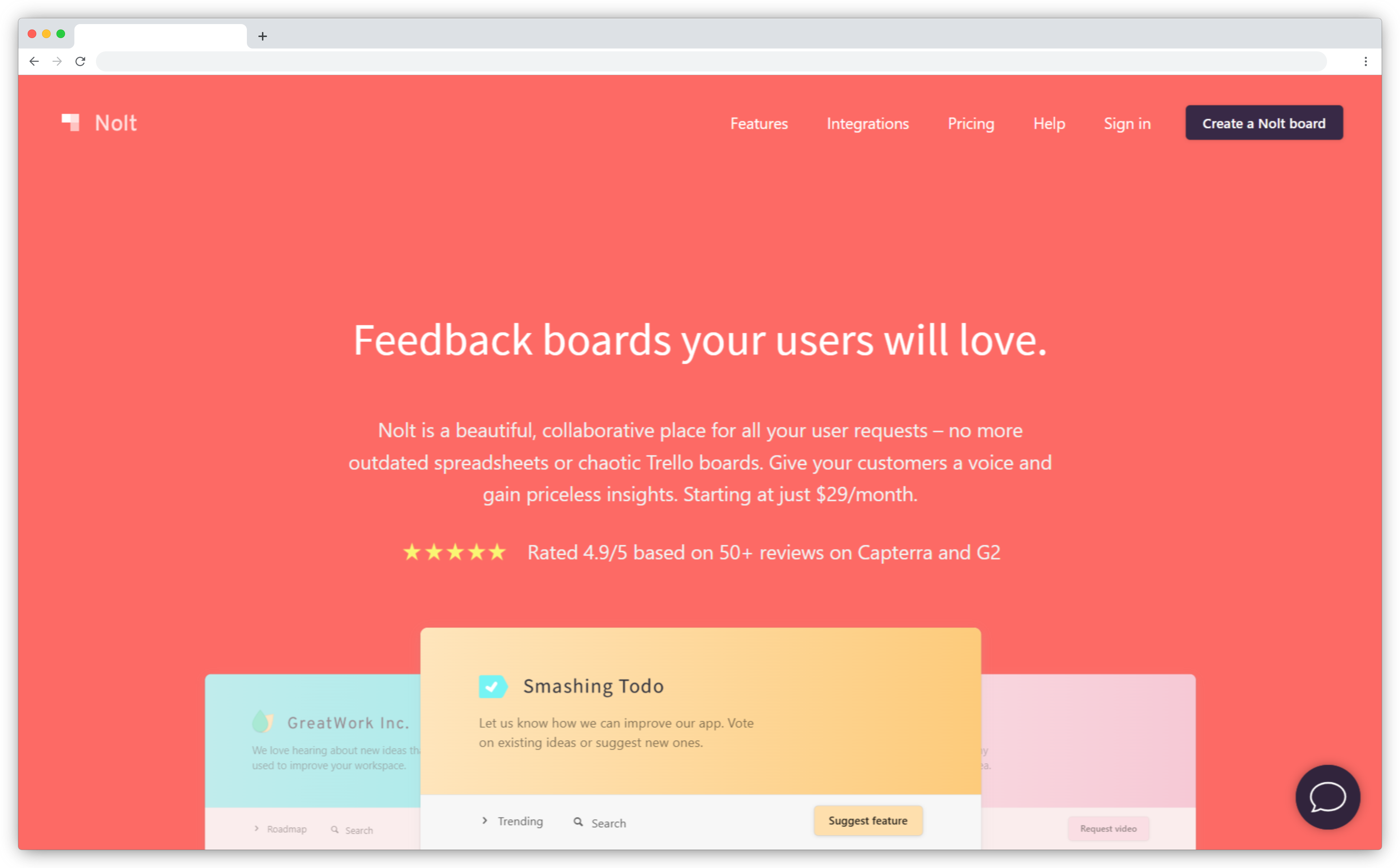
What Makes Nolt a Strong Canny Alternative in 2026?
Nolt is built for teams who want the essentials of a feedback management system—feature request tracking, voting, and a customer-facing roadmap—without needing advanced analysis or complex workflows. It’s especially useful when your goal is to create a simple feedback portal that encourages users to submit ideas, upvote existing feature requests, and follow progress as new features ship.
One reason Nolt shows up frequently in Canny.io alternatives roundups is its focus on simplicity: teams can collect customer feedback in a central place, prioritize feedback, and publish a roadmap with a few clicks, while keeping customers informed via automated updates.
What are the Key Features of Nolt?
- Feedback boards and voting: Collect user feedback, run voting boards, and prioritize feature requests
- Feedback portal: Gather customer feedback and track feature request status in one place
- Public roadmap: Create a roadmap and keep customers up to date with progress updates
- Automated updates: Notify users as features move through statuses to help close the feedback loop
Nolt Pros
- Very easy setup for feedback boards and feature requests
- Clean user interface for customers and product managers
- Strong for public roadmap + keeping customers informed
- Helpful customer support
Nolt Cons
- Limited advanced analysis and user insights vs full feedback management systems
- Best for a single-board workflow, less ideal for complex multi-product setups
- Less suited to multi-channel feedback collection beyond the portal
Nolt Pricing
- Starts at $29/month
- Free trial available for 10-days
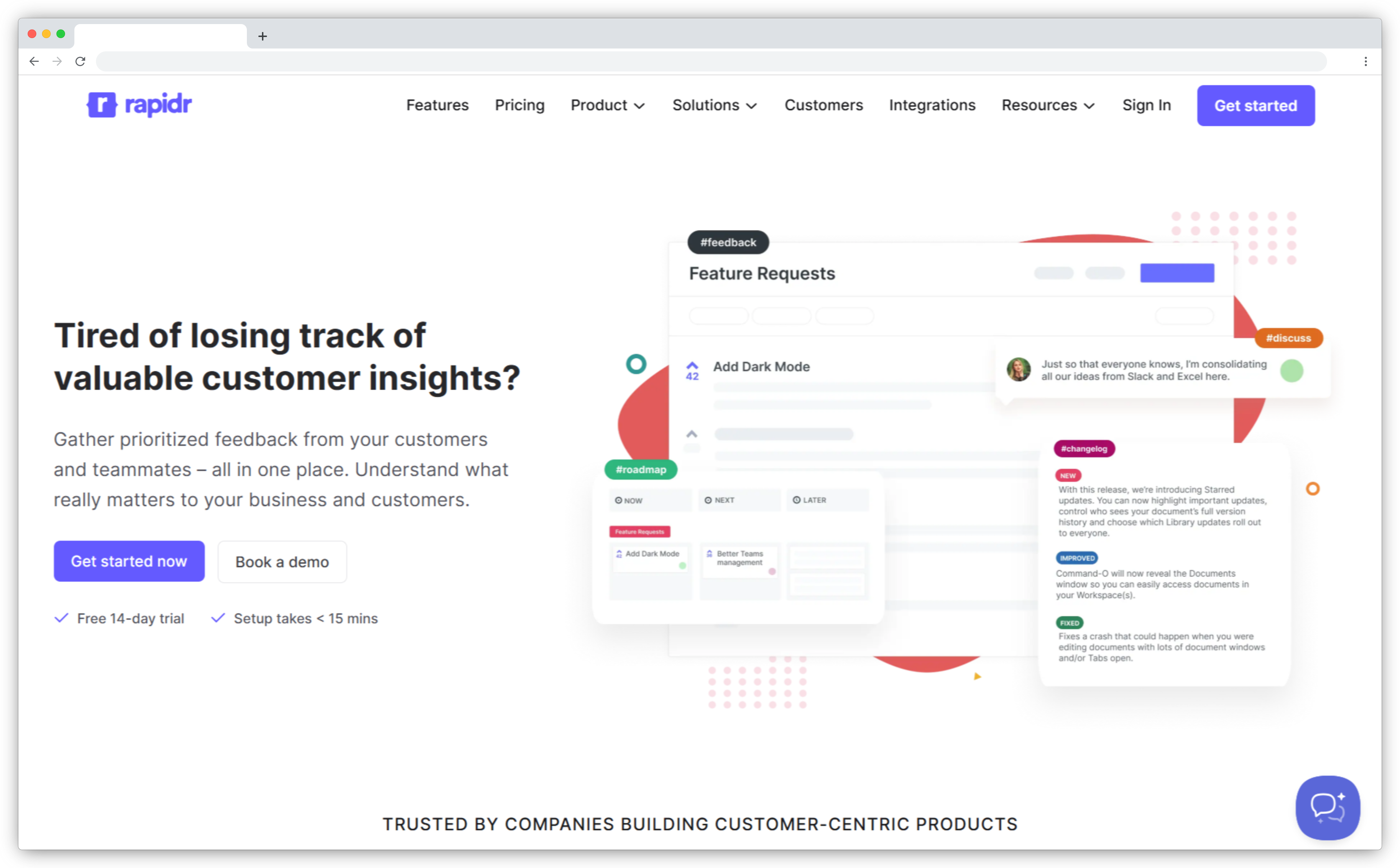
10. Rapidr: Best Lightweight Canny Alternative for Simple Feedback Boards & Feature Request Tracking
Rapidr is a lightweight Canny alternative designed for teams that want to collect user feedback, manage feature requests, and run feedback voting boards without the complexity of a full feedback management system. It focuses on the core jobs many teams use Canny for—feedback collection, idea voting, and basic prioritization—while keeping setup and workflows intentionally simple. It is often evaluated by startups and SaaS companies that want an alternative to Canny with similar functionality, faster onboarding, and a more affordable entry point.
- Best for: Startups and early-stage SaaS companies, product managers needing simple feedback boards, teams with basic feature request tracking needs, companies looking for a lightweight Canny.io alternative
- Use Case: Collecting customer feedback via a feedback portal, managing feature requests and user requests, tracking existing feature requests, prioritizing feedback using voting boards, sharing status updates on new features, keeping customers informed with minimal setup
- G2 Rating: Not available
What Makes Rapidr a Strong Canny Alternative in 2026?
Rapidr is built for teams that want to replicate the core Canny workflow without adding operational overhead. Instead of positioning itself as a fully integrated feedback solution, Rapidr focuses on enabling product teams to quickly set up feedback idea boards, gather customer feedback, and prioritize feature requests using voting.
For teams managing a modest volume of product feedback, Rapidr can serve as a straightforward feedback management tool—helping product managers track user requests, avoid duplicate feature ideas, and communicate progress without complex analytics or advanced workflows. This makes it a practical option when feedback boards and visibility matter more than deep analysis or multi-channel feedback collection.
What are the Key Features of Rapidr?
- Feedback boards & voting: Collect user feedback and prioritize feature requests using voting boards
- Feedback portal: Central space to gather customer feedback and manage user requests
- Feature request tracking: Track existing feature requests and manage status updates
- Basic prioritization: Organize and prioritize feedback primarily through votes
- Customer updates: Share progress on new features to keep customers informed
Rapidr Pros
- Simple and easy-to-use feedback boards
- Quick setup for feature request tracking
- Lightweight alternative to Canny for basic needs
- Suitable for early-stage SaaS teams
Rapidr Cons
- Limited advanced features and user insights
- Not designed for multi-channel feedback collection
- Lacks advanced analysis and feedback management depth
- Smaller ecosystem and fewer integrations than larger tools
Rapidr Pricing
- Starts at $49/month
- Free trial available
Conclusion
If there’s one clear takeaway from comparing these Canny alternatives, it’s that feedback needs change as products grow. What works well in the early days, simple feedback boards and voting, often starts to break down once customer feedback comes from multiple channels and feature decisions carry more impact.
Some tools are great at preserving the familiar Canny-style experience: collecting user feedback, running voting boards, and keeping customers informed through a public roadmap. Others are better suited for teams that need structure, prioritization frameworks, or tight alignment with project management and delivery workflows. The right choice depends on whether your biggest challenge is visibility or decision-making.
For teams that want to keep the simplicity of feature request workflows but also gain clarity at scale, Zonka Feedback offers a more complete path forward. It covers the core Canny use cases—feedback collection, feature request tracking, and closing the feedback loop—while helping product teams understand why customers are asking for certain features, not just how many.
If you’re evaluating a switch and want to see how this approach fits your product and feedback workflow, schedule a demo with Zonka Feedback and move towards an informed product decision.