

.svg)
 Healthcare
 Finance
 Retail
 SaaS & Digital
 eCommerce
 Education
 Salesforce
  HubSpot
 Pipedrive
 Mailchimp
 Klaviyo
 Zendesk
  Intercom
 Freshdesk
 HelpScout
  Front
Front Jira
Jira Slack
Slack  MS Teams
 Zoom
Zoom Google Sheets
  Zapier
  Integrately
 Make
Make  Webhooks




 MS Teams


TL;DR
- Net Promoter Score (NPS) measures customer satisfaction and loyalty through a simple rating question followed by qualitative follow-ups that reveal the "why" behind each score.
- Effective NPS surveys combine a 0-10 rating question with targeted follow-up questions, creating a comprehensive understanding of customer sentiment across different segments (Promoters, Passives, Detractors).
- Different scenarios require customized NPS questions: Relationship NPS (rNPS) for overall loyalty, Transactional NPS (tNPS) for specific interactions, and eNPS for employee engagement.
- This guide provides 50+ tested NPS question examples across industries (Healthcare, Retail, Banking, SaaS, Digital Apps) and business goals (reducing churn, improving CLV, optimizing products, enhancing support).
The standard NPS question—"How likely are you to recommend us to a friend on a scale from 0 to 10?"—is just the starting point. On its own, a single rating tells you what customers think, but not why they think it. That gap is what separates data collection from actionable insight.
The right follow-up questions reveal what keeps customers loyal, what pushes them away, and which improvements would have the highest impact on your business. When done correctly, NPS questions transform raw scores into a roadmap for retention, product development, and growth.
This guide covers the essential NPS questions that drive results, with practical examples across industries and use cases. You'll learn when and where to deploy each question type, how to segment responses for deeper insights, and which follow-ups maximize response quality without creating survey fatigue.
Simply put: effective NPS questions connect you with what your customers actually care about—and give you the data to act on it.
What is the NPS Survey Question?
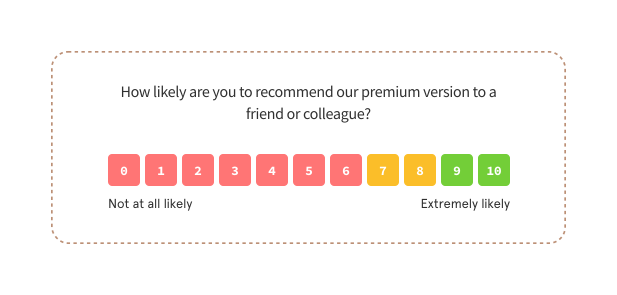
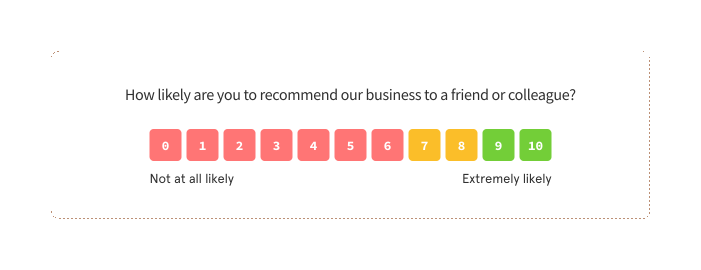
The NPS survey question asks customers to rate their likelihood of recommending your product or service on a scale from 0 to 10, where 0 means "not at all likely" and 10 means "extremely likely." This single question, combined with targeted follow-ups, provides both quantitative and qualitative data on customer loyalty.
Based on their score, customers fall into three categories:
- Promoters (9-10): Loyal enthusiasts who actively advocate for your brand and drive word-of-mouth growth.
- Passives (7-8): Satisfied but unenthusiastic customers who are vulnerable to competitive offers.
- Detractors (0-6): Dissatisfied customers who may damage your brand through negative word-of-mouth.
Your NPS is calculated by subtracting the percentage of Detractors from the percentage of Promoters. Use this free NPS calculator to compute your score instantly.
.svg)
Why Are NPS Survey Questions Important for Your Business?
Research shows that a 7% increase in NPS can correlate with a 1% increase in revenue, highlighting why companies with higher NPS scores tend to grow faster. For a company with $100 million in annual revenue, raising NPS from 30 to 37 could mean an additional $1 million in sales.
Beyond predictive growth, NPS survey questions are essential because they:
Identify Customer Types and Action Priorities: The three-segment model (Promoters, Passives, Detractors) isn't just a scoring mechanism—it's an action framework. You can reward and activate Promoters for referrals, engage Passives before they churn, and implement recovery protocols for NPS Detractors.
Provide Context Through rNPS and tNPS: Relationship NPS measures overall loyalty while Transactional NPS captures reaction to specific interactions. A declining rNPS signals systemic issues, while poor tNPS scores pinpoint exactly where the experience breaks down—like a confusing checkout flow or slow support response.
Enable Industry and Competitive Benchmarking: Compare your score to industry benchmarks to understand where you stand relative to competitors. If your NPS lags behind your sector's average, you can use this insight to develop targeted improvement strategies and allocate resources effectively.
Reveal Root Causes with Follow-Up Questions: The rating tells you what; the follow-up tells you why. A Detractor mentioning "confusing interface" gives your product team a specific improvement target, while a Promoter praising "fast customer service" validates your support strategy. This feedback loop turns Net Promoter Score from a metric into a decision-making tool.
NPS Survey Questionnaire Example to Drive Customer Insights
An effective NPS survey combines a core rating question with an open-ended follow-up. Here's a standard NPS survey template that works across most use cases:
Question 1 (Rating): How likely are you to recommend [Company/Product] to a friend or colleague?
Scale: 0 (Not at all likely) to 10 (Extremely likely)
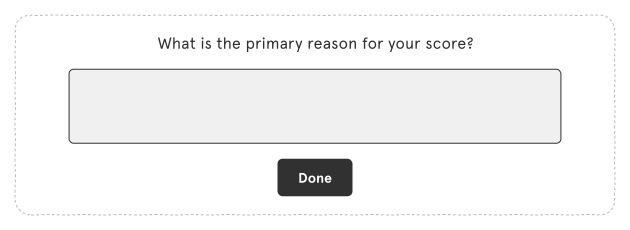
Question 2 (Follow-up): What's the primary reason for your score?
Open text field
You can customize this template for specific contexts. For example, to measure satisfaction with customer support specifically: "How likely are you to recommend us based on your recent support experience?"
The template is deliberately simple. Two questions maximize completion rates while capturing both quantitative scoring and qualitative context. For more specialized needs—like industry-specific language or segment-targeted questions—the examples throughout this guide show how to adapt the core structure.

What Does an NPS Survey Question Include?
A complete NPS survey consists of two essential components that work together to provide actionable customer intelligence:
1. The Core NPS Rating Question
This is the 0-10 scale question that generates your quantitative NPS score. The standard phrasing is: "How likely are you to recommend [Product/Company] to a friend or colleague?"
The scale must always run from 0 to 10, with clear anchors: 0 = "Not at all likely" and 10 = "Extremely likely." This consistency ensures your scores are comparable to industry benchmarks and your own historical data.
2. The Open-Ended Follow-Up Question
This captures the "why" behind the rating through open-ended questions. The follow-up reveals specific drivers of satisfaction or dissatisfaction that the score alone cannot communicate.
Common follow-up formats include:
- "What's the primary reason for your score?"
- "What could we do to improve your experience?"
- "What did you value most about [Product/Service]?"
The combination of quantitative rating and qualitative feedback transforms NPS from a single number into a diagnostic tool. The score tells you where you stand; the follow-up tells you what to do about it.
Types of Net Promoter Score Surveys
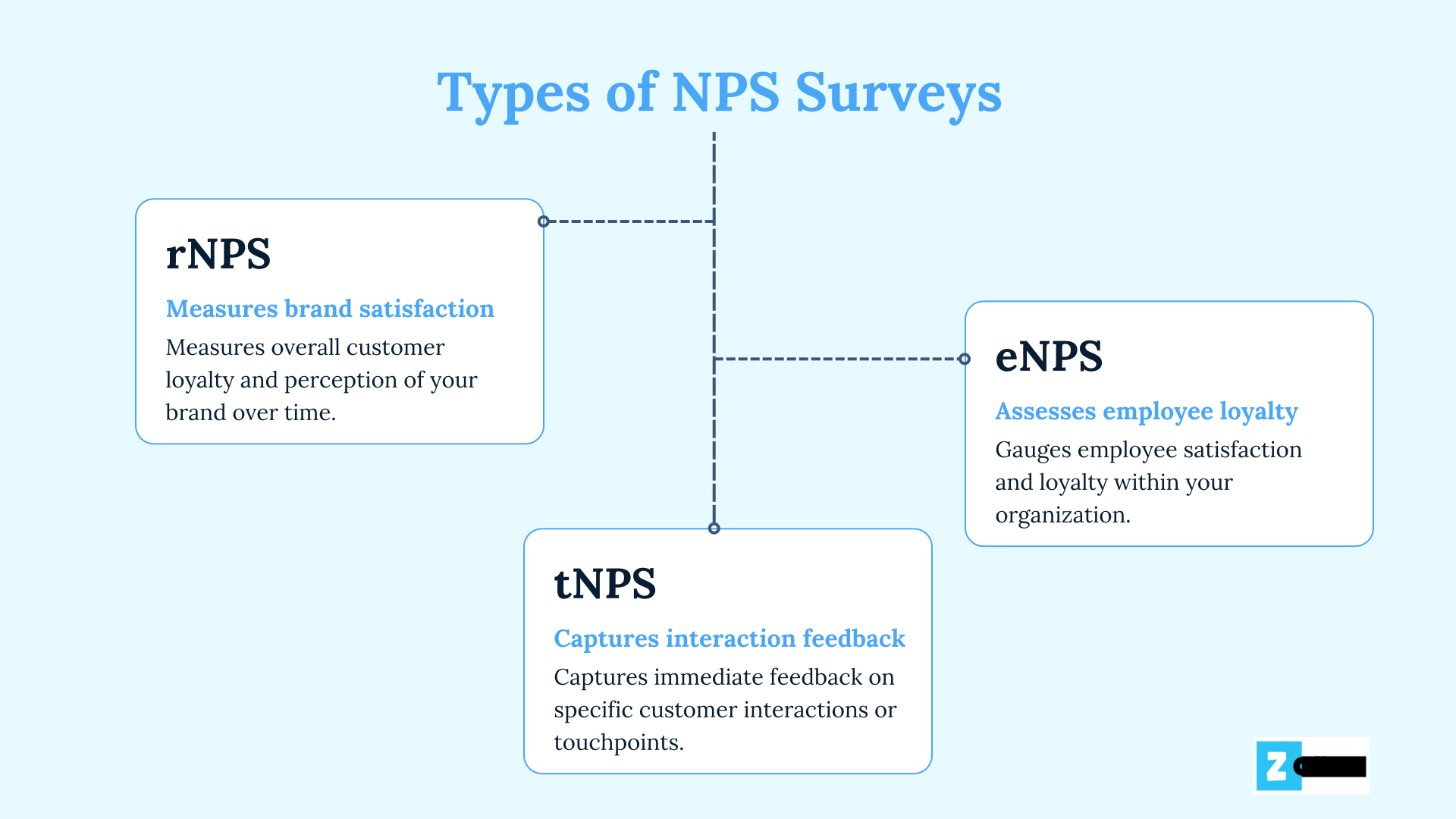
NPS surveys come in three main types, each designed to capture different aspects of the customer and employee experience. Understanding when to use each type ensures you're measuring the right thing at the right time.
1. Relationship NPS (rNPS) Survey
A Relationship Net Promoter Score (rNPS) survey measures overall satisfaction with your brand, providing a high-level view of customer loyalty independent of any single interaction. These surveys are typically sent quarterly, biannually, or at key account milestones.
Use rNPS surveys for:
- Regular Check-Ins: Quarterly or biannual surveys track sentiment trends over time and surface emerging issues before they become critical.
- Sample question: "How likely are you to recommend our company to others based on your overall experiences with us?"
- Brand Perception: Understand how customers view your brand beyond individual product or service interactions.
- Sample question: "How likely are you to recommend our brand to others, considering your overall impression of our company?"
- Account Management: For B2B businesses, measure satisfaction among key accounts to identify at-risk relationships early.
- Sample question: "How likely are you to recommend us as a long-term business partner to others within your industry?"
- Product Lifecycle Feedback: Gather customer feedback at different product stages, such as after major updates or feature releases.
- Sample question: "Considering your experience with our product over time, how likely are you to recommend it to colleagues or friends?"
2. Transactional NPS (tNPS) Survey
Transactional Net Promoter Score (tNPS) surveys capture feedback immediately after specific interactions—purchases, support cases, deliveries, or product usage milestones. These surveys identify exactly where your customer experience succeeds or fails.
Key moments to deploy tNPS surveys:
- Post-Purchase Feedback: Measure satisfaction with the buying process and whether the product met initial expectations.
- Sample question: "Based on your recent purchase, how likely are you to recommend our products to a friend or colleague?"
- Delivery and Fulfillment: Assess satisfaction with shipping speed, order accuracy, and packaging quality.
- Sample question: "How likely are you to recommend us based on your delivery experience?"
- Customer Service Quality: Gauge satisfaction immediately after support interactions to refine service quality and agent performance.
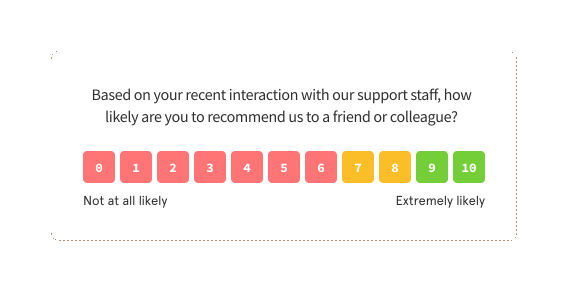
- Sample question: "After your recent interaction with our support team, how likely are you to recommend us to others?"
- Product Usage and Onboarding: Collect feedback after first-time product use to understand usability and initial impressions.
- Sample question: "How likely are you to recommend our product based on your initial experience using it?"
3. Employee NPS (eNPS) Survey
Employee Net Promoter Score (eNPS) measures workforce loyalty and engagement using the same 0-10 scale applied to customers. High eNPS scores correlate with lower turnover, better customer service, and stronger company culture.
Use eNPS surveys to:
- Reduce Turnover Costs: Identify flight-risk employees before they leave, reducing expensive recruitment and onboarding cycles.
- Sample question: "On a scale of 0-10, how likely are you to recommend our company as a place to work to others?"
- Strengthen Company Culture: Surface areas for improvement like recognition programs, growth opportunities, or work-life balance.
- Sample question: "How likely are you to recommend our company's work environment to your friends?"
- Target Key Improvements: Low scores pinpoint specific concerns—compensation, management, career development—that need attention.
- Sample question: "Based on your experience, how likely are you to recommend our company as a place to grow and develop professionally?"
Customizing NPS Survey Questions to Ask with Examples
Generic NPS questions miss the nuances that matter in your specific industry or business context. Tailored questions increase relevance, improve response rates, and deliver insights you can actually act on. Here are tested examples across major industries.
NPS Survey Questions Examples for the Healthcare Industry
Healthcare NPS questions need to balance clinical quality, staff interactions, and administrative efficiency. These questions capture patient satisfaction across the full care journey.
Key health survey questions to gather patient feedback:
- How likely are you to recommend our clinic to friends and family, on a scale of 0-10? (NPS question)
- What did you value most about your healthcare experience with us? (Open-ended question for Promoters)
- What improvements could we make to enhance your experience? (Open-ended question for Passives)
- Could you please share the issues or concerns that impacted your experience? (Open-ended question for Detractors)
.svg)
Questions to Ask in NPS Surveys for Retail
Retail NPS questions address in-store experience, product selection, checkout efficiency, and post-purchase satisfaction. These insights help you reduce friction and boost repeat purchase rates.
Key retail survey questions to gauge NPS:
- On an 11-point scale, how likely are you to recommend our store to a friend? (NPS question)
- What did you enjoy most about shopping with us? (Open-ended question for happy customers)
- What could improve your shopping experience? (Open-ended question for passive customers)
- We're sorry to see you disheartened. Could you please tell us what went wrong during your visit? (Open-ended question for unhappy customers)
.svg)
Digital Feedback & Apps NPS Survey Questions
For digital platforms and apps, NPS questions reveal usability issues, feature gaps, and overall user experience quality. These insights guide product roadmaps and reduce churn.
Key NPS survey question examples:
- How likely are you to recommend our premium version? (Classic NPS question)
- What features do you find most valuable in our app? (Open-ended question for brand advocates)
- What could make the app more enjoyable for you? (Open-ended question for passives)
- What made you unhappy and let you go? Please share here. (Open-ended question for unhappy customers)
Banking NPS Survey Questions to Ask
Banking NPS questions span online banking usability, branch experiences, customer support quality, and trust. These insights help identify service gaps in a highly competitive, trust-dependent industry.
Examples for successful banking NPS surveys:
- How likely are you to recommend our bank to a friend or colleague? (Relational NPS survey question)
- What aspects of our banking services do you find most valuable? (Follow-up question for promoters)
- What could we improve in your banking experience? (Follow-up question for passives)
- Could you share any specific issues with our services? (Follow-up question for detractors)
.svg)
SaaS NPS Survey Questions to Gauge Customer Satisfaction & Loyalty
NPS in SaaS evaluates customer satisfaction at every stage—from onboarding through ongoing usage. These questions reveal product-market fit, feature adoption, and churn risk.
Key NPS question examples:
- How likely are you to recommend our software to a friend or colleague? (Classic NPS question)
- What features of our software do you find most helpful? (NPS follow-up question for Promoters)
- What could make our software more valuable to meet your regular needs? (NPS follow-up question for Passives)
- Could you share what issues you faced with our software? (NPS follow-up question for Detractors)
.svg)
Leverage NPS Questions to Achieve Your Key Business Goals
Strategic NPS questions do more than measure satisfaction—they directly support your business objectives. From reducing churn to improving customer lifetime value, the right NPS questions provide the insights needed to refine your product, strengthen support, and increase loyalty.
1. Reduce Customer Churn
Catching unhappy customers before they leave is significantly cheaper than acquiring new ones. NPS questions identify at-risk customers (scores 0-6) early, allowing you to intervene with targeted retention efforts.
To address customer churn, ask:
"What's one thing we could improve to enhance your experience with our company?"
This question works because it assumes improvement is possible and invites constructive feedback rather than venting. Detractors who respond with specific issues—not just general dissatisfaction—are the most recoverable.
2. Improve Customer Lifetime Value (CLV)
NPS can boost CLV by helping you identify and engage two critical customer groups: Promoters ready for expansion revenue and Detractors who need recovery before they churn.
-
Cross-Selling to Promoters: Promoters are already fans, making them ideal candidates for upgrades, add-ons, or premium tiers. Identifying these customers allows you to offer complementary products that enhance their experience while increasing revenue.
-
Nurturing Unhappy Customers: Detractors aren't just a risk—they're an opportunity. Their feedback reveals specific pain points that, once resolved, can turn them into loyal advocates. A quick follow-up on their concerns demonstrates your commitment and can build lasting loyalty.
.svg)
3. Optimize Product Development
NPS feedback from beta testers and early users turns customer input into a product roadmap. By targeting these groups, you gain insights into functionality, usability, and feature priorities before a full release.
-
Prioritize Winning Features: A good NPS score on specific features shows what resonates with users, helping you prioritize future development that drives adoption.
-
Improve Underperforming Features: Low scores highlight features needing refinement or possible removal, allowing you to reallocate resources toward high-value improvements.
To optimize the product roadmap, ask:
"What feature would you like to see added to improve your experience with our product?"
.svg)
4. Enhance Customer Support
NPS surveys reveal how your support team impacts loyalty and uncover opportunities to make support a competitive advantage.
-
Spot Service Gaps: Low NPS scores after support interactions reveal process issues, knowledge gaps, or training needs. Fixing these weak points prevents future customer frustrations.
-
Sharpen Team Skills: NPS feedback highlights areas where additional training—such as product knowledge, communication skills, or empathy—can empower your team to deliver a standout customer experience.
-
Celebrate Top Agents: High NPS ratings and positive comments identify top-performing agents, allowing you to reward excellence and inspire the whole team.
This question helps gather critical feedback to elevate support:
"What did you appreciate most about your recent support interaction, and what could be improved?"
NPS Follow-Up Questions by Customer Segment
The core NPS rating tells you what customers think. Follow-up questions tell you why—and what to do about it. These questions should be tailored to the customer's score, extracting different insights from Promoters, Passives, and Detractors.
Follow-Up Questions for Promoters (9-10)
Promoters are your growth engine. These questions activate them as advocates and identify what's working so you can do more of it.
- What do you love most about [Product/Service]?
- Which feature has been most valuable to you?
- How has [Product/Service] helped you achieve your goals?
- Would you be interested in sharing your experience in a case study or testimonial?
- Can we feature your success story on our website or social media?
- Who else do you know who might benefit from [Product/Service]?
- What made you choose us over competitors?
- What keeps you coming back to us?
- How would you describe [Product/Service] to a colleague?
- What's one thing you'd never want us to change?
Follow-Up Questions for Passives (7-8)
Passives are satisfied but uncommitted. These questions identify what's preventing them from becoming Promoters and surface competitive vulnerabilities.
- What would it take to make this a 10 for you?
- What's one thing we could improve?
- Is there anything we're missing that competitors offer?
- What feature or service would make you more likely to recommend us?
- What almost made you give us a lower score?
- What's preventing you from being more enthusiastic about us?
- How does our service compare to alternatives you've considered?
- What would make your experience more seamless?
- What do you wish worked better?
- What's one frustration you experience regularly?
Follow-Up Questions for Detractors (0-6)
Detractors are at-risk or already churning. These questions surface critical issues and create opportunities for recovery.
- What's the primary reason for your score?
- What specific issue did you encounter?
- What could we have done differently?
- Which aspect of your experience was most disappointing?
- Did you reach out to support? If so, how was that experience?
- What would it take for us to win back your trust?
- Is this issue something we can help resolve right now?
- Have you considered switching to a competitor? If so, why?
- What were you expecting that we didn't deliver?
- What's the one thing that frustrated you most?
Additional Context-Specific NPS Questions
These questions work across segments when you need specific types of insight:
For Product Feedback:
- Which features do you use most often?
- Which features have you never used, and why not?
- What functionality is missing from our product?
- What part of the product is hardest to use?
- How intuitive was the onboarding process?
For Pricing and Value Perception:
- Do you feel you're getting good value for what you pay?
- How does our pricing compare to competitors?
- Would you pay more for [specific feature or service]?
- What would justify a price increase for you?
- How important is price in your decision to continue using us?
For Support and Service Quality:
- How easy was it to get help when you needed it?
- Was your issue resolved on the first contact?
- How would you rate the knowledge of our support team?
- How responsive have we been to your questions?
- What could our support team do better?
For Customer Success and Onboarding:
- How helpful was the onboarding process?
- Did you feel supported during setup?
- How long did it take before you saw value from [Product]?
- Do you know how to access help when you need it?
- What additional training or resources would be helpful?
Bad vs. Good NPS Questions: What Makes the Difference?
Not all NPS questions are created equal. Poorly phrased questions bias responses, confuse customers, or produce data you can't act on. Here's what separates effective NPS questions from ineffective ones.
| Bad Question | Why It Fails | Good Question | Why It Works |
| "Would you recommend our amazing product to others?" | Leading language ("amazing") biases toward positive responses | "How likely are you to recommend our product to others?" | Neutral phrasing avoids influencing the score |
| "How satisfied are you, and would you recommend us?" | Double-barreled question mixes satisfaction and advocacy | "How likely are you to recommend us?" (then separately ask about satisfaction) | One concept per question keeps responses clear |
| "Tell us everything about your experience." | Too broad and overwhelming; lowers response rates | "What's the primary reason for your score?" | Focused question gets specific, actionable feedback |
| "On a scale of 1-5, how likely are you to recommend us?" | Wrong scale breaks NPS methodology and benchmarking | "On a scale of 0-10, how likely are you to recommend us?" | Standard 0-10 scale ensures consistent, comparable data |
| "What didn't you like about your experience?" | Assumes negative experience; biases toward complaints | "What could we improve to make your experience better?" | Constructive framing invites helpful feedback without assumption |
The pattern: good NPS questions are neutral, focused, use standard scaling, and invite constructive feedback rather than complaints.
End Your NPS Survey Question with a Thank You Message
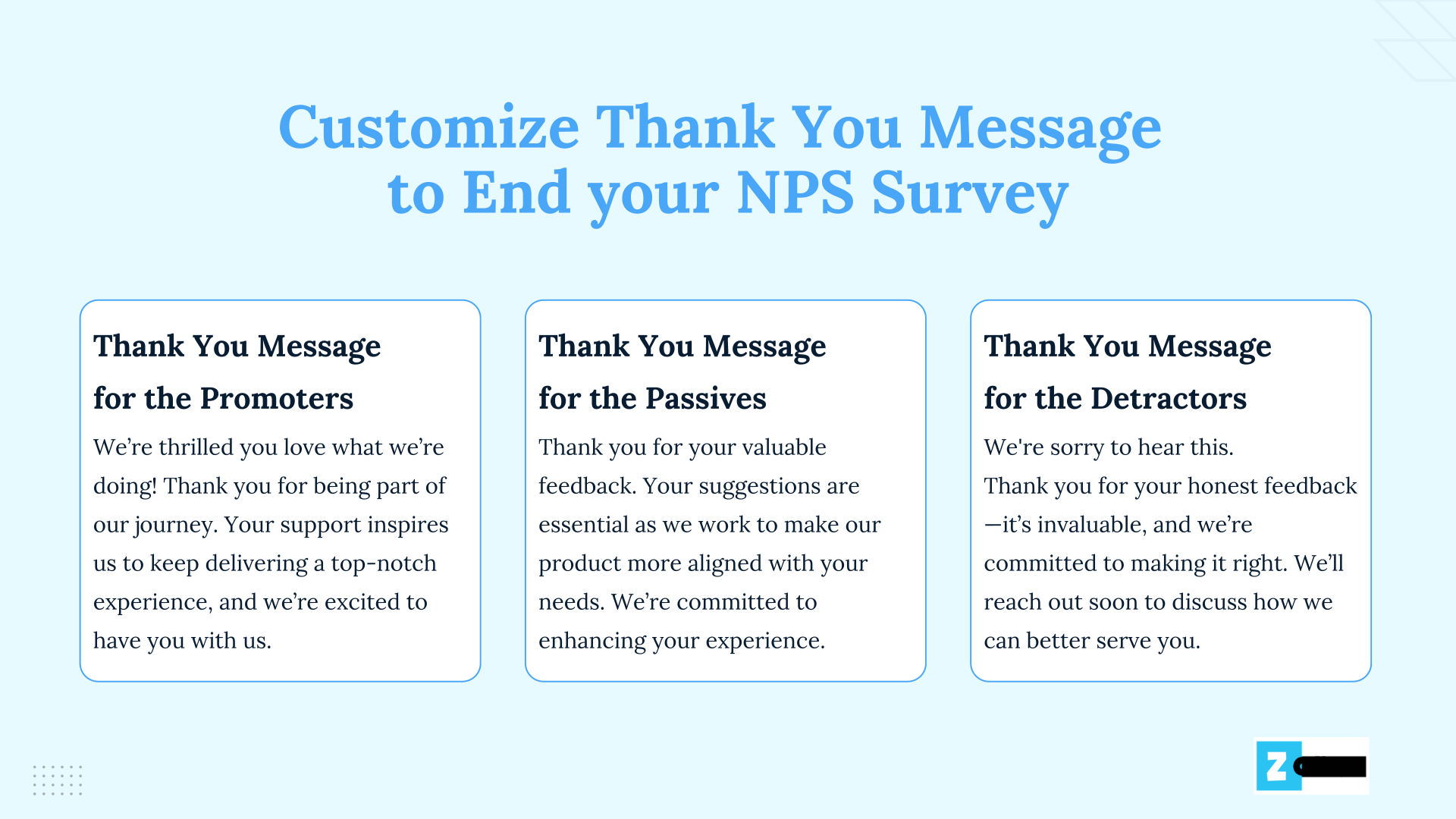
66% of consumers switch brands if they feel unappreciated. A simple, personalized thank-you message shows customers you value their time and feedback, fostering loyalty across all segments.
Here's how to make your thank-you messages more impactful:
- Address Detractor Pain Points: Thank Detractors for their honesty and show commitment to resolving their issues.
- For example: "Thank you for your honest feedback. We're committed to improvement and will reach out to better understand your needs."
- Engage Passives as Partners: Position Passives as collaborators in shaping your product or service.
- For example: "Thank you for your feedback. Your ideas are vital as we work to make our product better suited to your needs."
- Empower Promoters as Advocates: Thank Promoters for their enthusiasm and encourage continued advocacy.
- For example: "Thank you for your enthusiastic feedback! Your insights help us deliver a top-tier experience."
A thoughtful thank-you message makes customers feel valued and strengthens connections across all feedback levels, contributing to your efforts to improve your Net Promoter Score.
Choosing the Right NPS Survey Channels
Sending NPS surveys through the right channel significantly boosts survey response rates and data quality. Here are the most effective channels and when to use each:
- Email: Email surveys work best for rNPS surveys, allowing you to reach a broad audience with personalized messages. Ideal timing: quarterly for active customers or post-onboarding for new users.
- Website: Website surveys are perfect for tNPS, capturing feedback immediately after actions like purchases. Use behavior-triggered pop-ups for real-time insights.
- In-app: In-app surveys deliver instant feedback on specific features or user flows. Engage users directly within the app after task completion or milestone events.
- SMS: SMS surveys excel for short, transactional surveys like post-support interactions. High open rates make SMS ideal for time-sensitive feedback.
- WhatsApp: WhatsApp enables personalized, conversational feedback requests for both rNPS and tNPS. High response rates due to convenience and widespread adoption.
- Offline: Excellent for in-person feedback at retail stores, events, or service locations. Set up kiosk surveys or tablets to capture on-location insights.
Choosing the right channel and timing maximizes engagement and delivers the meaningful feedback that drives business decisions.
10 Tips to Create the Best NPS Survey Questions
Here are essential best practices to help you craft highly effective NPS questions that drive business growth and maximize ROI:
- Use a Mix of Quantitative and Qualitative Questions: Combine numerical ratings with specific follow-up questions like "What did you find most valuable about our service?" to gather both measurable scores and contextual feedback.
- Use Clear and Concise Language: Avoid jargon and complex terms to ensure all customers understand the question, leading to more reliable responses.
- Personalize the Survey Invitation: Address customers by name (e.g., "Hi [Customer Name], we'd love to hear from you.") to increase engagement and response rates.
- Optimize the Timing of the Survey: Send relationship surveys quarterly or annually; send transactional surveys within hours of the triggering event.
- Keep the Survey Short and Focused: Limit surveys to the core NPS question and one or two follow-ups to respect customers' time and reduce abandonment.
- Ensure Mobile-Friendly Survey Design: Use responsive design so surveys display properly on all devices, improving accessibility and completion rates.
- Avoid Leading or Biased Questions: Use neutral language without suggesting desired answers to ensure honest, unbiased feedback.
- Segment Your Audience for Customized Questions: Tailor questions based on customer segments (new vs. long-term customers, product tier, industry) to gain insights relevant to different customer journeys.
- Provide a Genuine Thank You and Next Steps: Include a sincere thank-you message and mention how you'll use their feedback, reinforcing a positive relationship and encouraging future engagement.
- Test and Refine: Pilot-test survey questions to ensure effectiveness. Gather initial feedback and refine questions to improve clarity and relevance.
By incorporating these best practices into your NPS surveys, you'll gather meaningful feedback that drives improvements and enhances customer loyalty.
Streamline and Scale Your Entire NPS Program with Zonka Feedback
Managing NPS surveys manually doesn't scale. For businesses with extensive customer bases, a dedicated CX platform like Zonka Feedback optimizes resources, enables efficient sentiment analysis to improve NPS, and delivers higher ROI on customer experience investments. Here's how you can move forward in your journey:
1. Tailor NPS Approach to Target Specific Customers
Segment your customer base using purchase history, product category, NPS score, usage patterns, and demographic data. This segmentation allows you to see beyond aggregate scores and identify segment-specific trends.
For example, an e-commerce company might discover that frequent apparel buyers love the selection but struggle with sizing, while one-time accessory purchasers are frustrated by the return policy. With these insights, you can create targeted NPS surveys for each segment and develop personalized action plans.
2. Automate Your Entire NPS Journey
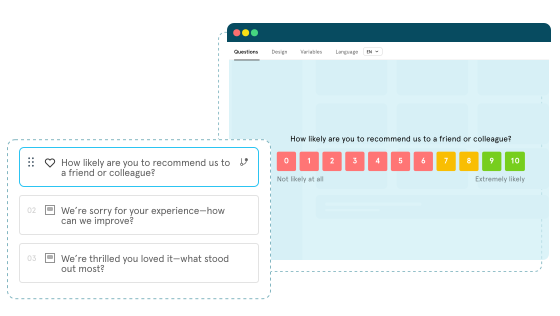
Manually managing NPS surveys is time-consuming and error-prone. Zonka Feedback's automation features streamline the entire process:
- Schedule NPS Surveys: Automatically send surveys 24 hours after delivery, at quarterly intervals, or based on account milestones.
- Trigger NPS Surveys Based on Events: Integrate with your CRM or delivery system to trigger surveys immediately after key events like order delivery or support case closure.
- Automate Website & In-App Surveys: Display NPS surveys within your app or website upon order completion or feature usage milestones.
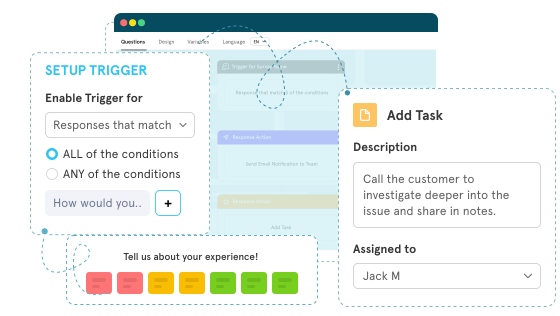
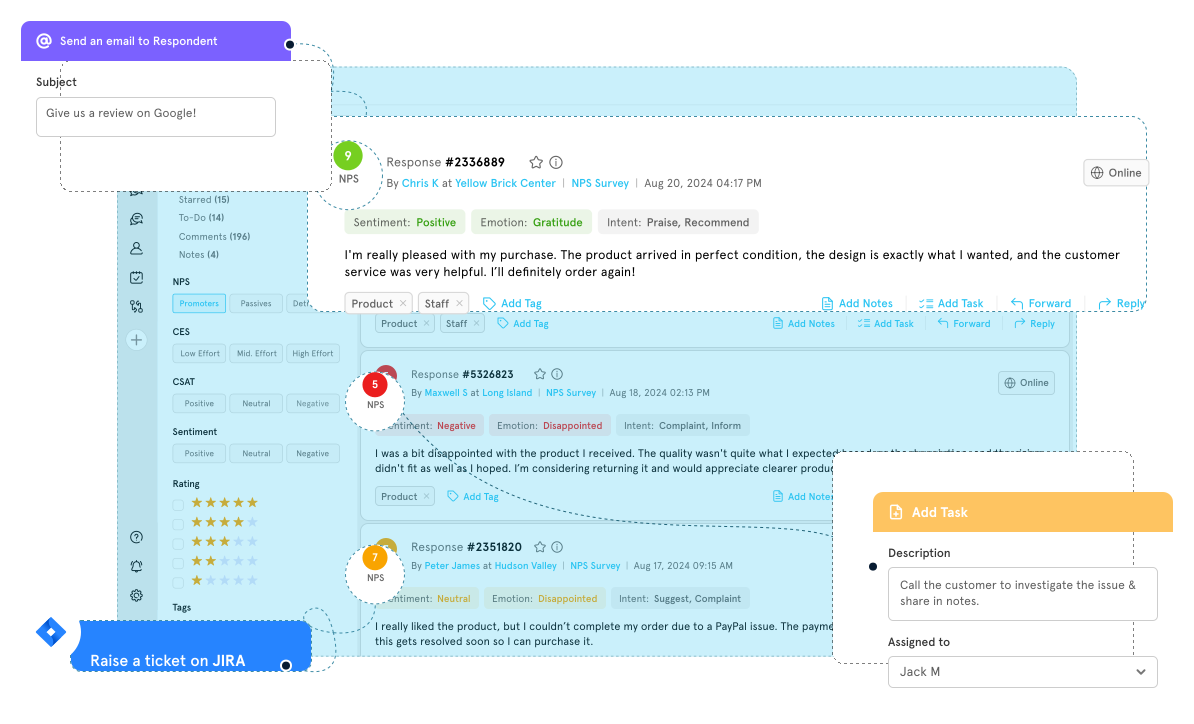
- Receive Real-Time Alerts & Notifications: Get instant alerts when Detractor scores come in, enabling prompt intervention and issue resolution.
3. Understand Customer Emotions from NPS Survey Responses
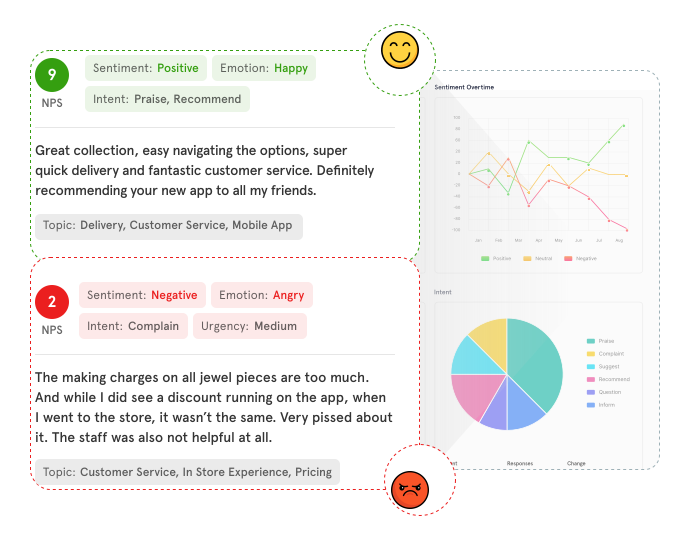
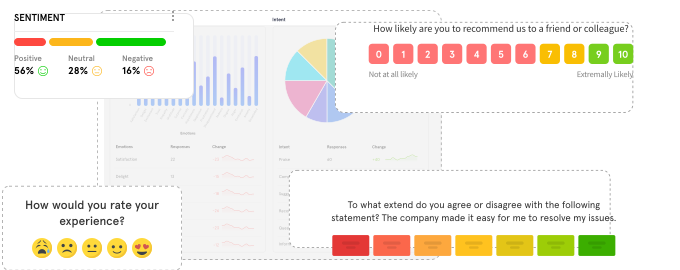
Zonka Feedback's AI-powered sentiment analysis goes beyond the NPS score to understand the emotions, intent, and urgency behind each response. The platform identifies:
- Sentiment Analysis: Positive, neutral, or negative tone in customer feedback
- Intent and Urgency: Whether feedback requires immediate action or can be addressed over time
- Entity Recognition: Specific products, features, agents, or processes mentioned in feedback
This analysis transforms unstructured feedback into structured, actionable insights that product, support, and customer success teams can immediately use.
4. Close the Customer Feedback Loop to Boost Loyalty
With Zonka Feedback, you can efficiently close the feedback loop, ensuring every customer feels heard and valued through automated response systems and workflows:
- Automate Responses: Send thank-you emails immediately after feedback submission
- Send Targeted Responses: Automatically trigger follow-up surveys to Detractors or request testimonials from NPS Promoters
- Get Real-Time Notifications: Alert relevant team members as soon as specific feedback is received
- Perform Task Tagging: Tag team members to clarify responsibilities and ensure accountability
- Take Integrated Actions: Integrate with business software to create or close support tickets based on feedback
Conclusion
Implementing a successful NPS strategy starts with asking the right questions. The core 0-10 rating provides your benchmark, but the follow-up questions reveal what truly matters to customers—what keeps them loyal, what frustrates them, and which improvements would have the highest impact.
By designing relevant NPS questions for each customer segment and business goal, automating survey delivery across the right channels, analyzing customer sentiment with AI, and closing the feedback loop with personalized follow-ups, you're not just measuring satisfaction—you're building a system that drives loyalty and reduces churn.

.svg)
.png)